
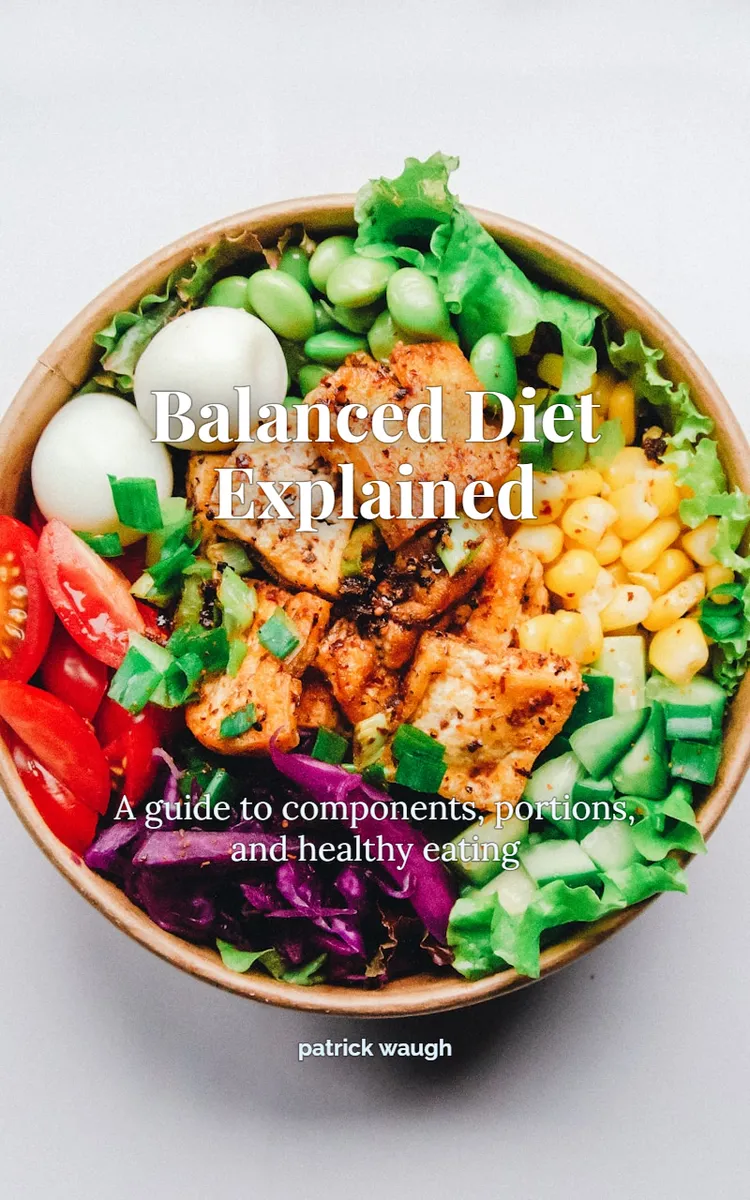
Balanced diet components, diet wheel, and age-based food portions
Table of Contents
- 1. What a Balanced Diet Means
- 2. Diet Wheel: How to Use It
- 3. Carbs, Proteins, and Fats Balance
- 4. Fiber and Whole Foods Priorities
- 5. What to Eat Most and Less
- 6. Age-Based Nutrition Adjustments
- 7. Hydration and Smart Beverage Choices
- 8. Building Balanced Meals for Real Life
Preview: What a Balanced Diet Means
A short excerpt from “What a Balanced Diet Means”. The full book contains 8 chapters and 14,265 words.
What a Balanced Diet Means and Why It Matters
What would happen if every meal gave your body not only enough food, but also the right mix of nutrients? A balanced diet is a way of eating that supplies energy, protein, healthy fats, vitamins, minerals, fiber, and fluids in suitable amounts. It does not require perfect meals, expensive ingredients, or banning favorite foods. It means building a dependable pattern that supports your body day after day.
A useful way to understand this pattern is the Balance-First Definition Map. Start with the question, “What does my body need from this meal?” Then look for four parts: an energy-giving food, a protein food, colorful produce, and a source of healthy fat. Water completes the meal. For example, brown rice with beans, roasted vegetables, avocado, and water gives a broader mix of nutrients than a meal made mostly of refined starch.
Who this is for: this guidance is for adults and families who want clearer everyday eating habits, including people who are beginning to plan meals more carefully. It can help you:
- support steadier energy between meals;
- provide nutrients needed for growth, repair, and daily activity;
- support overall health, including normal body functions;
- make food choices easier without relying on strict rules.
A balanced diet is not measured by one plate. It is measured by the pattern you create across a day or week. One meal may be lighter in vegetables, while another may include more. The goal is a practical overall balance. Ask yourself: over the past day, did my meals include several food groups, or did one type of food do nearly all the work? That answer gives you a useful starting point.
How Balance Supports Energy, Growth, and Health
Food affects the body in several connected ways. Carbohydrates are the body’s main quick source of energy. They are found in foods such as oats, potatoes, rice, fruit, beans, and whole-grain bread. Protein helps build and repair muscles, skin, blood cells, and other tissues. Eggs, fish, poultry, dairy foods, tofu, lentils, and beans provide protein.
Dietary fat supplies concentrated energy and helps the body absorb certain vitamins. Nuts, seeds, olive oil, avocado, and oily fish are common sources. Vitamins and minerals support many body processes. For example, iron helps carry oxygen in the blood, calcium supports bones and teeth, and vitamin C helps the body use iron from plant foods. Fiber, found in vegetables, fruit, beans, and whole grains, supports regular digestion and helps meals feel satisfying. Water supports temperature control, digestion, and normal circulation.
Steady energy comes from combining these parts rather than depending mainly on sugary drinks, sweets, or highly refined snacks. A sweet drink may provide energy quickly, but it usually supplies little protein or fiber. Pairing an energy food with protein and fiber often makes a meal more satisfying. An apple with peanut butter, yogurt with oats and berries, or a bean-filled whole-grain wrap are simple examples.
Growth and repair also depend on enough total food and enough protein, vitamins, and minerals. Children and teenagers need regular nourishment because their bodies are developing. Adults need nutrients to maintain muscle, bones, blood, and organs. Older adults may need to pay particular attention to protein, fluids, calcium, and vitamin-rich foods because appetite, thirst, and food intake can change with age. These are general patterns, not personal prescriptions; medical conditions and individual needs can change what is appropriate.
Several factors can make a balanced diet harder to maintain:
1. Irregular meals can leave you very hungry, making quick, less balanced choices more likely.
2. Limited variety can reduce the range of nutrients you receive.
3. Large portions of highly processed foods may crowd out vegetables, fruit, beans, whole grains, and protein foods.
4. Different life stages change nutritional needs. Infants, children, pregnant people, athletes, and older adults may need individualized guidance.
5. Health conditions, allergies, medications, and food access can affect which foods are suitable and practical.
The diet wheel is a simple visual reminder of variety. Its sections commonly represent fruits, vegetables, grains or starchy foods, protein foods, dairy or fortified alternatives, and smaller amounts of oils or other fats. The exact design may differ, but the message is consistent: eat from several groups, make some groups the foundation of meals, and use smaller amounts of foods high in added sugar, salt, or saturated fat.
As a broad starting point, let vegetables and fruit take up about half of a main plate, with the remaining half divided between a grain or starchy food and a protein food. Add a modest amount of healthy fat, such as a teaspoon of oil for cooking or a small handful of nuts....
About this book
"Balanced Diet Explained" is a health & wellness book by patrick waugh with 8 chapters and approximately 14,265 words. Balanced diet components, diet wheel, and age-based food portions.
This book was created using Inkfluence AI, an AI-powered book generation platform that helps authors write, design, and publish complete books. It was made with the AI Health Book Generator.
Frequently Asked Questions
What is "Balanced Diet Explained" about?
Balanced diet components, diet wheel, and age-based food portions
How many chapters are in "Balanced Diet Explained"?
The book contains 8 chapters and approximately 14,265 words. Topics covered include What a Balanced Diet Means, Diet Wheel: How to Use It, Carbs, Proteins, and Fats Balance, Fiber and Whole Foods Priorities, and more.
Who wrote "Balanced Diet Explained"?
This book was written by patrick waugh and created using Inkfluence AI, an AI book generation platform that helps authors write, design, and publish books.
How can I create a similar health & wellness book?
You can create your own health & wellness book using Inkfluence AI. Describe your idea, choose your style, and the AI writes the full book for you. It's free to start.
Write your own health & wellness book with AI
Describe your idea and Inkfluence writes the whole thing. Free to start.
Start writingCreated with Inkfluence AI


