
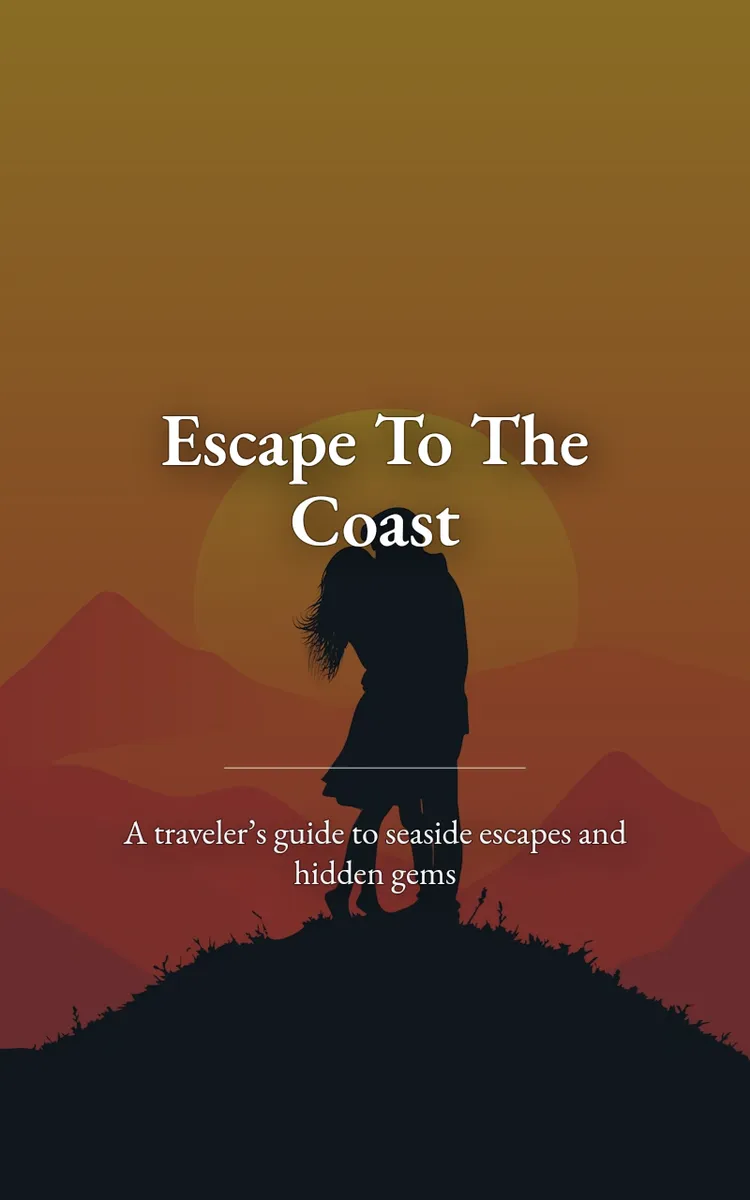
Read the first chapter
The whole of chapter one, free. About 8 min. Turn the pages with the arrows, your keyboard, or a swipe.
Chapter 1
The Ferry Ticket That Breaks
The brass clock above Riverton Harbor’s ticket hall clicked over to 6:40 as Mara Albright pushed through the revolving doors, one hand clamped around her canvas bag and the other around the envelope containing her ferry ticket.
Rain ticked against the tall windows. Beyond them, the inland harbor lay under a low ceiling of cloud, its dark water chopped into narrow silver strips by the wind. Mara checked the ticket again, though she knew every detail by heart: Northstar Ferry, berth three, departure at seven-ten, Seaborne Quay by noon.
Four hours from now, she would be looking at the coast.
She crossed the tiled floor toward the ticket desk, keeping her bag close as travelers moved around her with wet coats and rattling luggage. Her plan was small enough to fit on one folded sheet of paper. Ferry to Seaborne Quay. Bus to the southern villages. A rented room near the water. No explanations, no return date.
At the desk, a young clerk lifted his eyes. “Northstar?”
“Berth three,” Mara said, sliding over her ticket. “I’m early.”
“Early is good.” He glanced at the clock. “Storm watch just came through, though.”
Mara’s fingers tightened on the edge of the counter. “A storm watch?”
“Not a warning. Not yet.” He stamped the ticket with a sharp metallic crack. “They’re still assessing the lake.”
“The lake is calm.”
Outside, a gust drove rain sideways across the glass. The ferry horns answered from somewhere beyond the terminal, low and mournful.
The clerk looked past her toward the harbor. “Calm enough from here.”
Mara folded the ticket and tucked it into the inner pocket of her coat. “The Northstar is still leaving at seven-ten?”
He hesitated.
That pause cost her more than the words would have.
“Is it?” she asked.
A woman in a navy uniform hurried from the far end of the hall, holding a radio against her shoulder. “All passengers for Northstar, listen for an announcement. The route has changed.”
The hall shifted around Mara. Conversations stopped and restarted in nervous fragments. A child began dragging a suitcase in a slow circle. Somewhere near the vending machines, a cup struck the floor and rolled beneath a bench.
The clerk leaned toward her. “There’s been a gale warning issued for the eastern channel.”
“So the ferry is canceled?”
“Not exactly.”
The woman with the radio reached the desk. “Northstar will not call at Seaborne Quay. It’s diverting south to Bellwether Landing. Passengers continuing beyond Bellwether will need to arrange onward transport.”
Mara stared at her. Bellwether Landing was not on her sheet. It was a narrow inlet on the opposite side of the coastal range, connected to Seaborne by an old road that wound through marshland and hills. She had chosen the Northstar because it reached the coast directly. One clean crossing. One clean beginning.
“How much later?” Mara asked.
The uniformed woman consulted the radio. “Departure remains seven-ten. Arrival at Bellwether, approximately one-thirty.”
“And Seaborne?”
“No service tonight.”
Mara looked down at the ticket. The inked destination seemed suddenly childish, as if she had written it in a hurry and expected the world to obey.
“I paid for Seaborne.”
“You paid for passage to the coast,” the woman said. “Bellwether is coastal.”
“That isn’t the same thing.”
“No,” the woman agreed. “It isn’t.”
The clerk slid the ticket back beneath the glass. “We can refund you.”
Mara saw the word on the page she had folded into her bag: Seaborne Quay. Beneath it, the name of the boardinghouse and the number of the room waiting under her false reservation. If she took the refund, she would have to leave the harbor, find somewhere to sleep, and explain to herself why she had stopped before the first mile.
The terminal doors opened again. Wind swept across the floor, pushing a scatter of wet leaves against the benches. The ferry’s horn sounded once more, closer now.
“How long is the refund process?” she asked.
“Three to five business days.”
Mara almost laughed. “Then I’ll take Bellwether.”
The clerk’s expression softened, though she could not tell whether it was sympathy or approval. He marked the ticket with a blue stamp and handed it back.
“Boarding begins in ten minutes,” he said. “Berth two, not three.”
She stepped away from the desk.
A man in a gray wool coat collided with her near the departure board. His shoulder struck hers hard enough to twist her around. He caught the edge of a bench, steadied himself, and muttered, “Sorry.”
“Are you all right?”
He was older than she had first thought, with rain-dark hair and a face pinched pale beneath the fluorescent lights. His gaze flicked to the ticket in her hand, then to the harbor doors.
“I dropped something,” he said.
A gust blew through the opening behind him. Papers fluttered from the floor near the bench. The man bent quickly, gathering them with shaking fingers.
Mara noticed one envelope slide beneath the radiator.
The man did not.
He stuffed the papers into his coat and hurried toward the doors.
“Sir,” Mara called.
He kept walking.
She glanced at the envelope. It was thick, cream-colored, its flap sealed with dark red wax. No name appeared on the front. Only a line of blue ink, written in a firm hand:
BELLWETHER LANDING - ASK FOR THE BOATHOUSE.
Mara crouched and reached beneath the radiator. Heat pressed against her knuckles. She pulled the envelope free just as the man disappeared into the rain.
“Miss?” called the clerk. “Berth two is boarding.”
Mara slipped the envelope into her coat pocket.
She told herself she would hand it to the purser. She told herself she would ask the desk to page the man. She told herself several things while crossing the hall, none of which altered the fact that the envelope was now against her ribs.
At the dockside pier, the rain had sharpened into needles. Passengers crowded beneath the awning, clutching tickets and bags as the Northstar’s lights moved across the black water. The ferry was longer and lower than Mara had expected, its white hull streaked with rust, its loading ramp shuddering whenever the wind struck broadside.
A deckhand in orange slicks held up one arm. “Bellwether passengers to the left. Keep your tickets visible.”
Mara joined the line. Behind her, a woman argued into a phone.
“They changed it after we arrived,” the woman said. “No, I don’t care what the website says. I’m standing on the dock.”
The deckhand took Mara’s ticket and scanned it. The machine chirped.
“Bag?”
“Just this.”
He glanced at the canvas bag. “Keep it with you. Storm crossing.”
“Is Bellwether safe?”
He looked toward the harbor mouth, where the water was already lifting in dark ridges. “Safer than the eastern channel.”
That was not an answer.
The line moved. Mara stepped onto the ramp. Beneath her boots, the metal trembled. Water slapped the pilings with a hollow, impatient rhythm. She reached the ferry deck and turned once toward Riverton Harbor.
The terminal windows shone yellow through the rain. Beyond them, the ticket hall had already begun to empty. A man in a gray coat stood beneath the awning, looking toward the ferry.
Mara stopped.
Even at that distance, she knew him.
He saw her, or saw the movement of her coat. His face changed. Not relief. Alarm.
Then the ramp lifted between them.
“Keep moving,” the deckhand shouted.
Mara stepped inside.
The passenger cabin smelled of wet wool, diesel, and old coffee. Windows rattled in their frames as people searched for seats. Mara chose one near the rear, where she could see the exit and the dark sweep of the lake through the glass.
She set her bag beneath her knees and drew out the envelope.
The wax seal bore no emblem, only a shallow impression like the outline of a key. She turned it over. The paper had been folded once, then flattened. At the lower corner, almost hidden beneath a smear of rain, someone had written three words.
Not for Riverton.
Mara’s pulse gave a single hard beat.
A voice sounded beside her. “You found that on the pier?”
She looked up.
The gray-coated man stood in the aisle, one hand gripping the seatback. Up close, he seemed exhausted rather than old. Water ran from his sleeve onto the floor.
Mara closed her fingers around the envelope. “You dropped it.”
“I need it back.”
“Then tell me what’s inside.”
His eyes moved to the windows. The ferry’s engines had begun to turn, vibrating through the deck and up Mara’s spine.
“It doesn’t belong to you.”
“Neither does the storm, but it changed my destination.”
His mouth tightened. “Listen carefully. When we reach Bellwether, don’t give that envelope to anyone on the dock.”
“Who should I give it to?”
He looked toward the front of the cabin. A uniformed purser was checking the rows, collecting loose tickets.
“No one,” he said. “Keep it sealed.”
“Why?”
The man leaned closer. His voice dropped beneath the engine noise. “Because the person waiting for it may already know you have it.”
Mara felt the envelope’s hard edge press into her palm.
The purser called, “Passengers, remain seated while we clear the harbor.”
The man straightened. For a moment, Mara thought he might take the envelope by force. Instead, he stepped back into the aisle.
“Wait,” she said. “What is the boathouse?”
He gave her a look that held something like regret.
Then the ferry lurched away from the pier.
The man caught the seatback, but the motion threw him sideways. A suitcase slid from the overhead rack and struck the floor between them. By the time Mara pushed it aside, he had moved toward the front cabin.
She rose to follow.
The purser blocked the aisle. “Please sit down.”
“That man - ”
“Sit down, miss.”
Through the window, Riverton’s lamps pulled apart across the rain. The terminal became a yellow smear, the pier a black line, and the figure in the gray coat vanished behind the ferry’s spray.
Mara lowered herself into the seat.
The Northstar turned south, its bow shouldering into rougher water. Every few seconds, the hull struck a wave with a deep, bruising thud. Passengers fell silent. A child whimpered. The woman with the phone pressed both hands against the glass.
Mara looked at the ticket in her lap. Bellwether Landing. Arrival one-thirty, weather permitting.
Then she looked at the envelope.
Her escape had begun, but not toward the place she had chosen. In her coat, beneath the ticket that no longer led where it promised, a stranger’s sealed message waited for the coast.
Outside, lightning opened the sky over the dark water.
The ferry kept going.
End of chapter one. 14 more chapters in the full book.
Swipe or use the arrows to turn the page


What's inside: 15 chapters
- 1. The Ferry Ticket That Breaks
- 2. A Stranger’s Envelope Demands Action
- 3. Following the Keycard’s Hidden Door
- 4. Seacliff Exchange Turns Her Away
- 5. Mara Chooses the Risky Detour
- 6. The Market Stall Fire Spreads
- 7. Cliffside Paths Reveal a Hidden Route
- 8. The Watcher’s Note Confirms the Smuggling
- 9. Mara Confronts Theo’s Alibi
- 10. A Cop Blocks the Pier Entry
- 11. The Envelope Turns Out Empty
- 12. Tracking the Boat by Sound
- 13. Breakwater Light Reveals the Real Plot
- 14. Turning Theo’s Confession Into Proof
- 15. Escape Becomes a New Coast Plan
About this book
"Escape To The Coast" is a fiction book by Ronell Naude with 15 chapters and approximately 31,130 words. Planning coastal trips, destinations, and itineraries.
This book was created using Inkfluence AI, an AI-powered book generation platform that helps authors write, design, and publish complete books. It was made with the AI Novel Writer.
Frequently Asked Questions
What is "Escape To The Coast" about?
Planning coastal trips, destinations, and itineraries
How many chapters are in "Escape To The Coast"?
The book contains 15 chapters and approximately 31,130 words. Topics covered include The Ferry Ticket That Breaks, A Stranger’s Envelope Demands Action, Following the Keycard’s Hidden Door, Seacliff Exchange Turns Her Away, and more.
Who wrote "Escape To The Coast"?
This book was written by Ronell Naude and created using Inkfluence AI, an AI book generation platform that helps authors write, design, and publish books.
How can I create a similar fiction book?
You can create your own fiction book using Inkfluence AI. Describe your idea, choose your style, and the AI writes the full book for you. It's free to start.
Write your own fiction book with AI
Describe your idea and Inkfluence writes the whole thing. Free to start.
Start writingCreated with Inkfluence AI


