
Read the first chapter
The whole of chapter one, free. About 7 min. Turn the pages with the arrows, your keyboard, or a swipe.
Chapter 1
The First Fatal Call
The alarm sounded before Evan Mercer had finished tightening his collar.
He was twenty-four, three weeks into his first assignment at the station, and eager for the night shift to prove that he belonged there. The engine bay smelled of diesel, wet canvas, and the coffee someone had left warming too long. Around him, the crew moved with practiced economy. Helmets came off hooks. Gloves disappeared into pockets. The engine doors lifted, exposing a dark street slick with rain.
“Apartment fire,” the captain said. “Possible victim inside.”
Evan climbed aboard with his mask clipped to his coat and his medical bag secured between his boots. His mouth was dry. He told himself it was concentration. He wanted to be useful before anyone had to ask him to be.
The building stood six stories above a narrow street, its upper windows already breathing smoke. Flames showed behind one of the fourth-floor windows, bright and restless against the wet brick. People had gathered on the sidewalk in slippers and coats, looking upward. A woman held a child against her chest. Someone pointed toward the front entrance and said that an older man lived in the apartment above the fire.
The crew moved toward the building. Water surged through the hose line. The captain assigned Evan to the interior team and told him to stay close.
Inside, the lobby was warm enough to feel wrong. Smoke pressed low across the ceiling and rolled down the stairwell in thick layers. The alarm sounded somewhere above them, sharp and repetitive, while voices carried through the mask communications in broken bursts.
Evan followed the hose line upward. His gloves dragged against the railing, which was hot beneath the fabric. The first flight was clear. On the second, the smoke thickened until the stairwell narrowed to the beam of his light and the reflective bands on the firefighter ahead of him.
“Stay together,” the captain said over the radio.
Evan nodded, though no one could see it.
They reached the third-floor landing. The building groaned around them. Water struck somewhere above, and steam pushed down the stairs in a sudden wave. Evan lowered his head and kept moving. His objective had become simple: reach the resident, assess him, bring him out, and give him the care he needed. The simplicity steadied him.
Then the stairwell shifted.
A section of the landing dropped with a crack that traveled through the structure. The firefighter in front of Evan caught the railing. Evan felt his own boot slide toward the broken edge before he pulled it back. Dust and plaster fell through the opening. The hose line twisted, pulling against their legs.
“Back up!” someone called.
For several seconds, the crew could not advance. Heat pushed through the walls. Smoke blurred the apartment numbers. Evan’s visor fogged at the edges, and his breathing became loud inside the mask. He could feel each breath as a measured task: draw air, move forward, remain oriented.
The captain found another route through a side corridor. They crossed it low to the floor, where the air was clearer, then forced open the apartment door. Smoke poured around them. The heat inside was stronger, dry against the exposed skin at Evan’s wrists.
A bedroom lay beyond the living room. The resident was on the floor near the bed, partially covered by a blanket. Evan reached him with the medical bag. The man was older than Evan had imagined, though the smoke and low light made age difficult to judge. His skin was warm. His breathing was absent or too faint for Evan to distinguish from the roar of the fire.
Evan checked for a response and found none.
“I’ve got him,” he said.
The words came out thin through the mask. He began the assessment while the other firefighter cleared space and prepared to move the patient. Evan’s fingers worked by memory. Airway. Breathing. Circulation. Each step was familiar from training, where the patient had always been a mannequin or a volunteer who opened his eyes afterward.
This man did not.
They carried him into the hallway, then down the alternate stairwell as the original landing continued to sag behind them. The patient’s weight shifted against Evan’s arms. The blanket caught on a doorframe. Someone freed it, and they continued.
Outside, the rain had stopped. The pavement shone under the emergency lights. Evan helped place the patient on the stretcher and moved into the ambulance with the paramedic who had taken command of the medical care. The air inside smelled of plastic, disinfectant, and smoke-soaked clothing.
“Keep compressions going,” the paramedic said.
Evan positioned himself and began. The work was physical and exact. His shoulders tightened. His gloves slipped slightly against the patient’s chest. The ambulance lights flashed across the windows, turning the interior red, then dark, then red again.
“Bag him.”
Evan switched tasks. He watched the patient’s chest rise under ventilation and waited for signs that never came. The monitor showed a rhythm that did not become a life. The paramedic checked the time, administered medication, and directed the crew through the sequence they had practiced many times.
Evan followed every command. He did not think about the man’s apartment or the child on the sidewalk. He thought about the next compression, the next breath, the next check.
At some point, the paramedic stopped and looked at the clock.
The ambulance became quiet except for the equipment and the distant noise of the fire scene. Evan remained bent over the patient, his hands still placed where they had been. The paramedic spoke to the officer outside, then returned and covered the patient.
“He’s gone,” he said.
Evan understood the words, but they did not fit the work they had just done. They had reached the man. They had brought him out. They had supplied air, circulation, medication, and time. The goal he had carried into the building had been to deliver aid, and he had done that in every way he knew how.
The outcome was still death.
He stepped out of the ambulance. The fire continued above him, and the crew continued working around it. Hose lines crossed the street. Water ran along the curb. A firefighter climbed down from the building with soot across his face. The captain spoke with a police officer. No one stopped to explain what had happened because everyone already knew.
Evan looked back at the ambulance. The patient was covered now. The blanket had been pulled to the man’s shoulders, leaving only his face visible. It looked calmer than it had inside the apartment. That calm unsettled Evan more than the smoke.
“You all right?” the captain asked.
Evan turned toward him. “Yes.”
The answer arrived automatically. It was not a lie exactly. He was standing. He was breathing. Nothing on him appeared broken.
The captain studied him for a moment, then nodded toward the engine. “Get some water.”
Evan did. His hands shook when he lifted the bottle. He held it between both palms until they steadied.
For the rest of the call, he remained useful. He helped with overhaul. He carried equipment. He checked his air supply and repacked the medical bag. Each task gave his body somewhere to go while his mind returned to the apartment. He remembered the hot railing, the broken landing, the patient’s weight, and the moment the paramedic had looked at the clock.
Before that night, death had been something Evan understood in theory. It belonged to training scenarios, medical histories, reports, and the careful language used by instructors. He knew the clinical definitions. He knew the procedures. He knew that not every patient could be saved.
Knowing those things had not prepared him for the physical presence of a person who had been alive when the crew entered and dead when they left.
On the ride back to the station, no one discussed the patient. The engine cab filled with the sounds of wet gear shifting and radios murmuring. Evan sat with his helmet between his knees. Smoke clung to his coat. His throat tasted bitter even through the mask residue.
He wanted someone to tell him that he had done enough. He wanted to ask whether there had been a different route, a faster assessment, a better decision at the stairwell. Instead, he watched the city pass through the side window, its storefronts and apartment buildings continuing their ordinary lives.
The first fatal call changed the meaning of the job without changing its duties. Evan was still expected to move toward danger, assess patients, and work until the work was finished. What changed was the distance between the task and its consequence. The patient was no longer an exercise whose outcome disappeared when the scenario ended. He had a face, a room, a building, and a family or neighbor waiting somewhere for an answer.
Looking back, Evan understood that the death had not made him less willing to respond. It had made willingness more serious. Before that call, he had wanted to prove himself. He had measured readiness by speed, confidence, and the ability to keep up with the crew. Afterward, those measures seemed incomplete. Readiness also meant accepting that effort and outcome were not the same thing.
The crew had reached the resident. They had carried him through the damaged building and given him every intervention available in that moment. The patient had still died. That truth did not erase the work, but it changed what the work meant.
Evan had entered the apartment eager to become the kind of responder who could handle anything. He left the call shaken, carrying the first clear knowledge that a responder could do everything required and still have to walk away without the person he had gone in to save.
End of chapter one. 39 more chapters and about 98,917 words in the full book.
Swipe or use the arrows to turn the page


What's inside: 40 chapters
- 1. The First Fatal Call
- 2. The Station's Morning After
- 3. Learning the Unspoken Protocol
- 4. A Call in the Flooded Underpass
- 5. Choosing the Paramedic Path
- 6. The Apartment Stairwell Collapse
- 7. The Missing Dispatch Recording
- 8. The Night Shift at Harbor House
- 9. The First Patient He Remembers
- 10. The Highway Pileup
- 11. Who Changed the Call Notes
- 12. The Nursing Home Evacuation
- 13. The Cost of Staying Calm
- 14. The Warehouse Fire
- 15. The Worker No One Could Find
- 16. The Winter Bus Crash
- 17. The Family at the Roadside
- 18. The Station's Critical Incident
- 19. The Empty Ambulance Bay
- 20. The Call That Changed His Map
- 21. The Fear of Becoming Numb
- 22. The Heatwave Apartment Calls
- 23. The Dispatch Queue Audit
- 24. The Tunnel Smoke Rescue
- 25. The Call He Takes Home
- 26. The Flooded Basement Search
- 27. The Missing Resident's Timeline
- 28. The Mountain Road Wreck
- 29. The Crew's Open Debrief
- 30. The Shift He Cannot Finish
- 31. The Confidential Counseling Room
- 32. The Closed Firehouse Door
- 33. The Choice to Ride Again
- 34. The Review Board's Questions
- 35. The Apartment Fire Reentry
- 36. The Return-to-Duty Agreement
- 37. The Memorial Wall at Dawn
- 38. Teaching the New Recruit
- 39. The Night the Calls Keep Coming
- 40. What the Records Cannot Tell
About this book
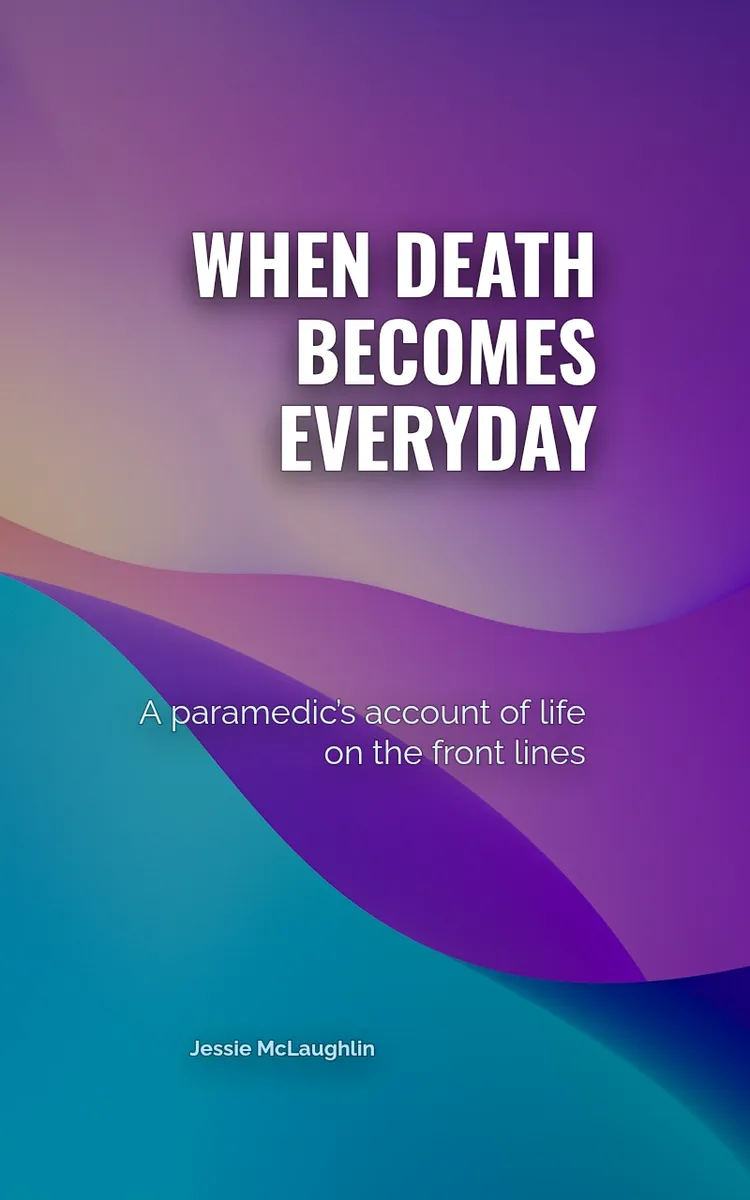
"When Death Becomes Everyday" is a nonfiction book by Jessie McLaughlin with 40 chapters and approximately 98,917 words. The emotional realities of a firefighter-paramedic’s daily encounters with death.
This book was created using Inkfluence AI, an AI-powered book generation platform that helps authors write, design, and publish complete books.
Frequently Asked Questions
What is "When Death Becomes Everyday" about?
The emotional realities of a firefighter-paramedic’s daily encounters with death
How many chapters are in "When Death Becomes Everyday"?
The book contains 40 chapters and approximately 98,917 words. Topics covered include The First Fatal Call, The Station's Morning After, Learning the Unspoken Protocol, A Call in the Flooded Underpass, and more.
Who wrote "When Death Becomes Everyday"?
This book was written by Jessie McLaughlin and created using Inkfluence AI, an AI book generation platform that helps authors write, design, and publish books.
Write your own nonfiction book with AI
Describe your idea and Inkfluence writes the whole thing. Free to start.
Start writingCreated with Inkfluence AI


