
Read the first chapter
The whole of chapter one, free. About 8 min. Turn the pages with the arrows, your keyboard, or a swipe.
Chapter 1
Choose the Right Training Rewards
Why Reward Choice Controls Your Dog’s Attention
What happens when your dog ignores a dry biscuit, drops a toy halfway through a game, or turns away from every reward you offer? The problem may not be stubbornness. Your reward may simply be too weak, too large, too difficult to eat, or poorly matched to the training setting.
A useful reward gives your dog a clear reason to repeat the behavior you want. During a quiet practice session at home, a small piece of kibble may work well. Outside, where squirrels, smells, bicycles, and people compete for attention, your dog may need soft chicken, cheese, or a favorite tug toy. Choosing the right reward solves a common training problem: your dog understands the exercise but stops responding when the surroundings become more exciting.
The Value Ladder Reward System helps you compare rewards instead of guessing. You will learn how to test treats and toys, place them at different value levels, control portion size, and change rewards when your dog’s motivation changes. By the end, you should know what to carry for a short “sit” session, what to save for difficult distractions, and how to keep rewards useful without overfeeding your dog.
Ask yourself one practical question before each session: “What reward would make this behavior worth repeating right now?” That question keeps your choice connected to the task.
Build Your Value Ladder
The Value Ladder Reward System ranks rewards from ordinary to exceptional. The lowest level handles easy practice. The highest level helps your dog work around strong distractions or attempt a behavior that still feels difficult. A reward’s value depends on the dog, the situation, and the task - not on its price or your opinion of it.
Start by preparing five to seven possible rewards. Include food and play if your dog enjoys both. Cut food into pieces no larger than a pea. For a small dog, use even smaller pieces. A reward should take one or two seconds to eat so your dog can return to training quickly. For toys, choose items that your dog can safely carry, chase, tug, or chase without becoming too excited to listen.
Use these steps to build the ladder:
1. List the available rewards. Write down regular kibble, commercial training treats, cooked chicken, cheese, a squeaky toy, and a tug toy if your dog likes them. Listing options prevents you from relying on one reward that may not work everywhere.
2. Test each reward in a quiet room. Offer one item at a time and watch your dog’s response. A dog that quickly turns toward the reward, takes it gently, and stays ready for another repetition shows strong interest. A slow sniff or refusal places that item lower on the ladder.
3. Rank the rewards from low to high value. Your ladder might place kibble at level one, soft liver treats at level two, chicken at level three, and a tug toy at level four. Ranking helps you match reward strength to difficulty.
4. Test the ladder around distractions. Repeat the test near the front door, in the yard, or on a quiet sidewalk. A reward that works inside may lose value outside. This check matters because training difficulty changes with the environment.
5. Assign each level a job. Use low-value rewards for easy behaviors, medium rewards for normal practice, and high-value rewards for difficult distractions or especially important repetitions. Saving the best reward keeps it special and prevents your dog from expecting chicken for every simple “sit.”
Food often works well because your dog can swallow it quickly. Soft treats usually work better than hard biscuits during fast practice because they require less chewing. Strong-smelling foods can help outdoors, but rich foods may upset some dogs’ stomachs. Use plain cooked meat without bones, seasoning, onion, or garlic. If your dog has allergies, a medical condition, or a special diet, ask your veterinarian which treats fit safely.
Toys can serve as rewards when your dog prefers movement to food. A short tug game may reward a focused “come” better than a treat. Keep toy play brief - perhaps five to ten seconds - then pause and offer the next cue. Choose toys that you can control and that your dog cannot easily shred or swallow. Never use a damaged toy as a training reward.
Avoid waving the reward in your dog’s face before every cue. That can teach your dog to follow the food instead of listening to the word. Keep treats in a pouch or closed hand, give the cue, wait for the behavior, and then deliver the reward. The reward should follow the correct action. Your practical takeaway: build a small, tested ladder and match its levels to the difficulty your dog faces.
Put the Ladder to Work
Consider a 20-minute evening session with a dog learning “come” in a fenced yard. The dog responds reliably indoors but pauses when birds land near the fence. A useful reward plan might look like this:
1. Prepare the rewards. Place 25 pea-sized pieces of kibble in a treat pouch, 10 pea-sized pieces of cooked chicken in a separate container, and a six-inch fleece tug toy beside the door. The small portions keep the session controlled, while the toy adds a non-food option.
2. Start with an easy warm-up. Ask for “sit” three times indoors and reward each response with kibble. Expect the dog to respond within two seconds. This confirms that the dog is ready and lets you begin with a low-level reward.
3. Move to the quiet end of the yard. Ask for “come” from a distance of six feet. Give the cue once, step backward, and reward the dog with kibble when the dog reaches you. Repeat five times. If the dog turns promptly on at least four repetitions, continue.
4. Increase the challenge gradually. Move to 10 feet and practice near, but not directly beside, the bird area. Use chicken for each successful return because the distraction raises the reward needed. If the dog ignores the cue twice in a row, move farther from the birds instead of repeating the command.
5. Add a toy reward. After one quick return, play tug for five seconds. Stop while the dog still wants more, then ask for “sit” before restarting the game. This teaches the dog that calm behavior keeps the game going.
6. Finish with an easy success. Return indoors and ask for “sit” or “touch.” Use kibble once, then end the session. A simple final repetition helps prevent the dog from finishing on confusion or repeated failure.
A reasonable outcome after this session is not perfect recall beside birds. The expected result is five quick indoor responses, several successful yard returns, and a clear sign of where the distraction becomes too difficult. Record the reward, distance, and setting in a notebook. For example: “Tuesday, 6:30 p.m. - yard, 10 feet, chicken worked near birds; kibble did not.” This note helps you choose wisely next time.
Use this quick checklist before practice:
• [ ] Cut food into pea-sized pieces or smaller. - [ ] Pack at least two reward levels. - [ ] Bring a safe toy if your dog enjoys play. - [ ] Start where your dog can succeed. - [ ] Give the cue once, then reward the correct behavior. - [ ] Use the highest-value reward only for the hardest work. - [ ] Watch for stomach upset, tiredness, or loss of interest. - [ ] Record which reward worked in each location.
Ask yourself after the session: “Did my dog fail because the behavior was unclear, or because the reward and difficulty did not match?” If your dog performs well indoors but struggles outside, lower the distraction, raise the reward, or both. Your takeaway: change one training condition at a time so you can tell what actually helped.
Fix Reward Problems Before They Grow
The reward is too large or too rich
Large treats slow the session and can fill your dog before practice ends. Rich foods may also cause loose stool or vomiting. A dog that feels unwell will not work eagerly, no matter how valuable the food seemed at first.
Do this: Cut soft treats into pea-sized pieces, use plain cooked meat in small amounts, and count the pieces before training. Reduce your dog’s regular meal slightly only after checking with your veterinarian, especially for a puppy, senior dog, or dog with a medical condition.
Not this: Hand over a whole biscuit, a large slice of cheese, or several pieces of sausage for every response.
The reward works at home but fails outdoors
Your dog may value the treat, yet the environment may offer stronger competition. A rabbit, passing dog, or busy playground can overpower a low-level reward.
Do this: Test the reward near mild distractions first. Use chicken or a toy for difficult outdoor work, and move farther from the distraction if your dog cannot eat or play. Increase difficulty in small steps.
Not this: Stand beside a barking dog, repeat “come” five times, and keep offering the same kibble after your dog stops responding.
The toy creates wild behavior
A toy can motivate your dog, but fast movement and squeaking may produce jumping, grabbing, or barking. The reward then interrupts training instead of strengthening it.
Do this: Use a calm release routine. Hold the toy still, wait for four paws on the floor, ask for “sit,” and start a five-second game. Put the toy away if your dog cannot settle after play.
Not this: Swing the toy constantly, let your dog bite your hands, or continue the game after your dog loses control.
A reward should make the right behavior easier to repeat, not make the session harder to manage. Keep your ladder flexible: kibble may move up when your dog is hungry and relaxed, while chicken may move down after your dog has eaten a full meal. Recheck your choices as the setting, time, and task change. When you match reward value to real difficulty, each practice session gives your dog a clearer path toward reliable obedience.
End of chapter one. 7 more chapters in the full book.
Swipe or use the arrows to turn the page


What's inside: 8 chapters
- 1. Choose the Right Training Rewards
- 2. Set Up a Distraction-Free Training Space
- 3. Teach Sit Using Lure and Reward
- 4. Train Stay with Gradual Distance
- 5. Master Recall with the Come Game
- 6. Leash Train Loose-Leash Walking
- 7. Stop Jumping with Four-Second Manners
- 8. Proof Commands in Real-World Situations
About this book
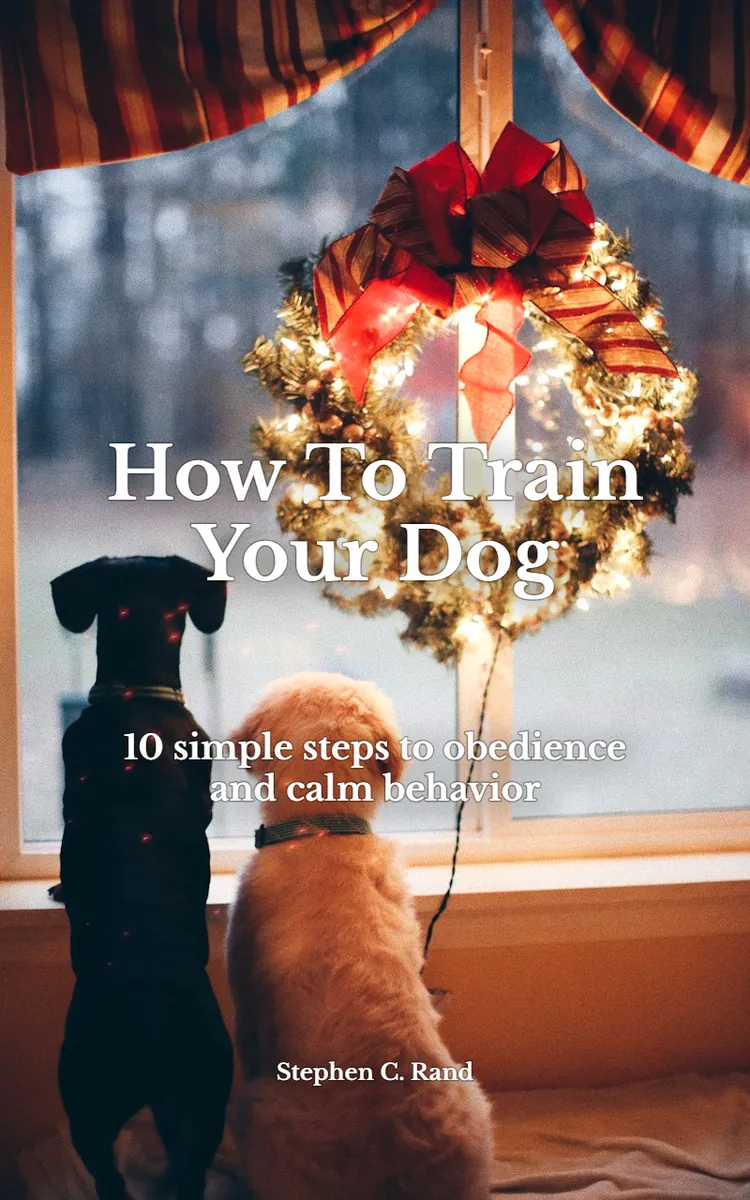
"How To Train Your Dog" is a how-to guide book by Stephen C. Rand with 8 chapters and approximately 14,348 words. Dog obedience training with step-by-step methods.
This book was created using Inkfluence AI, an AI-powered book generation platform that helps authors write, design, and publish complete books. It was made with the AI Ebook Generator.
Frequently Asked Questions
What is "How To Train Your Dog" about?
Dog obedience training with step-by-step methods
How many chapters are in "How To Train Your Dog"?
The book contains 8 chapters and approximately 14,348 words. Topics covered include Choose the Right Training Rewards, Set Up a Distraction-Free Training Space, Teach Sit Using Lure and Reward, Train Stay with Gradual Distance, and more.
Who wrote "How To Train Your Dog"?
This book was written by Stephen C. Rand and created using Inkfluence AI, an AI book generation platform that helps authors write, design, and publish books.
How can I create a similar how-to guide book?
You can create your own how-to guide book using Inkfluence AI. Describe your idea, choose your style, and the AI writes the full book for you. It's free to start.
Write your own how-to guide book with AI
Describe your idea and Inkfluence writes the whole thing. Free to start.
Start writingCreated with Inkfluence AI


