

Read the first chapter
The whole of chapter one, free. About 8 min. Turn the pages with the arrows, your keyboard, or a swipe.
Chapter 1
Charlie at the Community Fair
The blue-and-white fair banner had come loose from one of the maple trees and snapped above Walter’s head like a small flag of surrender.
He tightened his grip on Charlie’s carrier and stopped at the mouth of Maple Street. Beyond the banner, the neighborhood fair filled the road with folding tables, striped awnings, and people moving in every direction. A brass band played somewhere near the fire station. Children darted between grown-ups. A dog barked at a balloon.
Charlie gave a low, uncertain meow from inside the carrier.
“I know,” Walter said. “It looks crowded.”
For years, Walter had managed his days without asking anyone to make room for him. After the divorce, he had learned to shop for one, cook for one, and fix small problems before they became large ones. He had also learned that independence could become a habit so strong it felt like a locked door.
That morning, he had decided to open it a crack.
He had packed Charlie’s water dish, a small towel, and a few treats into a canvas bag. The carrier rested against his leg, warm and solid. Bringing Charlie had seemed sensible. Charlie was company, and a cat was easier to talk about than a man’s divorce or the empty chair at his kitchen table.
Walter stepped onto the fairground.
The narrow path between the tables left barely enough room for two people to pass. A woman carrying lemonade brushed his shoulder. Someone behind him said, “Excuse me,” and a child’s wooden train clattered across the pavement. Charlie shifted inside the carrier, making the metal door rattle.
“Easy,” Walter murmured. “We’ll find a quiet spot.”
His first objective was simple: stay for half an hour and speak to one person. Not become popular. Not join a committee. Just make one small connection and go home knowing he had tried.
At the nearest table, a handwritten sign offered homemade jam. The woman behind it smiled at him.
“Lovely cat,” she said, leaning toward the carrier. “Is he friendly?”
“Usually,” Walter said. “He has strong opinions about crowds.”
“So do I.” She laughed, but a man reaching for a jar bumped the table. The jars clinked sharply. Charlie pressed himself against the back of the carrier.
Walter moved on.
A gust of wind caught a paper tablecloth nearby. It snapped like a whip. Charlie cried out, and Walter stopped so quickly that a teenager behind him nearly walked into his back.
“Sorry,” Walter said.
“No problem,” the teenager replied, already turning away.
Walter looked down through the carrier’s grated door. Charlie’s green eyes were wide. His ears had flattened.
“We can leave,” Walter whispered.
The thought brought relief, followed by disappointment. He had not even reached the center of the fair. Going home now would be easy, and easy had carried him through many years. But he had promised himself one conversation.
Near the community garden table, a woman in a pale yellow cardigan was arranging seed packets in neat rows. She had silver hair cut just below her ears and wore a small brass pin shaped like an open book.
“Your cat seems to be having a more difficult morning than you are,” she said.
Walter glanced at her. “That obvious?”
“Only because I have spent forty years noticing when people want to leave a room.”
He smiled despite himself. “Are you a mind reader?”
“Retired librarian.” She held out a hand. “Miriam Vale.”
“Walter.”
Miriam looked at the carrier but did not touch it. “And this must be Charlie.”
Charlie answered with another unhappy sound.
“He’s not usually this dramatic,” Walter said.
“Neither are most people at fairs.” Miriam lowered her voice. “The music is rather loud today.”
“It is.”
A burst of applause rose from the far end of the street. Charlie twisted inside the carrier, and the carrier swung against Walter’s knee. He caught it with both hands.
Miriam’s expression changed from amusement to concern. “Would it help to step behind the garden tent? It’s quieter there.”
Walter hesitated. The space behind the tent was narrow, but he could see a patch of shade and a bench beside the fence. He nodded.
“Lead the way.”
Miriam moved slowly, making sure he had room. Walter followed, holding the carrier close to his chest. Two people squeezed past them, and one man’s shopping bag caught on the carrier handle.
“Sorry,” Walter said again.
The man glanced back. “These paths are too tight.”
“That’s what I’ve been thinking,” Walter replied.
Behind the tent, the fair softened. The band became a distant thump. The shade was cool beneath the maple branches, and the wooden bench felt steady when Walter sat down. He placed the carrier beside his shoes and opened the small side flap.
Charlie did not come out. He pushed his nose toward the opening, then retreated until only his eyes showed.
Miriam sat at the far end of the bench.
“He has chosen his hiding place,” she said.
“He’s good at that.”
“Most cats are. Charlie may simply be wiser than the rest of us.”
Walter took a treat from the canvas bag and held it near the opening. Charlie sniffed but refused it.
“That is serious,” Walter said.
“Perhaps he wants a better offer.”
“He usually accepts chicken.”
“Then I hope no one has brought a chicken to the fair.”
Walter laughed. It came out rusty, as though he had not used it in a while. Miriam smiled, and for a few moments they listened to the muffled fair together.
She pointed toward the carrier. “Do you bring him everywhere?”
“No. This is his first fair.”
“And your first?”
Walter looked at the crowd beyond the tent. “My first in a long time.”
Miriam did not press him. That kindness made it easier to speak.
“I’ve lived alone since my divorce,” he said. “I’m used to making my own plans. Lately, though, the plans have started getting smaller.”
Miriam folded her hands in her lap. “Small plans are not always bad plans.”
“No. But they can become a little too quiet.”
Charlie shifted inside the carrier. Walter rested his fingers against the metal door, and the cat leaned into them from the other side.
Miriam watched the movement. “He trusts you.”
“I’m not sure he has much choice.”
“Trust often begins with having someone stay nearby when the room is frightening.”
Walter felt the words settle between them. He had expected to talk about the cat. He had not expected to hear himself described so accurately.
From the fair came a sudden squeal of feedback, followed by a cheer. Charlie sprang against the carrier door. The latch clicked.
Walter stood at once.
“Charlie,” he said.
The carrier rocked toward the edge of the bench. Walter caught it before it fell, but the canvas bag slipped from his shoulder. Treats scattered beneath the bench. Charlie clawed at the door, frantic now.
Miriam rose. “The latch is still closed.”
“I know.” Walter knelt and checked it with shaking fingers. “I know, but he thinks he’s trapped.”
Charlie’s cries grew sharper.
Walter had two choices. He could carry the frightened cat back through the fair, or he could find another way out. He looked toward the alley behind the garden tent. A narrow gate stood open beside the community center, leading to a quieter side street.
“Miriam,” he said, “is that gate open to the other side?”
“It should be. I can check.”
“Please.”
She hurried through the gate while Walter gathered the treats and held the carrier against his chest. Charlie’s body trembled beneath the towel. Walter could feel each movement through the plastic shell.
Miriam returned a moment later. “It leads to Elm Avenue. Almost no one is there.”
Walter nodded. “Then that’s where we’re going.”
He waited until the path was clear, then carried Charlie through the gate. The noise faded with every step. On Elm Avenue, the only sounds were a lawn mower in the distance and the soft scrape of Walter’s shoes.
He set the carrier on a low stone wall and opened the door. Charlie remained inside for several seconds. Then he crept out, stretched his front legs, and pressed his head against Walter’s wrist.
“There you are,” Walter said.
Charlie rubbed against him, then tucked himself beneath Walter’s arm.
Miriam came through the gate, carrying the fallen canvas bag. “He has recovered enough to complain.”
“He’s very dependable that way.”
“He might prefer a smaller gathering.”
Walter looked at her. “Do you know one?”
“There’s a garden gathering at my house next Thursday afternoon. Only a few neighbors. Tea, chairs, no band, and no balloons.” She reached into her cardigan pocket and pulled out a small card. “You and Charlie could come for half an hour. If either of you dislikes it, you may leave.”
Walter accepted the card. Her name and address were written in careful blue ink.
“I don’t want to impose.”
“You wouldn’t. I invited you.”
Charlie placed one paw on the edge of the carrier and looked at Miriam.
Miriam crouched, keeping her hand still until he leaned forward to sniff it. “Hello, Charlie. I’m Miriam.”
Charlie sniffed her fingers, then retreated beneath Walter’s arm.
“A cautious fellow,” she said.
“He’ll remember you.”
“I hope so.”
Walter slid the card into his wallet. The fair continued behind them, bright and noisy and too much for Charlie. Yet he had stayed longer than he meant to. He had spoken to someone without rehearsing every sentence first. More importantly, someone had offered him another place to go.
“Thursday,” he said.
“Thursday,” Miriam agreed.
Walter lifted the carrier. Charlie settled inside, still tense but no longer crying. As Walter started toward home, the fair banner snapped again above the maple trees. This time it sounded less like surrender and more like a signal.
He had found a friend, perhaps. Charlie had found a reason to hide.
For the moment, both were enough.
End of chapter one. 29 more chapters and about 66,216 words in the full book.
Swipe or use the arrows to turn the page


What's inside: 30 chapters
- 1. Charlie at the Community Fair
- 2. Miriam’s Quiet Invitation
- 3. The Missing Walking Route
- 4. Charlie at the Bus Depot
- 5. Walter’s Empty Carrier
- 6. Rain Cancels the Walk
- 7. Who Changed the Meeting Place?
- 8. Charlie at the Café Door
- 9. The Door Walter Avoided
- 10. Charlie’s Collar Comes Loose
- 11. The Number on Charlie’s Tag
- 12. Charlie at the Clinic
- 13. Walter’s Sunday Table
- 14. The Lunch That Never Started
- 15. The Note Beneath the Door
- 16. Charlie at the Shared Room
- 17. The Help Walter Accepts
- 18. The Elevator Stops Again
- 19. Who Can Repair the Lift?
- 20. Charlie at the Pharmacy
- 21. Walter’s Unanswered Call
- 22. The Power Goes Out
- 23. The Night Walter Stayed In
- 24. The Message Walter Misread
- 25. Charlie at the Library Steps
- 26. The Courtyard Potluck
- 27. Walter Leaves Charlie Home
- 28. Charlie Meets Helen’s Dog
- 29. The Invitation Walter Almost Declined
- 30. A Table Kept for Walter
About this book
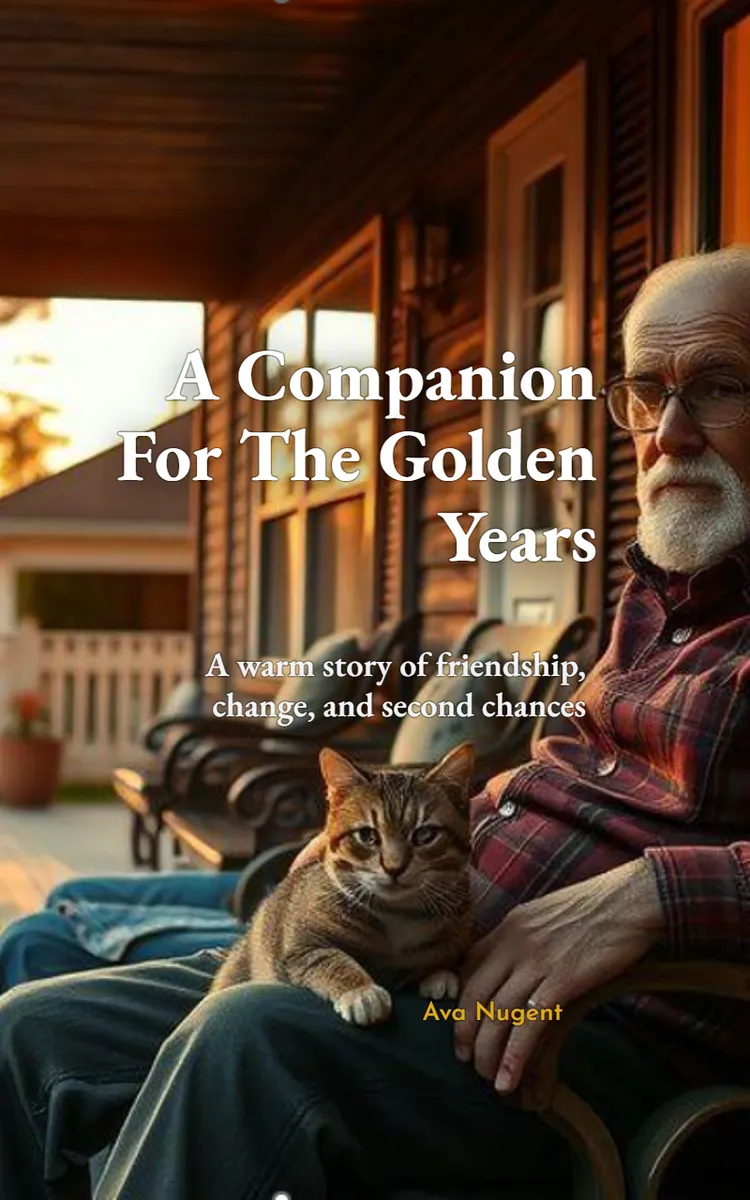
"A Companion For The Golden Years" is a fiction book by Ava Nugent with 30 chapters and approximately 66,216 words. Walter and his cat Charlie explore companionship through new friendships and mishaps.
This book was created using Inkfluence AI, an AI-powered book generation platform that helps authors write, design, and publish complete books. It was made with the AI Novel Writer.
Frequently Asked Questions
What is "A Companion For The Golden Years" about?
Walter and his cat Charlie explore companionship through new friendships and mishaps
How many chapters are in "A Companion For The Golden Years"?
The book contains 30 chapters and approximately 66,216 words. Topics covered include Charlie at the Community Fair, Miriam’s Quiet Invitation, The Missing Walking Route, Charlie at the Bus Depot, and more.
Who wrote "A Companion For The Golden Years"?
This book was written by Ava Nugent and created using Inkfluence AI, an AI book generation platform that helps authors write, design, and publish books.
How can I create a similar fiction book?
You can create your own fiction book using Inkfluence AI. Describe your idea, choose your style, and the AI writes the full book for you. It's free to start.
Write your own fiction book with AI
Describe your idea and Inkfluence writes the whole thing. Free to start.
Start writingCreated with Inkfluence AI


