

Read the first chapter
The whole of chapter one, free. About 3 min. Turn the pages with the arrows, your keyboard, or a swipe.
Chapter 1
When the Mirror Becomes a Verdict
Opening Inspiration
> “A mirror can show you a feature, but it cannot tell you what that feature means.” - Worth-Truth Reframe
A small detail can suddenly take over the whole picture: a scar, thinning hair, acne, a crooked tooth, a body shape that doesn’t match your hopes. The feature may be real. The pain may be real, too. But shame often adds a verdict that the mirror never actually said.
Reflection
You notice one thing, and your mind quickly turns it into everything. “My skin is breaking out” becomes “I look terrible.” “My stomach is larger than I want” becomes “I’m unattractive.” “My hair is changing” becomes “I’m losing what makes me valuable.” The visible concern may be specific, but the conclusion spreads across your whole identity.
That leap matters. A feature is something you can observe. A verdict is a meaning attached to it. The mirror may show a scar on your cheek; shame whispers that people will reject you. It may show a gap between your teeth; shame declares that you’re embarrassing. It may show a body that has changed after illness, pregnancy, aging, or stress; shame insists that you’re less worthy now.
The feature is not the verdict. That distinction doesn’t require pretending you like what you see. It doesn’t ask you to deny grief, frustration, insecurity, or the practical effects of appearance-based judgment. It simply slows the thought down enough to separate what is visible from what shame has concluded.
The Worth-Truth Reframe gives you a steady way to do that. First, identify the appearance lie. What are you telling yourself this feature proves? Next, look at its source. Did the thought come from a cruel comment, comparison, advertising, social media, family criticism, or years of repeating the same sentence internally? Then notice the consequences. Does the thought make you hide, avoid photographs, cancel plans, check the mirror repeatedly, or treat yourself harshly?
Finally, replace the lie with truth grounded in Scripture. Genesis 1:27 says that human beings are made in the image of God. Your dignity doesn’t begin with symmetry, clear skin, a certain size, or other people’s approval. Romans 8:1 speaks directly against condemnation for those who are in Christ. Ephesians 1:3-8 describes your standing as rooted in God’s grace, not in a polished appearance or a successful attempt to control every feature.
This isn’t a trick for forcing yourself to feel attractive every morning. Some mornings, you may still dislike what you see. The deeper truth is more secure than a good feeling: your appearance can affect your emotions without having authority over your worth.
That truth also helps you respond wisely. You can care for your skin without treating it as a moral failure. You can choose clothing that helps you feel comfortable without believing the right outfit will make you acceptable. You can pursue medical or dental care without turning correction into proof that you were unworthy before. Care and condemnation are not the same thing.
Shame tends to make everything sound final. “This is who I am.” “Nothing will change.” “No one could love me like this.” The Worth-Truth Reframe opens a little space. It lets you say, “This is a feature I’m struggling with. It matters to me, but it does not define the whole of me.” That sentence may feel modest, but it interrupts the habit of turning one detail into a complete identity.
Today's Practice
1. Complete a Worth-Truth Reframe. Write four short lines: “The feature I’m focused on is…”; “I’m tempted to believe it means…”; “This thought may have been shaped by…”; “God’s truth says…” For the final line, use Genesis 1:27, Romans 8:1, or Ephesians 1:3-8, and write the verse’s meaning in your own words.
2. Use the two-column mirror check. Draw a line down a page. On the left, record only what is visible and factual, such as “There is a scar near my eyebrow.” On the right, record the verdict shame adds, such as “I’m unacceptable.” Read the right column slowly, then answer it with: “That is a conclusion, not a fact.”
Closing Thought
One feature may draw your attention, but it cannot define the whole person God has made and graciously received. Today, I can notice what I see without surrendering my worth to it.
End of chapter one. 5 more chapters and about 4,700 words in the full book.
Swipe or use the arrows to turn the page


What's inside: 6 chapters
- 1. When the Mirror Becomes a Verdict
- 2. Name the Loop, Not Yourself
- 3. Truth That Does Not Dismiss Pain
- 4. Choose One Brave Next Step
- 5. Pray Honestly, Seek Help Wisely
- 6. Build a Life That Holds
About this book
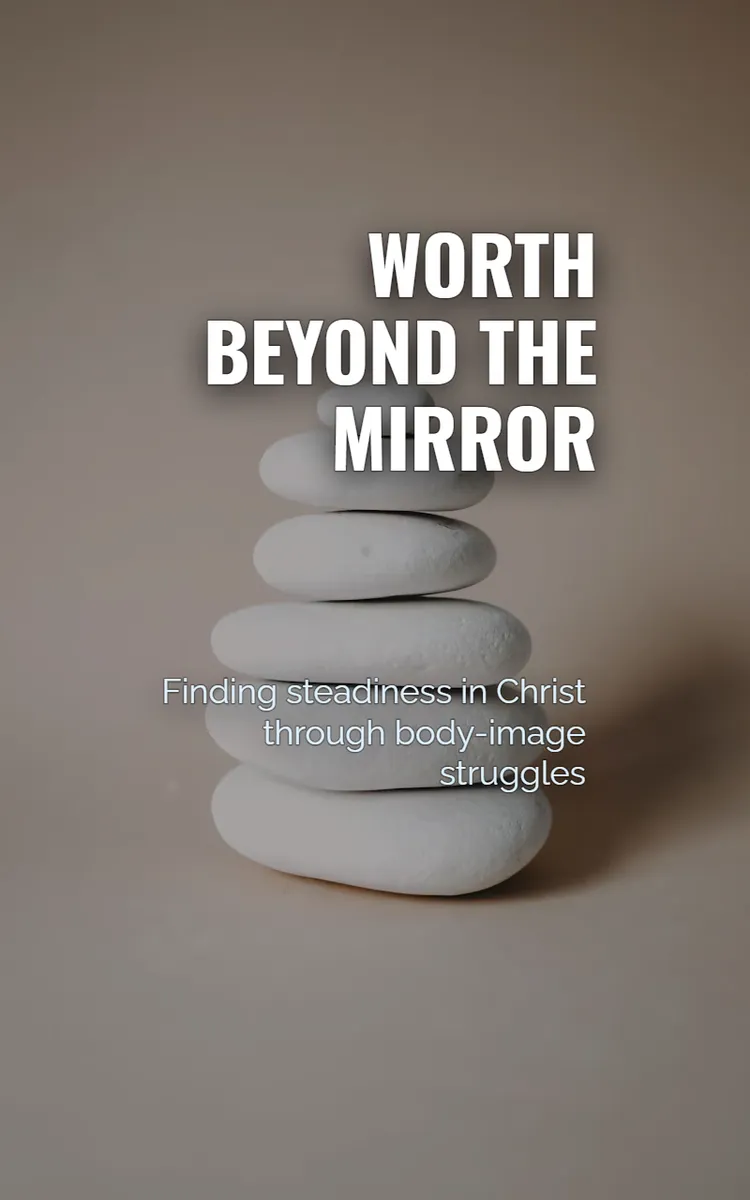
"Worth Beyond the Mirror" is a devotional book by Drs. Lee & Laurie Martin with 6 chapters and approximately 4,700 words. A gentle, Scripture-grounded devotional that helps readers recognize appearance-based shame, loosen its grip, and practice a life shaped by worth received from God..
This book was created using Inkfluence AI, an AI-powered book generation platform that helps authors write, design, and publish complete books. It was made with the AI Devotional Book Generator.
Frequently Asked Questions
What is "Worth Beyond the Mirror" about?
A gentle, Scripture-grounded devotional that helps readers recognize appearance-based shame, loosen its grip, and practice a life shaped by worth received from God.
How many chapters are in "Worth Beyond the Mirror"?
The book contains 6 chapters and approximately 4,700 words. Topics covered include When the Mirror Becomes a Verdict, Name the Loop, Not Yourself, Truth That Does Not Dismiss Pain, Choose One Brave Next Step, and more.
Who wrote "Worth Beyond the Mirror"?
This book was written by Drs. Lee & Laurie Martin and created using Inkfluence AI, an AI book generation platform that helps authors write, design, and publish books.
How can I create a similar devotional book?
You can create your own devotional book using Inkfluence AI. Describe your idea, choose your style, and the AI writes the full book for you. It's free to start.
Write your own devotional book with AI
Describe your idea and Inkfluence writes the whole thing. Free to start.
Start writingCreated with Inkfluence AI


