

Read the first chapter
The whole of chapter one, free. About 17 min. Turn the pages with the arrows, your keyboard, or a swipe.
Chapter 1
Practical Tools and Gentle Checklists
The pages that follow are here for the days when thinking feels difficult and you need something simple to reach for. You do not have to use every tool, complete every check or approach these exercises in a particular order. Take what feels useful, leave what does not, and adjust the wording so it sounds like you. A checklist cannot measure the whole of your experience, and a plan cannot prevent every hard moment. These are gentle supports, not tests you can pass or fail. You might print a page, keep a copy beside your bed, or return to one small section when an old reaction catches you off guard.
A quick survival mode self-check
There is no pass or fail mark here. This is simply a way of noticing whether your body and mind may still be living as though danger is close. You may recognise yourself in some statements and not at all in others. You may also find that your answers change from week to week. That is useful information, not inconsistency.
Read each statement slowly and mark often, sometimes or rarely. Try to answer from your usual experience rather than from your best day or your worst day.
• I spend a lot of time going over conversations, messages or decisions in my mind.
• I think through everything that might go wrong, even when nothing is currently wrong.
• I notice small changes in people’s voices, faces or moods.
• I feel responsible for keeping other people calm, happy or comfortable.
• I say yes quickly, then feel tired, resentful or trapped afterwards.
• I feel guilty when I say no, ask for help or put my needs first.
• I apologise automatically, even when I have done nothing wrong.
• I avoid difficult conversations because conflict feels dangerous or unbearable.
• I find it hard to know what I want until I know what everybody else wants.
• I check messages, doors, plans, accounts or other details repeatedly for reassurance.
• I expect kindness to come with a price, a demand or a later disappointment.
• I find it difficult to relax, even when I have time and privacy.
• Quiet moments make me restless, uneasy or watchful.
• I feel numb, disconnected or unable to reach my emotions.
• I prepare myself for bad news, rejection or criticism before anything has happened.
• I struggle to trust my own judgement and look to others to tell me what to do.
• I take other people’s disappointment or anger as proof that I have done something wrong.
• I keep my feelings, opinions or needs hidden to avoid upsetting someone.
• I feel that my worth depends on being useful, agreeable or strong.
• I carry on functioning while feeling frightened, exhausted or far away from myself.
Now look at the pattern rather than adding up a score. A few “often” answers may point to one particular area of strain. A larger number may suggest that your alarm system is working harder than the present situation requires. That does not tell you what happened to you, and it is not a diagnosis. It is only a gentle indication that some protective habits may still be taking up a great deal of space.
Notice which statements brought the strongest reaction. Perhaps you felt a familiar tightening when you read about guilt, conflict or trusting kindness. Perhaps you wanted to argue with one of the statements and say, “That is just being responsible.” Perhaps you felt nothing at all. All of these responses are worth noticing. They may show you where survival has become so ordinary that it is difficult to see from the inside.
Choose one statement that feels especially familiar and complete these sentences:
• When this happens, I usually feel…
• My body tends to…
• I am afraid that…
• This response may once have helped me by…
• Today, one small thing I could try is…
For example, you might write: “When I say yes without thinking, I feel tight and worried. My body rushes ahead before I have decided. I am afraid the other person will be angry or leave me. Saying yes may once have reduced conflict. Today, I could say, ‘Let me check and get back to you,’ before I answer.” The aim is not to force yourself into a brave response. It is to create the smallest possible pause between the old alarm and your next choice.
If this check brings up strong memories, panic, numbness or a feeling that you cannot manage alone, stop and do something grounding and ordinary. Look around the room, feel your feet on the floor, drink some water or contact someone safe. You do not have to continue with the exercise. A qualified therapist or other appropriate professional can help you explore these patterns with care, particularly if your past includes abuse, ongoing danger or severe distress.
Whatever you have noticed, please do not use it as another reason to criticise yourself. These responses developed because some part of you was trying to protect you. Seeing them clearly is not an accusation. It is the beginning of having more choice.
Grounding ideas for anxious or overwhelmed moments
When anxiety rises, it can feel as though you need to solve everything immediately. Your thoughts may race ahead, your body may tighten and your attention may narrow around whatever seems most urgent. In those moments, the most helpful grounding idea is often a simple one: you do not have to work out your whole life while your alarm system is active. First, help yourself come back to this minute.
Look around and name, quietly or aloud, five ordinary things you can see. Choose details rather than general descriptions: the blue edge of a mug, a mark on the wall, the shape of a lampshade, sunlight on the floor. Then notice four things you can feel, such as your feet inside your shoes, the chair supporting you, the weight of a jumper on your shoulders or the warmth of a cup in your hands. Listen for three sounds. Notice two smells, even if they are faint. Finally, name one taste, or take a sip of water and pay attention to it. You are not trying to make yourself feel wonderful. You are giving your mind present-day information.
If counting feels too much like a task, try describing the room as if you were telling someone who could not see it. “I am sitting at the kitchen table. There is a window on my left. The curtains are open. The floor is solid beneath my feet.” This may sound plain, but plain is useful when fear has made everything feel urgent. You can add, “It is Tuesday afternoon. I am at home. That conversation happened earlier; it is not happening now.” Use words that are true and believable. You do not need to promise yourself that nothing difficult will ever happen again.
Your body may need movement rather than stillness. If you are able, press both feet into the floor for a few seconds, then release. Push your hands gently together, notice the effort, and let go. Roll your shoulders slowly or walk from one room to another while noticing each step. You might hold something with a clear texture, such as a towel, a knitted sleeve or a smooth stone. These small actions can remind your body that it has choices. If closing your eyes, breathing deeply or sitting still makes you feel worse, do not force it. Grounding should support you, not become another situation in which you have to perform correctly.
Sometimes the most useful grounding comes through contact with something familiar. Wrap yourself in a cardigan, place a warm wheat bag across your shoulders, wash your hands in comfortably warm water or make a drink and take it slowly. Put on a radio programme with a steady voice, sit near a pet if that feels soothing, or hold a cushion against your chest. Comfort is not childish or indulgent. When you have been frightened for a long time, ordinary comfort can be practical care.
For anxious thoughts that keep pulling you into the future, try giving them a small container. Write the worry on a piece of paper and say, “I will return to this at seven o’clock,” or choose another realistic time later in the day. You are not denying the concern. You are telling your mind that it does not need to keep shouting in order to be heard. When the worry returns, you can repeat, “Not now. I have made a time for this.” If the matter requires action, write down the next single step rather than the entire list of possible outcomes.
You may also find it helpful to keep a small grounding card in your handbag, beside the bed or near your computer. Write a few sentences in your own language:
• I am having a frightened moment, and frightened moments pass.
• I am allowed to pause before I respond.
• I can check what is happening now before I believe what fear predicts.
• I do not have to make another person comfortable immediately.
• I can ask for help if I need it.
Choose only the words that feel honest. A grounding practice may lower the intensity by one point rather than removing it altogether. That still counts. If you are in immediate danger, grounding is not a substitute for getting somewhere safe or contacting emergency services. And if grounding repeatedly brings up distressing memories, panic or a sense of disconnection, it would be wise to practise with support from a qualified professional. The aim is not to manage everything alone. It is to give yourself a steadier bridge between the first wave of alarm and the next choice you make.
Boundary phrases you can borrow and adapt
Having a few words ready can make a boundary easier to hold, especially when your mind goes blank or your old habit is to explain yourself until the other person agrees. You do not need to sound firm in a particular way, and you do not have to give a long account of your reasons. A boundary is not a case you must win. It is information about what you will do.
For time and energy, you might say:
• “I am not able to take that on at the moment.”
• “I cannot commit to that.”
• “I need to check my diary before I answer.”
• “I can help for half an hour, but I cannot stay longer.”
• “I am keeping this weekend quiet.”
• “That does not work for me.”
Notice how little these sentences explain. If you are used to people questioning your needs, this may feel abrupt. It is not rude to give an honest answer without listing every reason. You are allowed to have limits simply because your time, health or energy matters.
For conversations that feel too personal, you could try:
• “I would rather not discuss that.”
• “That is private.”
• “I am not ready to talk about it.”
• “I have answered that question.”
• “I understand you are curious, but I am choosing not to go into it.”
• “Let us talk about something else.”
Some people will accept a limit the first time. Others may ask again, joke about it or suggest that you are being secretive. You do not have to be drawn into proving that your privacy is reasonable. You can repeat yourself calmly: “As I said, I am not discussing that.” Repeating a boundary is not being difficult. It is refusing to let pressure turn your answer into a negotiation.
When someone is speaking to you in a way that feels disrespectful, try to describe the behaviour rather than attacking the person:
• “I am willing to talk when we are both calm.”
• “I will not continue this conversation while I am being shouted at.”
• “Please do not speak to me like that.”
• “If the insults continue, I will leave.”
• “I need a break. We can return to this tomorrow.”
• “I am listening, but I will not accept threats.”
A boundary is strongest when it includes what you will do. You cannot make another adult stop shouting, apologise or become considerate. You can decide to end the call, leave the room, stop replying or seek support. If there is a risk of violence or retaliation, your safety comes first. You do not have to announce a boundary in person or confront someone alone. A qualified professional or a specialist support service can help you plan safely.
For family requests, money, belongings or repeated demands, these phrases may help:
• “I am not lending money.”
• “Please ask before taking my things.”
• “I will not be able to host this time.”
• “I have made my decision.”
• “That is something you will need to arrange yourself.”
• “I am not discussing my choice any further.”
You may prefer softer wording, particularly while you are practising. “I am afraid I cannot” or “I need to say no this time” can be a useful beginning. Softer does not have to mean unclear. Be careful with adding “maybe later” or “I am sorry” when you do not mean it, as this can leave the door open or make you feel responsible for an ordinary limit. You can be warm and still be definite: “I care about you, and I am not able to do that.”
It may help to choose two or three phrases that sound natural in your own voice and write them somewhere easy to find. Practise saying them quietly when you are alone, not to make yourself perfect, but to help your body become familiar with the words. Start with a situation where you are reasonably safe and the consequences are manageable. Each time you pause, answer honestly or end a conversation that has become harmful, you are giving yourself evidence that you can protect your own wellbeing.
Questions for weekly reflection
A weekly reflection is not another task to complete perfectly. It is a quiet way of noticing how you are travelling. You might set aside ten or fifteen minutes at the same time each week, perhaps with a cup of tea or before bed. If writing feels too much, answer one question in your head, speak into your phone, or jot down a few words. You are gathering information, not giving yourself a mark.
Choose only the questions that feel useful. You do not need to answer every one, and you may find that some bring up more than you are ready to handle alone. If you become overwhelmed, pause, look around the room, feel your feet on the floor and return to the present. You can come back another day, or discuss what has surfaced with a qualified professional.
• When this week did I feel most settled, even for a short time?
• What was happening around me, and what did I notice in my body?
• When did I feel my alarm system becoming active?
• What happened just before I began worrying, withdrawing, apologising or trying to keep someone happy?
• Was there real danger in that moment, or was something familiar being stirred?
• What did I need then: time, space, reassurance, rest, information, support or a clear boundary?
• Did I respond in a way that protected me, or in a way that abandoned my own needs?
• Where did I say yes when I meant no, and what was I afraid might happen if I refused?
• Where did I allow myself to pause, choose or speak honestly?
• What did I notice about my thoughts this week? Which predictions were facts, and which were fear?
• Did I make any decision without asking several people to approve it?
• What small promise did I keep to myself?
• Was there a promise I could make smaller or kinder next time?
• When did I take responsibility for another person’s feelings?
• What belonged to me, and what belonged to someone else?
• Did I have any contact with a person who left me feeling respected and at ease?
• Did I ignore a warning sign because I wanted the relationship to be safe?
• What did I enjoy, even briefly, without needing to justify it?
• What did I learn about my preferences, limits or values?
• What am I beginning to understand about myself that I did not understand before?
It may help to finish with three short sentences: This week was difficult because… I supported myself by… Next week, one gentle step I might try is… Keep the final step small enough that your body does not immediately treat it as another demand. It might be waiting ten minutes before answering a message, taking a short walk, asking for more notice, or noticing your first impulse before acting on it.
Every few weeks, look back at what you have written. Do not search only for dramatic improvement. Look for quieter changes: you recognised a trigger sooner, recovered a little faster, questioned a fearful thought, rested without explaining, or noticed that a relationship repeatedly leaves you uneasy. These are meaningful signs. They show that you are becoming more familiar with your own experience and less willing to disappear inside it.
You may also notice weeks when old patterns are stronger. Record those honestly without turning them into evidence against yourself. Ask, “What was I carrying? What made this week harder? What support might have helped?” A difficult week contains information; it does not cancel the work you have done. You are learning to stand beside yourself, and that learning can continue at any age.
A personal plan for when old fear takes over
When old fear takes over, it helps to have a plan you can follow without having to invent one in the middle of distress. A plan is not a promise that you will never be triggered again. It is a way of reminding yourself what to do when your thinking becomes cloudy, your body feels threatened or the urge to react becomes strong. Keep it short enough to use on a difficult day. You might write it on a card, save it in your phone or place it somewhere you will see it regularly.
Begin by naming what is happening. You might say, “Old fear has been stirred,” or, “My alarm system is active.” This is different from saying, “I am being ridiculous,” or, “I cannot cope.” The first statement gives you information without attacking you. If possible, check whether there is immediate danger. Are you being threatened, followed, harmed or prevented from leaving? If the answer is yes, your priority is practical safety: move towards other people, contact someone you trust or call emergency services. A calming exercise is not a substitute for getting away from genuine danger.
If you are physically safe, create a little space before doing anything else. Put down the phone if you are about to send a message in anger or panic. Move to another room, sit in your car, step outside or place both feet on the floor. You might need to say, “I need a few minutes before I answer,” or, “I am going to come back to this conversation later.” You are not avoiding a problem simply because you are choosing not to deal with it while your body is sounding an alarm. A pause can prevent an old protective response from making the decision for you.
Next, give your body something steady to notice. Look around and name where you are, what day it is and one fact about your present circumstances. For example: “I am in my kitchen. It is Tuesday afternoon. I am safe in my home and I can choose what happens next.” Feel the chair beneath you or the floor under your feet. Let your eyes move slowly around the room. If breathing exercises make you feel worse, do not force them. Try stretching your hands, holding a warm mug, washing your face or walking slowly from one room to another. The best tool is the one your body can tolerate.
Once the first rush has eased, write down three brief answers:
• What happened just before I felt this way?
• What is my fear predicting?
• What do I know as a fact right now?
Keep the answers plain. “She has not replied for four hours” is a fact. “She is angry and will stop speaking to me” is a prediction. The prediction may be understandable, but it is not confirmed. You could add one balanced sentence: “I feel afraid because this reminds me of earlier experiences, but I do not yet know what her silence means.” This is not about arguing with yourself. It is about making room for the present alongside the past.
Then ask what you need in the next ten minutes, rather than what you need to solve for the rest of your life. You may need water, food, warmth, quiet, movement or contact with a safe person. If you are tempted to apologise, agree, explain or rescue, wait until you have settled further. You can make a note of what you want to say without sending it. If someone else is upset, remind yourself, “Their feelings are real, but they are not automatically mine to fix.” If you need a boundary, use the simplest words available: “I am not discussing this while we are both upset. I will speak tomorrow.”
Finally, decide on one small act of care after the moment has passed. You might have a shower, lie down, eat something nourishing, take a short walk or tell a trusted person what happened. Do not turn the episode into evidence against yourself. Afterwards, you can ask, “What helped even slightly?” and, “What might I change next time?” Progress may be no more than noticing the fear five minutes earlier, delaying a response or speaking to yourself with less cruelty. That still counts. Each time you meet an old reaction with a little more steadiness, you are showing yourself that fear can be heard without being obeyed.
End of chapter one. 13 more chapters and about 54,806 words in the full book.
Swipe or use the arrows to turn the page


What's inside: 14 chapters
- 1. Practical Tools and Gentle Checklists
- 2. When Survival Becomes a Way of Life
- 3. How Trauma Shapes the Body and Mind
- 4. The Survival Habits ThatHide in Plain Sight
- 5. Understanding Your Triggers Without Shame
- 6. Learning to Feel Safe in the Present
- 7. Questioning Fear-Based Thoughts
- 8. Rebuilding Trust in Yourself
- 9. Letting Go of People-Pleasing and Over-Responsibility
- 10. Rest, Numbness and the Right to Do Nothing
- 11. Recognising Safe People and Safer Relationships
- 12. Building a Stronger Sense of Identity
- 13. Living Beyond Survival, One Small Step at a Time
- 14. Where to Find Help
About this book
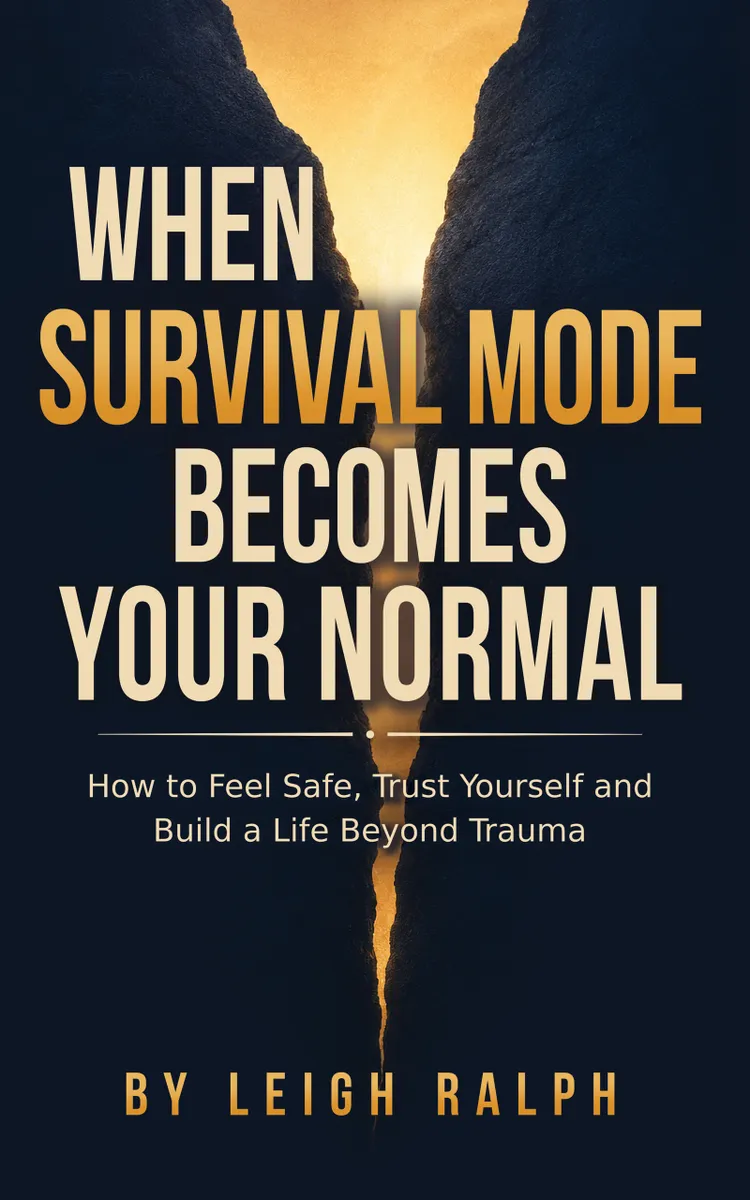
"When Survival Mode Becomes Your Normal" is a self-help book by Leigh Ralph with 14 chapters and approximately 54,806 words. It covers key insights and practical takeaways on the topic.
This book was created using Inkfluence AI, an AI-powered book generation platform that helps authors write, design, and publish complete books. It was made with the AI Self-Help Book Writer.
Frequently Asked Questions
What is "When Survival Mode Becomes Your Normal" about?
"When Survival Mode Becomes Your Normal" is a self-help book by Leigh Ralph covering key insights and practical takeaways on the topic.
How many chapters are in "When Survival Mode Becomes Your Normal"?
The book contains 14 chapters and approximately 54,806 words. Topics covered include Practical Tools and Gentle Checklists, When Survival Becomes a Way of Life, How Trauma Shapes the Body and Mind, The Survival Habits ThatHide in Plain Sight, and more.
Who wrote "When Survival Mode Becomes Your Normal"?
This book was written by Leigh Ralph and created using Inkfluence AI, an AI book generation platform that helps authors write, design, and publish books.
How can I create a similar self-help book?
You can create your own self-help book using Inkfluence AI. Describe your idea, choose your style, and the AI writes the full book for you. It's free to start.
Write your own self-help book with AI
Describe your idea and Inkfluence writes the whole thing. Free to start.
Start writingCreated with Inkfluence AI


