
Read the first chapter
The whole of chapter one, free. About 6 min. Turn the pages with the arrows, your keyboard, or a swipe.
Chapter 1
Rebuilding Identity Beyond Addiction
When “Addict” Becomes the Only Name You Know
A few weeks into sobriety, you catch your reflection while brushing your teeth. You’re doing something ordinary, but your mind isn’t quiet. I’m an addict. I’ll always be an addict. One mistake and I’m back where I started. The label may have helped you take addiction seriously, yet now it feels like it’s following you from room to room.
Later, someone asks what you’ve been doing lately. You want to say you’ve been showing up to meetings, repairing trust, and making it through hard evenings without using. Instead, you shrug and say, “I’m just trying not to mess up.” That answer may be honest - but it leaves out the person you’re becoming.
You are not required to build a sober life around the worst thing you’ve ever done.
From an Addict Identity to a Recovery Identity
Old Belief: Addiction is who I am, and recovery is only about avoiding substances.
New Reality: Addiction is part of my history, while recovery is a daily identity I strengthen through my choices.
This shift doesn’t mean pretending addiction never happened. It means refusing to let it become your only description. A label can explain a struggle, but it can’t capture your patience with your child, your courage in asking for help, or the way you now pause before reacting.
The brain often looks for proof of the story it already believes. If your story is “I’m broken,” a difficult afternoon becomes evidence. If your story is “I’m a person in recovery who’s learning new ways to cope,” that same afternoon becomes practice. The event hasn’t changed. The meaning you give it has.
Take a simple example. You receive a stressful message from someone you hurt during active addiction. The old identity says, “I can’t handle this. I always ruin things.” The recovery identity says, “This is painful, and I need support before I respond.” You might call someone, wait thirty minutes, write a draft without sending it, or attend a meeting. Those actions don’t erase the past. They prove that your next choice doesn’t have to repeat it.
The Identity Ladder Method helps make this change visible. At the bottom are survival-based labels: using, hiding, lying, reacting. Higher rungs include asking, repairing, choosing, contributing, and trusting myself. You don’t leap to the top. You climb one rung at a time, especially on days when your confidence is shaky.
Notice the Identity That’s Running the Show
Your identity isn’t built only by what you say about yourself. It’s built by what you repeatedly notice, expect, and do. When “addict” becomes the loudest word in your mind, you may unconsciously act as though failure is already decided. That can create shame, and shame often pushes people toward secrecy - the very place where old behavior grows stronger.
Look for the difference between responsibility and identity. Saying, “My addiction harmed people, and I need to repair what I can,” takes responsibility. Saying, “I’m nothing but a harmful person,” turns responsibility into a permanent sentence. One points toward action. The other drains the energy needed to change.
Signs this pattern is running your life:
1. You dismiss progress as luck. You’ve handled several cravings, but you tell yourself it doesn’t count because “anyone could do that.” 2. You treat one mistake as proof of your whole identity. A missed meeting or angry reply becomes, “See? I haven’t changed.” 3. You introduce yourself through your past before sharing your present. Your history matters, but it isn’t the only information people need to know about you. 4. You avoid healthy opportunities because you don’t feel like the kind of person who deserves them. A job, friendship, or responsibility can feel threatening when your old label feels safer.
The Identity Ladder Method turns recovery into evidence you can see.
Each time you make a recovery-centered choice, you move upward. Not dramatically. Not perfectly. But genuinely. If you pause before answering a difficult call, that’s a rung. If you tell the truth instead of hiding, that’s another. If you accept help without calling yourself weak, you’re climbing.
Questions That Help You Find Your Next Rung
1. When I call myself an “addict,” what am I trying to protect myself from? Maybe the label helps you stay alert, or maybe it protects you from hoping. Write the honest answer, even if it sounds messy: “If I believe I can change, I’m afraid I’ll disappoint people again.”
2. What recovery-centered qualities have I already shown in the past seven days? Be specific. “I’m better” is hard to trust. “I told my sponsor I was craving,” “I left the argument,” or “I kept my appointment” gives your mind something solid to recognize.
3. Which rung of the Identity Ladder feels just above me right now? If you’re often hiding, the next rung may be telling one safe person the truth. If you’re asking for help, the next may be following through on the help you received.
4. What would a recovery-centered version of me do during my most predictable trigger? Name the trigger and the action. For example: “When payday brings urges, I’ll transfer money for bills first, avoid the old route home, and call someone before making plans.”
5. What part of my past needs accountability, and what part needs release? You may need to apologize, repay money, or accept consequences. You may also need to stop using old guilt as proof that you’re forbidden from becoming trustworthy.
You don’t need perfect answers. The point is to catch the old identity in the act and give your present self a chance to speak.
The Seven-Day Identity Ladder Challenge
Challenge: Collect Seven Days of Recovery Evidence
For the next seven days, record one action each day that supports the person you’re becoming. Keep it in a phone note titled “My Recovery Identity.” Small actions count, but they must be real and specific.
• Write the date and complete this sentence: “Today I moved up one rung by…” - Name the action, not the intention. Write “I called before isolating,” rather than “I wanted to call.” - Add the quality the action showed: honesty, patience, courage, responsibility, or willingness. - At the end of each day, read the previous entries before adding the new one. - On day seven, choose one rung to practice again during your most common trigger.
Expected difficulty: Medium
You’ll know it’s working when…
• You begin noticing progress before someone else points it out. - Your language shifts from “I’m trying not to use” to “I’m practicing recovery.” - A hard moment feels like a test of a skill, not a verdict on your character. - You can name at least three qualities you’re building besides abstinence. - You respond to one trigger with a recovery action you planned in advance.
Some days, your entry may be simple: “I got out of bed, took my medication as prescribed, and went to my meeting.” Don’t downgrade that. Identity is built through repetition, and ordinary choices are the bricks.
You Are More Than the Label You Survived
Recovery doesn’t erase your past; it gives your present enough strength to stop being ruled by it.
• The word “addict” may describe an important part of your history, but it doesn’t have to be your whole identity. - The Identity Ladder Method helps you notice the small choices that prove who you’re becoming. - Shame says one mistake reveals the truth about you; recovery treats a mistake as a signal to return to support and action. - A recovery-centered identity grows through repeated evidence: honesty, asking for help, repairing harm, and choosing differently.
You may still have days when the old label feels louder than your progress. That doesn’t mean the progress disappeared. Keep climbing the next available rung. As you build this new self-concept, you’ll be ready to look more closely at the daily routines and supports that protect it.
End of chapter one. 4 more chapters in the full book.
Swipe or use the arrows to turn the page
What's inside: 5 chapters
- 1. Rebuilding Identity Beyond Addiction
- 2. Challenging Cravings With Urge Surfing
- 3. Building Boundaries Without Guilt
- 4. Designing Recovery Habits That Stick
- 5. Turning Setbacks Into Purposeful Resilience
About this book
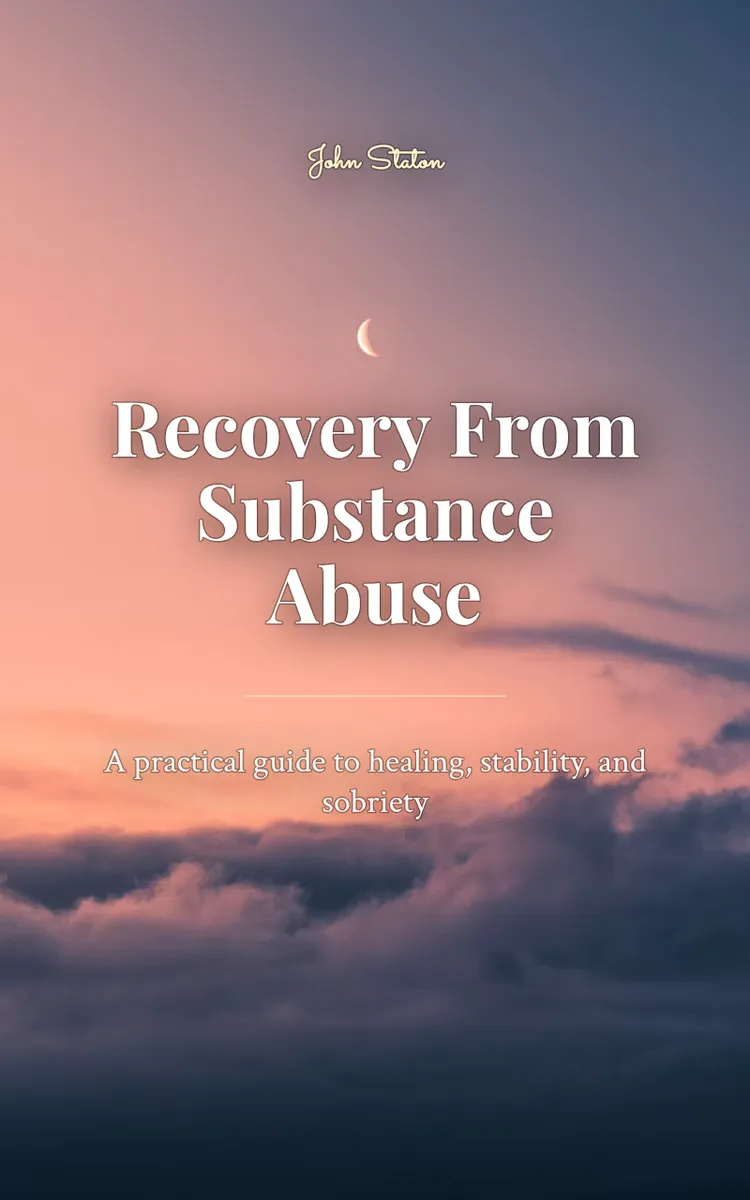
"Recovery From Substance Abuse" is a self-help book by John Staton with 5 chapters and approximately 7,251 words. Self-help guidance for substance abuse recovery and relapse prevention.
This book was created using Inkfluence AI, an AI-powered book generation platform that helps authors write, design, and publish complete books. It was made with the AI Self-Help Book Writer.
Frequently Asked Questions
What is "Recovery From Substance Abuse" about?
Self-help guidance for substance abuse recovery and relapse prevention
How many chapters are in "Recovery From Substance Abuse"?
The book contains 5 chapters and approximately 7,251 words. Topics covered include Rebuilding Identity Beyond Addiction, Challenging Cravings With Urge Surfing, Building Boundaries Without Guilt, Designing Recovery Habits That Stick, and more.
Who wrote "Recovery From Substance Abuse"?
This book was written by John Staton and created using Inkfluence AI, an AI book generation platform that helps authors write, design, and publish books.
How can I create a similar self-help book?
You can create your own self-help book using Inkfluence AI. Describe your idea, choose your style, and the AI writes the full book for you. It's free to start.
Write your own self-help book with AI
Describe your idea and Inkfluence writes the whole thing. Free to start.
Start writingCreated with Inkfluence AI


