
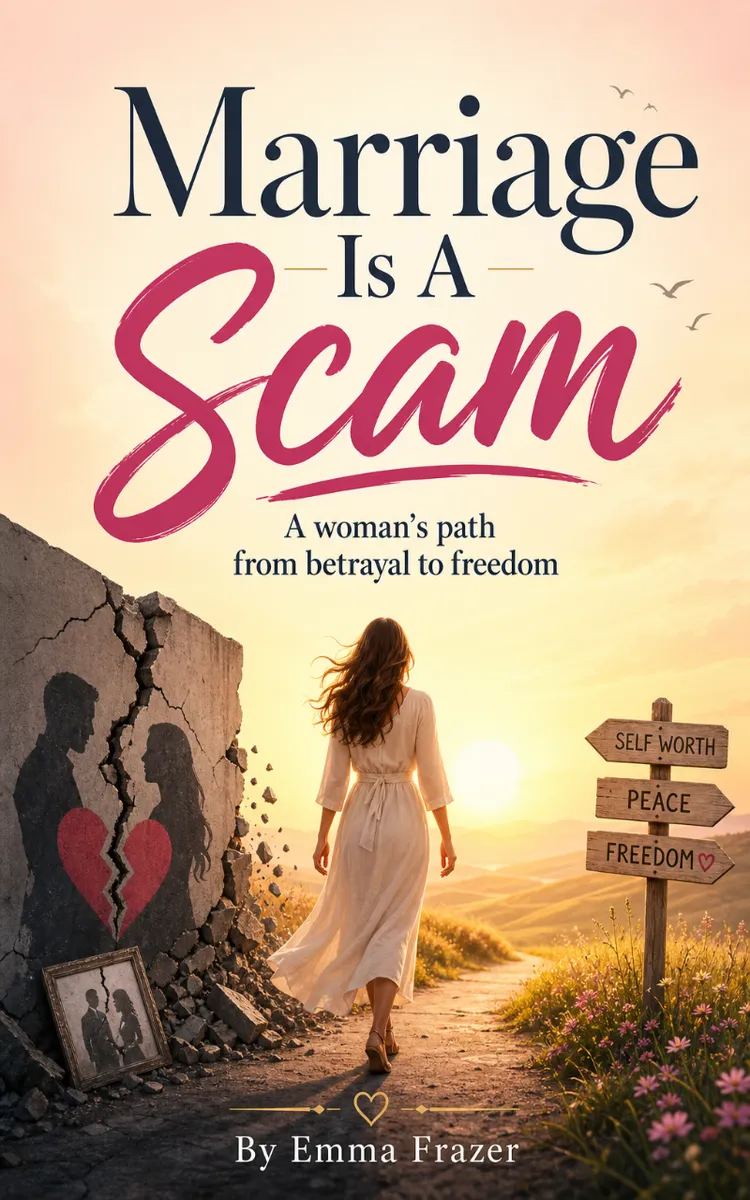
Read the first chapter
The whole of chapter one, free. About 6 min. Turn the pages with the arrows, your keyboard, or a swipe.
Chapter 1
Spotting Love-Bait in Dating
When Attention Feels Like a Trap
Why does someone you barely know suddenly make you feel chosen, understood, and certain about a future you haven’t had time to examine?
Maybe it starts with messages from morning until midnight. He remembers tiny details you mentioned once. He says you’re different from every woman he’s met. He talks about loyalty, marriage, and forever before you’ve seen how he handles disappointment. When you hesitate, he doesn’t slow down. He turns up the charm.
You may call it chemistry. You may call it answered prayer. But sometimes attraction isn’t growing naturally. It’s being carefully built around your hunger to feel loved.
Is this love - or is someone designing an emotional hook?
The Moment Attraction Changes Meaning
Old Belief: If someone gives me intense attention, shares personal secrets, and talks about a future with me, it means we have a rare connection.
New Reality: Intensity can be manufactured. Real connection needs time, consistency, and room for both people to see clearly.
Love-bait works because it gives you what you’ve been missing before you’ve had time to ask whether the person giving it is safe. The attention feels like relief. You stop feeling invisible. You stop wondering whether you’re too much, too difficult, or too damaged to be loved.
That relief can make warning signs look romantic.
A man who texts constantly may not be deeply devoted. He may be trying to occupy your thoughts before trust has been earned. A man who says, “I’ve never felt this way before,” may be expressing genuine excitement - or creating pressure for you to match his speed. A man who tells you his entire painful history on the second date may seem vulnerable. But vulnerability isn’t the same as accountability. Some people use their wounds to gain access to yours.
Take a simple example. You say you want to move slowly because your last relationship hurt you. Instead of respecting that, he says, “I understand, but I’m not like him. You have to trust me.” That sounds reassuring on the surface. Underneath, he’s asking you to prove your trust by ignoring your own boundary.
The Red-Flag Radar helps you notice the difference between affection that grows and attention that corners you. It doesn’t ask you to become suspicious of every kind word. It asks you to stop treating strong feelings as evidence.
How the Red-Flag Radar Detects Engineered Attraction
Attraction becomes dangerous when it moves faster than reality. You feel bonded to promises, confessions, and imagined plans before you’ve witnessed ordinary behavior. You know what he says he wants, but not how he reacts when you say no, change plans, or disagree.
That’s the part love-bait tries to hide. It keeps you focused on the emotional high. You’re busy rereading messages, explaining his behavior to friends, and protecting the connection from questions. Meanwhile, the relationship has very little proof underneath it.
Watch for these signs:
1. The pace feels urgent. He talks about exclusivity, marriage, moving in, or building a life together before you’ve had enough ordinary time together. You feel as if slowing down might make him disappear.
2. The attention is constant, then punishing. He floods you with messages and affection, then becomes cold when you don’t respond quickly or give him what he wants. The change leaves you working harder for the warmth you had before.
3. Your boundaries become tests of love. When you say you need a quiet night, privacy, or more time, he calls you guarded, selfish, confused, or afraid of happiness.
4. The fantasy is bigger than the facts. He promises a beautiful future, but his current life is chaotic, dishonest, disrespectful, or full of excuses. You’re falling for what he says will happen instead of studying what is happening.
The Red-Flag Radar doesn’t measure how exciting someone feels. It measures whether their behavior remains respectful when the excitement doesn’t go their way.
The Red-Flag Radar asks one hard question: What happens when I stop feeding the fantasy?
Questions That Bring You Back to Reality
1. What has this person actually done that proves he is safe, separate from what he has promised? Write down three observable actions. “He says he respects me” isn’t proof. “He accepted my no without sulking or arguing” is evidence.
2. When I ask for slower pacing, does he become patient - or does he make me feel guilty? An honest answer might sound like, “He agreed at first, then kept pushing until I gave in.” That matters. Pressure disguised as passion is still pressure.
3. Do I feel peaceful after our conversations, or do I feel desperate to keep his attention? Love-bait often creates emotional withdrawal. If one delayed reply ruins your day, notice what the relationship is training you to chase.
4. Have I seen him handle disappointment without punishing, blaming, or humiliating me? Don’t only study how he treats you when he wants access to you. Watch what happens when dinner changes, you disagree, or you need space.
5. Am I attached to this person, or to the future he keeps describing? Separate the two on paper. List what you know today, then list what you hope will happen later. The gap between those lists can reveal how much of the relationship is built on fantasy.
These questions aren’t meant to shame you for being hopeful. Hope is not stupidity. But hope needs facts beside it, especially when someone is asking for your trust at high speed.
The Seven-Day Red-Flag Radar Challenge
Challenge: Seven Days of Evidence Before Emotion
For the next seven days, stop making decisions based only on how wanted this person makes you feel. Track the pattern instead.
• Keep a small note on your phone titled “Red-Flag Radar.” - After each meaningful interaction, record what happened, what he said, how you felt, and whether he respected your boundary. - Mark each interaction with one word: steady, pressuring, confusing, or punishing. - Do not reward pressure by rushing into exclusivity, sex, shared finances, private information, or major promises. - Tell one trusted person what you’re observing. Choose someone who won’t romanticize behavior that makes you uncomfortable. - At the end of seven days, read the notes as if they belonged to someone you love.
Difficulty: Medium
You’ll know it’s working when:
• You can describe his behavior without using excuses for him. - You notice the difference between an apology and a change. - You feel less compelled to answer immediately. - You can say “I need time” without negotiating against yourself. - Your decision is based on a pattern, not one thrilling conversation.
If tracking his behavior makes him angry, mocking, or more controlling, don’t dismiss that reaction. You don’t have to announce every observation you make. If you feel unsafe, protect your privacy and reach out to someone you trust or a local support service.
Choose Evidence Before the Fantasy
Real love doesn’t need to rush you past your own warning signs.
You learned to notice:
• Intense attention can be a strategy, not proof of devotion. - The speed of a relationship matters when promises arrive before evidence. - Boundaries reveal more than romantic speeches. - The Red-Flag Radar helps you track patterns instead of chasing emotional highs.
You’re not foolish because someone knew exactly what to say. You’re human, and you wanted tenderness. Now you’re learning to require something stronger than beautiful words: consistent behavior, respect, and time. That clarity will matter when the attention becomes a trap and the promises start demanding a price.
End of chapter one. 16 more chapters and about 25,155 words in the full book.
Swipe or use the arrows to turn the page
What's inside: 17 chapters
- 1. Spotting Love-Bait in Dating
- 2. Breaking the Relationship Trap Script
- 3. Resisting the Fairytale Wedding Pressure
- 4. Protecting Yourself While Having Children
- 5. Unlearning the Wife-Role Performance
- 6. Refusing the Husband-Role Control Myth
- 7. Choosing Mutual Benefit Over Balance
- 8. Mapping the Relationship Changes Spiral
- 9. Ending the Argument Loop With Boundaries
- 10. Recognizing Abuse as a System, Not Events
- 11. Using the Survival Mechanism Without Losing You
- 12. Making the Decision to Leave Safely
- 13. Navigating Divorce Without Self-Erasure
- 14. Rebuilding Identity After the Escape
- 15. Creating a Second Chance Life Plan
- 16. Starting Over With Boundaries That Hold
- 17. Choosing Your Forever Soulmate Criteria
About this book
"Marriage Is A Scam" is a self-help book by By Emma Frazer with 17 chapters and approximately 25,155 words. Leaving an abusive or harmful marriage and rebuilding life.
This book was created using Inkfluence AI, an AI-powered book generation platform that helps authors write, design, and publish complete books. It was made with the AI Self-Help Book Writer.
Frequently Asked Questions
What is "Marriage Is A Scam" about?
Leaving an abusive or harmful marriage and rebuilding life
How many chapters are in "Marriage Is A Scam"?
The book contains 17 chapters and approximately 25,155 words. Topics covered include Spotting Love-Bait in Dating, Breaking the Relationship Trap Script, Resisting the Fairytale Wedding Pressure, Protecting Yourself While Having Children, and more.
Who wrote "Marriage Is A Scam"?
This book was written by By Emma Frazer and created using Inkfluence AI, an AI book generation platform that helps authors write, design, and publish books.
How can I create a similar self-help book?
You can create your own self-help book using Inkfluence AI. Describe your idea, choose your style, and the AI writes the full book for you. It's free to start.
Write your own self-help book with AI
Describe your idea and Inkfluence writes the whole thing. Free to start.
Start writingCreated with Inkfluence AI


