
Read the first chapter
The whole of chapter one, free. About 9 min. Turn the pages with the arrows, your keyboard, or a swipe.
Chapter 1
Lagos: Finding Yoruba Roots
Lagos at the Yoruba Crossroads
The first thing Lagos gives you is movement: yellow buses, danfo conductors calling routes, okada engines, market women bargaining, and the steady beat of music spilling from somewhere nearby. Beneath that rush is a Yoruba city with deep roots in fishing communities, royal traditions, family compounds, language, food, and faith. Lagos suits the traveler who wants culture in real places - not behind glass only - and who can handle heat, traffic, noise, and a little friendly negotiation.
This is Nigeria’s busiest gateway, but it isn’t merely a stop before somewhere else. Spend time in Lagos Island, walk through markets where Yoruba names still shape daily life, listen to live highlife or afrobeats, and let a respectful conversation open a door. You may arrive through the airport, but you’ll understand Lagos through its neighborhoods.
Quick Facts
• Best months: November to February, when the air is less humid and rainfall is lighter. December is lively but expensive.
• Getting there: Murtala Muhammed International Airport is in Ikeja. A prearranged airport transfer costs about $20 - $40; ride-hailing to Victoria Island usually runs $10 - $25, depending on traffic and surge pricing.
• Budget per day: Budget $45 / Mid-range $120 / Luxury $300+
• Languages: English, Nigerian Pidgin, Yoruba, and several Nigerian languages.
• Currency: Nigerian naira (₦). Cards work at established hotels and restaurants, but carry small naira notes for markets and street food.
• Time needed: 3-5 days minimum
What makes Lagos different from similar coastal destinations is the way Yoruba heritage lives beside modern ambition. A gallery, shrine tradition, fashion studio, church, nightclub, and old family house can all sit within the same day’s route. You’re not visiting a preserved past. You’re meeting a culture that keeps moving.
Museums, Markets, and Living Yoruba History
Plan your sightseeing around traffic. Lagos roads can turn a short trip into a long one, so group places by area rather than trying to cross the city repeatedly.
• Nike Art Gallery, Lekki
Open daily from 9 a.m. to 6 p.m.; entry is free, though donations and purchases are welcome. Give yourself 1-2 hours to browse several floors of Nigerian painting, sculpture, textiles, beadwork, and Yoruba-inspired pieces. The gallery is a strong introduction to living art rather than a quiet museum collection. Ask staff about the artist behind a work before taking photographs, and don’t feel pressured to buy. The gallery is at 2 Nike Art Gallery Road, Lekki Phase I.
• National Museum Lagos, Onikan
Open Monday through Friday, generally 9 a.m. to 4 p.m.; entry is about ₦5,000 - ₦10,000, or roughly $5 - $10. Allow 1-2 hours. Its collection includes royal objects, masks, archaeological pieces, and the famous bullet-riddled car associated with General Murtala Mohammed. The building and displays show their age, but that’s part of the story. Go early, before the afternoon heat, and confirm the day’s opening time locally because schedules can change.
• Lagos Island Markets: Idumota and Balogun
Most stalls operate from about 8 a.m. to 6 p.m., Monday through Saturday; there’s no entry fee. Spend 2-3 hours here, preferably with a trusted local guide. You’ll find aso-oke fabric, lace, shoes, jewelry, cosmetics, books, and household goods among the crowded lanes. Ask before photographing people or merchandise. A useful Yoruba connection is the fabric itself: ask a seller how a pattern is used for weddings, naming ceremonies, or family events. Wear closed shoes and keep your phone tucked away.
• Freedom Park, Lagos Island
Open Tuesday through Sunday, usually 11 a.m. to 11 p.m.; daytime entry is around ₦5,000 - ₦10,000, with higher prices for concerts. Set aside 1-2 hours, or return at night for live music. The park occupies the former Broad Street prison site and now hosts performances, food stalls, art, and festivals. It’s a good place to connect Lagos’s colonial history with its present creative energy. Check the event calendar before going; a quiet afternoon and a concert night feel like two different places.
• Terra Kulture, Victoria Island
Opening hours vary by event, but the cultural center commonly operates from late morning into the evening; exhibitions may cost ₦5,000 - ₦10,000, while plays and concerts cost more. Allow 2-3 hours. Terra Kulture is one of the best places to catch Nigerian theater, dance, books, and food under one roof. Look for Yoruba-language or Yoruba-themed productions, and arrive early for popular shows. It’s at 1376 Tiamiyu Savage Street, Victoria Island.
• The John Randle Centre for Yoruba Culture and History, Onikan
Opening hours and admission can change with exhibitions and programming, so check its official channels before visiting; plan on roughly ₦10,000 - ₦20,000 for entry or special experiences. Give yourself 2 hours. This modern center presents Yoruba history through digital displays, objects, and public programs, making it a useful bridge between older museums and contemporary Lagos. Ask whether a guided tour or cultural event is running that day. The center is near Onikan Stadium on Lagos Island.
• Makoko Waterfront Viewpoint
Access depends on local conditions and should be arranged through a reputable community-connected guide. Boat visits often cost about $50 - $100 per person, depending on group size, and take 1-2 hours. Makoko is a living neighborhood, not an attraction built for spectators. Don’t enter homes, photograph residents without permission, or treat children as photo subjects. A guide who works respectfully with the community can explain the water-based economy without turning people’s lives into a show.
Skip These Tourist Traps
• Unlicensed “heritage” guides around Lagos Island: Use a named guide or established cultural organization instead of following someone who approaches you with a sudden private tour.
• Unplanned beach hopping from central Lagos: Traffic can eat your whole day. Choose Landmark Beach or Tarkwa Bay only after checking access, weather, and current fees.
• Buying “antique” Yoruba objects from aggressive street sellers: Visit a known gallery or museum shop, ask for provenance, and avoid objects that may be sacred, looted, or recently made to look old.
Where to Sleep, Eat, and Hear the City
Lagos neighborhoods have distinct personalities. Victoria Island is convenient for restaurants, offices, and nightlife, but prices rise quickly. Ikoyi is quieter and polished. Yaba feels younger and more creative. Ikeja is practical for the airport and mainland plans. Lagos Island puts you close to historic streets and markets, though it can be intense after dark.
Budget Tier
Recommendation
Area
Price/Night
Best For
Budget
Lagos Marriott or a well-reviewed guesthouse near Ikeja
Ikeja
$100 - $120
Airport access and short stays
Mid-range
Nordic Hotel Lagos
Victoria Island
$150 - $200
Design, comfort, and central dining
Luxury
The Wheatbaker
Ikoyi
$350 - $500
Quiet service and a refined base
Yellow Chilli (Victoria Island) - Nigerian cuisine. Order the seafood okra with rice or swallow ($20 - $50). It’s a comfortable introduction to rich sauces, pepper, and local seafood without making you guess what’s on the plate.
Terra Kulture Restaurant (Victoria Island) - Nigerian cuisine. Order the pounded yam with egusi soup ($50 - $100). Eating here before a performance keeps the cultural experience in one place.
Shiro Lagos (Victoria Island) - Asian fusion. Order the sushi or seafood platter ($50 - $100). It’s not a Yoruba restaurant, but it’s a useful choice when your group wants a polished meal after a long day in the heat.
Iyan Aladuke (Ikeja) - Yoruba comfort food. Order pounded yam with ewedu, gbegiri, and stew ($25 - $50). The combination gives you the Yoruba soup experience in its classic layered form.
Ofada Boy (multiple locations) - Yoruba cuisine. Order Ofada rice with ayamase pepper sauce ($20 - $50). The smoky rice and green pepper sauce are bold, filling, and unmistakably tied to southwestern Nigerian food culture.
RSVP Restaurant (Victoria Island) - Contemporary Nigerian and international cuisine. Order the jollof rice with grilled protein ($50 - $100). It’s a good evening stop when you want local flavors in a stylish setting.
Street Food to Try
• Akara: Fried black-eyed-pea cakes, about ₦500 - ₦1,500 ($0.40 - $1.25) per serving.
• Boli and fish: Roasted plantain with grilled fish and pepper sauce, about ₦3,000 - ₦8,000 ($2.50 - $7).
• Suya: Spiced grilled beef or chicken, about ₦2,000 - ₦6,000 ($1.50 - $5).
• Puff-puff: Sweet fried dough balls, about ₦500 - ₦1,500 ($0.40 - $1.25).
Practical Ways to Meet Lagos with Respect
Lagos rewards preparation that is specific, not fussy. Pack for heat, sudden rain, long drives, and places where you’ll want to look presentable. More importantly, bring curiosity without assuming that every Yoruba tradition is available for public viewing.
Packing Checklist
• Lightweight clothing that covers shoulders and knees for museums, markets, and religious spaces.
• Comfortable closed shoes for Idumota and Balogun’s uneven, crowded lanes.
• A compact umbrella or light rain jacket.
• Sunscreen, insect repellent, and a refillable water bottle.
• Small naira notes for food stalls, transport, and market purchases.
• A power bank; traffic delays can turn a short outing into an all-day trip.
• A scarf or wrap for modesty when visiting sacred or family spaces.
• A zippered crossbody bag worn in front in crowded markets.
• A printed hotel address and offline map, especially for first-time visitors.
• A small notebook for Yoruba names, food terms, and stories people share with you.
Useful Phrases
• E kaaro - “Good morning” (eh kah-ah-roh).
• E kaasan - “Good afternoon” (eh kah-ah-sahn).
• E ku ale - “Good evening” (eh koo ah-leh).
• Bawo ni? - “How are you?” (bah-woh nee?).
• E se - “Thank you” (eh sheh).
• Jowo - “Please” (joh-woh).
Money-Saving Tips
• Stay in Ikeja for the first or last night if your flight is early; it can save $25 - $50 compared with a Victoria Island hotel.
• Use ride-hailing during daylight and split longer trips with a travel partner, but avoid booking a cross-city itinerary during peak traffic.
• Eat lunch at local spots such as Ofada Boy, then save higher-priced restaurants for one evening.
• Visit free-entry galleries like Nike Art Gallery and use paid museum days for the collections you genuinely want to see.
• Carry cash for markets, but count change before leaving the stall and keep larger notes out of sight.
Common Mistakes
• Mistake: Treating Lagos Island markets like a quick photo stop. Do this instead: Allow several hours, dress simply, and ask before photographing people or goods.
• Mistake: Calling every southwestern Nigerian tradition “Yoruba culture.” Do this instead: Ask which town, family, festival, or community a practice comes from.
• Mistake: Assuming English makes every conversation easy. Do this instead: Learn a few Yoruba greetings and listen for Nigerian Pidgin; the effort changes the mood quickly.
• Mistake: Trying to see Lekki, Ikeja, Lagos Island, and Yaba in one day. Do this instead: Build each day around one area and leave room for traffic.
Lagos can be loud, costly, crowded, and wonderfully generous. Its Yoruba roots aren’t hidden in one perfect landmark. They show up in the name of a dish, the pattern of a cloth, the rhythm at a park concert, and the greeting exchanged before a conversation begins. Pay attention to those small openings. That’s where the city starts speaking directly to you.
End of chapter one. 7 more chapters in the full book.
Swipe or use the arrows to turn the page

How To Go From is God Even Listening To Hearing Directions Loud And Clear

Remembering Grandpa Joshua

The Tourism Insider Black Book
What's inside: 8 chapters
- 1. Lagos: Finding Yoruba Roots
- 2. Ibadan: Reading the City’s History
- 3. Ile-Ife: Meeting Yoruba Origins
- 4. Oshogbo: Following Sacred Art
- 5. Abeokuta: Climbing Egba Heritage
- 6. Oyo: Exploring Imperial Legacies
- 7. Badagry: Tracing Diaspora Connections
- 8. Igbó-Ora: Experiencing Rural Yoruba Life
About this book
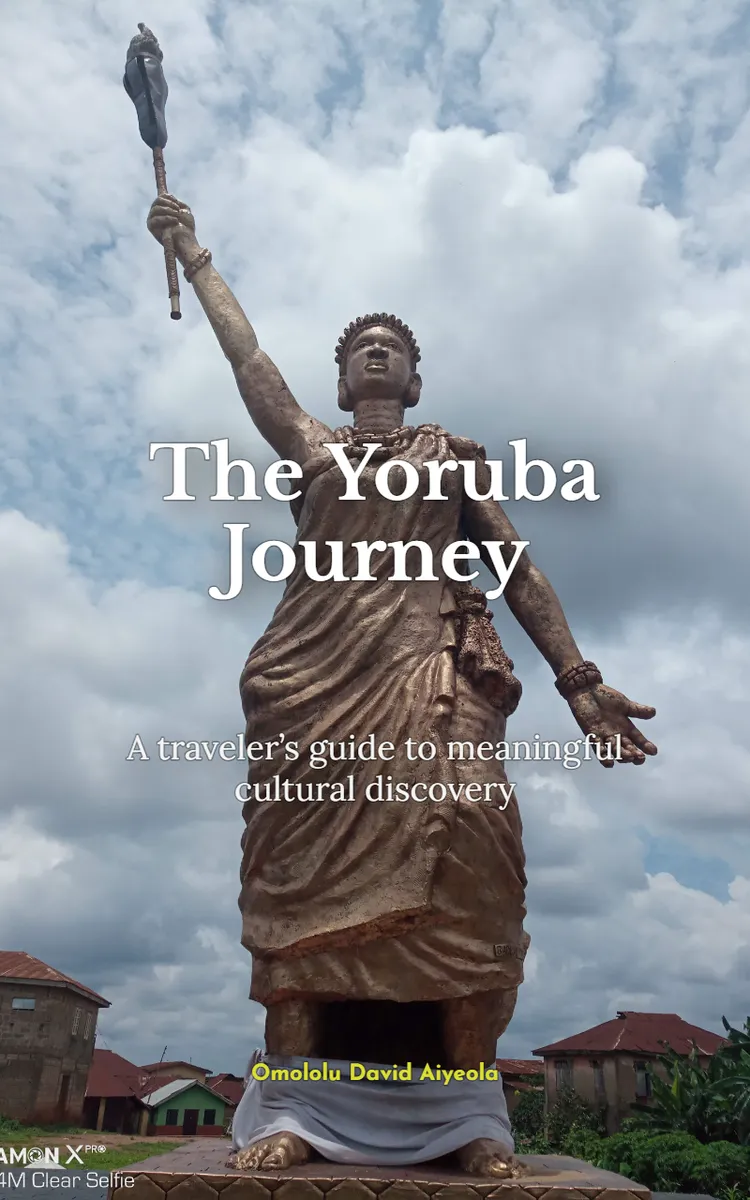
"The Yoruba Journey" is a travel book by Omololu David Aiyeola with 8 chapters and approximately 15,011 words. Experiencing Yoruba culture as a traveler of the African diaspora.
This book was created using Inkfluence AI, an AI-powered book generation platform that helps authors write, design, and publish complete books. It was made with the AI Travel Guide Creator.
Frequently Asked Questions
What is "The Yoruba Journey" about?
Experiencing Yoruba culture as a traveler of the African diaspora
How many chapters are in "The Yoruba Journey"?
The book contains 8 chapters and approximately 15,011 words. Topics covered include Lagos: Finding Yoruba Roots, Ibadan: Reading the City’s History, Ile-Ife: Meeting Yoruba Origins, Oshogbo: Following Sacred Art, and more.
Who wrote "The Yoruba Journey"?
This book was written by Omololu David Aiyeola and created using Inkfluence AI, an AI book generation platform that helps authors write, design, and publish books.
How can I create a similar travel book?
You can create your own travel book using Inkfluence AI. Describe your idea, choose your style, and the AI writes the full book for you. It's free to start.
Write your own travel book with AI
Describe your idea and Inkfluence writes the whole thing. Free to start.
Start writingCreated with Inkfluence AI


