
Read the first chapter
The whole of chapter one, free. About 7 min. Turn the pages with the arrows, your keyboard, or a swipe.
Chapter 1
Reclaiming Your Spiritual Identity
When your old “you” stops fitting, who are you supposed to be?
Nadia noticed it first in small moments. She’d walk into her usual office routines with the same shoes, the same smile, the same “no problem” energy - but something in her felt… slightly out of sync. Like she was wearing a version of herself that used to work. Now it just pinched.
At home, she’d catch herself reaching for the familiar conversations - work drama, weekend plans, the quick jokes that kept everyone comfortable. But lately, the words felt like they belonged to a different person. And then the loneliness would hit. Not the dramatic, movie-style kind. More like a quiet drift. Like everyone was still there, but the bridge between her and them had thinned.
When the roles that once defined you stop fitting, loneliness becomes painful - or it becomes information.
---
The Identity Ladder Reset: turning loneliness into a sign of inner evolution
Old Belief: “Loneliness means something is wrong with me - either I’m failing spiritually, or I’ve become too distant from people to be loved.” New Reality: “Loneliness often shows up when my inner identity is moving to a new rung. I’m not broken; I’m being redefined.”
Why does this matter? Because if you treat loneliness like a verdict, you’ll try to “fix” it by snapping back into old masks. You’ll force the same conversations, chase the same validation, and pretend the part of you that’s changing isn’t changing. That can keep you socially busy, but spiritually stuck. The disconnect only gets deeper - because you’re shrinking to fit a role that no longer matches your awareness.
Let me put this in Nadia’s shoes. One evening, after a meeting, she realized she didn’t want to celebrate the way she “should.” Her team was excited about a promotion pathway, but Nadia felt a tug toward meaning she couldn’t explain in corporate language. She went quiet. Later, she texted less. At first she called it “distance.” Then she remembered something: the Identity Ladder Reset. When your inner identity shifts, the old ladder creaks. People may not climb the same way at the same pace. That doesn’t mean you’re unlovable. It means your relationship to your former self is changing.
So the goal isn’t to eliminate loneliness. The goal is to understand what it’s trying to reveal about your identity. The Identity Ladder Reset helps you ask: What rung am I leaving? What rung am I stepping toward? Once you can name it, loneliness stops being a monster and starts being a compass.
---
Why this mindset shift works (and what it looks like in real life)
Your spiritual growth isn’t just “more peace.” It’s also more honesty. And honesty changes your social patterns. The parts of you that used to run on habit - people-pleasing, performing competence, staying light to keep the air safe - eventually feel hollow. Not because you’re trying to be difficult, but because you’re becoming more true. And truth has a cost at first: it can make you feel unseen.
The Identity Ladder Reset reframes the early discomfort as a normal transition period. When you outgrow a role, your nervous system notices the mismatch. You might feel restless in your body. You might stop enjoying what you used to enjoy. You might even miss people while simultaneously feeling like you can’t “be” with them the way you used to. That’s the ladder creaking. That’s your inner evolution asking for a new structure.
Here’s a concrete example you can recognize: Nadia started volunteering for a project outside her usual department. It wasn’t dramatic. No big announcement. But she felt more “herself” there than in her regular team chat. The loneliness didn’t disappear immediately - she still felt a tug when she returned to her old group. But it became clearer: her identity was widening. Her old community fit her old shape. Now her shape is changing.
Signs this pattern is running your life 1. You feel “socially present” but inwardly absent. You show up, but you don’t feel connected to yourself in the moment. 2. Your conversations start draining you. Not because people are bad - because the topics no longer match your current awareness. 3. You keep trying to prove you’re still the same person. You over-explain, over-perform, or “act normal” to avoid being misunderstood. 4. Loneliness intensifies right after moments of clarity. The more honest you get with yourself, the more isolated you feel at first.
Loneliness can be the signal that your identity ladder is shifting, not that your life is failing.
---
Reflection & Self-Assessment: mapping your next rung without losing yourself
If you want to redefine who you are when old roles stop fitting, you need something simple and honest: a way to track where you’re being asked to grow. Not through willpower. Through awareness.
Ask yourself questions that don’t let you hide behind “I’m just tired.” You’re looking for patterns - especially the moment when your identity starts to move and you try to hold it back.
1. When do I feel loneliest - right after I behave like my old self, or right after I act like my new self? If the loneliness spikes after you perform, that’s a clue you’re forcing the wrong role. If it spikes after authenticity, that’s a clue you’re in a transition window where connection hasn’t caught up yet.
2. Which “version of me” am I currently trying to preserve to stay accepted? You might name it as “the easygoing one,” “the competent one,” or “the spiritual one who doesn’t make it weird.” Notice what you lose when you wear that version.
3. What do I feel drawn toward lately that my old role couldn’t hold? For Nadia, it was meaning and depth - things she couldn’t translate into her old work banter. Your answer might be slower, quieter, more personal: solitude, creative work, truth-telling, service.
4. Where am I shrinking my inner voice to prevent discomfort in others? Think of one recent moment. What did you say yes to that your heart didn’t really want? What did you swallow to keep the peace?
5. If loneliness is feedback, what is it asking me to stop doing - and what is it inviting me to start? An honest answer might sound like: “Stop forcing small talk that feels dead.” Or: “Start having one deeper conversation, even if it’s awkward.”
Take your time. Don’t rush to “fix” the feelings. The point isn’t to become fearless overnight. The point is to become accurate.
---
Growth Challenge: a 7-day Identity Ladder Reset (start today)
You don’t need a full life overhaul. You need a small, repeatable practice that helps you notice the ladder shifting instead of panicking when it does.
Identity Ladder Reset Sprint (7 Days) - Day 1: Write down the role you’ve been trying to keep: “I’m the _ who.” Keep it plain. Nadia’s might look like “I’m the competent project manager who keeps things smooth.” - Day 2: List 3 moments this week where you felt lonely or disconnected after you performed that role. What were you doing right before the loneliness hit? - Day 3: Choose one “new-rung” action you can take for 10 minutes. Examples: journal one honest paragraph, walk without music, read spiritual text that actually feels alive to you, or send a message that isn’t trying to impress - just to connect. - Day 4: Have one micro-honest moment with someone safe. It can be small, like: “I’ve been craving deeper conversations lately.” Then observe what happens in your body. - Day 5: Identify one old belief you’re ready to retire. Finish this sentence: “I thought I had to to be loved, but now I see _.” - Day 6: Do a “role-release” ritual: tidy one space that represents the old identity (desk corner, closet shelf, notes folder). While you do it, say (out loud if you can): “I’m not abandoning myself. I’m updating.” - Day 7: Review your notes and answer: What rung am I moving toward? Write one sentence you can trust.
• Difficulty rating: Medium - You’ll know it’s working when… - You can name your loneliness as a transition signal within minutes, not days. - You feel slightly more permission to be yourself - even if connection still feels uneven. - You notice at least one moment where you acted from your “new self,” even in a tiny way, and the loneliness changed tone (from threat to feedback).
Keep it gentle. If you miss a day, don’t treat it like failure. Treat it like data - what got in the way, and what do you need to adjust so your ladder can keep moving?
---
Key Takeaway: your loneliness may be the doorway, not the dead end
When your old roles stop fitting, loneliness can feel like rejection. But with the Identity Ladder Reset, you learn to see it differently: it’s often the discomfort of stepping into a more honest version of yourself. Nadia didn’t become less lovable. She became more real. And that reality took time to meet the world where it was.
You don’t lose your spiritual identity when you feel lonely - you reveal it.
• You can redefine yourself without abandoning your past; you’re updating the rung. - Loneliness often spikes when you’re performing an identity that no longer matches your awareness. - Small “new-rung” actions help your nervous system trust the shift. - Honesty in tiny doses makes connection possible again, even when it feels awkward.
And as you start mapping your identity ladder, you’ll notice something else: the way you hold loneliness matters just as much as the reason it shows up. Next, we’ll look at how to work with loneliness in the moment - so it doesn’t steer your choices, it informs them.
End of chapter one. 2 more chapters in the full book.
Swipe or use the arrows to turn the page


What's inside: 3 chapters
- 1. Reclaiming Your Spiritual Identity
- 2. Letting Go of Social Masks
- 3. Turning Loneliness Into Purpose
About this book
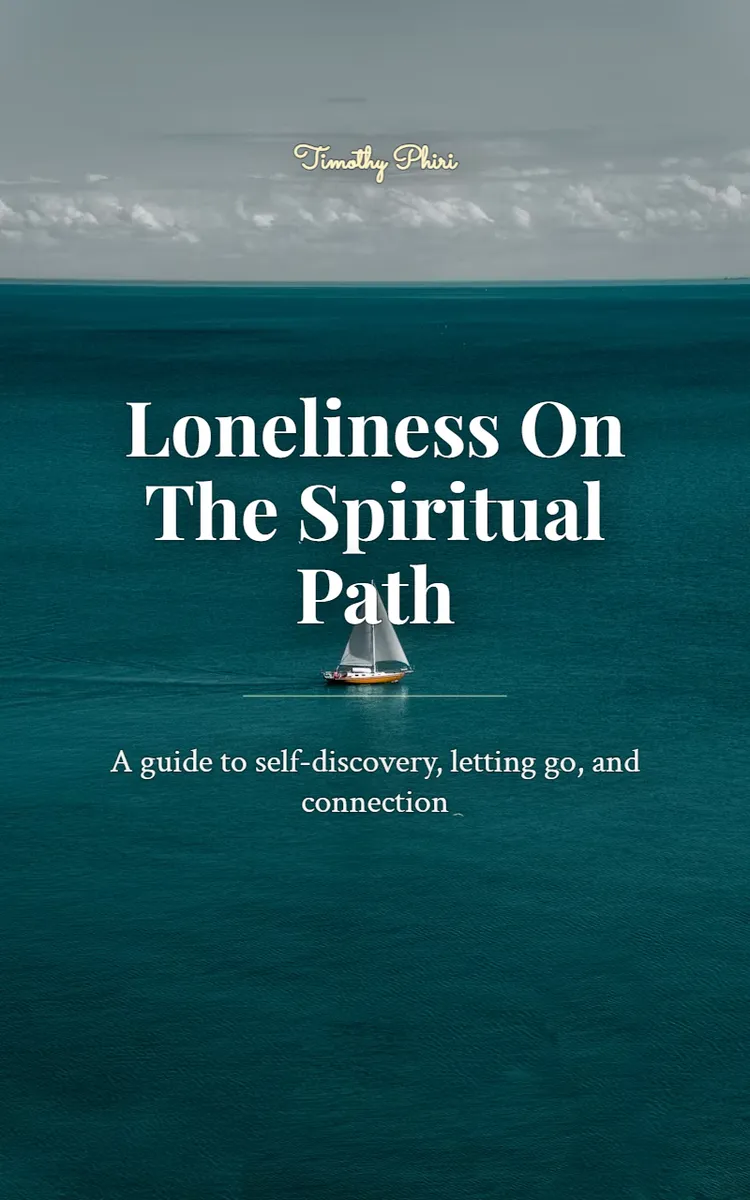
"Loneliness On The Spiritual Path" is a self-help book by Timothy Phiri with 3 chapters and approximately 5,440 words. Coping with loneliness during spiritual growth and self-awareness.
This book was created using Inkfluence AI, an AI-powered book generation platform that helps authors write, design, and publish complete books. It was made with the AI Self-Help Book Writer.
Frequently Asked Questions
What is "Loneliness On The Spiritual Path" about?
Coping with loneliness during spiritual growth and self-awareness
How many chapters are in "Loneliness On The Spiritual Path"?
The book contains 3 chapters and approximately 5,440 words. Topics covered include Reclaiming Your Spiritual Identity, Letting Go of Social Masks, Turning Loneliness Into Purpose.
Who wrote "Loneliness On The Spiritual Path"?
This book was written by Timothy Phiri and created using Inkfluence AI, an AI book generation platform that helps authors write, design, and publish books.
How can I create a similar self-help book?
You can create your own self-help book using Inkfluence AI. Describe your idea, choose your style, and the AI writes the full book for you. It's free to start.
Write your own self-help book with AI
Describe your idea and Inkfluence writes the whole thing. Free to start.
Start writingCreated with Inkfluence AI


