
Read the first chapter
The whole of chapter one, free. About 7 min. Turn the pages with the arrows, your keyboard, or a swipe.
Chapter 1
Arriving Through Breath Anchors
When Attention Slips, Let Breath Lead You Back
A message arrives while you’re halfway through a task. Your hand reaches for the phone, your eyes jump to the screen, and suddenly the original thought has thinned into mist. Or you’re standing at a sink, driving through familiar streets, or waiting for a page to load, yet your mind is already arguing with a conversation that hasn’t happened.
In moments like these, stillness doesn’t need to be summoned from some quiet mountaintop. It can begin with one breath you actually feel. The breath is already moving beneath the noise, steady enough to offer your attention a place to rest.
The Three-Anchor Breath Map gives you three simple ways to return: the breath at the nostrils, the breath in the ribs, and the breath through the whole body. You don’t need to force calm. You only need to notice where breathing is happening, and keep coming back without making the return a problem.
This Chapter Is For You If...
• Your attention scatters easily between screens, tasks, conversations, and unfinished thoughts. - You want a short practice that can be used at a desk, in a vehicle before driving, or during a tense exchange. - You’ve tried to “clear your mind” and ended up frustrated by the very thoughts you hoped would disappear. - You’re ready to shift from chasing stillness to recognizing the small stillness already present in each breath.
The Breath Is a Place to Stand
Steady attention by choosing one physical point in the breath, noticing when you leave it, and returning without judgment.
That principle is modest on purpose. Attention wanders because attention is built to notice change. A sound, a memory, a notification, a tightening in the chest - each one can tug at it. The practice isn’t to defeat this movement. It’s to make the return familiar.
The Three-Anchor Breath Map begins with the nostrils. Notice the coolness of the inhale and the warmer touch of the exhale. If that sensation is faint, move to the ribs. Feel them widen slightly as air enters, then settle as air leaves. If your body feels restless or your thoughts are especially loud, widen the anchor to the whole body: feet on the floor, hands resting, shoulders rising and falling, breath moving through the shape of you.
Take a simple example. You’re about to answer a difficult message. Your first impulse is sharp, and your fingers are already moving. Before typing, you pause for three breaths. On the first, you notice the nostrils. On the second, you feel the ribs. On the third, you sense your whole body sitting in the chair. The message may still need a firm answer. But now the answer comes from a wider field than the first flash of irritation.
The anchor doesn’t tell you what to think. It gives thought a little room. That room can be the difference between reacting and responding.
In Practice, This Means...
• You choose one anchor before you need it, rather than searching for a method in the middle of stress. - You treat wandering as part of the exercise, not evidence that you’re doing it badly. - You take three conscious breaths before sending a charged message or making a quick decision. - You adjust the anchor when needed: nostrils for precision, ribs for steadiness, whole body for grounding.
Drawing the Three-Anchor Breath Map Into the Day
A breath anchor becomes useful through repetition in ordinary places. You’re not building a separate life for mindfulness. You’re placing small points of return inside the life already underway.
Use the following rhythm as a starting structure. Keep it light enough to repeat.
1. Morning - begin at the nostrils for two minutes. Before checking your phone, sit or stand comfortably. Let the breath remain natural. Feel the inhale and exhale at the nostrils. Count ten breaths if counting helps, then begin again. When the mind wanders, name it softly - “thinking,” “planning,” “remembering” - and return to the touch of air.
2. Midday - move to the ribs for three breaths. Set a quiet reminder around the middle of your day, perhaps at 12:30 or when you finish lunch. Place one hand on the lower ribs if that feels comfortable. Notice the gentle expansion and release. Don’t deepen the breath on purpose. Let the ribs show you what breathing is already doing.
3. Before a transition - use the whole body. Before entering a meeting, opening the shop, picking up a child, or walking through your front door, pause for one complete breath. Feel your feet, hands, face, shoulders, and the movement of breathing. This takes about ten seconds. Its value comes from doing it often.
4. Evening - review three returns, not three failures. At the end of the day, ask: Where did I remember the breath? Perhaps it was beside the kettle, at a red light, or before replying to someone. Mark those moments. You’re teaching attention to recognize its own path home.
5. When tension rises - choose the smallest workable anchor. If the nostrils feel too subtle, use the ribs. If the ribs feel tight, use the whole body and include the feet. If breathing feels uncomfortable, stop controlling it and simply notice contact with the ground while allowing the breath to continue naturally.
The timing matters less than the cue. A morning practice builds familiarity. A midday pause interrupts momentum. An evening review helps the practice become visible. Three breaths repeated across a day can shape attention more reliably than one ambitious session you never return to.
Three Breaths Before the Reply
Before: A difficult message appears during a busy afternoon. The body tightens before the meaning has fully landed. The jaw sets, the shoulders lift, and the mind begins drafting a defense. The impulse is to answer immediately, partly to regain control.
Action: The phone is placed face down. The first breath is felt at the nostrils, though the sensation is hard to find. The second moves to the ribs, where the breath feels clearer. On the third, attention widens to the whole body: feet pressing into the floor, hands resting near the keyboard, shoulders softening by a small amount.
There’s no demand to become serene. The message is still unpleasant. The pause simply reveals another fact: the first response is not the only response available. A concise reply is written, with one question instead of three accusations. It’s read once before sending.
Result: The situation may not resolve at once. That isn’t the measure. The measure is that attention stayed present long enough for choice to enter. A breath anchor didn’t erase the tension; it kept tension from becoming the only voice in the room.
This is how the map works in real time. The nostrils gather attention. The ribs steady it. The whole body gives it context. You can use one anchor or travel through all three. The point is not perfect sequence. The point is a return that can happen anywhere.
Questions for Finding Your Returning Point
1. Where does my attention leave most often during the day? Notice the actual pattern. Is it during phone use, difficult conversations, repetitive work, or the space between tasks? The answer can show you where to place a breath cue, such as three breaths before unlocking your phone.
2. Which anchor feels easiest to sense right now: nostrils, ribs, or whole body? There’s no superior choice. The nostrils may suit a quiet morning, while the whole body may be more supportive when you’re hurried. Begin with the anchor your attention can genuinely feel.
3. What do I believe should happen when I pay attention to my breath? You may expect immediate calm, silence, or a pleasant feeling. Honest reflection might reveal that you’ve been judging the practice by mood rather than by the simple fact of returning.
4. What is one decision I could place after three breaths? Choose something concrete: sending an email, entering a meeting, making a purchase, or answering a family member. The pause becomes meaningful when it touches a real choice.
5. How do I speak to myself when I notice I’ve wandered? Listen for words such as “again,” “hopeless,” or “I can’t focus.” Try replacing them with a plain description: “The mind moved. I’m back.” That sentence doesn’t flatter you or scold you. It simply keeps the door open.
Take One Breath Before the Next Thing
Today, choose one transition that happens every day. Before you cross it - before opening your inbox, starting your vehicle, entering your home, or sending a message - pause for three breaths using the Three-Anchor Breath Map: nostrils, ribs, whole body.
Time needed: about 30 seconds.
You will know it worked when... you notice the transition itself. You may still feel rushed, annoyed, or tired, but you’ll have experienced the small space between impulse and action. That space is not empty. It is where attention begins to gather, one breath at a time.
End of chapter one. 4 more chapters and about 7,591 words in the full book.
Swipe or use the arrows to turn the page

What's inside: 5 chapters
- 1. Arriving Through Breath Anchors
- 2. Letting Thoughts Pass Without Grasping
- 3. Turning Toward Discomfort With Kindness
- 4. Designing a Daily Stillness Practice
- 5. Using Stillness to Choose Your Next Step
About this book
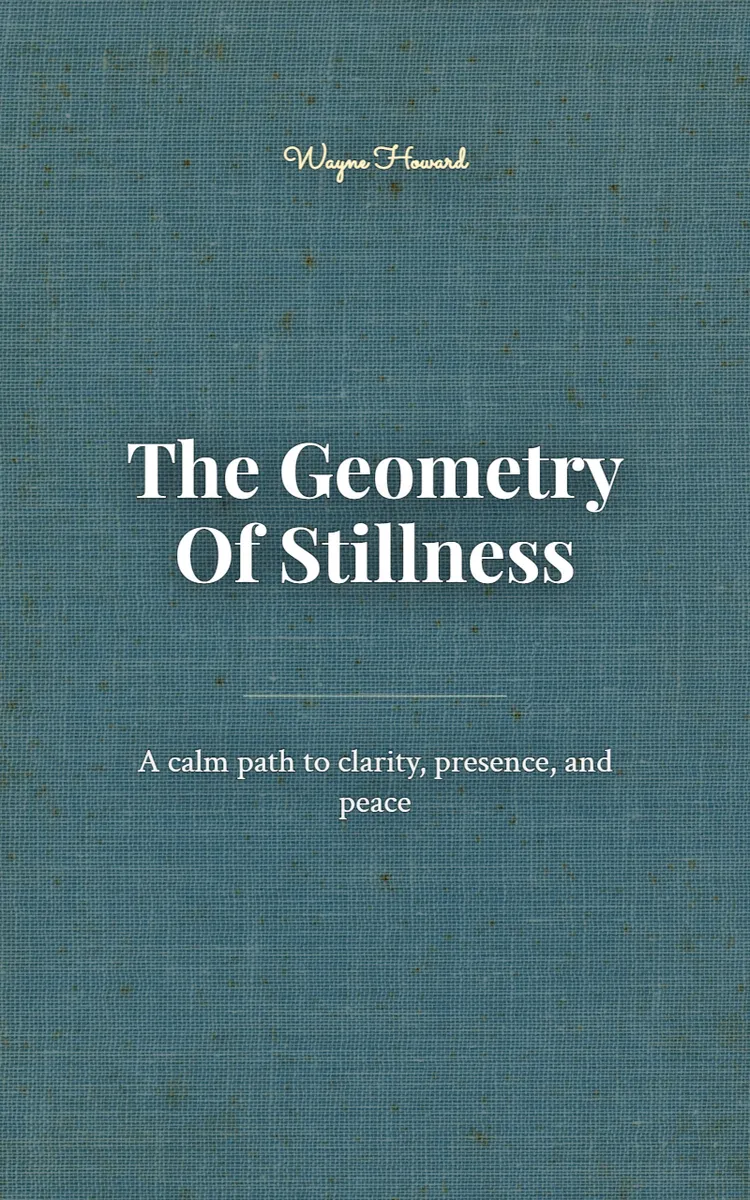
"The Geometry Of Stillness" is a inspirational book by Wayne Howard with 5 chapters and approximately 7,591 words. Mindfulness and reflective guidance for inner calm.
This book was created using Inkfluence AI, an AI-powered book generation platform that helps authors write, design, and publish complete books. It was made with the AI Inspirational Book Writer.
Frequently Asked Questions
What is "The Geometry Of Stillness" about?
Mindfulness and reflective guidance for inner calm
How many chapters are in "The Geometry Of Stillness"?
The book contains 5 chapters and approximately 7,591 words. Topics covered include Arriving Through Breath Anchors, Letting Thoughts Pass Without Grasping, Turning Toward Discomfort With Kindness, Designing a Daily Stillness Practice, and more.
Who wrote "The Geometry Of Stillness"?
This book was written by Wayne Howard and created using Inkfluence AI, an AI book generation platform that helps authors write, design, and publish books.
How can I create a similar inspirational book?
You can create your own inspirational book using Inkfluence AI. Describe your idea, choose your style, and the AI writes the full book for you. It's free to start.
Write your own inspirational book with AI
Describe your idea and Inkfluence writes the whole thing. Free to start.
Start writingCreated with Inkfluence AI


