

Read the first chapter
The whole of chapter one, free. About 9 min. Turn the pages with the arrows, your keyboard, or a swipe.
Chapter 1
The Holiness of God
When the Holy One Draws Near
The first sound in Isaiah’s temple vision is not music from a worship team. It is the cry of the seraphim: “Holy, holy, holy is the LORD of hosts; the whole earth is full of his glory!” (Isaiah 6:3). The foundations shake, smoke fills the house, and Isaiah does not step forward with confidence. He says, “Woe is me! For I am lost” (Isaiah 6:5). Before worship is led, holiness must be faced.
Biblical holiness explains why God is worthy of worship, why human beings cannot approach Him casually, and why worship leaders carry a serious responsibility. The God revealed in Scripture is not simply a larger version of us. He is morally pure, completely set apart, independent of creation, and glorious beyond our control. His character shapes the songs we choose, the posture we model, the way we prepare, and the reverence we bring into a room.
The earlier foundations of sacred space now lead us to the central reality: sacred space is sacred because the Holy One is present. The tabernacle, temple, gathered church, and worship platform have no power in themselves. God’s presence gives them weight. To understand worship rightly, we must first understand the God whom worship approaches.
Learning Objectives
• Define biblical holiness and divine otherness in plain language. - Explain how God’s holiness reveals human limits and shapes reverent worship. - Apply Isaiah 6 and related Scriptures to the preparation and practice of worship leading.
Ask yourself before moving on: When your team says, “God is here,” what do you believe that statement requires from your words, bodies, preparation, and conduct?
Holiness, Otherness, and the Human Limit
Holiness - God’s complete moral purity and His being set apart from all creation. The Hebrew word often translated “holy” is qadosh, meaning set apart or distinct. In Scripture, holiness is not merely a bright religious feeling. It describes who God is.
God is holy because there is no evil, weakness, corruption, or falsehood in Him. “God is light, and in him is no darkness at all” (1 John 1:5). He does not become good by obeying a standard outside Himself. His own character is the standard. Moses could say, “The Rock, his work is perfect, for all his ways are justice” (Deuteronomy 32:4).
Divine otherness - God’s complete distinction from creation. He made heaven and earth, but He is not part of the created order. “Before the mountains were brought forth, or ever you had formed the earth and the world, from everlasting to everlasting you are God” (Psalm 90:2). God is near, yet He is never ordinary. He is personal, yet He is not manageable. He speaks to His people, yet He remains the Lord.
This distinction matters because worship can easily reduce God to our emotional experience. A moving song, a darkened room, raised hands, or a strong sense of peace may accompany worship, but none of these creates God’s presence or defines His holiness. The Lord is holy whether the room feels alive or quiet. He is worthy when the team sings in perfect unity and when a congregation struggles to sing through grief.
The Bible shows this holiness through encounters that expose human limits. At the burning bush, God tells Moses, “Do not come near; take your sandals off your feet, for the place on which you are standing is holy ground” (Exodus 3:5). The ground is not holy because of its soil. It is holy because God is present. Moses covers his face because he is afraid to look at God (Exodus 3:6).
At Mount Sinai, God commands boundaries around the mountain (Exodus 19:10-24). Israel is invited into covenant, but not into careless access. The boundary teaches a simple truth: God’s nearness is a gift, not a human right. The people cannot approach on their own terms.
The same truth appears in Leviticus 10 when Nadab and Abihu offer “unauthorized fire” before the Lord and die in His presence. The passage is sobering because their worship is not rejected for being emotionally weak. They approach God in a way He has not commanded. Moses explains, “Among those who are near me I will be sanctified” (Leviticus 10:3). Those who serve near God must treat Him as holy.
This does not mean Christians return to the old covenant’s ceremonial system. Through Jesus Christ, believers have bold access to God (Hebrews 10:19-22). But biblical boldness is not casualness. We draw near because Christ has opened the way, not because holiness has become less serious. Hebrews holds both truths together: “Let us then with confidence draw near to the throne of grace” (Hebrews 4:16), and, “Let us offer to God acceptable worship, with reverence and awe” (Hebrews 12:28).
The fear of the Lord - humble, obedient wonder before God’s holiness, power, and judgment. It is not the panic of someone running from a cruel master. It is the response of a creature who knows that God is righteous and that life depends on His mercy. Proverbs calls it “the beginning of knowledge” (Proverbs 1:7). Psalm 130:4 says, “With you there is forgiveness, that you may be feared.” Forgiveness does not erase reverence; it deepens it.
For a worship team, this changes the question from “Did the service feel powerful?” to “Did our worship tell the truth about God?” A song may mention God’s love while ignoring His holiness, or mention His holiness while treating Him as a tool for personal success. Biblical worship holds together His mercy and majesty, His nearness and otherness, His welcome and His authority.
Consider Revelation 4. The living creatures do not stop saying, “Holy, holy, holy,” while the elders cast their crowns before the throne. Their worship is not built around self-expression. It is built around God’s character. Their bodies, words, and attention all say that glory belongs to Him.
A practical test follows: listen to the language your team uses in rehearsal. “We are going to create an atmosphere” may suggest that the team produces God’s presence. A more faithful statement is, “We will serve the congregation by making the truth of God clear and helping people respond to Him.” The first centers control in the team. The second recognizes dependence.
The practical takeaway is this: God’s holiness is not a mood to produce but a reality to honor. Before choosing a song, leading a transition, or stepping onto a platform, remember that the One you serve is both near enough to hear and holy enough to command your reverence.
A Worked Example: Reading Isaiah 6 Before Leading
Isaiah 6 gives worship leaders a clear pattern for thinking about holy approach. The passage is not a script for manufacturing a dramatic service. It is a revelation of God that reshapes the servant who sees Him.
1. Begin with the vision of God. Isaiah sees “the Lord sitting upon a throne, high and lifted up” (Isaiah 6:1). The first decision is to place God, not the leader or congregation, at the center. If a team plans a 60-minute service, the goal is not to make all 60 minutes impressive. The goal is to use every part of the service to tell the truth about the enthroned Lord.
2. Name the central attribute. The seraphim repeat the word “holy” three times. Repetition gives emphasis. The team may decide that the opening song must clearly declare God’s holiness rather than begin with a vague statement about personal feelings. A line such as “Holy, holy, holy, Lord God Almighty” directly serves the passage’s emphasis.
3. Recognize the effect of holiness. The foundations shake and the temple fills with smoke (Isaiah 6:4). Isaiah does not respond by congratulating himself on being invited into a powerful moment. He confesses, “I am a man of unclean lips” (Isaiah 6:5). The team therefore asks whether its preparation includes honest repentance. A 30-minute rehearsal cannot replace confession, but the team can set aside 5 minutes to pray specifically about pride, resentment, competition, or careless speech.
4. Receive cleansing as grace. A seraph touches Isaiah’s lips with a burning coal and declares that his guilt is taken away (Isaiah 6:6-7). Isaiah is not cleansed by vocal skill, emotional intensity, or public success. God provides cleansing. In Christian worship, this points to the cleansing accomplished by Christ. The team should prepare from grace, not perform to earn acceptance.
5. Wait for God’s call. Only after confession and cleansing does Isaiah hear, “Whom shall I send?” (Isaiah 6:8). The order matters. Service flows from encounter and surrender. A leader should not treat platform access as proof of spiritual maturity, but should receive every opportunity as a calling requiring faithfulness.
6. Choose the outcome. Suppose the team has two possible service plans. Plan A includes eight songs, several spontaneous transitions, and no clear movement toward confession or response. Plan B includes six songs, a Scripture reading from Isaiah 6, a congregational confession, and a closing song about God’s holiness and mercy. The second plan uses fewer songs but better reflects the passage’s movement: vision, conviction, cleansing, and surrender.
7. State the result. The worship service should not merely leave people saying, “That was intense.” It should help them see God truthfully, recognize their need, receive His mercy, and respond in obedience. The final result is a service shaped by God’s holiness rather than by the team’s desire to create a powerful atmosphere.
This example also guards against a common mistake. Isaiah 6 is not permission to imitate smoke, darkness, loud volume, or dramatic effects. The weight of the passage comes from God’s holiness and Isaiah’s response. A quiet reading of the text can be more faithful than a highly produced moment that leaves the congregation impressed with the production.
Ask your team to work through the same seven movements with one upcoming service: What will help the congregation see God? Where will sin and human limits be acknowledged? How will the gospel make cleansing and access clear? What response of obedience will the service invite?
The practical takeaway is that reverence is not added after the song list is complete. It shapes the decisions from the beginning.
Practice and Answer Key
1. What is the difference between holiness and divine otherness? Hint: Holiness includes God’s moral purity; otherness emphasizes His distinction from creation.
2. Why does access through Jesus produce reverence rather than casualness? Hint: Read Hebrews 10:19-22 and Hebrews 12:28 together. Ask what makes access possible and what kind of worship follows.
3. A worship leader says, “We need to create God’s presence tonight.” What biblical concern should you raise? Hint: Compare that statement with Exodus 3:5 and Psalm 139:7-10. God’s presence is not manufactured by music.
4. In Isaiah 6, why does confession come before Isaiah’s commission? Hint: Trace the order in Isaiah 6:1-8: vision, conviction, cleansing, then sending.
5. Name one change your team could make so that a service communicates God’s holiness more clearly. Hint: Consider song language, Scripture reading, transitions, rehearsal prayer, volume, or the way the leader speaks about God.
Answer Key: Holiness describes God’s pure and set-apart character; divine otherness describes His distinction from creation. Christ gives believers access, but that access is costly grace and therefore leads to reverence. God’s presence cannot be produced by a worship team; the team can only respond faithfully to the God who is already present. Isaiah is commissioned after cleansing because service must flow from God’s mercy rather than human confidence. Faithful changes will vary, but each should move attention away from performance and toward God’s character, truth, and rightful authority.
The Holy One is not made weighty by our music. Our music becomes weighty when it tells the truth about Him. At the center of every gathered service stands the same reality Isaiah saw: God is high and lifted up, holy beyond comparison, and merciful enough to draw near.
End of chapter one. 7 more chapters and about 15,689 words in the full book.
Swipe or use the arrows to turn the page


What's inside: 8 chapters
- 1. The Holiness of God
- 2. Sacred Space in Israel
- 3. Levitical Priests and Atonement
- 4. Fear of the Lord in Worship
- 5. Christ, the True High Priest
- 6. The Church as Living Temple
- 7. Personal Holiness for Worship Leaders
- 8. Leading Worship with Sober Responsibility
About this book
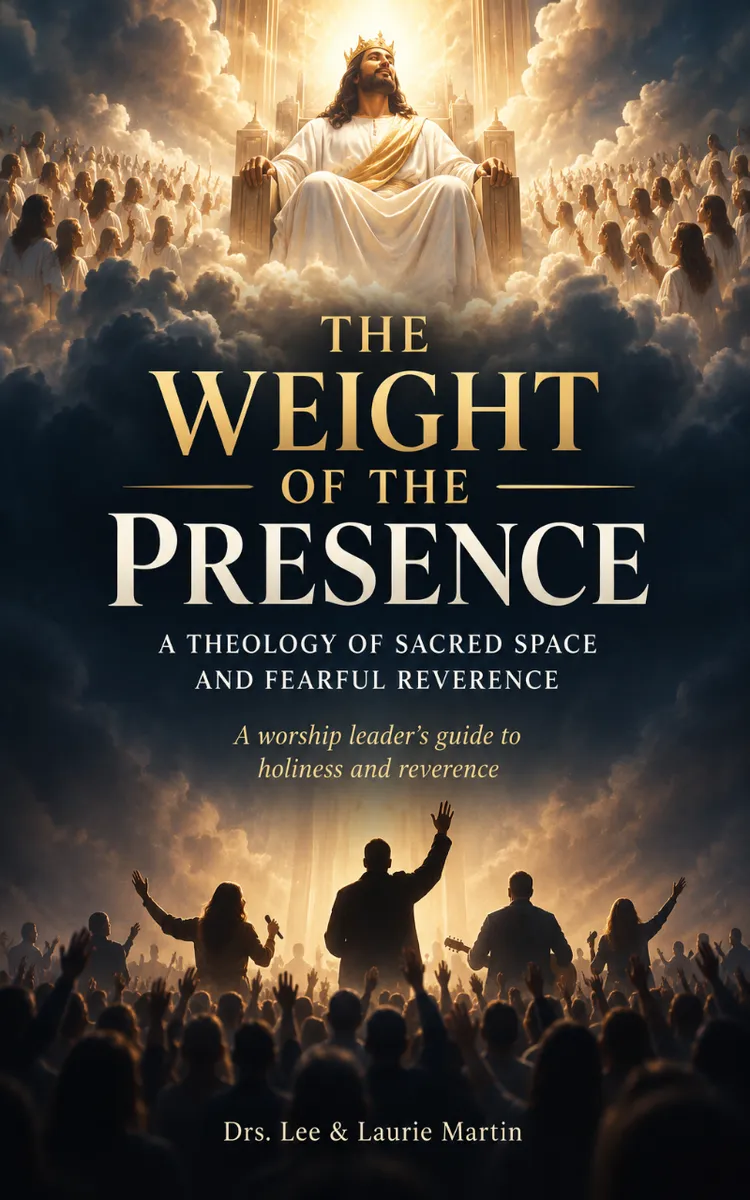
"The Weight Of The Presence: A Theology Of Sacred Space And Fearful Reverence" is a education book by Drs. Lee & Laurie Martin with 8 chapters and approximately 15,689 words. Biblical theology of sacred space, priesthood, worship, and reverence.
This book was created using Inkfluence AI, an AI-powered book generation platform that helps authors write, design, and publish complete books. It was made with the AI Lesson Plan Generator.
Frequently Asked Questions
What is "The Weight Of The Presence: A Theology Of Sacred Space And Fearful Reverence" about?
Biblical theology of sacred space, priesthood, worship, and reverence
How many chapters are in "The Weight Of The Presence: A Theology Of Sacred Space And Fearful Reverence"?
The book contains 8 chapters and approximately 15,689 words. Topics covered include The Holiness of God, Sacred Space in Israel, Levitical Priests and Atonement, Fear of the Lord in Worship, and more.
Who wrote "The Weight Of The Presence: A Theology Of Sacred Space And Fearful Reverence"?
This book was written by Drs. Lee & Laurie Martin and created using Inkfluence AI, an AI book generation platform that helps authors write, design, and publish books.
How can I create a similar education book?
You can create your own education book using Inkfluence AI. Describe your idea, choose your style, and the AI writes the full book for you. It's free to start.
Write your own education book with AI
Describe your idea and Inkfluence writes the whole thing. Free to start.
Start writingCreated with Inkfluence AI


