

Read the first chapter
The whole of chapter one, free. About 3 min. Turn the pages with the arrows, your keyboard, or a swipe.
Chapter 1
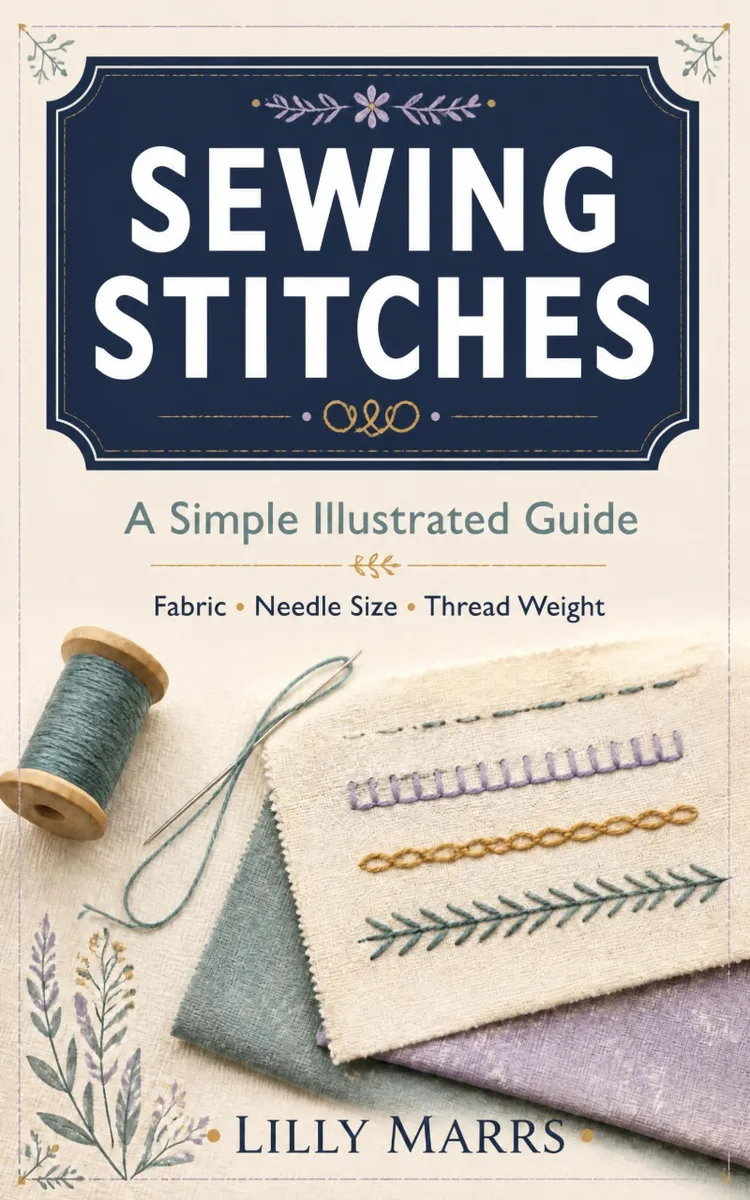
SEWING STITCHES
A Simple Illustrated Guide
Fabric • Needle Size • Thread Weight
What's Inside
• Step-by-step diagrams for 8 essential stitches
• Recommended fabric types for each stitch
• Recommended needle sizes
• Recommended thread weights & pairings
• Quick-reference chart at the end
Running
• Backstitch
• Whipstitch
• Blanket
Slip Stitch
• Catch Stitch
• French Knot
• Chain
Getting Started • Needles, Thread Weights & Brands
Hand Needle Sizes
Size Use for Fabric
3–5 Canvas, upholstery, leather, heavy denim Heavy
6–7 Denim, wool, medium-heavy sewing Med–heavy
8–9 Everyday sewing, cotton, linen (most versatile) Medium
10–12 Light fabrics, sheers, fine detail Light / sheer
Thread Weights & Recommended Brands
Type Weight Recommended brands Needle
All-purpose Tex 30–40 Gütermann Sew-All, Coats Dual Duty XP, Mettler Metrosene 8–9
Heavy / topstitch Tex 70–100 Gütermann Top Stitch, Coats Extra Strong, Mettler Extra Strong 5–7
Fine / light 60 wt / Tex 18–27 Mettler Silk-Finish 60, Superior MicroQuilter, Gütermann fine 10–12
Quilting cotton 40–50 wt Aurifil 50wt, Mettler Silk-Finish 50, Gütermann Cotton 8–10
Embroidery floss 6-strand DMC Six-Strand, Anchor Stranded Cotton 7–9
Silk / specialty Fine silk Tire Silk, Gütermann Silk, YLI Silk 10–12
Brand & pairing tips
• Gütermann Sew-All and Coats Dual Duty XP are excellent everyday defaults (polyester, strong, low lint).
• Aurifil 50wt is a quilter favorite — fine, strong, and comes in a huge color range.
• DMC floss is the most widely available embroidery standard; Anchor is a close alternative.
• Match thread thickness to fabric: heavy thread on heavy fabric, fine thread on sheers.
• If thread shreds, try a larger needle eye or a higher-quality brand (cheaper thread often frays).
• Test fabric + needle + thread + stitch on a scrap before starting your project.
Thread Strength Comparison
How strong is your thread?
Relative strength matters for seams that take stress. Rankings below are approximate for typical products.
Rank Thread type Relative strength Best uses Example brands
1 Heavy polyester / nylon Highest Denim, bags, upholstery Gütermann Top Stitch
2 All-purpose polyester High Most garments, general seams Gütermann Sew-All, Coats XP
3 Quilting cotton (50 wt) Medium–high Piecing, quilting, light seams Aurifil 50wt, Mettler 50
4 Standard cotton (40–50) Medium Soft seams, natural look Gütermann Cotton
5 Embroidery floss (per strand) Medium–low* Decorative only (not seams) DMC, Anchor
6 Fine / silk thread Lower Sheers, invisible hems, detail Tire Silk, Gütermann Silk
*Floss is strong enough for surface embroidery but not for structural seams.
Fiber type vs strength & behavior
Fiber Strength Stretch Abrasion Notes
Polyester Very high Low–med Excellent Best all-around; resists rot & UV
Nylon Very high Higher Excellent Very strong; can be springy
Cotton Medium Low Good Soft, natural; can break under high stress
Silk Medium Low Fair Beautiful sheen; weaker when wet
Linen High Very low Very good Strong but stiff; less common as thread
When does strength matter most?
• High-stress seams (crotch, underarms, bag straps, buttonholes) → polyester or heavy thread.
• Children’s clothes and workwear → prefer polyester all-purpose over cotton.
• Decorative stitches (French knot, chain, blanket on felt) → floss is fine; strength is secondary.
• Heirloom / soft hand-feel seams → cotton is pleasant but avoid it where the seam may strain.
• Rule: the thread should not be the weakest part of the seam — match or exceed fabric strength.
End of chapter one. 8 more chapters in the full book.
Swipe or use the arrows to turn the page

The World In Chaos 6x9 Interior

When Everyone Else Has Moved On 8 5x11 196p REVISED v3

The Blind Spot of Reality EDITED Garamond 6x9
What's inside: 9 chapters
- 1. SEWING STITCHES
- 2. 1. Running Stitch
- 3. 2. Backstitch
- 4. 3. Whipstitch (Overcast)
- 5. 4. Blanket Stitch
- 6. 5. Slip Stitch (Ladder Stitch)
- 7. 6. Catch Stitch (Herringbone)
- 8. 7. French Knot
- 9. 8. Chain Stitch
About this book
"Sewing Stitch Guide" is a general book by Lilly Marrs with 9 chapters and approximately 1,587 words. It covers key insights and practical takeaways on the topic.
This book was created using Inkfluence AI, an AI-powered book generation platform that helps authors write, design, and publish complete books.
Frequently Asked Questions
What is "Sewing Stitch Guide" about?
"Sewing Stitch Guide" is a general book by Lilly Marrs covering key insights and practical takeaways on the topic.
How many chapters are in "Sewing Stitch Guide"?
The book contains 9 chapters and approximately 1,587 words. Topics covered include SEWING STITCHES, 1. Running Stitch, 2. Backstitch, 3. Whipstitch (Overcast), and more.
Who wrote "Sewing Stitch Guide"?
This book was written by Lilly Marrs and created using Inkfluence AI, an AI book generation platform that helps authors write, design, and publish books.
Write your own book with AI
Describe your idea and Inkfluence writes the whole thing. Free to start.
Start writingCreated with Inkfluence AI


