

Read the first chapter
The whole of chapter one, free. About 9 min. Turn the pages with the arrows, your keyboard, or a swipe.
Chapter 1
A Vanishing Pastry Supplier
The copper clock above Camille Dupont’s pastry bench clicked toward six, each sound swallowed by the soft thunder of rain against the kitchen windows. Beyond the glass, Paris was still blue with morning, its rooftops slick beneath a sky the color of pewter.
“Another tray of apricot choux, and I can stop worrying,” Camille said.
Marc, her trusted supplier, stood beside the open delivery door with a clipboard tucked beneath one arm. His wool coat was darkened at the shoulders, and a paper bag of flour rested against his boot. “You stopped worrying yesterday.”
“Yesterday I was pretending.”
“That is a professional skill.”
“It is a pastry chef’s first professional skill.” Camille slid a tray beneath the oven light and checked the rows of golden shells. “The second is knowing when someone has switched the butter.”
Marc gave her a wounded look. “I would never.”
“You brought me salted butter last Tuesday.”
“For the salted caramel.”
“For the lemon cream.”
“And did anyone die?”
“Only three dozen éclairs.”
He laughed, but the sound faded quickly. The museum fundraiser that evening had filled the kitchen with lists, ribbon, sugar, and the kind of pressure that made every small mistake feel criminal. Camille had promised two hundred choux pastries, six croquembouches, and miniature pear tarts for the Musée des Histoires Civiques, where donors would gather beneath restored paintings and admire the museum’s new exhibition.
The pastries had to leave by four.
She needed Marc’s final delivery before noon: vanilla, butter, pears, and the pale gold sugar used for the spun-sugar cages. Without it, the croquembouches would stand unfinished and the fundraiser would become a table of apologies.
Camille reached for the clipboard. “Show me the delivery note.”
Marc did not hand it over.
The hesitation was small, but she noticed it. Marc had a habit of tapping the corner of every invoice twice before passing it across. This time his fingers remained still.
“What is it?” she asked.
“Nothing.”
“That is a poor answer from a man carrying half my afternoon.”
He glanced toward the courtyard. The delivery van sat beyond the open doors, its rear lamps glowing red through the rain. “I need to check the back.”
“You checked it before you came in.”
“I may have missed something.”
“Marc.”
He met her eyes. For a moment, the kitchen seemed too bright around them - the white tiles, the polished copper, the neat rows of pastry shells waiting to be filled.
“I’ll be two minutes,” he said.
Then he stepped outside.
Camille turned back to the oven. The timer rang. She pulled out the tray, and a wave of heat brushed her face. The choux were perfect, hollow and crisp, their tops shining like lacquer. She set them on the rack and reached for the piping bag.
A minute passed.
Then three.
The rain ticked against the metal awning. Somewhere in the front shop, the refrigerator motor shuddered awake.
“Marc?”
No answer.
She wiped her hands on her apron and went to the delivery door. The courtyard was empty.
The van remained, its rear doors unlocked. One of them swung slightly in the wind. Inside, crates had been stacked in careful rows, but the space where the vanilla and butter should have been was bare. A single wooden box lay on its side, its lid split.
“Marc?” Camille called again.
Only rain answered.
She stepped into the courtyard. Cold water seeped through the soles of her kitchen shoes. Near the van, a trail of muddy marks crossed the stones and disappeared beneath the archway leading toward the street. They were not quite footprints. The marks were too narrow, as if something heavy had been dragged.
Camille’s stomach tightened.
She hurried back inside and found Marc’s clipboard on the floor beside the delivery door. The paper had been torn from its metal clip. Beneath it lay a folded square of cream-colored card.
Her name was written on the outside.
Camille picked it up. The card was dry, though everything around it was damp. A faint blue stamp marked one corner: a rectangle crossed by three thin lines. She had seen it before on the museum’s fundraiser invitations.
Her fingers felt suddenly clumsy.
She unfolded the card.
The message inside contained no greeting, no explanation.
M-17 / BLUE ROOM THREE KEYS, ONE DOOR ASK WHO ARRIVES AFTER MIDNIGHT
Below the words was a small drawing of a sugar cage.
Camille read it twice. The letters seemed to shift beneath the kitchen lights.
The front bell chimed.
She spun around, expecting Marc, but a courier stood in the shop doorway with a helmet tucked beneath one arm. “Delivery for Camille Dupont?”
“I’m Camille.”
He held out a narrow parcel. “Signed this morning.”
She did not take it. “Who sent it?”
The courier checked his device. “No name. Just your address.”
Camille looked past him at the empty street. A bus rolled along the wet pavement, spraying silver water against the curb. “Did you see a man leave this building?”
“Which man?”
“My supplier. Gray coat. About this tall.” She raised a hand to her shoulder. “He went into the courtyard.”
The courier shrugged. “I came through the front.”
The bell gave a soft, impatient tremble above his head.
Camille took the parcel. It was light, wrapped in brown paper, and tied with blue thread. The knot had been pulled so tightly that the paper had puckered around it. She set it on the counter without opening it.
“Call the police,” the courier said.
“I know.”
“Good.”
He left before she could ask anything else.
Camille locked the shop door. The click of the bolt sounded absurdly loud.
She called Marc. The first ring went unanswered. On the second, his voice came through, broken by static.
“Marc? Where are you?”
No reply.
“Marc, answer me.”
A scrape. A breath. Then a faint metallic clatter.
The line went dead.
Camille stared at the phone. She called again. This time it went straight to voicemail.
Her first thought was the fundraiser. The butter would soften. The pears would bruise. The sugar cages would never be finished.
Her second thought was the muddy trail.
She took the cream-colored card to the prep table and placed it beside the museum invitation. The blue stamp was identical. The museum had called the room on its event map the Blue Gallery, not the Blue Room. M-17 could be a storage code, an exhibit number, or something Marc had written for himself.
The drawing of the sugar cage unsettled her most. It was not a symbol used by the museum. It was hers.
Only three people had seen the design: Camille, Marc, and the museum’s events coordinator, who had approved it for the dessert display.
She picked up the parcel and cut the blue thread with a paring knife.
Inside was a brass key, cold against her palm.
A paper label hung from it.
M-17.
Camille’s breath caught.
The kitchen door rattled under a sudden gust. She looked toward the courtyard, where rain blurred the van and the broken wooden box. The museum stood six streets away, its stone entrance already being prepared for the evening crowd. If M-17 belonged to the museum, Marc had left her a path.
But the note had not asked her to follow it.
It had warned her.
Camille wrapped the key in a clean cloth and slipped it into the pocket of her apron. Then she picked up her phone and dialed emergency services.
A calm voice answered.
“My supplier has disappeared,” Camille said. “His van is outside my patisserie. There’s a note, and I think it may be connected to the museum fundraiser tonight.”
The operator asked questions. Camille answered them all, though her eyes stayed fixed on the cream-colored card.
When she finished, the operator told her not to touch anything else.
“I already touched the note,” Camille said.
“Then do not touch anything more.”
The first police car arrived twelve minutes later. Blue lights washed over the wet courtyard and flashed across the kitchen’s copper pans. Two officers entered through the delivery door, followed by a tall man in a charcoal coat whose shoes were spotless despite the rain.
He showed his badge without flourish.
“Inspector Lucien Moreau,” he said. “Which one is Camille Dupont?”
“I am.”
His gaze moved from her face to the van, the open doors, and the card on the prep table. “You called about Marc?”
“Yes.”
“Marc what?”
“Marc D Joiner.”
The inspector’s expression changed - not surprise exactly, but recognition sharpened by caution.
“You know him well?”
“Well enough to trust him with my supplies.”
“And well enough to know whether he would leave this?”
Camille gestured toward the note. “He would not leave without telling me. Not like this.”
Moreau put on gloves before lifting the card. His eyes moved over the writing, then stopped at the three lines in the corner.
“Where did you find the key?”
“In the parcel.”
“Who delivered it?”
“A courier. He said there was no sender.”
Moreau looked toward the officer examining the van. “Seal the courtyard. No one enters or leaves until we finish.”
Camille stepped forward. “The fundraiser is tonight. I have two hundred pastries to deliver.”
“The fundraiser can wait.”
“It cannot. The museum is expecting - ”
“Madame Dupont.” His voice remained gentle, which made the interruption firmer. “Marc D Joiner did not vanish because your croquembouches are late.”
The words struck harder than they should have.
“What are you saying?”
Moreau folded the card into an evidence sleeve. “I’m saying Marc has spent months looking into something connected to that museum.”
Camille’s hands tightened around the edge of the table. “Looking into what?”
The inspector glanced at the blue stamp.
“Human trafficking.”
The kitchen seemed to contract around her. The oven fan hummed. A drop of rain fell from the open door and darkened the tile.
“No,” Camille said. “The museum is hosting a cultural fundraiser.”
“Places can host more than one story.”
“Marc supplied restaurants. He delivered flour and fruit. He knew every café from here to the river.”
“He also uncovered a trafficking network operating through people promised work in the music industry.” Moreau’s eyes returned to the note. “He brought the first evidence to the authorities.”
Camille thought of Marc’s hesitation, the way he had looked toward the courtyard before leaving. She thought of the broken crate and the brass key warming in her apron pocket.
“Did he tell you he was in danger?”
“No.”
“Then he told you less than he should have.”
Moreau’s phone rang. He listened, said nothing, and ended the call.
“We found a camera near the archway,” he said. “The recording has been removed.”
Camille stared at him. “Can I go to the museum? M-17 may be there.”
“No.”
“It could tell us where he went.”
“It could also tell someone that you found the note.”
“I already have the key.”
Moreau’s gaze dropped to her apron. Camille realized too late that he had noticed the outline.
“Give it to me.”
She hesitated.
“Camille.”
She pulled out the cloth and placed it in his gloved hand. The brass key flashed once beneath the police lights.
Moreau turned it over. “M-17.”
“Can you use it?”
“Not while the museum is full of donors, staff, and private security. We need a warrant and a controlled search.”
“And Marc?”
“We find him first.”
Behind the inspector, an officer stretched yellow tape across the courtyard entrance. The bright strip cut the patisserie away from the street, from the museum, from every answer Camille had been ready to chase.
Moreau slipped the key into an evidence bag.
“Stay here,” he said. “Do not speak to the museum.”
Camille looked at the note through its plastic sleeve. The three lines in the corner resembled bars across a window. Beneath them, the sugar cage waited in miniature, delicate and precise.
She had wanted to keep the fundraiser on schedule. She had wanted to decode the note and find Marc before the evening began.
Now she had decoded enough to understand the cost.
The museum was not merely hosting the night’s celebration. It was part of the locked door.
And somewhere beyond the police cordon, Marc D Joiner was missing.
End of chapter one. 39 more chapters in the full book.
Swipe or use the arrows to turn the page


What's inside: 40 chapters
- 1. A Vanishing Pastry Supplier
- 2. The Cop’s Quiet Interrogation
- 3. Marc D Joiner’s Museum Clue
- 4. The Locked Service Door
- 5. A Recipe That Hides Numbers
- 6. A Sudden Power Cut at Dawn
- 7. Following the Dates to Montreuil
- 8. The Alley Smells Like Almonds
- 9. Camille Chooses to Tell Lucien
- 10. A Gallery Donor’s False Alibi
- 11. The Torn Scrap Reappears in Wax
- 12. No One Answers at Rue des Fleurs
- 13. Camille’s Fear of Getting Someone Hurt
- 14. The Delivery Van’s Hidden Compartment
- 15. Lucien Confirms Marc D Joiner’s Pattern
- 16. The Museum Music Night Turns Sour
- 17. Camille Risks Her Badge of Trust
- 18. A Stage Prop Reveals a Ledger
- 19. The Seine’s Night Ferry of Lies
- 20. Marc D Joiner’s Name in the Ledger
- 21. Camille Bargains for One Door Key
- 22. The Meeting Room Is Already Cleared
- 23. A Scorched Badge Imprint Leads Back
- 24. Zoé Bernard’s Office Smells of Threats
- 25. Lucien Arrives with a Search Warrant
- 26. Empty Boxes, Full Surveillance
- 27. Camille Confronts Hélène Roussel
- 28. The Warehouse Door Won’t Open
- 29. Inside the Compartment, a Message
- 30. Camille Watches Evidence Burn Again
- 31. Smudged Map Corner to Final Rue
- 32. A Courtyard Escape Under Searchlights
- 33. Camille’s Choice to Go In
- 34. Zoé Bernard’s Trap with Pastry Boxes
- 35. Lucien’s Raid Catches the Network
- 36. Marc D Joiner’s Story Finally Stands
- 37. Pastries for the Survivors’ Vigil
- 38. A Thank-You Note from Lucien
- 39. The Museum Reopens with New Rules
- 40. A Sweet Ending for Marc D Joiner
About this book
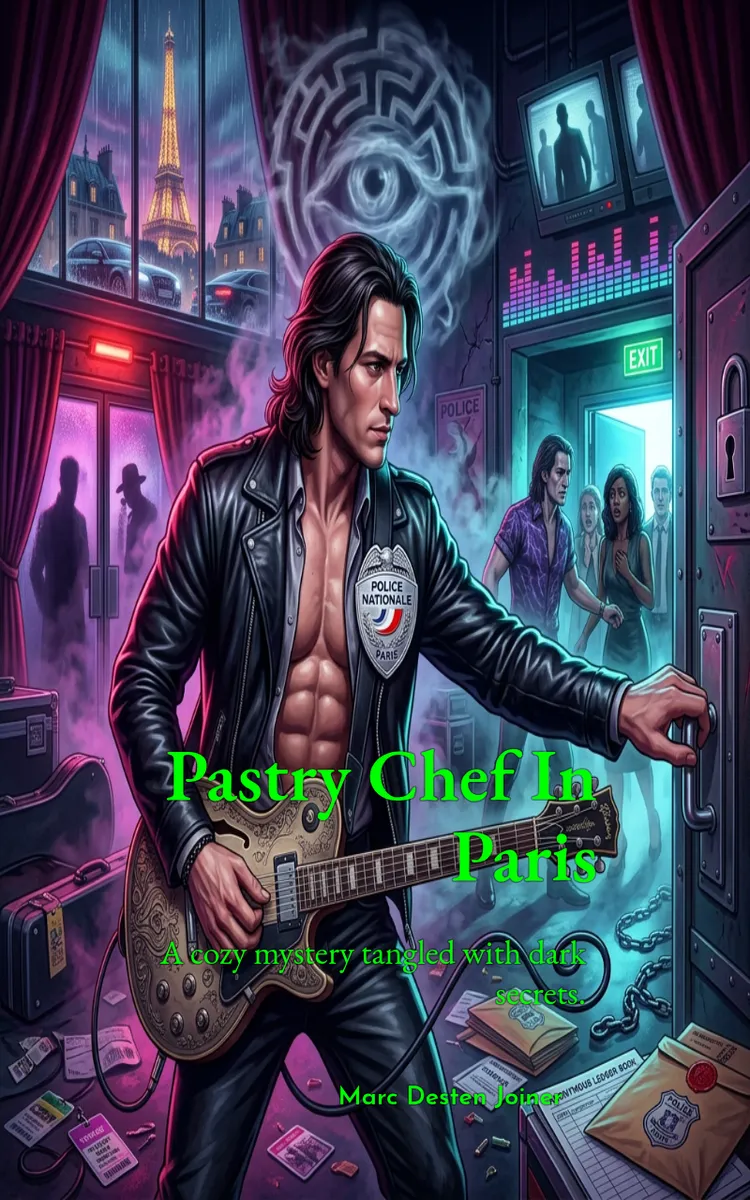
"Pastry Chef In Paris" is a fiction book by Marc Desten Joiner with 40 chapters and approximately 83,990 words. A pastry chef solves crimes in Paris.
This book was created using Inkfluence AI, an AI-powered book generation platform that helps authors write, design, and publish complete books. It was made with the AI Novel Writer.
Frequently Asked Questions
What is "Pastry Chef In Paris" about?
A pastry chef solves crimes in Paris
How many chapters are in "Pastry Chef In Paris"?
The book contains 40 chapters and approximately 83,990 words. Topics covered include A Vanishing Pastry Supplier, The Cop’s Quiet Interrogation, Marc D Joiner’s Museum Clue, The Locked Service Door, and more.
Who wrote "Pastry Chef In Paris"?
This book was written by Marc Desten Joiner and created using Inkfluence AI, an AI book generation platform that helps authors write, design, and publish books.
How can I create a similar fiction book?
You can create your own fiction book using Inkfluence AI. Describe your idea, choose your style, and the AI writes the full book for you. It's free to start.
Write your own fiction book with AI
Describe your idea and Inkfluence writes the whole thing. Free to start.
Start writingCreated with Inkfluence AI


