

Read the first chapter
The whole of chapter one, free. About 3 min. Turn the pages with the arrows, your keyboard, or a swipe.
Chapter 1
Addiction Pathways and Onset Triggers
Scope, Outcome, and Intended Use
A client misses a counseling appointment after using alone, then reports that the substance “just happened.” The Path-to-Use Ladder makes the sequence visible: vulnerability, trigger, thought, access, use, and consequence. This chapter explains how substance disorders typically begin without reducing the person to a label or assuming diagnostic certainty.
Who this is for: New Christian counselors, ministry leaders working within their training, and clients using this as a professional self-help reference alongside licensed care. The expected outcome is improved recognition of early onset patterns, clearer safety decisions, and a documented plan for interrupting escalation.
Key benefits include:
• Mapping substance use before intoxication occurs. - Distinguishing risk factors from proof of a disorder. - Connecting clinical observations with Scripture and identity in Christ. - Preparing focused questions for assessment and referral.
This is a Biblically based Clinical counseling desk reference manual, grounded in Scripture. It is a Clinical teaching guide, not a Daily Devotional.
Mechanisms, Causes, and Risk Factors
Substance disorders often develop through repeated reinforcement. A substance may temporarily reduce distress, increase energy, numb grief, or support belonging. The brain then learns that use changes an unwanted internal state. Repetition can strengthen craving, tolerance (needing more for a similar effect), and withdrawal (physical or emotional symptoms after reduction). These patterns vary; they require assessment rather than assumption.
Use the Path-to-Use Ladder to document the earliest observable link:
1. Vulnerability: trauma exposure, sleep disruption, chronic pain, isolation, untreated mental-health symptoms, family history, or easy access. 2. Trigger: conflict, shame, celebration, physical discomfort, a location, person, time of day, or intrusive memory. 3. Interpretation: “I cannot tolerate this,” “God has abandoned me,” or “One time will not matter.” 4. Access and ritual: contacting a supplier, entering a familiar setting, preparing equipment, or withdrawing from accountability. 5. Use and reinforcement: short-term relief followed by impairment, conflict, financial harm, secrecy, or renewed craving.
Scripture addresses both responsibility and worth. Identity in Christ is not earned through abstinence or lost through relapse; it is grounded in belonging to Christ (2 Corinthians 5:17; Galatians 2:20). At the same time, believers are called to truthful self-examination and wise accountability (1 Corinthians 10:12-13; James 5:16). Counselors should avoid presenting spiritual failure as the sole cause or spiritual practice as a substitute for licensed treatment.
Actionable Assessment and Safety Protocol
At intake, ask about the previous 14 days and record each ladder link: substance, amount if known, route, time, setting, trigger, perceived benefit, consequence, and current access. Review the map at every appointment; complete a brief check-in at least weekly during early counseling.
Use this sequence:
1. Identify the earliest warning link, not only the final use. 2. Select one interruption: leave the setting, contact a named support person, delay access for 20 minutes, or attend a scheduled treatment or recovery meeting. 3. Reassess after 7 days and revise the plan; after four consecutive weeks of reliable reporting, address deeper beliefs, grief, trauma, and relational repair with appropriate clinical support. 4. Coordinate referrals with consent and document releases, boundaries, and follow-up dates.
Urgent professional evaluation is required for suspected overdose, slowed or stopped breathing, chest pain, seizure, severe confusion, hallucinations, suicidal intent, violent intent, or dangerous withdrawal symptoms. Contact emergency services for immediate danger. Do not direct a client to stop alcohol, benzodiazepines, or other substances abruptly without medical guidance.
| Observation | Counselor response | |---|---| | Increasing secrecy or access behaviors | Same-week clinical assessment | | Repeated failed attempts to cut down | Licensed substance-use evaluation | | Intoxication during session | Do not conduct routine counseling; assess immediate safety and arrange appropriate care |
Frequent Errors
Treating the first reported use as the beginning
• Why it happens: Clients often report the visible event, while earlier triggers remain unexamined. - What to do instead: Map the preceding 24 hours and identify the first change in sleep, mood, setting, thought, or access.
Equating relapse with loss of Christian identity
• Why it happens: Shame can be mistaken for conviction, and moral language can eclipse clinical risk. - What to do instead: Address behavior honestly, affirm identity in Christ, and connect the client with treatment, accountability, and pastoral support.
Using prayer as the entire intervention
• Why it happens: Spiritual care is essential, but counselors may lack a clear referral protocol. - What to do instead: Pray with consent, document the ladder, coordinate licensed care, and monitor safety at each appointment.
The earliest interruption point is usually more useful than the final consequence. Faithful counseling holds truth, safety, skilled treatment, and identity in Christ together.
End of chapter one. 9 more chapters in the full book.
Swipe or use the arrows to turn the page

Spirit-Led Whole-Person Renewal

ChurchBased Christian Biblical Counseling Ministry

Anxiety And Panic Counseling Desk Reference
What's inside: 10 chapters
- 1. Addiction Pathways and Onset Triggers
- 2. Screening, DSM-5 Terms, and Risk Tiers
- 3. Motivational Interviewing for Change Talk
- 4. Identity in Christ and Shame Reversal
- 5. Craving, Urges, and HALT-Plus Skills
- 6. Withdrawal, Detox, and Medical Safety Protocols
- 7. Relapse Prevention Planning and Trigger Maps
- 8. Trauma-Informed Counseling for Substance Use
- 9. Family Systems, Enabling, and Healthy Boundaries
- 10. Aftercare, Church Partnerships, and Deliverance Discernment
About this book
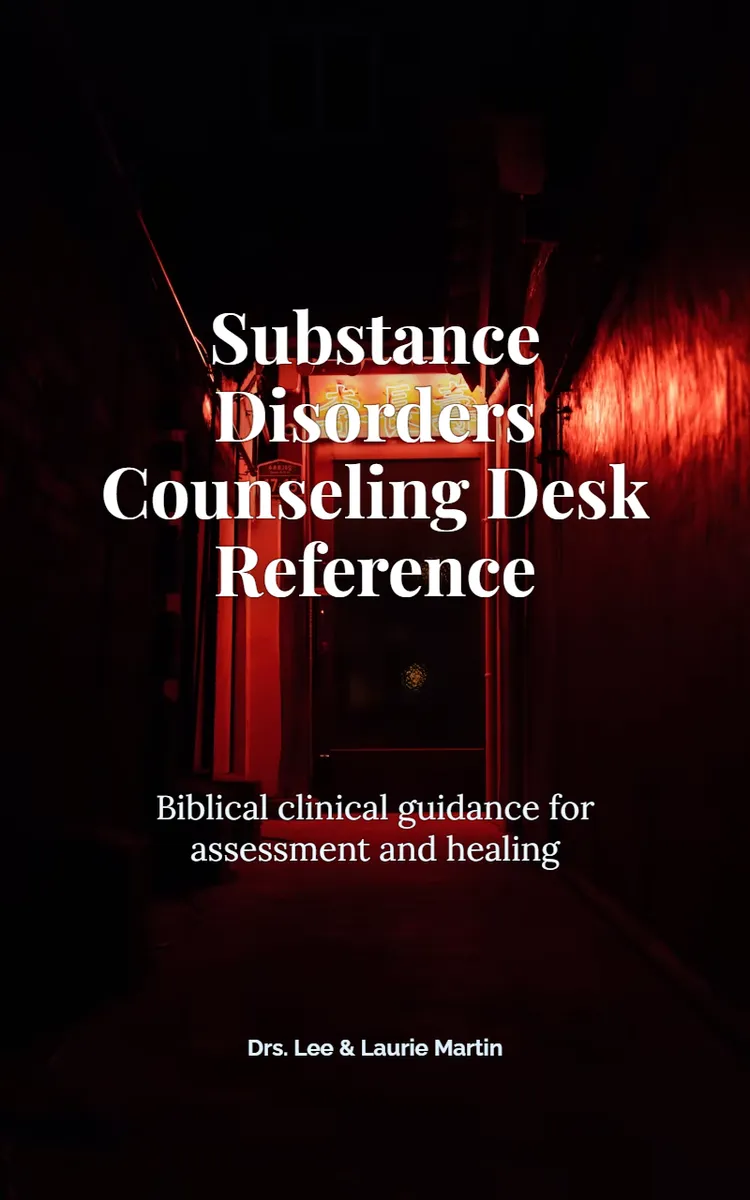
"Substance Disorders Counseling Desk Reference" is a clinical guide book by Drs. Lee & Laurie Martin with 10 chapters and approximately 6,952 words. Clinical counseling manual for substance disorders grounded in Scripture.
This book was created using Inkfluence AI, an AI-powered book generation platform that helps authors write, design, and publish complete books. It was made with the AI Health Book Generator.
Frequently Asked Questions
What is "Substance Disorders Counseling Desk Reference" about?
Clinical counseling manual for substance disorders grounded in Scripture
How many chapters are in "Substance Disorders Counseling Desk Reference"?
The book contains 10 chapters and approximately 6,952 words. Topics covered include Addiction Pathways and Onset Triggers, Screening, DSM-5 Terms, and Risk Tiers, Motivational Interviewing for Change Talk, Identity in Christ and Shame Reversal, and more.
Who wrote "Substance Disorders Counseling Desk Reference"?
This book was written by Drs. Lee & Laurie Martin and created using Inkfluence AI, an AI book generation platform that helps authors write, design, and publish books.
How can I create a similar clinical guide book?
You can create your own clinical guide book using Inkfluence AI. Describe your idea, choose your style, and the AI writes the full book for you. It's free to start.
Write your own clinical guide book with AI
Describe your idea and Inkfluence writes the whole thing. Free to start.
Start writingCreated with Inkfluence AI


