
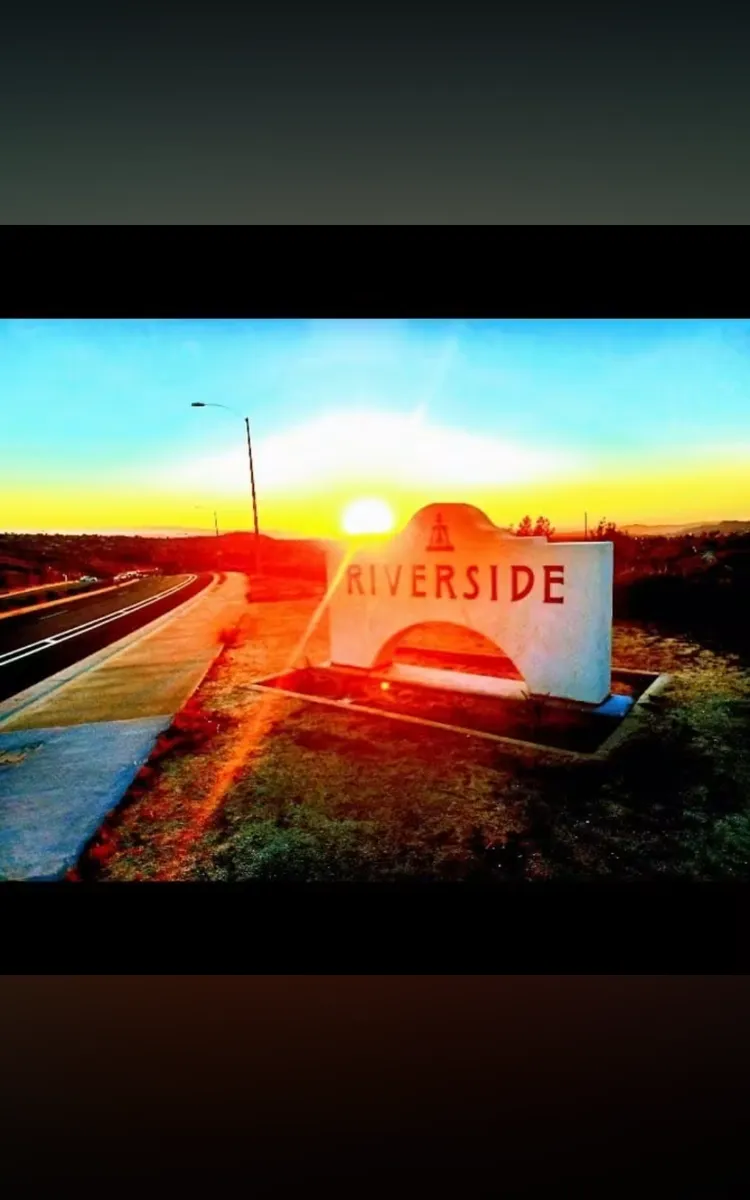

Read the first chapter
The whole of chapter one, free. About 9 min. Turn the pages with the arrows, your keyboard, or a swipe.
Chapter 1
Three Lights Over Riverside
The barbecue spat grease onto Thomas’s wrist just as Johnny shouted from the lawn.
“Birthday boy, that’s not how you cook a steak.”
Thomas jerked the tongs, and the steak slid against the grate with a hiss. Behind him, Riverside afternoon pressed bright and dry against the backyard: patio stones hot beneath his shoes, citrus leaves ticking in the faint wind, a blue plastic cooler sweating beside the folding table. Twenty-seven people filled the yard, counting the dogs. Family crowded beneath the aluminum awning while friends claimed lawn chairs, steps, and any strip of shade they could find.
Thomas lifted his wrist and watched the red mark rise.
“Then come do it yourself,” he called.
Johnny grinned from beside the cooler. He was younger by three years and still had the narrow, restless build of someone who never sat through a whole meal. “It’s your birthday. You’re supposed to suffer.”
“I’m trying to keep everybody fed.”
“That’s not suffering. That’s hosting.”
A dog barked at the sliding glass door. Someone turned up the music. From the far end of the yard, Thomas’s sister shouted that the ice was melting. His mother appeared with an empty bowl and pointed toward the kitchen.
“Thomas, more plates.”
“I’ve got burgers on.”
“You’ve got twenty-seven mouths.”
“Twenty-seven?”
“Count the dogs.”
He glanced across the yard. Three dogs nosed beneath the tables, one slept under a chair, and another had stolen a paper napkin from a child’s hand. The number had started as a joke, then become a running tally as people arrived. Twenty-two adults and children. Five dogs. Twenty-seven.
Thomas turned the steaks with one hand and reached for the plates with the other. He wanted one clean birthday: food cooked before dark, nobody fighting, nobody driving home hungry. The house was already full of voices and damp towels and shoes kicked beneath the couch. If he could keep the fire going and the drinks cold, the evening might stay simple.
Edgar lounged near the fence in a canvas chair, sunglasses still on though the sun had begun to lower behind the roofs. He had been talking for ten minutes about ancient aliens, government cover-ups, and the possibility that the pyramids had been built as landing beacons.
“They didn’t need landing beacons,” Johnny said. “They had GPS.”
“Not back then.”
“Back when?”
Edgar raised his beer. “Before they left.”
A few people laughed. Thomas carried the plates past him.
“Don’t start,” Thomas said.
“I’m not starting anything.” Edgars’s smile widened. “I’m saying if they’re listening, this is a pretty good address.”
“Then send them a plate.”
“Better idea.” Edgar leaned forward, lowering his voice theatrically. “Call out to them with your minds.”
Johnny made a circle around his ear.
Thomas handed Edgar a Modelo. “Here. Communicate with that.”
The bottle struck Edgar’s palm. He caught it, laughing, and the yard loosened around the joke. Thomas returned to the grill, but the words stayed with him. Call out to them with your minds.
The sun dropped behind the neighboring houses. Shadows stretched across the grass, swallowing the chalk drawings near the patio. The music shifted to something slower. Thomas pressed a spatula beneath the last row of burgers and heard the dogs begin to bark - not at the gate, not at one another, but upward.
He looked toward the western sky.
At first he saw only the pale blue left after sunset. Then a point of blue appeared above the roofline.
It was too sharp to be a star and too steady to be an aircraft. A bead of cold light hung over the houses, no larger than the head of a pin. Thomas watched it descend.
The spatula slipped from his hand.
“Thomas?” his mother said.
The blue point moved without flicker, dropping straight down toward the dark ridge beyond the neighborhood. No sound followed it. No contrail. No change in the wind. It simply came lower until it seemed to hover above the trees.
Every conversation in the yard stopped.
“What is that?” someone asked.
Thomas stepped away from the grill. Heat licked his forearms, but the rest of him had gone cold.
The blue light vanished.
A second later, three red points appeared in the same patch of sky.
They were arranged in a loose triangle. One brightened, then another, then the third. They descended together, slower than the blue light had, and stopped somewhere beyond the houses. Their color was not the warm red of a taillight. It was deeper, almost wet-looking, each point pulsing with a faint internal glow.
Johnny came to Thomas’s side.
“Those helicopters?” he whispered.
“No.”
“How do you know?”
Thomas had no answer. The red lights did not drift, wobble, or blink like aircraft. They remained fixed over the dark line of land, three marks pressed into the sky.
His mother touched his elbow. “Get everybody inside.”
The request landed with the weight of an order.
Thomas looked across the yard. Children stood frozen near the table. One dog had crawled beneath a chair. Edgar had removed his sunglasses. For the first time that afternoon, he looked sober.
“Inside,” Thomas said. “Everybody inside now.”
“What about the food?” someone asked.
“Leave it.”
The gathering broke apart in uneven bursts. Chairs scraped over stone. A child began to cry. Johnny caught one of the dogs by its collar and pulled it toward the sliding door while Thomas’s mother herded people through the house. Thomas grabbed the propane tank valve and twisted it shut, then ran after them.
The house could not hold twenty-seven bodies. People packed into the living room, hallway, and kitchen, shoulder to shoulder beneath the yellow ceiling lights. The dogs paced and whined. Someone locked the front door. Someone else checked the back door twice.
Thomas stood at the sliding glass door, staring beyond his reflection.
The red lights were still there.
“Close the blinds,” his mother said.
“We need to see.”
“We need to stop being seen.”
He pulled the blinds down. The slats rattled shut, turning the yard into narrow strips of darkness and red.
A crash sounded from the kitchen.
“Who has a gun?” Edgar asked.
The room went quiet again.
Thomas’s mother looked at him. “Don’t.”
“If something’s out there - ”
“Nothing is out there.”
The three red points pulsed through the blinds.
Thomas went to the hallway closet and opened the locked cabinet beneath the coats. His hands shook as he entered the combination. The firearms were wrapped in oilcloth, exactly where they had always been. He carried them to the kitchen table while his mother watched without speaking.
“Thomas,” she said.
“I’m not handing them out. I’m keeping them here.”
“You don’t know what you’re doing.”
“I know what I’m looking at.”
The blue light appeared again.
This time it was closer.
It hovered above the backyard fence, shining through the blinds with a color so intense that the room filled with blue bars. Every face turned toward it. The music, still playing from the speaker outside, warped into a low electronic moan.
Then the power went out.
The house fell into darkness. A dog yelped. Someone knocked over a chair.
Thomas reached for his phone. The screen lit his palm. No service. The time read 8:17.
“Everybody stay away from the windows,” he said.
A soft vibration passed through the floor.
Not an earthquake. The glasses on the counter trembled in place, and the hanging pans in the kitchen clicked against one another. Outside, the dogs began barking at once. The sound rose into a frantic, overlapping chorus.
Johnny gripped Thomas’s arm. “It’s in the yard.”
Thomas stared at the blinds. Between two slats, a blue glow washed over the patio stones. He could see the abandoned grill, the overturned chair, the paper plates lifting and settling in air that did not seem to move.
Something crossed the far edge of the yard.
He saw no body, no face, only a distortion passing through the blue light, tall and narrow, gone before his eyes could make sense of it.
“Did you see that?” Johnny whispered.
Thomas could barely speak. “Stay here.”
He took one step toward the door.
His mother seized the back of his shirt. “No.”
“I need to check the dogs.”
“They’re inside.”
One of the dogs barked from the living room. Another answered from somewhere beyond the kitchen.
Thomas turned.
The house was full of them. He counted quickly. One beneath the table. One pressed against Johnny’s leg. One near the hallway. The other two were missing.
“Where are the rest?”
No one answered.
A knock sounded against the glass door.
Three slow taps.
The room contracted around the sound.
Thomas raised the firearm, though he knew the glass would not stop anything. His finger rested along the frame, not the trigger. The blue light brightened beyond the blinds.
A woman began praying under her breath.
The taps came again.
Then the lights outside went black.
The red points remained beyond the houses, but they had shifted. They were no longer in a triangle. They formed a line now, low over the neighborhood.
Thomas waited for a sound, a voice, a breaking window.
Nothing came.
Minutes passed. Or hours.
The darkness thickened and loosened in waves. People sat on the floor with their backs against the walls. Nobody spoke above a whisper. Thomas checked his phone again and again. The screen stayed frozen at 8:17, then went dark completely.
At some point, Johnny fell asleep against the cabinet.
At some point, Thomas found the two missing dogs beneath the dining table, pressed together and trembling.
At some point, the red lights disappeared.
He remembered standing in the kitchen. He remembered his mother’s hand on his shoulder. He remembered looking through the blinds at the empty yard.
After that, there was only a blank stretch where the night should have been.
Sunlight lay across the living room floor.
Thomas opened his eyes beside the sliding glass door. His neck ached. The firearm rested on the floor inches from his hand. Around him, the family and friends slept in tangled positions, fully clothed, as if they had collapsed where they sat.
The grill stood cold in the backyard. The chairs were upright. The paper plates remained on the table. Nothing had been disturbed.
His phone lay beside his knee.
The screen was black.
Thomas pressed the power button. Nothing happened. He checked another phone, then another. Every battery was dead.
From the kitchen came a sharp metallic click.
His mother stood before the wall clock, staring at it.
“What time is it?” Thomas asked.
She did not turn around. “Six twelve.”
Thomas looked at the clock. The hands pointed to 6:12.
The microwave displayed 12:00. The oven displayed 12:00. The clock on the mantel had stopped at 6:12, though its second hand moved once every few seconds, then stalled, then moved again.
Johnny woke with a groan. His face looked gray beneath the morning light.
“What happened?” he asked.
Thomas looked toward the backyard.
The blue light was gone. The red lights were gone. The sky held only ordinary morning.
He wanted to ask where the missing hours had gone. He wanted to ask why nobody was screaming, why the dogs had stopped barking, why the food still sat untouched as if the night had ended exactly where it began.
Instead, his mother carried the firearms back to the cabinet.
No one mentioned the lights.
No one mentioned the knock.
Johnny stared at his dead phone, then at Thomas, his expression emptied by exhaustion and confusion. Thomas met his eyes and saw that Johnny remembered something.
Neither of them said what it was.
Outside, the first sprinkler clicked on, sweeping a silver arc over the grass. The water passed across the patio, over the cold grill, and stopped just short of the place where the blue light had hung.
End of chapter one. 4 more chapters and about 10,251 words in the full book.
Swipe or use the arrows to turn the page


What's inside: 5 chapters
- 1. Three Lights Over Riverside
- 2. Grandfather’s Warning
- 3. Numbers in the Night
- 4. The Decommissioned Runway
- 5. The Missing Hour
About this book
"The Arlanza Incident" is a fiction book by Thomas Cooper with 5 chapters and approximately 10,251 words. A man investigates mysterious lights, missing time, and his grandfather’s military secrets.
This book was created using Inkfluence AI, an AI-powered book generation platform that helps authors write, design, and publish complete books. It was made with the AI Novel Writer.
Frequently Asked Questions
What is "The Arlanza Incident" about?
A man investigates mysterious lights, missing time, and his grandfather’s military secrets
How many chapters are in "The Arlanza Incident"?
The book contains 5 chapters and approximately 10,251 words. Topics covered include Three Lights Over Riverside, Grandfather’s Warning, Numbers in the Night, The Decommissioned Runway, and more.
Who wrote "The Arlanza Incident"?
This book was written by Thomas Cooper and created using Inkfluence AI, an AI book generation platform that helps authors write, design, and publish books.
How can I create a similar fiction book?
You can create your own fiction book using Inkfluence AI. Describe your idea, choose your style, and the AI writes the full book for you. It's free to start.
Write your own fiction book with AI
Describe your idea and Inkfluence writes the whole thing. Free to start.
Start writingCreated with Inkfluence AI


