
Read the first chapter
The whole of chapter one, free. About 7 min. Turn the pages with the arrows, your keyboard, or a swipe.
Chapter 1
Becoming a Proverbs Money Person
The Moment Money Stops Being the Main Character
“Money is a good servant but a poor master.” That line has been repeated for generations because it names a tension many of us know by heart.
You check the bank app before breakfast. A payment is late, a bill is due, or the next job hasn’t come through yet. You tell yourself that once you earn more, everything will settle down. Once the business grows. Once the debt shrinks. Once the raise arrives. Then, surely, you’ll feel calm enough to make wise decisions.
But the bigger paycheck comes, and the pressure simply changes clothes. You earn more, yet spend more. You win a good month, then give it away to old habits. You chase cash so hard that you never stop to ask what kind of person your money is helping you become.
The real question isn’t only, “How much money can I get?” It’s, “Who am I becoming while I handle it?”
From Chasing Cash to Building Character
Old Belief: If I can earn enough money, I’ll finally feel secure, successful, and in control.
New Reality: Money can support a secure life, but character determines whether I can handle, direct, and enjoy it wisely.
Proverbs keeps bringing money back to the person holding it. It speaks about diligence, honesty, restraint, generosity, planning, teachability, and patience. Those aren’t decorative virtues for a quiet Sunday morning. They’re working tools for ordinary decisions: whether to hide a purchase, whether to take a shortcut, whether to save a strong week’s income, and whether to keep a promise when nobody is checking.
Consider the steady guide who reframes money as stewardship. When a customer pays him for a job, he doesn’t see the whole amount as personal spending power. He sees several responsibilities inside it: pay the people who helped, cover the work’s costs, prepare for taxes, care for his household, give where he can, and build room for the future. He still enjoys money. He simply refuses to treat every dollar as proof of his worth.
That shift matters because cash is a poor identity. It rises and falls with contracts, seasons, customers, markets, and surprises. Character gives you something steadier to stand on. You may have a lean month and still be honest. You may receive a strong month and still be disciplined. Your identity no longer swings with the balance in your account.
The Identity Ledger Method makes this practical. Instead of recording only what money did, you record what your money revealed and reinforced. A purchase might reveal impatience. A saved payment might reinforce foresight. A generous choice might strengthen trust. The goal isn’t shame. It’s awareness. You’re learning to see money as a daily vote for the person you want to become.
The Identity Ledger in Real Life
The money chase often feels like ambition, but underneath it may be fear. Fear says, “More will finally make me safe.” Pride says, “More will prove I’m doing well.” Comparison says, “More will keep me from falling behind.” None of these voices becomes satisfied simply because income increases.
A character-driven money identity asks a better question before the transaction: “What does this choice train me to do next time?” That question slows the moment just enough to bring wisdom back into the room. Proverbs-inspired money management isn’t about pretending money doesn’t matter. It’s about refusing to let money become your master, your scoreboard, or your excuse.
Look for these signs that the chase is running your life:
1. You treat every extra dollar as permission to upgrade your lifestyle. A good month becomes a new subscription, a bigger payment, or a purchase you didn’t plan.
2. You measure your progress mainly by what you can afford. You notice the truck, tools, clothes, or home, but rarely ask whether your choices are making you more dependable.
3. You avoid looking closely at your money. The unopened statements and ignored account alerts aren’t laziness alone. They may be protecting a story you don’t want to face.
4. You make money decisions to manage appearances. You spend to look successful, generous, or unbothered, even when the decision creates private stress.
Your money habits are rehearsals for your money identity.
The steady guide uses a simple Identity Ledger after meaningful transactions. On one side, he writes the financial action: “Set aside money for upcoming obligations.” On the other, he names the character it practiced: “I am becoming prepared and trustworthy.” When he makes a careless purchase, he doesn’t write, “I’m terrible with money.” He writes, “This practiced impulse. Next time, I’ll wait twenty-four hours.”
That language matters. Shame attacks the person. Reflection trains the person. You’re not trying to build a spotless record. You’re building the ability to notice, choose, and return to wisdom.
Questions That Put Your Values on the Ledger
1. When you say, “I just need more money,” what problem are you hoping money will solve? Perhaps you’re longing for rest, respect, safety, or freedom. Naming the deeper need helps you stop asking income to carry a job it cannot perform.
2. What money decision from the past month made you respect yourself? It might be a small choice, such as refusing an unnecessary purchase, paying someone on time, or admitting you couldn’t afford something. Write down the character that choice expressed.
3. Where do your current spending habits disagree with the person you claim you want to become? If you want to be dependable but regularly spend money reserved for bills, don’t hide behind a vague goal. Name the exact pattern and the next faithful action.
4. What do you do with a strong earning month that you would never do with a lean one? Your answer may reveal whether extra income becomes wisdom or simply permission. The steady guide uses strong months to create breathing room before increasing personal spending.
5. If someone studied your last ten transactions, what would they conclude you value? Don’t answer with what you hope they’d see. Look at the evidence. Then choose one transaction this week that will tell a truer story.
Take ten quiet minutes with a notebook. Write the question at the top of the page and answer without polishing your words. Honest reflection can feel uncomfortable, but it’s far less expensive than letting an unexamined identity make every money decision for you.
The Seven-Day Identity Ledger Challenge
Challenge: Practice the Person Before You Claim the Progress
For the next seven days, use the Identity Ledger for every meaningful money decision. “Meaningful” doesn’t mean you need to record a pack of gum. It means any purchase, payment, transfer, gift, or earning decision that carries emotion or consequence.
• Before the decision, write one sentence: “I’m about to use money to ____.” - Add a second sentence: “This choice could train me to become more ____.” - Afterward, record what actually happened, without excuses or insults. - Choose one Proverbs-inspired quality to practice each day: honesty, diligence, restraint, planning, generosity, patience, or teachability. - At the end of the seven days, circle three entries that show the person you’re becoming. - Choose one repeated pattern and write a specific replacement action for the following week.
Expected difficulty: Medium
You’ll know it’s working when:
• You pause before at least one emotionally charged purchase. - You can name the character behind a wise money choice. - You notice a spending pattern without immediately defending it. - You make one decision based on stewardship rather than appearance. - Your language changes from “I’m bad with money” to “I’m practicing a better way.”
The point isn’t to create a perfect ledger. The point is to make invisible training visible. Every money choice is teaching you something, even the choices you’d rather not discuss.
Let Character Carry the Money
Money reveals your priorities, but character decides what those priorities become.
You learned to separate income from identity, so a lean month doesn’t have to make you feel like a failure. You learned to view money as stewardship, not a personal scoreboard. You learned how the Identity Ledger turns ordinary transactions into opportunities for reflection and growth. You also have a seven-day practice for moving from self-judgment to deliberate character building.
The steady guide doesn’t handle money wisely because every month is easy. He handles it wisely because he has decided what money is for and who he wants to be while using it. That decision gives his money direction before the next payment arrives.
Begin there. Not with a perfect budget or a dramatic financial overhaul. Begin with the next choice, and let it rehearse the person you want to become. As that identity grows stronger, the practical parts of the Proverbs Money Plan - earning, planning, saving, giving, and spending - will have a steadier foundation to stand on.
End of chapter one. 7 more chapters in the full book.
Swipe or use the arrows to turn the page


What's inside: 8 chapters
- 1. Becoming a Proverbs Money Person
- 2. Replacing Fear with Wise Budgeting
- 3. Breaking the Debt Cycle with Small Wins
- 4. Using the Watchful Eye Spending Filter
- 5. Building Boundaries Without Guilt
- 6. Practicing Diligence Through Weekly Money Reviews
- 7. Investing with Wisdom, Not Hype
- 8. Steadfastness During Money Setbacks
About this book
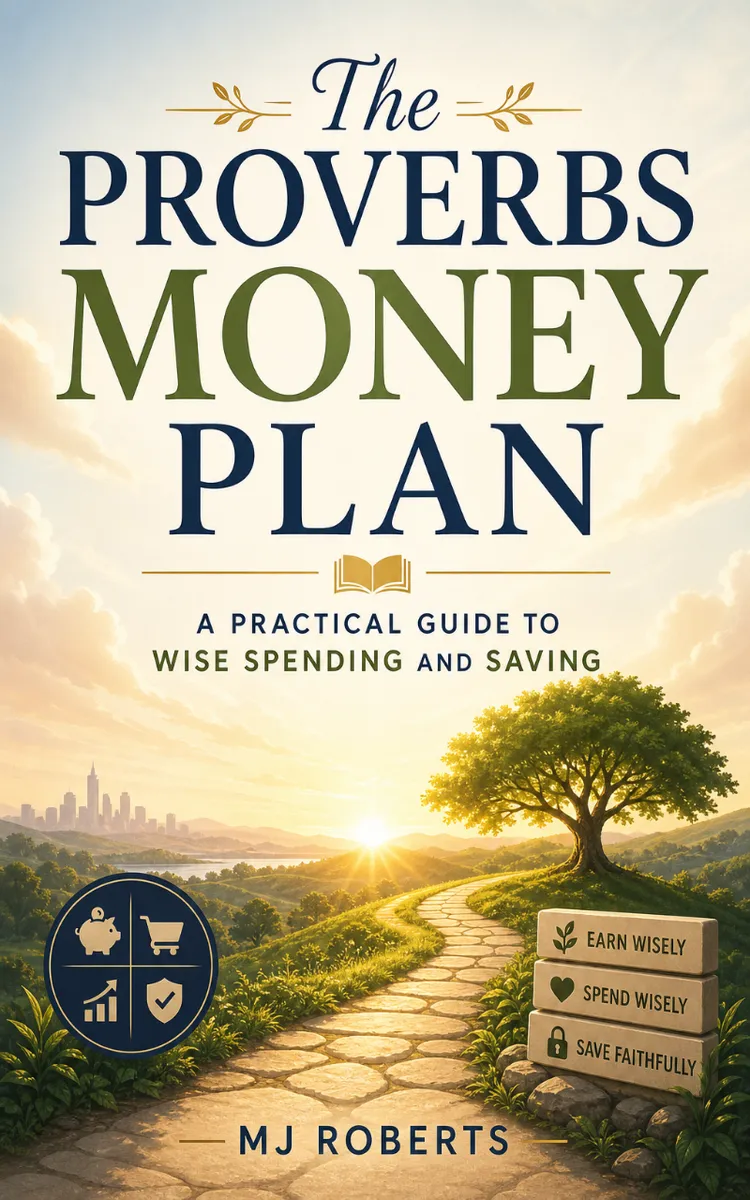
"The Proverbs Money Plan" is a self-help book by MJ Roberts with 8 chapters and approximately 11,748 words. Using Proverbs-inspired principles for personal money management.
This book was created using Inkfluence AI, an AI-powered book generation platform that helps authors write, design, and publish complete books. It was made with the AI Self-Help Book Writer.
Frequently Asked Questions
What is "The Proverbs Money Plan" about?
Using Proverbs-inspired principles for personal money management
How many chapters are in "The Proverbs Money Plan"?
The book contains 8 chapters and approximately 11,748 words. Topics covered include Becoming a Proverbs Money Person, Replacing Fear with Wise Budgeting, Breaking the Debt Cycle with Small Wins, Using the Watchful Eye Spending Filter, and more.
Who wrote "The Proverbs Money Plan"?
This book was written by MJ Roberts and created using Inkfluence AI, an AI book generation platform that helps authors write, design, and publish books.
How can I create a similar self-help book?
You can create your own self-help book using Inkfluence AI. Describe your idea, choose your style, and the AI writes the full book for you. It's free to start.
Write your own self-help book with AI
Describe your idea and Inkfluence writes the whole thing. Free to start.
Start writingCreated with Inkfluence AI


