
Read the first chapter
The whole of chapter one, free. About 8 min. Turn the pages with the arrows, your keyboard, or a swipe.
Chapter 1
When a Crowd Became a Shield
The Crowd at the Courthouse Door
In Adams County, Pennsylvania, a crowd could become a shield before anyone raised a hand. When slave catchers arrived to seize a Black person, local resistance often took the form of bodies gathering in public - at a courthouse, along a road, or around a jail - making the law’s machinery difficult to operate.
That response mattered because the Fugitive Slave Act of 1850 gave federal authority to the pursuit of alleged fugitives, while offering Black defendants almost no legal protection. They could not testify on their own behalf in a federal hearing, and commissioners were paid more when they ordered a person returned to slavery than when they released him. The law was designed to turn a claim into custody quickly.
Adams County sat in a dangerous borderland. It was close enough to Maryland for slave catchers to reach it, yet connected to Pennsylvania communities where Black residents, antislavery people, and members of the Underground Railroad had built relationships over decades. The public crowd was not merely an expression of outrage. It was a practical instrument: a way to slow an arrest, expose the pursuers, and make the cost of removing a person too high to ignore.
What happens when the most immediate protection available is not a locked door, but a street full of witnesses?
The Law Arrives in Public
The Fugitive Slave Act changed the meaning of an ordinary public place. A road could become a pursuit route. A tavern could become a place of surveillance. A courthouse could become the setting for a hearing in which the accused person stood nearly voiceless while a claimant’s statement carried extraordinary weight.
Before the federal law passed in 1850, earlier fugitive-slave laws already required assistance in returning people claimed as enslaved. Enforcement, however, depended heavily on local officers and local willingness. The new law strengthened federal power and created commissioners who could decide cases without a jury. It also threatened fines and imprisonment for people who helped fugitives or obstructed their capture.
That legal design produced a public contradiction. The law claimed to protect property rights, but its enforcement required the cooperation of neighbors who might know the accused person as a worker, parent, church member, or fellow resident. A slave catcher might possess a warrant or a commissioner’s order, yet still have to move through a community that recognized the human being behind the legal claim.
In Adams County, geography sharpened the conflict. The county’s roads connected it to Maryland, where slavery remained legal, and to towns farther north where antislavery organizing had become part of public life. Gettysburg and the surrounding settlements were not hidden corners beyond the reach of national politics. They were places where federal law met local memory, local friendships, and the visible presence of Black residents.
The Public Shield Method grew from that collision. Its elements were simple but powerful: gather witnesses, make the arrest visible, surround the threatened person with people who could identify him or her, and force officials to proceed under observation. The crowd did not erase the law. It changed the conditions under which the law could be used.
Why Presence Worked
A crowd offered protection in several ways at once. First, it made mistaken identity harder to conceal. Slave catchers often relied on descriptions, accusations, or claims made by people from outside the community. A group of local residents could challenge those claims with knowledge of the person’s name, work, family, and history.
Second, public presence created witnesses. An arrest carried out in an isolated place could be described later according to the captor’s account. An arrest surrounded by neighbors produced many accounts. The difference was important in a system where federal officers might treat a claimant’s word as decisive.
Third, the crowd disrupted the practical business of removal. A person had to be escorted, placed in a wagon or train, and transported through streets and stations. Every stage required movement. A gathering could block a doorway, delay a transfer, or draw the attention of people who might otherwise remain uninvolved.
The method depended less on physical strength than on social density. One person objecting could be arrested. Dozens of people standing together presented a more complicated problem. Officials had to decide whether to call for assistance, risk a confrontation, or abandon the attempt. The crowd turned private coercion into a public event.
A single fact captures the imbalance: under the 1850 law, the accused could not testify in the federal proceeding. The community’s presence therefore became a kind of substitute voice - not a legal one, but a social and political one.
This was not always orderly. Public resistance could include shouting, pushing, attempts to seize a prisoner back, or interference with officers. Yet even when a crowd did not physically free someone, it could expose the enforcement process and make local residents aware of the danger. News traveled through churches, workshops, farms, and market streets. An attempted capture rarely remained only the business of the people who had initiated it.
The Unexpected Power of Delay
The counterintuitive feature of public resistance was that it did not need to win immediately to matter. Delay itself could be a form of protection. A few hours might allow friends to locate an attorney, alert relatives, gather witnesses, or challenge the identity of the person being held.
That changes how the confrontations should be understood. The crowd was not simply an angry mass opposing authority. It was part of a wider network of information. Its presence bought time, and time allowed other forms of resistance - legal petitions, appeals, public testimony, and escape - to become possible.
The connection resembles a principle familiar from other systems: pressure applied at one point can alter the behavior of the whole structure. In a courthouse, the law appeared to move in a straight line from accusation to removal. A crowd introduced friction. Friction did not necessarily overturn the machinery, but it made its operation slower, more visible, and less predictable.
The public shield also worked psychologically. Slave catchers depended on confidence: confidence that local officers would cooperate, that residents would remain passive, and that the accused person could be moved before opposition formed. A gathering challenged each assumption. It told the pursuers that they were not operating in an empty legal space but in a community with its own judgment.
This mattered especially because the federal government had placed responsibility for enforcement on local terrain. A distant Congress could pass the statute, but the arrest still had to occur beside a Pennsylvania courthouse or along a Pennsylvania road. National power required local hands. Local hands could hesitate.
Adams County’s Antislavery Ground
Adams County’s resistance did not appear suddenly in 1850. For decades, Black residents and white antislavery allies had maintained relationships that made flight and protection possible. The Underground Railroad was not a single railroad and did not depend only on secret rooms. It also relied on ordinary knowledge: who would offer food, who knew a safe road, who could recognize a suspicious stranger, and who would gather others when danger became public.
The county’s location made such knowledge urgent. Maryland lay nearby, and enslavers or their agents could cross the border with practical familiarity. Pennsylvania’s legal status as a free state did not guarantee safety. A Black person could be free under Pennsylvania law and still be accused of belonging to someone else.
That distinction - between freedom in law and safety in practice - stood at the center of every confrontation. A Black resident might have lived in the county for years, yet an outsider’s claim could place him at risk. Community recognition became a form of evidence, even when federal procedure refused to treat it as sufficient.
The name McLaughlin belongs within this longer history of local vigilance. The McLaughlin family is remembered in Adams County accounts as part of the network of people who resisted slave catchers and protected Black neighbors over the decades before the Civil War. Their significance lies not only in individual acts, but in the pattern they represent: protection depended on people who knew the roads, understood the law’s weaknesses, and were willing to appear in public when silence would have made capture easier.
The public shield was therefore both immediate and cumulative. A crowd gathered for one person drew on relationships formed through years of work, worship, travel, and shared danger. Its strength came from preparation that rarely looked like preparation. The knowledge had been stored in memory and reputation.
A Community Made Visible
The most revealing setting for this resistance was the courthouse. A courthouse represented official authority, yet it was also a public building surrounded by people who could gather without needing an invitation. The same place that promised a legal decision could become a stage on which the community judged the law’s human consequences.
The details of such confrontations were often plain: a prisoner brought before an officer, a claimant offering testimony, local residents filling the surrounding space, and arguments over identity and authority. Their plainness is part of the point. Protection did not always look like a dramatic rescue. Sometimes it looked like remaining present, refusing to disperse, and preventing the accused person from becoming invisible inside a federal procedure.
In Adams County, that presence connected Black residents to white allies without erasing the unequal risks they faced. The Black person under threat could lose liberty, family, and safety. White participants might face fines, arrest, or public condemnation. The danger was shared, but it was not equal. Any honest account of the crowd must keep that difference in view.
Still, the gathering altered the balance. The alleged fugitive was no longer alone before the officer. The claimant was no longer the only person whose story shaped the room. Every witness represented a question the law preferred to avoid: Who is this person here? How long has he lived among us? Who knows him? What gives an outsider the right to carry him away?
Those questions could not always defeat the statute. They could, however, make its violence visible.
The Shield and the Unfinished Question
A crowd became a shield when people converted shared knowledge into public presence. In Adams County, that conversion connected the daily life of Black residents with the larger struggle over slavery’s reach. The law treated a person as recoverable property; the community answered by placing that person among witnesses, relationships, and recognized belonging.
The story is not one of simple victory. Federal authority remained powerful, and many fugitives were captured or forced to continue northward. Yet the confrontations reveal something broader about power: it often depends on the quiet cooperation of ordinary people, and it can be unsettled when those people refuse to remain quiet.
A courthouse crowd could not decide the entire question of slavery. It could decide whether one person would face the machinery alone. And when enough people gathered, the law’s claim to order began to reveal the uncertainty beneath it - leaving behind the enduring question of how many witnesses it takes for a community to become a shield.
End of chapter one. 39 more chapters and about 68,691 words in the full book.
Swipe or use the arrows to turn the page


What's inside: 40 chapters
- 1. When a Crowd Became a Shield
- 2. McLaughlin’s First Stand
- 3. The Fugitive Slave Law at Home
- 4. A County on the Border
- 5. Who Were the Vigilantes?
- 6. The Price of Taking Sides
- 7. The Road North from Maryland
- 8. Safe Houses, Real Addresses
- 9. Signals Hidden in Plain Sight
- 10. The Work of Getting Someone Away
- 11. Black Adams County, Before the War
- 12. The People Who Asked for Help
- 13. Women’s Quiet Infrastructure
- 14. Churches as Places of Resolve
- 15. Quakers and the Limits of Conscience
- 16. Abolitionists Who Disagreed
- 17. The Mob’s Unwritten Rules
- 18. Rescue at the Courthouse Door
- 19. When the Jail Couldn’t Hold
- 20. The Slave Catchers’ Countermove
- 21. The Law’s Dangerous Paper Trail
- 22. Neighbors Who Would Not Help
- 23. The Economics of Escape
- 24. Newspapers That Named the Conflict
- 25. Rumor, Memory, and Missing Names
- 26. How Historians Test a Rescue Story
- 27. The McLaughlin Name in the Record
- 28. Forty Years of Changing Resistance
- 29. The Fugitive Slave Act of 1850
- 30. The Courtroom as a Battleground
- 31. Black Resistance Beyond Escape
- 32. The Cost of Being Free
- 33. Children in the Shadow of Capture
- 34. The Border’s Everyday Witnesses
- 35. Gettysburg Before Gettysburg
- 36. When the War Changed the Work
- 37. What Freedom Did Not Fix
- 38. The Places Still Holding Evidence
- 39. Who Gets Remembered as a Guardian?
- 40. Protection Was a Shared Act
About this book
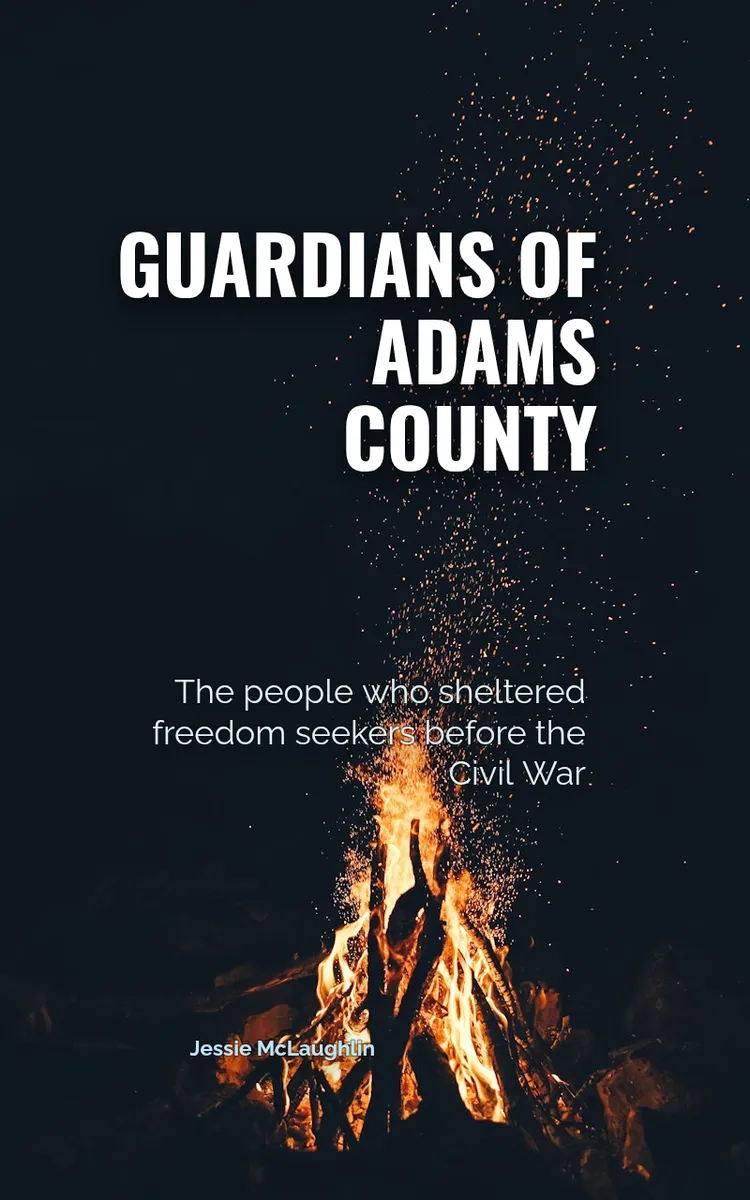
"Guardians Of Adams County" is a curiosity book by Jessie McLaughlin with 40 chapters and approximately 68,691 words. McLaughlin and vigilantes protecting Black people in Adams County before the Civil War.
This book was created using Inkfluence AI, an AI-powered book generation platform that helps authors write, design, and publish complete books.
Frequently Asked Questions
What is "Guardians Of Adams County" about?
McLaughlin and vigilantes protecting Black people in Adams County before the Civil War
How many chapters are in "Guardians Of Adams County"?
The book contains 40 chapters and approximately 68,691 words. Topics covered include When a Crowd Became a Shield, McLaughlin’s First Stand, The Fugitive Slave Law at Home, A County on the Border, and more.
Who wrote "Guardians Of Adams County"?
This book was written by Jessie McLaughlin and created using Inkfluence AI, an AI book generation platform that helps authors write, design, and publish books.
Write your own curiosity book with AI
Describe your idea and Inkfluence writes the whole thing. Free to start.
Start writingCreated with Inkfluence AI


