

Read the first chapter
The whole of chapter one, free. About 9 min. Turn the pages with the arrows, your keyboard, or a swipe.
Chapter 1
The Missed School Pickup
The crossing guard’s orange flag snapped in the wind as Mara Voss checked the clock above the elementary school office.
3:07.
She had ten minutes before the dismissal bell. Plenty of time, she told herself, tightening her grip on the steering wheel. She had made this pickup every weekday since September, always from the same curb, always with the same practiced turn past the sycamore trees.
Then the bus lurched to a stop.
A red notice flashed across the electronic sign above the intersection: ROAD CLOSED - WATER MAIN REPAIR.
Mara braked behind a line of cars. Ahead, a city bus sat crooked across two lanes, its hazard lights blinking. A police officer waved vehicles away from the school district’s usual route.
“No,” Mara said.
The car behind her honked.
She reached for her phone and tapped the school’s number. It rang once, then dropped into a recorded message about dismissal procedures. Children were released only to approved adults. Cars were not permitted to idle in the fire lane. Parents were expected to remain calm and follow staff directions.
Mara stared at the words on the screen.
Her daughter, Lily, would be standing beneath the covered walkway with the other third graders. She would be watching the curb, searching for Mara’s blue hatchback. Lily hated being the last child waiting. Last year, when Mara had been three minutes late after a dentist appointment, Lily had cried so hard she hiccupped all the way home.
Mara looked at the motionless bus, then at the clock.
3:11.
She pulled into a narrow side street and parked beside a row of trash bins. The cold wind slipped through the gap at her collar as she climbed out. She grabbed her purse, locked the car, and began running.
Her boots struck the pavement unevenly. She passed a delivery truck, a woman pushing a stroller, two fathers in office clothes cutting across the grass. The school appeared beyond the chain-link fence, its brick walls bright beneath the afternoon sun.
At the gate, a staff member held out an arm.
“Pickup line only,” the woman said.
“I’m here for Lily Voss. Third grade.” Mara bent over, trying to catch her breath. “The road is blocked. The bus - ”
“Cars are being redirected around the east lot.”
“I parked on Benton. I can walk.”
“You need to go through the main entrance.”
The woman pointed toward the far side of the building. A stream of parents moved in that direction, some carrying folding signs with their children’s names, others shouting over the rumble of idling engines. The gate clanged shut behind Mara as she hurried along the fence.
She called the office again. This time, someone answered.
“Maple Ridge Elementary.”
“This is Mara Voss. I’m here for Lily, but the road closure - ”
“Please report to the pickup desk.”
“I’m on my way. Can you keep her with her teacher?”
A pause. Paper rustled.
“Ms. Voss, children are released according to the dismissal list. If you’re not at the assigned area, we may need to contact the next approved adult.”
Mara stopped walking.
“Who is the next approved adult?”
“Please come to the desk.”
“Who?”
Another pause. “Mrs. Harlan is listed.”
Mrs. Harlan. Lily’s classmate’s grandmother. Mara had met her twice, both times in the school parking lot. She was kind enough, probably. But Lily had never gone home with her. Lily did not know that Mara had listed her as an emergency contact after the nurse insisted every form contain one.
“I’m coming,” Mara said. “Please don’t release Lily yet.”
“We’ll follow procedure.”
The call ended.
Mara shoved the phone into her pocket and ran faster.
At the main entrance, the crowd thickened. Parents pressed against the glass doors, waving car tags and calling children’s names. A volunteer in a yellow vest directed people toward separate lines.
“Car pickup is outside,” he shouted. “Walkers to the gym doors. Aftercare down the hall.”
“I need the pickup desk,” Mara said.
“Inside, left, then right.”
“Where’s the third-grade group?”
“Outside.”
Mara pushed through the doors.
The lobby smelled of wet coats and floor cleaner. A child’s mitten lay abandoned beneath a bench. Somewhere down the hall, a bell chimed, followed by the scrape of dozens of chairs.
At the office counter, three parents were already arguing.
“I signed the form,” a man said. “You can’t tell me my son isn’t on the list.”
“I’m not telling you that,” the secretary replied. “I’m telling you his teacher has not sent him down.”
Mara stepped forward. “Lily Voss. Third grade. Her mother is here.”
The secretary looked up. “Name?”
“Mara Voss.”
She typed, frowned, then lifted the phone.
“Her group is outside,” she said. “You need to report to the west gate.”
“I was told to come here.”
“And now I’m telling you to go to the west gate.”
“Is Mrs. Harlan there?”
The secretary’s expression changed, just slightly. “Mrs. Harlan has signed in as an approved pickup.”
Mara felt the floor tilt beneath her boots.
“Is she taking Lily?”
“She is waiting for Lily.”
“Then call her. Tell her not to leave.”
“Ma’am, we’re managing a very crowded dismissal.”
“I know. I’m trying to get to my daughter.”
The secretary picked up the phone again, but a bell began ringing in the hall. The office door opened and a teacher hurried in, cheeks flushed.
“Voss?” the teacher asked. “Mara Voss?”
“Yes.”
“Lily’s group has been moved to the covered walkway. Mrs. Harlan is with them.”
“Why was she moved?”
“Because the buses are delayed and the car line is backed up. We’re consolidating groups.”
Mara pushed away from the counter. “Where?”
The teacher pointed toward a side exit. “Through there, across the courtyard, then past the cafeteria.”
Mara ran before the sentence ended.
The courtyard was a maze of bodies and noise. Parents leaned over railings, calling to children. A boy in a green coat slipped on the wet concrete and began crying. A teacher caught him by the elbow while another shouted for everyone to stay behind the painted yellow line.
Mara tried to cross, but a metal barrier blocked the shortest path.
“West gate!” someone yelled.
“I’m going there,” Mara called back.
“Not through here!”
She backed up, nearly colliding with a woman holding a cardboard sign that read BENNETT.
“Sorry,” Mara said.
The woman turned. “You can’t cut through.”
“I’m not cutting through. My daughter is waiting.”
“Everyone’s daughter is waiting.”
The words landed harder than they should have.
Mara stepped around her and found the cafeteria doors. They were locked. Through the narrow window, she saw children moving in a line, their coats bright against the dull floor.
“Lily!” she shouted.
A teacher inside looked over but kept walking.
Mara pounded on the glass.
The teacher shook her head and pointed toward the courtyard.
Mara turned back into the crowd. Her phone vibrated. A message from an unknown number appeared.
I’m with Lily. Don’t worry.
Mrs. Harlan.
Mara’s fingers went cold.
She typed, Where are you?
The reply came almost immediately.
Covered walkway. She’s upset.
Mara looked toward the far end of the courtyard. Beyond the play structure, past the orange cones and the knot of parents, the covered walkway stretched along the gymnasium wall.
She pushed forward.
A man with a stroller blocked her path. “Excuse me.”
He did not move.
“Please.”
“There’s a line.”
“My child is being released to someone else.”
That made him glance at her. “Then you should’ve gotten here earlier.”
Mara stared at him.
The words were ordinary. That was what made them cruel.
“I was here,” she said. “The road is closed.”
He shrugged and turned away.
Mara squeezed between the stroller and the fence, catching her purse on a wire tie. The strap tore with a sharp snap. Her wallet fell into a puddle.
She dropped to her knees, fingers plunging into icy water. Cards scattered beneath the surface. Someone stepped around her without stopping.
“Mara?”
She looked up.
Mrs. Harlan stood at the end of the walkway in a quilted gray coat. Beside her, Lily clutched a pink backpack to her chest. Her face was pale and blotched from crying.
Mara rose, leaving her wallet in the puddle.
“Lily.”
Her daughter ran.
Mara caught her so hard Lily’s backpack pressed between them. Lily’s hair was damp at the temples, and her small hands locked around Mara’s coat.
“You came,” Lily whispered.
“I came.”
“You were late.”
“I know.”
“I thought Mrs. Harlan was taking me home.”
“I’m sorry.” Mara kissed the top of her head. “I’m here now.”
Mrs. Harlan approached, her mouth tight with concern. “I tried calling you.”
“The road was blocked.”
“I understand, but the office said you weren’t at the pickup area.”
“I was trying to get here.”
Mrs. Harlan glanced at Lily, then back at Mara. “They asked me to wait with her. She was frightened.”
“I know.”
“You should probably update the emergency contacts.”
Mara looked down at the puddle around her boots. Her wallet lay open, a photograph of Lily floating faceup beside a credit card.
“I will,” she said.
A woman nearby had been watching. Mara recognized her from the morning drop-off line, though she did not know her name. The woman held her phone at chest height.
“Could you not?” Mara said.
The woman lowered it. “Not what?”
“Take pictures.”
“I wasn’t taking a picture of you.”
Mara looked at the phone. The camera lens pointed directly at them: Mara’s wet knees, Lily pressed against her coat, the torn purse strap hanging loose.
“Please delete it.”
The woman’s eyebrows rose. “It’s a public school.”
“That doesn’t make my daughter public.”
“She’s fine,” the woman said. “Everyone can see that.”
Lily tightened her arms around Mara.
Mrs. Harlan touched Mara’s elbow. “Let’s get her home.”
The woman’s phone chimed.
Mara heard the sound before she saw the screen light up with a neighborhood group notification.
By the time Mara retrieved her wallet, the photograph was already posted.
MISSING AT PICKUP AGAIN? the caption read.
Under it, someone had written: This is what happens when parents treat school like a casual errand.
Another reply appeared.
Poor child. Thank goodness Mrs. Harlan was there.
Mara’s face burned. Around her, the courtyard continued its noisy churn. Children laughed near the gym doors. A car horn blared from the lot. The world did not pause for the judgment gathering beneath her photograph.
Lily looked up. “Mom?”
Mara locked the phone.
“Come on,” she said.
They walked toward the gate together. Lily held one of Mara’s hands, and Mara carried the torn purse in the other. Behind them, the woman with the phone watched until they disappeared beyond the fence.
At the sidewalk, Mara’s phone chimed again.
She did not look at it.
Then Lily’s hand slipped lower in hers, searching until their fingers intertwined.
Mara looked back at the school, at the crowded walkway and the orange flags and the parents who had already decided what kind of woman she was.
Her knees were wet. Her purse was broken. Her daughter was safe.
Mara squeezed Lily’s hand and started toward the car. She would go home. She would dry the wallet, fix the strap, and read every word they had written.
And tomorrow, she would walk back through those gates.
End of chapter one. 7 more chapters in the full book.
Swipe or use the arrows to turn the page


What's inside: 8 chapters
- 1. The Missed School Pickup
- 2. The Mother Behind the Label
- 3. The Door Marked Unfit
- 4. Who Filed the Complaint?
- 5. The Hearing at the School
- 6. The Night She Nearly Quit
- 7. The Vote That Changed the Room
- 8. A Name Beyond Bad Mother
About this book
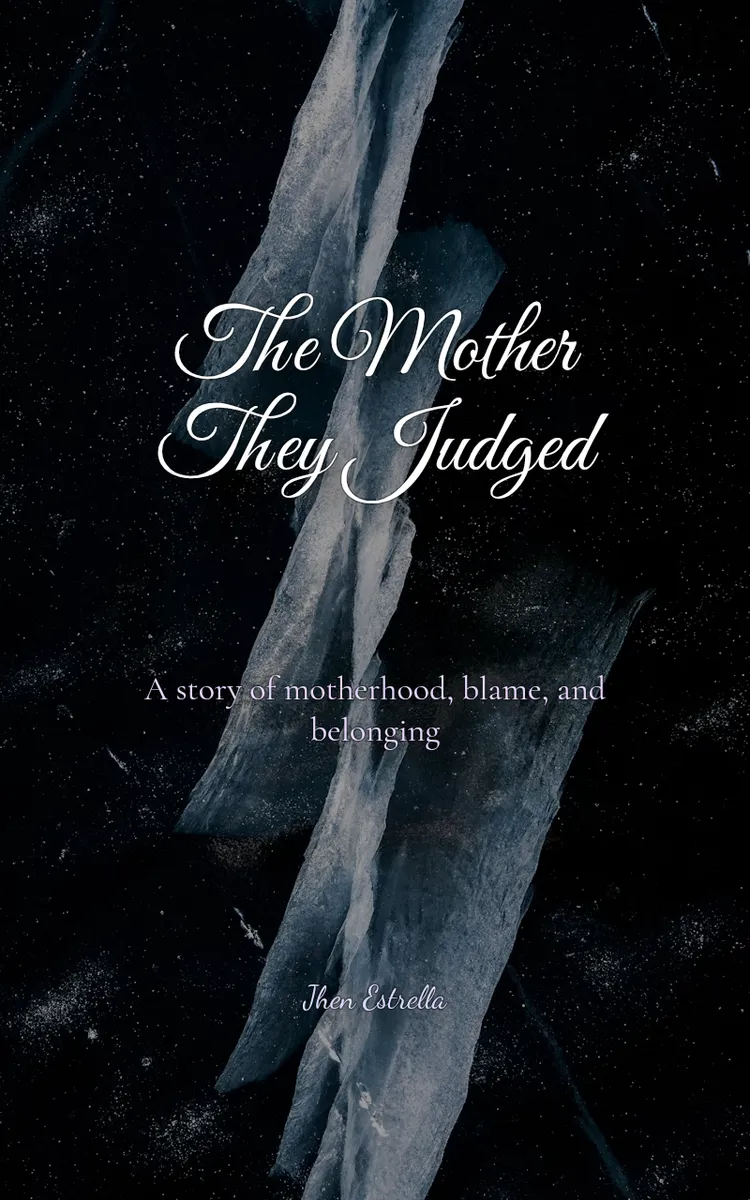
"The Mother They Judged" is a fiction book by Jhen Estrella with 8 chapters and approximately 17,174 words. A mother judged by others as responsible or inadequate.
This book was created using Inkfluence AI, an AI-powered book generation platform that helps authors write, design, and publish complete books. It was made with the AI Novel Writer.
Frequently Asked Questions
What is "The Mother They Judged" about?
A mother judged by others as responsible or inadequate
How many chapters are in "The Mother They Judged"?
The book contains 8 chapters and approximately 17,174 words. Topics covered include The Missed School Pickup, The Mother Behind the Label, The Door Marked Unfit, Who Filed the Complaint?, and more.
Who wrote "The Mother They Judged"?
This book was written by Jhen Estrella and created using Inkfluence AI, an AI book generation platform that helps authors write, design, and publish books.
How can I create a similar fiction book?
You can create your own fiction book using Inkfluence AI. Describe your idea, choose your style, and the AI writes the full book for you. It's free to start.
Write your own fiction book with AI
Describe your idea and Inkfluence writes the whole thing. Free to start.
Start writingCreated with Inkfluence AI


