
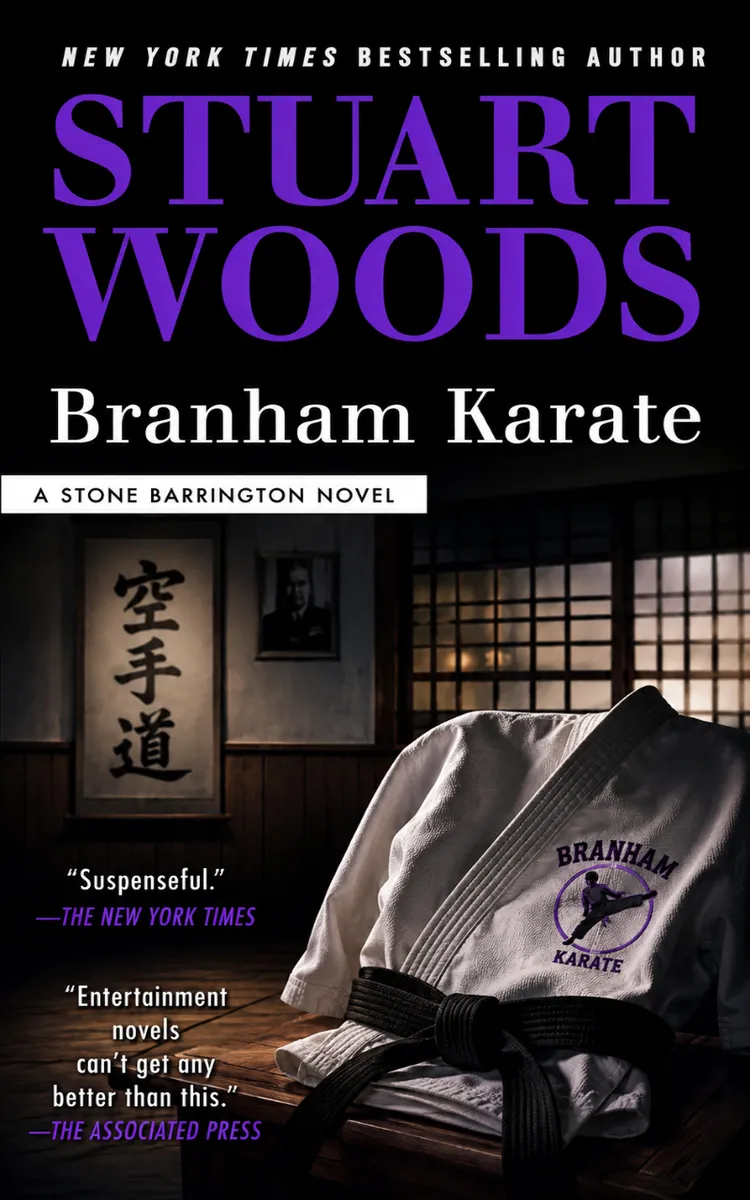
Read the first chapter
The whole of chapter one, free. About 14 min. Turn the pages with the arrows, your keyboard, or a swipe.
Chapter 1
The Warehouse Knife-Edge Challenge
Michael Branham didn’t see the call so much as feel it - his phone vibrating against the edge of the nightstand, a hard little buzz that cut through the quiet like a knuckle on glass. The screen lit his bedroom in a pale rectangle, and for a half-second he stared at the number because it wasn’t in his contacts and it wasn’t local. Then the voice came through, low and flattened by distance and bad reception.
“Warehouse. Outskirts. Now.”
No name. No reason. Just that.
Michael swung his feet to the floor and let the room come into focus - the dull hum of the refrigerator in the kitchen, the rasp of his own breath as he sat up, the cool bite of air against his forearms. He’d learned long ago that unanswered questions got expensive. He also knew the other thing: people who wanted to hurt him didn’t usually call politely.
He didn’t reach for a gun. Not yet. He reached for his gi top out of habit, not because he was planning to perform, but because the fabric made him feel anchored, made his body understand that this was work. When he pulled it over his head, the familiar collar tugged against his throat, and his breathing settled into a rhythm that didn’t ask permission.
By the time he got outside, the night had that industrial-edge chill - concrete sweating somewhere out of sight, distant traffic thinning until it sounded like someone turning pages. His car’s tires whispered along the road to the outskirts, and the streetlights seemed to drop away behind him in steps. The warehouse district sat back from town like a secret that had never been told, a scatter of brick and corrugated metal with loading docks that didn’t see much daylight.
The address on the screen was only a block number, not much to go on. He turned anyway, following the coordinates the caller had somehow managed to squeeze into the routing data. The last stretch was gravel and weeds. When the headlights found the building, it looked like a storage shed that had learned to hate people - dim windows, a chain-link fence with a gap that had been widened, and a single exterior light that flickered like it was tired of watching.
Michael parked where he could see both the front doors and the side access. He killed the engine and waited a beat longer than he wanted to, listening for the sounds that didn’t belong: idling engines, voices, the scrape of boots on concrete.
Instead he heard something else - metal ticking somewhere inside, a steady rhythm like a tool being set down and picked up again. The warehouse door was shut, but the building wasn’t silent; air moved through gaps with a faint hiss, and the light above the entrance shivered over the wet patch marks on the ground.
He stepped out. Cold damp climbed through the soles of his shoes, and the gravel shifted under his weight with a small, treacherous crunch. Michael kept his hands loose at his sides, shoulders down. When he moved, it was with the same economy he used in practice - no wasted reach, no unnecessary noise.
The ticking stopped.
A second later, a voice carried from the shadowed doorway. “Branham.”
The tone was wrong. Not a greeting, not an accusation. A measurement.
Michael didn’t answer. He didn’t have to. He took two steps toward the entrance, then halted when a second sound joined the first - a soft click, like a latch being tested. Something inside shifted, and the dim light painted his silhouette over a row of stacked pallets.
“Come in,” the voice said. “We want to talk.”
Michael felt the lie in it before it became evidence. People who wanted to talk didn’t build a trap with silence and timing. He moved anyway, because the alternative was standing on the gravel and letting whoever had called decide the pace.
He slipped through the doorway. The air inside was colder than outside, and it smelled of oil and old dust - machinery sweat trapped in concrete. His eyes adjusted slowly, picking up the shapes: a maze of shelving and stacked crates, narrow lanes between metal racks, a high ceiling lost in darkness. The floor was slick in places where condensation had gathered, and his shoes made a muted sound that vanished quickly.
“Over here,” someone said, closer now.
Michael angled toward the voice. A faint strip of light from a side opening cut across the warehouse floor, and he followed it the way he’d followed a target in sparring - without staring, without rushing. When he reached the edge of that light, he saw movement behind the racks: two figures, hard silhouettes, stepping in sync.
Then the warehouse decided it was done waiting.
A flare of sound erupted - boots striking, a door slamming somewhere behind him, and a rush of air as something heavy moved. Michael spun toward the entrance just in time to see a chain draw taut and the front doors begin to close, metal groaning as if it resented the motion.
“Hey!” the voice from earlier snapped, like the trap had been sprung early. “Hold - ”
Too late. The doors met with a final clang that echoed through the space. Michael was inside, the maze sealing around him.
He didn’t curse. He didn’t waste breath. He planted his feet and scanned, letting the darkness resolve into distance and angles. The two figures were closer now - one on the left, one on the right - both dressed in dark work clothes that made them look like they belonged to the building. Their hands weren’t empty.
A flash of steel caught the light.
Knives, not guns. Close work. Fast work.
Michael’s stomach tightened, not with fear but with calculation. He’d handled blades before - short range meant leverage, and leverage meant mistakes got paid for. He kept his stance loose, weight on the balls of his feet, and he breathed in through his nose, out through his mouth, letting the rhythm clear the noise.
“Who are you?” he asked, because sometimes forcing words bought half a second of information.
The figure on the left laughed under his breath. “You know.”
“I don’t,” Michael said.
“You’ll know when you’re on the floor,” the other said, and the way he spoke made it sound like practice, like rehearsed cruelty.
Michael moved first. He stepped in toward the left attacker, not straight at him but across his line, trying to take away the knife angle. His shoulder brushed forward, his hip turned, and his foot slid to set his base. The blade came out toward his ribs in a quick arc, but Michael’s movement cut the distance short; he batted the wrist with the flat of his forearm and pressed in on the man’s body.
The knife scraped fabric, then met resistance - Michael’s gi top took the first kiss of steel, rough and hot. Pain flared, sharp enough to make him tighten without losing form. He didn’t let the attacker draw back.
He drove a short strike into the attacker’s midsection, compact and brutal, and the man folded with a grunt. Michael didn’t follow with another blow; he pivoted to face the right attacker because the second knife had already moved into the space his partner vacated.
The right attacker feinted high, then snapped the knife toward the inside of Michael’s thigh. Michael jerked his leg back and caught the wrist again, this time with a sharper angle, using the line of his forearm to redirect. The blade scraped along his leg and left a thin, burning cut that would bleed later if it wasn’t handled.
Both attackers backed half a step, recalculating. The warehouse felt like a room designed for their plan - too many lanes, too many blind spots, too many places for a third person to appear.
Michael heard something else then: a faint, deliberate tap from somewhere above. A knuckle on metal. Not random. Signal.
That was the complication. This wasn’t just two men with knives. It was a team working the geometry of the building.
He lunged toward the nearest rack, using it as cover and a barrier. Metal racked against metal as he shoved his way through the narrow space, and his shoulder slammed into a stack of crates that rattled. The right attacker followed, knife leading, and Michael caught the blade with his forearm again, gritting through the sting.
“Back off,” Michael said, voice low.
“Or what?” The attacker’s breath fogged faintly in the cold air.
Michael didn’t answer. He shifted his weight and let his opponent commit to the strike, then he moved his elbow into the attacker’s striking arm with a turn that made the knife’s line miss him by inches. The attacker stumbled, caught off-balance by his own momentum. Michael drove in with a short kick to the inside of the knee.
The man went down hard, the knife clattering across the concrete. It skittered into shadow and vanished.
Michael’s breath came faster now, and he felt the cut on his leg throb. He forced it down, keeping his attention on the warehouse rather than his body. The maze was the real enemy. If he let pain become the center, the building would win.
A third sound - running - came from behind a row of shelves. Michael spun and saw movement, a blur between stacks, too fast to be one of the downed men. Whoever it was had the confidence to treat the warehouse like a chessboard.
“Michael!” a voice barked from somewhere deeper inside.
It wasn’t the caller. It wasn’t one of the knife men.
It was a woman’s voice, urgent, familiar enough to hit him in the gut. He couldn’t place it instantly - only the tone, the authority in it, the way she used his first name when she wanted him to stop thinking and start surviving.
The knife attacker on the floor groaned and tried to get up, but Michael stepped around him, eyes scanning the lanes. The woman’s voice came again, closer. “Don’t go that way!”
He didn’t. Not because he trusted her yet, but because the warehouse had already taught him what happened when he ignored the walls. He pivoted toward a different opening between racks and moved low, using the shelves as cover.
A blade flashed at head height where he’d been a second earlier. The attacker - another one, Michael realized, another knife in motion - had waited for him to commit. The warehouse was changing its exits without moving a door. It did it by feeding him into angles.
Michael hit the floor hard and rolled, coming up with his gi top brushing dust from the concrete. He felt the grit against his palms. When he rose, his eyes found a small control panel mounted near a service door, its faceplate scuffed and dimly lit.
A way to lock and unlock sections. A way to force him deeper.
A tangible lead, suddenly, in the middle of the chaos: someone had set this up carefully enough to build in control points.
Michael surged toward the panel. The new attacker charged, knife angled for his ribs. Michael grabbed the attacker’s wrist mid-strike, twisting so the blade pointed harmlessly into the air. The attacker grunted and tried to pull free, but Michael leaned in, shoulder to shoulder, using the man’s body as a lever.
“Who sent you?” Michael demanded.
The attacker’s eyes flashed, then cut away toward the darkness - toward direction, toward signal.
Michael followed the gaze and saw a faint glow at the far end of the warehouse: a digital display on a forklift control, lit from someone’s hand-held power pack. It wasn’t bright, but it was enough to show motion. Someone was working the building from a safer pocket.
Michael released the wrist and drove a knee into the attacker’s thigh, then a short punch to the jaw. The man folded and slid down against the rack base.
Michael didn’t check if he was out. He sprinted to the panel and yanked open the cover. Inside, wires and a simple switch. Someone had wired it to trigger the doors. It was crude, but effective.
He slapped his palm against the switch housing, then froze.
A small tag, taped to the inside of the panel, fluttered slightly with the air movement. It was a piece of paper, half burned at one edge, with a handwritten number and a symbol drawn in thick ink. The symbol wasn’t random. Michael had seen it before - in reports, on the edge of files that weren’t supposed to exist, tied to people who moved through Branham Karate’s wider network like a ghost using someone else’s name.
He didn’t have time to understand it fully, but he had time to take it.
Michael tore the tag free, folding it quickly into his gi pocket, where it pressed against his ribs and the cut on his leg. Pain flared again, hot and immediate, but he pushed through.
Behind him, a voice snapped, close enough now to carry clearly. “Give it back.”
Michael turned and saw the woman again, stepping out from between racks. She was dressed like she belonged here - dark jacket, hair tied back tight, face hard with fatigue and focus. There was blood on her knuckles, and her eyes were locked on Michael’s pocket.
“You know this?” Michael asked.
Her gaze dropped to the pocket, then rose to his face. “I know what it means. And I know what it costs.”
The knife men shifted around her, recovering enough to stand. The maze tightened, lanes narrowing, shadows thickening where exits should have been. Michael could hear the warehouse machinery start up somewhere - like a door motor remembering its job.
The woman took one step forward, then stopped as if the floor itself had teeth. “They’re not just trying to hurt you,” she said. “They’re trying to make you choose.”
Michael heard the clatter of metal and realized the service door behind him was moving, closing off the space he’d come through. The warehouse was herding him now, not just trapping him.
“What choice?” he demanded.
She swallowed once, and her eyes flicked to his leg cut, to the way he was holding himself. “Fight for the exit and lose the lead,” she said. “Or keep the lead and buy time for the people behind this to find you.”
The warehouse gave a low groan as a section door slid shut with a heavy finality. The sound echoed down corridors between racks as if it were counting out seconds.
Michael’s body wanted to sprint - wanted out, wanted air, wanted distance from knives and metal. But the tag in his pocket felt like weight and direction at the same time. It was a thread tied to something bigger than a warehouse brawl.
He made his decision with the part of him that had survived too many ambushes to pretend there was a clean way through. He didn’t argue with her. He didn’t ask for more explanations. He moved.
He stepped in close to the woman - close enough that the knife men hesitated, close enough that her next move had to account for his range. He grabbed her jacket near the collar and shoved her sideways, using her body as a shield for the half-second it took her to react.
Then he kicked the nearest rack with his heel - hard, deliberate. Metal shrieked. Crates toppled in a clattering cascade, blocking a lane and forcing the knife men to reposition. The warehouse’s geometry changed under their feet, just as it had under his.
“Now!” he barked, and he didn’t know if she understood the command or if she needed it.
She lunged, fast and angry, and in one motion she reached down and snatched a dropped knife from the floor - clean pickup, blade up. The steel caught the dim light. She didn’t go after Michael; she went after the space behind him, cutting off the angle of pursuit as another door began to slide closed.
Michael shoved his shoulder into a narrow gap between racks where he’d noticed a thin line of darkness earlier. It wasn’t an exit. It was a maintenance passage, barely wide enough for a man with shoulders and stubbornness. He squeezed through anyway, the gi fabric snagging on a bolt. His breath came out in short bursts. He felt the passage scrape skin along his ribs and hip, and he kept moving because stopping would mean knives finding a way in.
Behind him, the woman’s voice rose - sharp, commanding, as if she’d finally decided she wasn’t going to be part of the trap anymore. Something metal struck concrete with a dull thud. A grunt. Then footsteps that sounded like they were running the opposite direction of where Michael was going.
He reached the end of the passage and found a service door with a simple latch. It resisted his first pull, then gave with a wet metallic clank. Cold night air rushed in, carrying damp and distant traffic.
Michael stumbled out into an alley between warehouses. The sound of the fight faded behind him, swallowed by distance and the warehouse maze. His leg throbbed, and when he pressed his fingers against the cut, he felt warm blood seep through the gi fabric.
He didn’t check it. He checked the tag.
His hand went into his pocket, and his fingertips found the folded paper. He pulled it out under the weak streetlight, shielding it with his palm. The symbol was clear now - a thick-marked emblem tied to Branham Karate’s larger network, something that suggested a connection deeper than this place, deeper than tonight’s knives.
The number beside it wasn’t random either. It was the kind of number that opened doors, if doors were still willing to open after what had just happened.
From inside the warehouse, a motor whined and then cut off. Not a full shutdown. A reset.
Michael looked back once, just once, because he needed to know how quickly they’d be able to adjust. The alley was empty except for shadow and the faint stink of oil. No one stepped out. No one shouted.
But he could feel the warehouse behind him like a fist that hadn’t finished closing.
He stuffed the tag back into his pocket, tightened his gi around the wound, and started walking toward his car with steady, deliberate steps that didn’t match the pain in his leg. The night was cooler than before. The air tasted of wet concrete and metal.
Somewhere out there, someone connected to the conspiracy had wanted him alive long enough to take the lead - and then disappear into the maze they’d built.
Michael kept moving anyway, because he’d escaped the warehouse knife-edge challenge with something tangible in his possession. And now that clue wasn’t just a way out.
It was a way deeper in.
End of chapter one. 4 more chapters and about 15,090 words in the full book.
Swipe or use the arrows to turn the page


What's inside: 5 chapters
- 1. The Warehouse Knife-Edge Challenge
- 2. Breathing Through the Kyokushin Guard
- 3. Tracing the Missing Belt Number
- 4. The One-Step Counter at Dusk
- 5. Turning Fear into Final Commitment
About this book
"Branham Karate" is a fiction book by Erik Felix with 5 chapters and approximately 15,090 words. Karate-centered thriller story featuring Stuart Woods’ style.
This book was created using Inkfluence AI, an AI-powered book generation platform that helps authors write, design, and publish complete books. It was made with the AI Novel Writer.
Frequently Asked Questions
What is "Branham Karate" about?
Karate-centered thriller story featuring Stuart Woods’ style
How many chapters are in "Branham Karate"?
The book contains 5 chapters and approximately 15,090 words. Topics covered include The Warehouse Knife-Edge Challenge, Breathing Through the Kyokushin Guard, Tracing the Missing Belt Number, The One-Step Counter at Dusk, and more.
Who wrote "Branham Karate"?
This book was written by Erik Felix and created using Inkfluence AI, an AI book generation platform that helps authors write, design, and publish books.
How can I create a similar fiction book?
You can create your own fiction book using Inkfluence AI. Describe your idea, choose your style, and the AI writes the full book for you. It's free to start.
Write your own fiction book with AI
Describe your idea and Inkfluence writes the whole thing. Free to start.
Start writingCreated with Inkfluence AI


