
Read the first chapter
The whole of chapter one, free. About 9 min. Turn the pages with the arrows, your keyboard, or a swipe.
Chapter 1
Kencot’s Inherited Estate
The carriage wheels sank to their hubs in the wet lane before Kencot Manor came fully into view. Lord Kencot leaned forward, one gloved hand against the window, and saw the house through a veil of rain: grey stone, narrow windows, and chimneys giving off no smoke.
He had arrived as its heir and entered it as its lord, though the distinction still felt too large for the coat on his shoulders. The estate had passed to him suddenly, and no careful preparation had softened the first sight of it. The gates hung unevenly. Brambles had climbed over the lower wall. Beyond the manor, the fields ran toward a line of bare elms, their boundaries difficult to distinguish beneath the wet grass.
When he stepped down, the cold reached through his boots. The gravel shifted under his weight, and the manor door opened only after the housekeeper had drawn the bolt twice. Inside, the air smelled of damp wood, ashes, and rooms kept closed too long.
“Is the steward here?” Lord Kencot asked.
“He was sent for,” the housekeeper replied. “He has not yet returned.”
“And the boundary books?”
She lowered her eyes. “They are in the office, my lord. Some papers were moved before your arrival.”
The answer was careful, but it did not reassure him. He removed his gloves and placed them on the hall table. Dust lay in the carved grooves of the wood. The manor was not ruined, yet it bore the marks of neglect: a loose hinge, a torn runner, a ceiling stain spreading above the staircase.
He had expected responsibility to announce itself in accounts and correspondence. Instead, it presented itself as a wet lane, a silent house, and a boundary he had not yet seen.
The steward arrived near noon, carrying a leather case darkened by rain. He was an older man with a narrow face and a manner that suggested he had spent years answering questions without offering more than was required.
“Mr. Hale,” Lord Kencot said. “I understand there is trouble in the boundary fields.”
“There is disagreement, my lord.”
“Disagreement over what?”
“The eastern line. The tenants beyond the ash copse claim the marker was placed farther west than it stands now.”
Lord Kencot looked toward the window. From there, the fields appeared orderly enough, divided by hedges and ditches. Yet the rain blurred every distance.
“Who moved it?”
“No one admits to having done so.”
“Then we will inspect it.”
Mr. Hale hesitated. “The ground is poor today.”
“The ground will not improve because I delay.”
The steward’s mouth tightened, though he bowed. “As you wish.”
They left by the side entrance, taking the lower path toward the boundary fields. The lane narrowed almost at once. Water filled the ruts, and the hedges pressed close enough to brush Lord Kencot’s coat. He had been told that the eastern fields were easily reached. Whoever had told him had not walked the lane in winter.
At the first gate, a wooden bar had been fastened with a chain. Mr. Hale searched his pockets.
“The key is with the tenant,” he said.
“Which tenant?”
“Bramwell.”
“Send for him.”
“He may not come.”
Lord Kencot studied the chain. It was new, its links bright against the weathered wood.
“Then we will open it without him.”
Mr. Hale looked at him. “That may cause offence.”
“The chain has already caused obstruction.”
It took several minutes to work the fastening loose. The metal cut into Lord Kencot’s palm through his glove, and the gate groaned when he pushed it aside. On the other side, two men stood beside a cart loaded with cut timber. They watched him without moving.
“Is this your gate?” Lord Kencot asked.
One of the men, broad-shouldered and red-cheeked from the cold, answered, “It has been ours to use for years.”
“That was not my question.”
The man glanced at Mr. Hale. “We have permission.”
“From whom?”
There was a pause. Rain tapped against the cart boards.
“From the former lord.”
Lord Kencot felt the weight of that answer. The former lord’s name was being used as though it still settled every matter. He had expected the estate to remember its old master. He had not expected the tenants to measure him against him at every gate.
“Until the boundary is confirmed,” he said, “no timber is to pass through this gate.”
The broad man gave a short laugh. “You have been here less than a day.”
“That is long enough to see a locked gate and a disputed line.”
“You may call it disputed. We call it ours.”
Mr. Hale shifted beside him. “Bramwell, you should speak with respect.”
“I speak plainly,” the tenant replied. “That is more than can be said for the line.”
Lord Kencot looked past him toward the ash copse. The field fell gently there, but the hedges did not meet cleanly. A gap ran between them, filled with flattened grass and shallow standing water. Somewhere beyond it should have been the boundary marker.
“Take us to it,” he said.
The men did not move.
“Take us to the marker,” he repeated.
“The marker is gone,” Bramwell said.
For a moment, the rain seemed louder than before.
Mr. Hale turned sharply. “Gone?”
“It was there last week.”
“And you did not report this?”
“To whom?” Bramwell asked. “The steward who had not come out, or the new lord who had not arrived?”
The words struck more deeply because they were partly true. Lord Kencot had inherited the estate before he had learned its roads, its tenants, or the condition of its records. He had assumed that taking possession meant being given knowledge. Instead, knowledge appeared to have been scattered among locked offices, uncertain memories, and people who had learned to manage without him.
He walked on toward the ash copse. The mud pulled at his boots. Behind him, the cart wheels creaked as Bramwell followed, though the other man remained near the gate.
At the place where the marker should have stood, there was only a square of disturbed earth. The grass had been pressed flat, and a pale splinter of wood lay half-buried in the mud. Lord Kencot knelt and lifted it. The rain had softened the grain, but a dark stain remained along one edge, as if it had once been fixed deep in the ground.
Mr. Hale stood over him. “It may have rotted.”
“A stone marker would not rot.”
“There may have been a wooden post.”
“You said the boundary marker.”
“I said what was recorded.”
“Where is it recorded?”
The steward did not answer at once. He looked toward the manor, though the house was no longer visible through the rain.
“In the survey book,” he said at last.
“And where is that?”
“In the office.”
“Then we return there.”
Bramwell’s expression hardened. “You cannot claim the line merely because the post is missing.”
“I have claimed nothing.”
“You have stopped our cart.”
“I have stopped the removal of timber while the line is examined.”
“The timber was cut on our ground.”
“Then you will have no difficulty proving it.”
Bramwell stepped closer. Mud darkened the hem of his coat. “Proof is useful to a man who has papers. The rest of us have only the land beneath our feet.”
Lord Kencot met his eyes. He understood then that the quarrel was not only about a strip of field. The missing marker had given every person involved an opportunity to assert what he believed the estate owed him. Bramwell wanted access and certainty. Mr. Hale wanted time. The manor, neglected between one lord and the next, had allowed both to become possible.
“I will hear the claim,” Lord Kencot said. “I will not accept it without evidence.”
Bramwell looked toward the empty place in the earth. “And if the evidence is gone?”
“Then we will find what remains.”
The tenant’s face showed no agreement, but he stepped back from the cart. Lord Kencot instructed Mr. Hale to have the timber left where it stood and to send word to every tenant affected by the eastern line. The steward objected that such a gathering would invite disorder.
“Disorder has already entered the estate,” Lord Kencot replied. “I would rather see it in the open.”
By the time they returned to the manor, Lord Kencot’s boots were caked with clay and his right palm was marked where the chain had cut him. The housekeeper brought hot water. He washed in silence while Mr. Hale searched the office.
The room smelled of leather, mildew, and old ink. Ledgers filled the shelves, but several spaces were empty. A cabinet stood open, its lock broken. Mr. Hale examined the drawers one by one.
“The survey book is not here,” he said.
“Was it here before my arrival?”
“It was listed among the estate papers.”
“Listed by whom?”
“The former clerk.”
Lord Kencot rested his hand on the desk. Beneath his fingers, the wood was worn smooth by years of use. He had wanted to secure the boundary before making any larger decision. He had believed that a firm first act would establish him in the eyes of the estate. Instead, his first act had exposed the cost of its uncertainty.
“Search the records room,” he said. “Then the old steward’s quarters.”
Mr. Hale looked uneasy. “The old steward left no address.”
“Find the book without him.”
For the rest of the afternoon, papers were brought into the office. Receipts, leases, letters, and maps accumulated across the desk. None settled the eastern line. One map showed a boundary running beside the ash copse. Another placed it several yards away. A lease referred to a marker that was not named or described.
Lord Kencot read each document himself. The work was slow, and the fire in the grate gave little warmth. Outside, a horse moved in the yard, its hooves striking the stone. Somewhere in the house, a door opened and closed.
Near dusk, Mr. Hale found a folded sheet behind a shelf.
“It is not the survey,” he said. “But it refers to one.”
Lord Kencot took the paper. The writing was faded, and the lower corner had been torn away. It named the eastern fields and gave the date of an earlier measurement. At the bottom, in a different hand, someone had written that the survey had been sent away for correction.
“Where?” Lord Kencot asked.
“There is no address.”
“Then the search begins there.”
Mr. Hale lowered his gaze. “The tenants will expect a decision.”
“They will receive one when the evidence is sound.”
“They may not accept delay.”
“Nor will I accept a false boundary simply because it is convenient.”
That evening, Lord Kencot stood at the manor window and looked toward the fields. The rain had stopped, leaving the glass cold beneath his fingertips. In the fading light, the ash copse formed a dark mass against the pale ground. The missing marker could not be seen from the house, yet its absence had already altered the estate. It had changed how the tenants regarded him, how the steward spoke, and how he understood the inheritance placed in his hands.
He had entered Kencot Manor hoping to secure its borders before taking possession. He had secured the gate, halted the timber cart, and established that no claim would be accepted without examination. That was a beginning, but it was not a victory. The boundary remained uncertain, the survey was missing, and the cost of restoring order would fall to him.
Looking back, I understand that my first lesson as Lord Kencot did not come from a document or a formal declaration. It came from the empty ground where the marker had stood. Authority could close a gate, but it could not make the truth appear. It could command attention, yet it could not replace evidence. If I wished to govern the estate responsibly, I would have to learn its history as carefully as I defended its land.
The manor was mine, but possession had proved to be only the beginning. The fields, the tenants, and the missing survey had already made their demands. Somewhere beyond the ash copse, an absent marker waited to be explained.
End of chapter one. 39 more chapters and about 92,353 words in the full book.
Swipe or use the arrows to turn the page


What's inside: 40 chapters
- 1. Kencot’s Inherited Estate
- 2. Royce’s First Appeal
- 3. The Missing Survey
- 4. Flooded Mill Road
- 5. A Lord’s Uneasy Duty
- 6. The Broken Crossing
- 7. Who Moved the Marker
- 8. Winter at Royce Hall
- 9. The Price of Mercy
- 10. The Market Charter Disrupted
- 11. The Agent’s Ledger
- 12. The Pass Through the Hills
- 13. The Burden of Inheritance
- 14. The Empty Granary
- 15. The Witness in Hiding
- 16. The Marshland Detour
- 17. A Name on the Petition
- 18. The Hearing Postponed
- 19. The Chapel Road
- 20. The Survey’s Hidden Note
- 21. Royce’s Choice to Stay
- 22. The Relief Cart Seized
- 23. Tracing the Old Order
- 24. The Ruined Orchard
- 25. The Cost of Candor
- 26. The Estate Auction
- 27. The Witness Revises His Account
- 28. The Pass Closed Again
- 29. The Tenants’ Assembly
- 30. The Manor Without Fires
- 31. The Sealed Account Book
- 32. The Ruined Causeway
- 33. Choosing Shared Stewardship
- 34. The Creditor’s Original Receipt
- 35. The Crossing Rebuilt
- 36. Kencot’s Public Apology
- 37. The Market Road Reopened
- 38. Royce’s Terms of Partnership
- 39. The Debt Settlement Terms
- 40. The Lives They Built
About this book
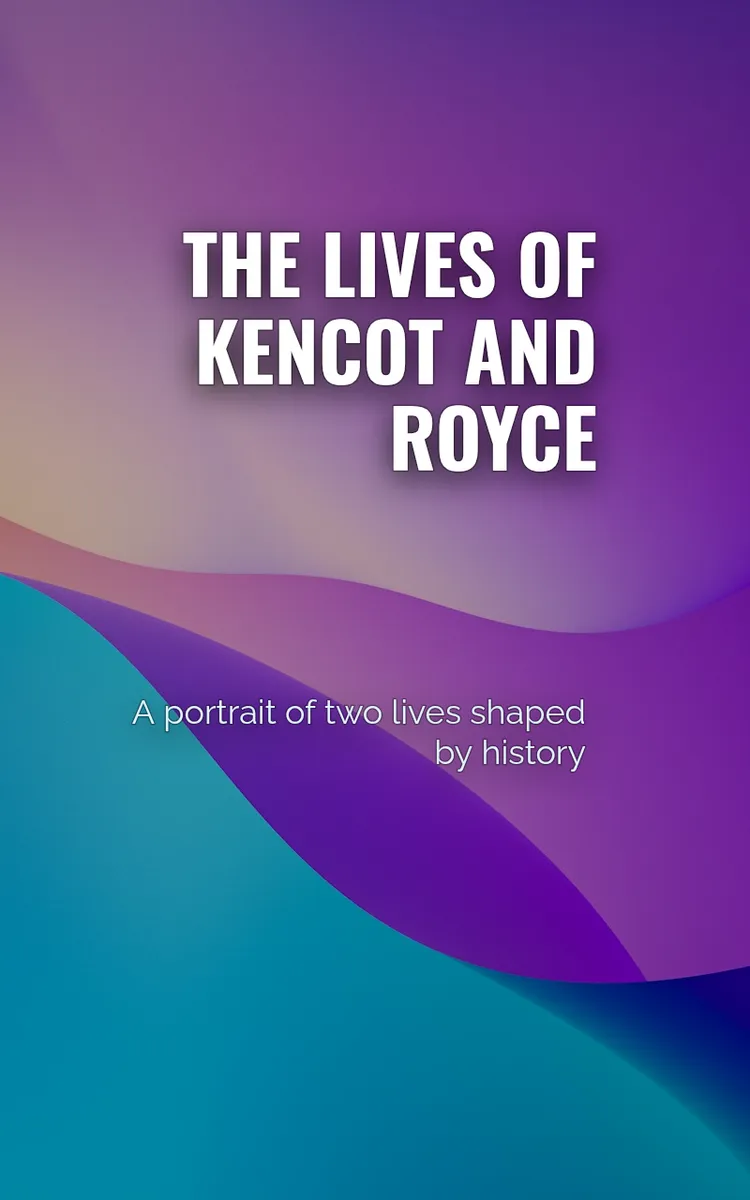
"The Lives Of Kencot And Royce" is a nonfiction book by Jessie McLaughlin with 40 chapters and approximately 92,353 words. The lives and personal histories of Lord of Kencot and Lady Royce.
This book was created using Inkfluence AI, an AI-powered book generation platform that helps authors write, design, and publish complete books.
Frequently Asked Questions
What is "The Lives Of Kencot And Royce" about?
The lives and personal histories of Lord of Kencot and Lady Royce
How many chapters are in "The Lives Of Kencot And Royce"?
The book contains 40 chapters and approximately 92,353 words. Topics covered include Kencot’s Inherited Estate, Royce’s First Appeal, The Missing Survey, Flooded Mill Road, and more.
Who wrote "The Lives Of Kencot And Royce"?
This book was written by Jessie McLaughlin and created using Inkfluence AI, an AI book generation platform that helps authors write, design, and publish books.
Write your own nonfiction book with AI
Describe your idea and Inkfluence writes the whole thing. Free to start.
Start writingCreated with Inkfluence AI


