

Read the first chapter
The whole of chapter one, free. About 3 min. Turn the pages with the arrows, your keyboard, or a swipe.
Chapter 1
Who Lives on Your Eyelashes?
A Neighborhood on Your Eyelashes
What lives on your eyelashes right now - besides your eyelashes? Tiny creatures called eyelash mites may be there. They are too small to see without a microscope, and most people never notice them.
Your face is not empty space. It is a busy little neighborhood of skin, hairs, oils, and microbes. Microbes are tiny living things, such as bacteria and yeasts. Most are harmless. Some are normal residents of healthy skin.
We will use the Eyelash Neighborhood Map to explore this hidden place. We will look at who lives there, what they eat, and why they usually do not cause trouble.
How can a face be a home without feeling crowded?
The Tiny Residents
An eyelash mite is a very small animal with eight legs. Two common kinds live near human hair follicles, the tiny pockets where hairs grow. One kind often stays near eyelashes and eyebrows.
These mites spend much of their lives inside or near a follicle. At night, they may crawl out to move across the skin. They feed on skin oils and old skin cells. Then they return to their tiny shelters.
A mite is not an insect. Insects have six legs. Mites are more closely related to spiders, though they are far smaller than a spider you might find in a garden.
A Face Has Weather
Your skin has its own weather. It can be warm, slightly oily, dry, or damp. Eyelashes help catch dust and protect your eyes, while the skin around them provides food and hiding places for tiny life.
Bacteria also live on the skin. They are not all dangerous. Many simply use the skin’s oils and bits of old cells. Some even make it harder for harmful germs to settle in.
The skin is like a playground after recess: many small visitors may be there, but that does not mean something bad is happening.
The Surprising Part
The strange truth is that a clean face can still have mites and microbes. Washing removes some of them, but it does not turn skin into a lifeless wall.
This matters because “tiny” does not mean “dangerous.” A healthy body is more like a small ecosystem than a spotless toy box. Different living things share the space, usually without causing harm.
A Real Look Through a Microscope
Scientists studying human skin have found eyelash mites on people around the world. They collect tiny samples from eyelashes or skin and examine them with microscopes. Under magnification, a mite’s pale body and little legs become visible.
Most people do not feel these mites moving. Trouble can happen when too many gather or when the skin reacts to them. Red, itchy eyelids can have many causes, so doctors - not guesses - help find the reason.
When we look closely, an ordinary eyelash becomes a doorway into a living world. Our bodies are not lonely islands. They are homes, gardens, and neighborhoods all at once.
The World on You
Human beings often think of themselves as one creature with one body. Microscopes show a wider picture. You are also a place where many tiny lives find food and shelter.
That may sound creepy, but it is also wonderfully strange. The next time you blink, you may wonder what your eyelashes would look like on an Eyelash Neighborhood Map - and what other invisible neighbors are waiting to be discovered.
End of chapter one. 13 more chapters and about 7,091 words in the full book.
Swipe or use the arrows to turn the page

Space Explorers: 500 Mind-Blowing Facts About The Universe

500 Amazing Animal Facts Kids Will Love

1,001 Amazing Facts About The World
What's inside: 14 chapters
- 1. Who Lives on Your Eyelashes?
- 2. The Ocean’s Boiling Hotspots
- 3. Animals That Make Their Own Light
- 4. The Blob That Remembers Routes
- 5. How Tardigrades Survive Almost Anything
- 6. Your Gut’s Microscopic Food Web
- 7. The Fungus That Controls Insects
- 8. Parasites with Unbelievable Life Cycles
- 9. The Fish That Walks on Land
- 10. Inside a Drop of Pond Water
- 11. Why Some Creatures Eat Their Kin
- 12. Life Beneath the Antarctic Ice
- 13. When Animals Borrow Other Species
- 14. The Hidden Life Connecting Everything
About this book
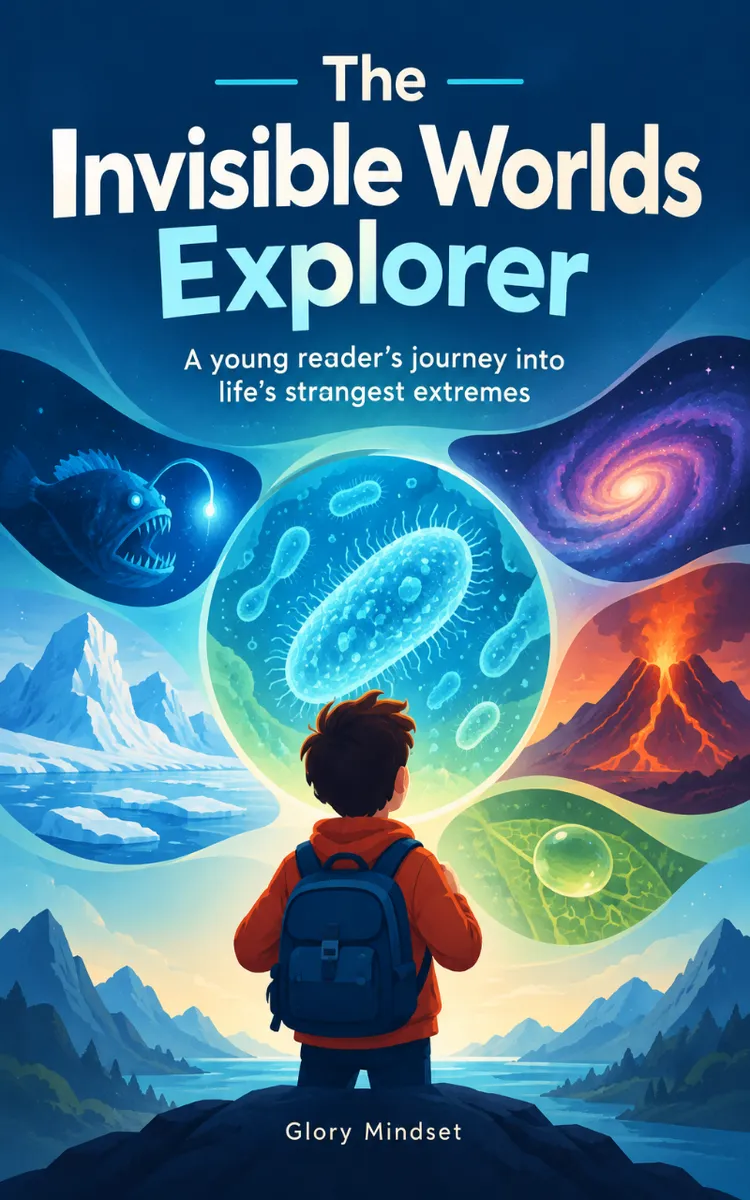
"The Invisible Worlds Explorer" is a curiosity book by Glory Mindset with 14 chapters and approximately 7,091 words. Scientific exploration of bizarre creatures and microscopic life around the globe.
This book was created using Inkfluence AI, an AI-powered book generation platform that helps authors write, design, and publish complete books.
Frequently Asked Questions
What is "The Invisible Worlds Explorer" about?
Scientific exploration of bizarre creatures and microscopic life around the globe
How many chapters are in "The Invisible Worlds Explorer"?
The book contains 14 chapters and approximately 7,091 words. Topics covered include Who Lives on Your Eyelashes?, The Ocean’s Boiling Hotspots, Animals That Make Their Own Light, The Blob That Remembers Routes, and more.
Who wrote "The Invisible Worlds Explorer"?
This book was written by Glory Mindset and created using Inkfluence AI, an AI book generation platform that helps authors write, design, and publish books.
Write your own curiosity book with AI
Describe your idea and Inkfluence writes the whole thing. Free to start.
Start writingCreated with Inkfluence AI


