
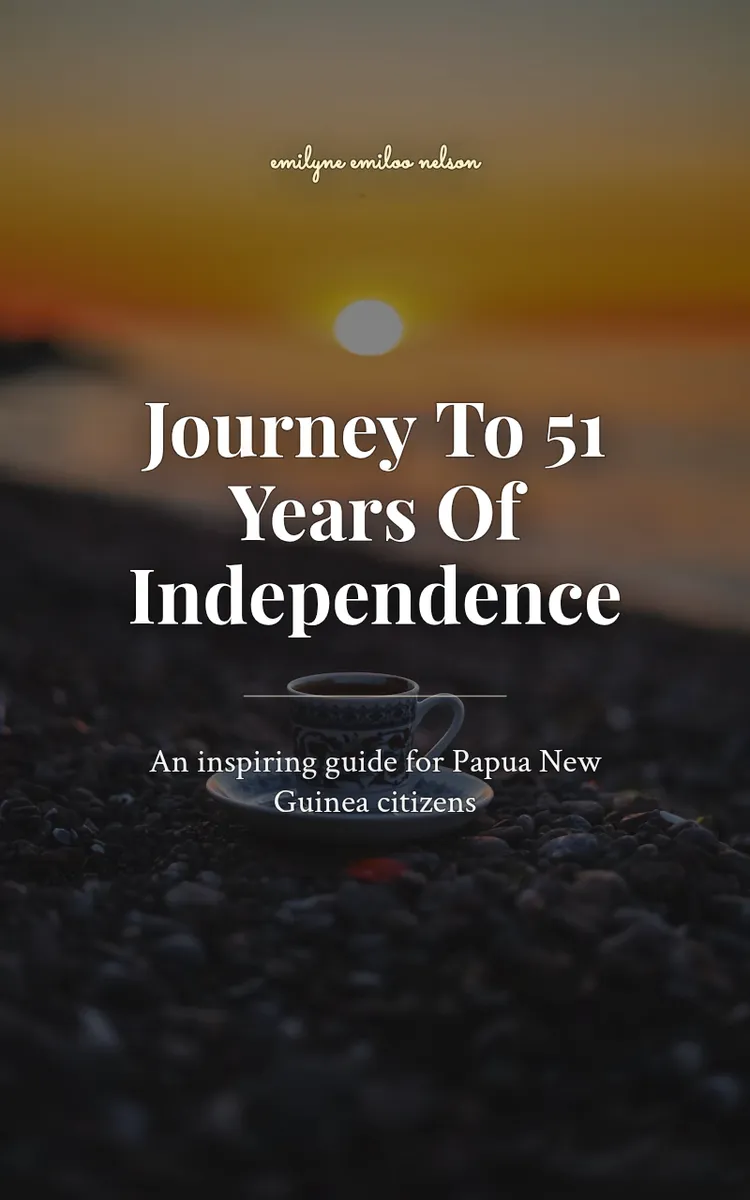

Read the first chapter
The whole of chapter one, free. About 8 min. Turn the pages with the arrows, your keyboard, or a swipe.
Chapter 1
Owning Our Shared Story
The Flag Becomes Personal
On 16 September 1975, Papua New Guinea’s flag rose as a new nation took its place in the world. Fifty-one years later, that flag still carries more than history. It carries the work left in our hands.
You see that work in a student preparing for an exam in Port Moresby, a health worker serving a remote community, a small business owner paying staff, and a family teaching children where they come from. Independence isn’t only a date on the calendar or a ceremony with speeches. It’s a shared story, and your choices are part of its next page.
That changes the question we ask. Instead of saying, “What has the country done for me?” we also ask, “What am I adding to the country I belong to?” This isn’t about carrying every national problem alone. It’s about recognising that belonging gives us a place in the work - and a reason to hope.
This Chapter Is For You If...
• You feel proud to be Papua New Guinean but sometimes struggle to connect national history with your daily choices. - You’re a student, professional, worker, parent, leader, or citizen who wants your contribution to be useful, not merely spoken about. - You’re tired of hearing that change belongs only to politicians, leaders, or people with money. - You want a practical way to turn national pride into responsible action while keeping hope grounded in real life.
You can expect a shift from watching PNG’s journey from the outside to seeing yourself as a participant. That shift may begin with one honest conversation, one reliable task, or one decision to protect what belongs to the wider community.
The Shared Story Ownership Loop
Papua New Guinea’s future becomes more hopeful when each citizen connects belonging to responsibility, responsibility to action, and action to renewed hope.
This is the Shared Story Ownership Loop. It begins with belonging: “This country is mine, and I am part of its story.” Belonging then creates responsibility. You start noticing how your conduct affects your family, workplace, community, and nation. Responsibility becomes action, and consistent action gives hope a solid place to stand.
Consider a student who sees the country’s education challenges and decides that nothing can change. The same student can take ownership of one part of the story: attend lessons, study with discipline, share notes, respect school property, and help a younger student read. These actions won’t solve every problem in education. They do something important, though. They build the kind of citizen a stronger education system needs.
The loop also works in professional life. A public servant who treats a file carefully, a driver who refuses to offer or accept a bribe, and a shop owner who keeps accurate records are not performing small acts unrelated to independence. They are practising the trust, fairness, and reliability that national progress requires. No trumpet may sound when the work is done. Still, the story moves.
Hope, then, isn’t pretending that PNG has no serious challenges. It’s refusing to surrender your part of the answer. Our 51-year journey includes achievements, disappointments, wounds, creativity, and unfinished work. Owning the shared story means holding all of that honestly without allowing the difficult parts to erase our capacity to build.
In Practice, This Means...
• You speak about PNG’s problems with honesty, but you also identify the part you can influence. - You treat public property, shared spaces, and community resources as belonging to you - not as “someone else’s.” - You keep promises in your work, studies, family duties, and community commitments. - You measure patriotism by useful conduct, not only by flag-waving or Independence Day celebration.
Making Ownership a Daily Habit
The Shared Story Ownership Loop becomes meaningful when it enters ordinary routines. You don’t need a large platform. You need a clear connection between what you value and what you do next.
• Morning: name your place in the story. Before the day becomes noisy, take two minutes to say what role you are carrying. You might be a student building knowledge, a worker serving customers, a parent shaping children, or a leader earning trust. Then choose one action that honours that role. - Morning: make one reliability decision. Decide what you will complete properly today. It could be arriving on time, submitting an assignment, answering a customer honestly, or keeping a worksite safe. One completed responsibility is stronger than five impressive intentions. - Midday: ask the ownership question. Pause for one minute and ask, “Am I adding trust or taking it away?” This question can change how you handle a disagreement, a public resource, a payment, or a task that nobody seems to be checking. - Midday: strengthen one connection. Share useful information, encourage a colleague, help a classmate understand a difficult topic, or listen to a community concern without immediately dismissing it. National belonging grows through relationships, not slogans alone. - Evening: record evidence of contribution. Write down one action that served more than your personal convenience. Also note one place where you fell short. The purpose isn’t self-attack. It’s to make tomorrow more deliberate. - Once a week: choose a visible community action. Spend 30 to 60 minutes on something specific: clearing a shared area, supporting a local learning effort, checking on an elderly neighbour, joining a lawful community discussion, or helping a small group organise its work. - At the end of each month: review the loop. Ask what helped you feel belonging, where responsibility became difficult, what action you repeated, and what new hope came from it. Keep the answers in a notebook or phone note titled “Our Shared Story.”
These habits are deliberately modest. Their strength comes from repetition. A nation is not built only through major projects. It is also built through thousands of ordinary decisions made when nobody is handing out medals.
From Frustration to Useful Responsibility
Before
A community noticeboard near a shared facility has become cluttered and damaged. People complain that local services are declining, rubbish is increasing, and leaders don’t care. The complaints may be justified, but the conversation ends there. Each person leaves with the same frustration they brought.
Action
One resident decides to connect the concern to ownership rather than blame. They speak with the facility manager and two nearby households. Together, they agree on a simple Saturday clean-up, a small rubbish schedule, and a request for repairs sent to the responsible office. The resident does not claim to fix the whole area or speak for every citizen. They organise the next useful step.
During the clean-up, they invite young people to help and explain why the space matters. They take a photograph of the damaged noticeboard, record the date of the request, and follow up after one week. The work is practical, lawful, and limited to what the group can genuinely carry.
Result
The area becomes cleaner, the repair request is easier to track, and more people see that responsibility can begin without waiting for perfect conditions. The larger problems have not disappeared. But frustration has been converted into evidence of care, cooperation, and follow-through.
That is the Shared Story Ownership Loop in motion. Belonging says, “This place matters to me.” Responsibility says, “I have a part to play.” Action makes that part visible. The result gives hope a foundation stronger than talk.
You can use the same pattern at school, work, church, business, or home. Start with one issue close enough to understand. Name the part you can influence. Involve the right people. Take a lawful, measurable step. Then review what changed.
Questions That Bring the Story Close
1. When I speak about PNG, do I speak as a member of the nation or only as a critic of it? Honest reflection may show that you care deeply but have allowed disappointment to become your main identity. Keep the criticism that protects truth, then add one responsibility you are willing to carry.
2. Which national value do my daily actions currently support - trust, fairness, service, learning, courage, or care? Look for evidence from the past seven days. If you value fairness but regularly use connections to bypass proper process, the gap is worth facing without excuses.
3. Where do I treat a shared resource as if it belongs to nobody? This could be a classroom, road, workplace tool, public building, water source, or community space. Choose one way to protect it this week, such as reporting damage, using it carefully, or helping organise its maintenance.
4. What is one responsibility I keep assigning to leaders that I can begin within my own reach? You may not control a national policy, but you may control your preparation, honesty, service, spending, voting information, or treatment of others. Start with the part that is truly yours.
5. What would renewed hope look like in my conduct, not just in my feelings? Perhaps it means attending class consistently, reopening a difficult conversation, keeping business records, mentoring someone, or joining a community effort. Hope becomes credible when another person can experience it through what you do.
Put Your Name on the Next Page
Today, write one sentence in your phone or notebook: “Because I belong to Papua New Guinea, I will…” Complete it with one action you can finish within the next seven days. Tell one trusted person, then place a date beside it.
Time needed: 10 minutes today, followed by the time required for your chosen action.
You will know it worked when... you can point to a completed act that strengthened trust, service, learning, care, or responsibility beyond your own immediate convenience.
The journey to 51 years is not only a record of what happened before us. It is also a responsibility we are now carrying together. Your place in that story is not waiting for permission. Take it with clear eyes, steady hands, and one useful action.
End of chapter one. 7 more chapters in the full book.
Swipe or use the arrows to turn the page
What's inside: 8 chapters
- 1. Owning Our Shared Story
- 2. Practicing Gratitude Daily
- 3. Turning Challenges Into Lessons
- 4. Choosing Integrity Over Convenience
- 5. Building Courage Through Small Acts
- 6. Communicating With Respectful Strength
- 7. Growing Unity With Shared Responsibility
- 8. Sustaining Hope for the Next 51
About this book
"Journey To 51 Years Of Independence" is a inspirational book by emilyne emiloo nelson with 8 chapters and approximately 12,792 words. Papua New Guinea’s 51st independence journey and national inspiration.
This book was created using Inkfluence AI, an AI-powered book generation platform that helps authors write, design, and publish complete books. It was made with the AI Inspirational Book Writer.
Frequently Asked Questions
What is "Journey To 51 Years Of Independence" about?
Papua New Guinea’s 51st independence journey and national inspiration
How many chapters are in "Journey To 51 Years Of Independence"?
The book contains 8 chapters and approximately 12,792 words. Topics covered include Owning Our Shared Story, Practicing Gratitude Daily, Turning Challenges Into Lessons, Choosing Integrity Over Convenience, and more.
Who wrote "Journey To 51 Years Of Independence"?
This book was written by emilyne emiloo nelson and created using Inkfluence AI, an AI book generation platform that helps authors write, design, and publish books.
How can I create a similar inspirational book?
You can create your own inspirational book using Inkfluence AI. Describe your idea, choose your style, and the AI writes the full book for you. It's free to start.
Write your own inspirational book with AI
Describe your idea and Inkfluence writes the whole thing. Free to start.
Start writingCreated with Inkfluence AI


