
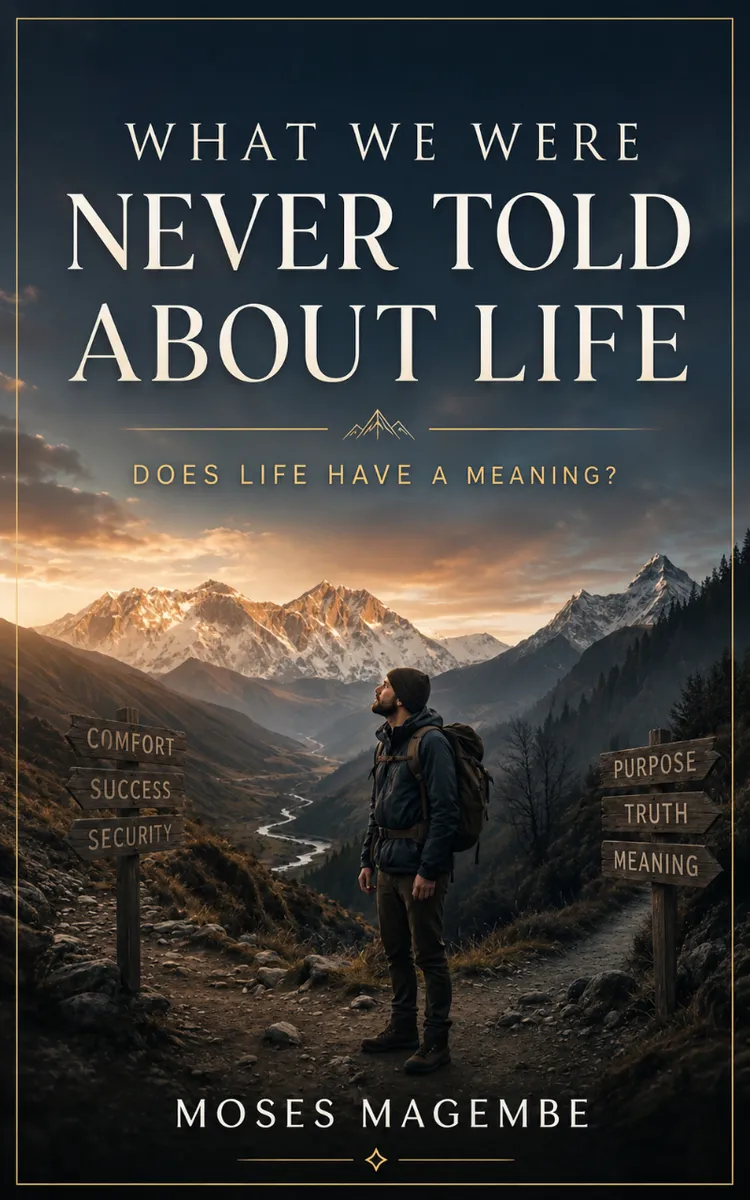
Read the first chapter
The whole of chapter one, free. About 7 min. Turn the pages with the arrows, your keyboard, or a swipe.
Chapter 1
Questioning Life’s Apparent Emptiness
The Ache Beneath a Busy Life
What if the deepest problem in your day isn’t that you have too much to do, but that you’re no longer sure why any of it matters?
You can answer messages, earn money, care for family, maintain a home, and still feel an empty space underneath it all. The calendar is full, yet the heart keeps asking a stubborn question: “Is this all life is - surviving until the next demand arrives?”
That question can feel inconvenient, even embarrassing. You may tell yourself to be grateful, work harder, or stay distracted. But the ache doesn’t disappear because it’s ignored. It often grows quieter and deeper. The Honest Question Method begins by refusing to cover that ache with quick answers. It asks what you’re truly experiencing, what you believe life is for, and whether your understanding of God has any connection to your ordinary Tuesday.
The obstacle is not simply busyness. It’s the habit of treating survival as the same thing as purpose. Paying bills matters. Feeding your family matters. Doing good work matters. Yet these responsibilities can become the whole story, leaving no room to ask who you are becoming or what your life is meant to serve.
You don’t need to solve your entire existence tonight. You do need to tell the truth about the question. That honesty isn’t a failure of faith. It can be the beginning of seeking God with greater seriousness.
You’re Ready for This If...
• You keep accomplishing tasks but feel strangely untouched by them. - You’ve wondered whether your life has meaning beyond earning, consuming, and repeating. - You’re willing to name your doubts without turning them into a final verdict. - You want to seek God honestly rather than pretend you already have every answer.
The Habit of Surviving Instead of Asking
Most People Do This: They notice emptiness and immediately fill the space. They reach for a phone, another task, another purchase, another argument, or another hour of work. The goal isn’t always pleasure. Sometimes it’s simply avoiding the quiet where difficult questions become audible.
Try This Instead: Pause for ten minutes and ask one honest question: “What am I hoping my next accomplishment will prove about my life?” Write the first answer without correcting it. It might be, “That I’m useful,” “That I’m not falling behind,” or “That God hasn’t forgotten me.” Those answers give you something real to bring before God.
This small change matters because distraction can hide the difference between activity and direction. A person can spend years responding to demands without choosing what deserves their life. The issue isn’t that work, entertainment, or responsibility is automatically wrong. The issue is whether they’re carrying a burden they were never meant to carry: proving that your life has value.
The Honest Question Method creates a pause between the ache and the usual escape. During that pause, you can notice what your heart is asking. Are you longing for purpose, forgiveness, belonging, service, or a clearer relationship with God? You may not receive a complete answer immediately. Still, a truthful question is better than a polished lie you no longer believe.
A Daily Practice for the Meaning Question
Use this schedule for one week. Keep a small notebook nearby, or create a note on your phone titled “The Honest Question.” The entire practice takes about twenty minutes a day.
| Time | Micro-action | Time estimate | |---|---|---:| | Morning | Before checking messages, write: “Today, I want my life to point toward…” Finish the sentence with one specific quality or act, such as patience with your child or integrity at work. Offer it to God in a simple prayer. | 5 minutes | | Midday | Stop during a natural break. Ask, “Am I only getting through today, or am I living toward something?” Record one moment when your actions matched your stated purpose, and one moment when they didn’t. | 5 minutes | | Evening | Review the day without attacking yourself. Write one task that was necessary, one action that was meaningful, and one question you still need to bring to God. | 10 minutes |
The morning question keeps purpose from becoming an abstract idea. “I want my life to point toward love” is meaningful, but “I’ll listen without reaching for my phone during the ten-minute conversation with my son” gives it a shape. Purpose becomes easier to recognize when it enters a real decision.
The midday pause is especially useful because it catches you while the day is still happening. You may discover that your emptiness isn’t caused by having too little to do. It may come from doing everything under pressure, resentment, or the need to impress. The evening review then turns the day into evidence. You begin to see patterns instead of judging one difficult moment.
When Survival Stops Being the Whole Plan
Before: A person moves from one demand to the next, measuring the day by what was completed. If the work is finished, the bills are paid, and nobody needs immediate help, the day counts as successful. Yet there’s no space to ask whether the person’s choices reflect any deeper purpose. Quiet moments feel uncomfortable, so they’re filled with scrolling or more work.
The Change: The person begins using a ten-minute pause each evening. Instead of asking only, “What did I get done?” they ask, “What did my actions say mattered today?” One answer might be disappointing: “I gave more attention to proving myself at work than to the people I love.” Another might be encouraging: “I stayed calm when I wanted to snap.” Both answers are useful because they’re honest.
After: The schedule may look almost the same, but the person starts making small, deliberate changes. A phone stays away during dinner. A difficult apology happens sooner. A portion of the week is set aside to serve someone rather than simply recover from exhaustion. The ripple effect is not instant happiness. It’s greater alignment. Work becomes work instead of a test of worth. Family conversations become opportunities for presence. Prayer becomes less like a performance and more like a real conversation with God.
The important behaviour change is not “become perfectly purposeful.” It’s learning to connect ordinary actions with the question of what life is for. A five-minute pause can expose a pattern that years of busyness kept hidden. Once you see that pattern, you can bring it to God and choose one different response.
Questions Worth Answering Honestly
1. When have I felt most strongly that life was empty, and what was happening around me at the time? Be specific. Maybe the feeling appeared after a promotion, during a quiet weekend, or while driving home from work. The setting can reveal what achievement or routine failed to provide.
2. What do I usually use to avoid asking whether my life has meaning? Name the actual habit: checking news for forty minutes, accepting unnecessary work, spending money, staying constantly available, or keeping noise on in every room. Honesty here isn’t an accusation; it’s a map.
3. If survival were no longer my only concern, what kind of person would I want to become? Don’t write a job title or a public image. Consider qualities and commitments. You might write, “Someone who tells the truth kindly,” or “Someone who uses his skills to make life lighter for others.”
4. What do I believe God has to do with my purpose, and where did that belief come from? Your answer may include trust, confusion, anger, or uncertainty. For example: “I believe God created me, but I’ve treated Him as distant from my daily choices.” That kind of sentence gives your faith something real to work with.
5. What is one responsibility I can perform with intention instead of resentment this week? Choose something measurable, such as giving your full attention during one conversation or completing a needed task without using it to prove your worth. Purpose often becomes visible through repeated small choices.
Your First Honest Step
Set a timer for ten minutes right now. On paper, complete this sentence: “If my life is more than survival, I need to understand…” Don’t edit the answer, make it sound spiritual, or force yourself to feel hopeful. When the timer ends, read what you wrote once and pray in plain language: “God, help me face this honestly and show me what is true.”
Time estimate: 10 minutes Difficulty: Easy You’ll know it’s working when... you can name the question beneath your busyness without immediately trying to silence it.
That question may not resolve today. It has already done something important: it has turned your attention from merely getting through life toward seeking the One who may give life its meaning.
End of chapter one. 4 more chapters and about 7,951 words in the full book.
Swipe or use the arrows to turn the page
What's inside: 5 chapters
- 1. Questioning Life’s Apparent Emptiness
- 2. Seeking God Beyond Easy Answers
- 3. Receiving Purpose as a Calling
- 4. Finding Meaning in Ordinary Faithfulness
- 5. Trusting God Through Unanswered Questions
About this book
"What We Were Never Told About Life" is a inspirational book by Moses Magembe with 5 chapters and approximately 7,951 words. David’s pursuit of God and discovery of life’s purpose and meaning.
This book was created using Inkfluence AI, an AI-powered book generation platform that helps authors write, design, and publish complete books. It was made with the AI Inspirational Book Writer.
Frequently Asked Questions
What is "What We Were Never Told About Life" about?
David’s pursuit of God and discovery of life’s purpose and meaning
How many chapters are in "What We Were Never Told About Life"?
The book contains 5 chapters and approximately 7,951 words. Topics covered include Questioning Life’s Apparent Emptiness, Seeking God Beyond Easy Answers, Receiving Purpose as a Calling, Finding Meaning in Ordinary Faithfulness, and more.
Who wrote "What We Were Never Told About Life"?
This book was written by Moses Magembe and created using Inkfluence AI, an AI book generation platform that helps authors write, design, and publish books.
How can I create a similar inspirational book?
You can create your own inspirational book using Inkfluence AI. Describe your idea, choose your style, and the AI writes the full book for you. It's free to start.
Write your own inspirational book with AI
Describe your idea and Inkfluence writes the whole thing. Free to start.
Start writingCreated with Inkfluence AI


