
Read the first chapter
The whole of chapter one, free. About 8 min. Turn the pages with the arrows, your keyboard, or a swipe.
Chapter 1
Mana-Less Magic Basics: The Spark
Mana-Less In A Magical World
Finding the Spark
What happens when your hand reaches for magic and finds no mana waiting inside you? The answer begins with a spark - not a reserve, not a spell core, and not a hidden pool you must somehow unlock. A spark is the brief reaction created when intent, touch, and a suitable focus meet at the right moment.
Most magical training assumes that mana supplies the force. A mana-less person must work differently. You cannot pour power into a rune, sustain a glowing orb, or force a ward open. You can, however, trigger a small effect by giving a prepared object the correct command at the correct instant. That first effect might warm a cup, brighten a marked stone, or push a loose latch by a finger’s width. Small does not mean useless. Small means controllable.
The goal here is practical: learn to notice an instinctive spark, shape it into a safe first effect, and stop before the reaction grows beyond your control. By the end, you should know how to prepare a focus, test for a spark, measure the result, and repeat the action without relying on mana.
The Spark-to-Shape Ladder
The Spark-to-Shape Ladder turns an unpredictable reaction into a repeatable action. It has four parts:
1. Stillness - Stop your body before you reach for magic. Stillness matters because a sudden movement can blur the difference between a real spark and ordinary contact. Place both feet on the floor, relax your fingers, and take one slow breath lasting about four seconds.
2. Intent - Choose one plain result. Use a command such as “warm,” “glow,” or “nudge.” Do not combine commands. “Warm and brighten” gives the spark two directions and makes the result harder to judge.
3. Contact - Touch the focus with one fingertip. Contact gives the spark a path. Use a focus designed for weak reactions, such as a chalk-marked ceramic tile or a smooth copper coin etched with a single line.
4. Shape - End the effect as soon as you see the first response. Lift your finger, name the result aloud, and record what changed. Shaping does not mean making the effect larger. It means giving the effect a clear beginning and end.
A suitable focus acts like a narrow doorway. A blank stone gives the spark no clear route, while a single-purpose mark guides it toward one mild result. For a first test, draw a circle no wider than a coin and place one short line through its center. Assign that mark one effect only: warmth. Keep the focus on a stone or wooden surface, never on cloth, paper, hair, or anything that can catch fire.
The spark often feels different from mana. Mana usually feels like pressure that gathers and remains available. A spark feels more like a click behind the fingertips, a brief prickling, or a sudden sense that the focus has become “ready.” Do not chase the sensation. Ask yourself one question: did the focus change after contact? A measurable change - heat, light, movement, or sound - counts. A feeling without a change does not.
Begin with effects that cannot easily harm you. A warm tile should feel mildly heated, not hot enough to force your hand away. A glow mark should produce light no brighter than a candle. A nudge mark should move a dry leaf or slide a wooden bead less than an inch. These limits matter because a mana-less spark can still trigger stored energy inside a prepared object. Your body supplies the trigger, but the focus may supply the rest.
After each attempt, wait ten seconds before trying again. This pause lets the focus settle and helps you identify delayed heat, flickering light, or a second movement. If the focus becomes hot, cracks, smokes, or continues acting after you withdraw your finger, place it on bare stone and step away. Do not grab it to “cancel” the effect.
The ladder is simple: become still, choose one intent, make contact, then shape the result by ending it quickly. Practice that order until the spark feels less like luck and more like a small tool.
A First Effect at the Workbench
Use a clear work surface with a stone tile, a ceramic focus, a wooden bead, a cup of cool water, and a timer. Keep the water nearby for cooling the focus, but do not pour it over a glowing or cracked object. Work in a room with steady light so you can notice a weak glow.
Follow these steps:
1. Inspect the focus. Check the ceramic tile for cracks and confirm that its single mark means warmth. A damaged line can split the reaction and create uneven heat.
2. Set the limit. Place your free hand beside the tile, not on it. Decide that you will stop at the first clear warmth or after three seconds, whichever comes first. A time limit prevents you from holding contact while waiting for a stronger result.
3. Clear your body. Put both feet flat on the floor. Breathe in for four seconds, breathe out for four, and keep your shoulder still. This gives you a steady baseline.
4. Choose the command. Say, “Warm the tile,” once. Use the same words during every attempt. Consistent wording helps you notice whether the result comes from the technique or from changing your intention.
5. Touch the center. Place one fingertip on the mark. Do not press. Hold contact for up to three seconds while watching for a click-like sensation or a change in temperature.
6. End the contact. Lift your finger at the first warmth. If nothing happens by three seconds, lift your finger anyway. Wait ten seconds before you inspect the tile.
7. Check the result. Compare the marked center with the edge using the back of your hand from a short distance first. If the center feels warmer but remains comfortable to touch, record “mild warmth.” If the tile stays unchanged, record “no effect.” If it feels hot, stop practice and let it cool on stone.
8. Repeat twice. Use the same focus, command, contact time, and stopping point. A useful first session produces either two similar mild effects or three clean failures without damage. Both outcomes teach you something: repeatable warmth shows control, while clean failure shows that you can stop safely.
A realistic result might look like this: the first touch produces nothing, the second creates a faint warmth after two seconds, and the third produces the same warmth after two seconds. That pattern suggests a spark can reach the focus, but your timing needs work. Do not increase the mark, duration, or pressure yet. First make the existing result repeatable.
Quick checklist
• [ ] Work on bare stone or a ceramic surface. - [ ] Use one undamaged, single-purpose focus. - [ ] Choose one command: warm, glow, or nudge. - [ ] Touch with one fingertip and no pressure. - [ ] Stop at the first effect or after three seconds. - [ ] Wait ten seconds between attempts. - [ ] Record the result after every attempt. - [ ] Stop if the focus cracks, smokes, burns, or keeps acting.
The important measure is not strength. It is consistency. If the same action produces the same mild result, you have begun to shape a spark.
Mistakes That Break the First Spark
Holding contact after the effect begins
A beginner may feel warmth and keep touching the focus, hoping to make it hotter. That choice turns a controlled first effect into an unknown reaction. The focus may store heat or pass the reaction into the hand.
Do this: Lift your finger as soon as you notice the first clear change, then wait ten seconds.
Not this: Keep touching until the tile reaches a satisfying temperature.
If you need a stronger effect later, change the focus under controlled conditions. Do not extend the first test.
Using several intentions at once
A mana-less spark follows the clearest path available. If you think “glow,” “warm,” and “move” together, the focus may flicker, heat unevenly, or fail to respond. The problem does not come from weak will. It comes from giving one brief reaction too many jobs.
Do this: Choose one visible result and repeat the same command for three attempts.
Not this: Add a second command because the first attempt feels slow.
If you want to test a different effect, end the session, mark a fresh focus, and begin again. A new mark gives you a clean comparison.
Practicing on unsafe materials
A spark can trigger a prepared object more strongly than expected. Testing on cloth, dry grass, paper, or a metal surface held in your hand creates risks that add nothing to the lesson. Metal can conduct heat quickly, while loose materials can catch from a tiny glow.
Do this: Use ceramic, stone, or untreated wood on a clear bench.
Not this: Test a glow mark beside curtains or hold a copper focus in your palm.
Keep your fingers near - not on - the focus after activation. If the object heats, cracks, or moves without your touch, step back and wait for the reaction to end.
Mistaking sensation for success
A prickling finger or sudden rush of attention can feel magical, especially during a tense first attempt. Yet the spark only counts when the focus changes. Treating every sensation as success encourages you to repeat poor technique and ignore useful evidence.
Check the object, not your excitement. Look for a warmer center, a visible glow, a measured movement, or a clear sound. If nothing changed, write “no effect” and adjust only one part of the next attempt - your breathing, the contact point, or the command. Change one variable because changing everything hides the cause.
A safe spark leaves a clear trace and a clear stopping point. Once you can create that trace twice in a row, you have more than a lucky reaction: you have the first rung of the Spark-to-Shape Ladder. From there, every new effect begins with the same discipline - one intent, one focus, and one controlled end.
End of chapter one. 4 more chapters and about 9,008 words in the full book.
Swipe or use the arrows to turn the page
What's inside: 5 chapters
- 1. Mana-Less Magic Basics: The Spark
- 2. Mana Substitutes: Using Breath and Heat
- 3. Ritualless Casting: Gesture and Focus
- 4. The No-Mana Oath: Building Magical Identity
- 5. Advanced Control: Weaving Without Mana
About this book
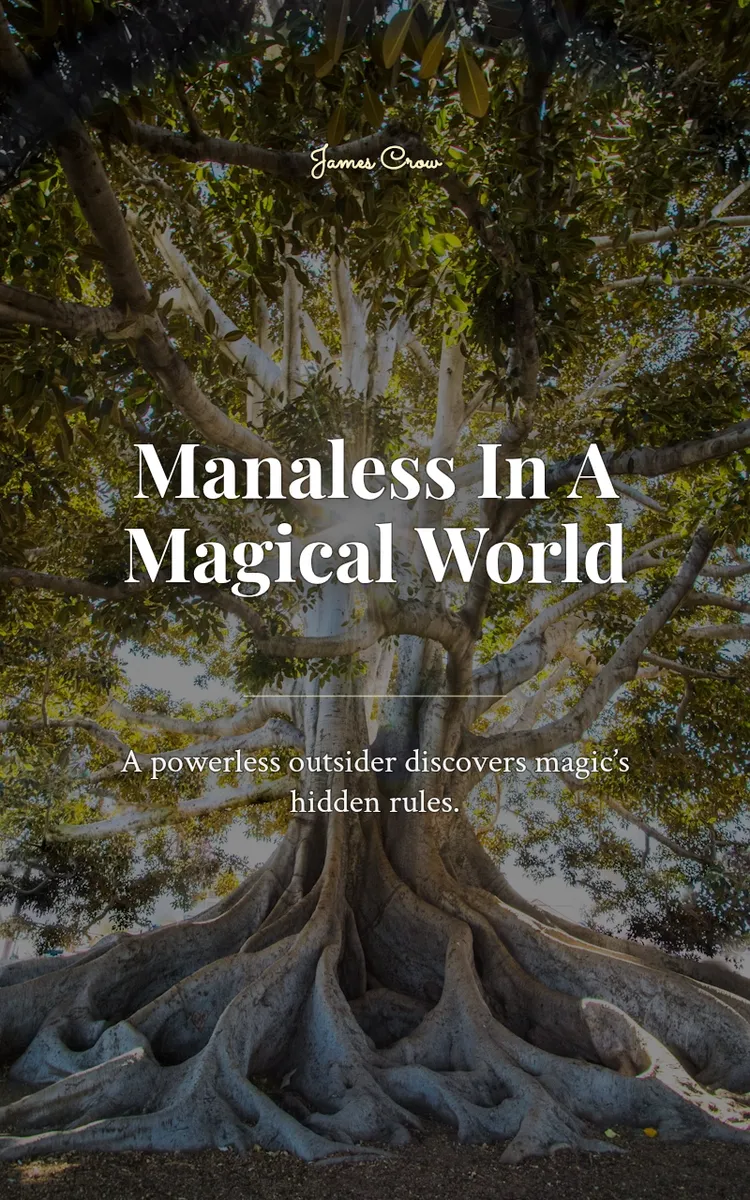
"Manaless In A Magical World" is a fantasy book by James Crow with 5 chapters and approximately 9,008 words. A magical world where one man lacks mana.
This book was created using Inkfluence AI, an AI-powered book generation platform that helps authors write, design, and publish complete books.
Frequently Asked Questions
What is "Manaless In A Magical World" about?
A magical world where one man lacks mana
How many chapters are in "Manaless In A Magical World"?
The book contains 5 chapters and approximately 9,008 words. Topics covered include Mana-Less Magic Basics: The Spark, Mana Substitutes: Using Breath and Heat, Ritualless Casting: Gesture and Focus, The No-Mana Oath: Building Magical Identity, and more.
Who wrote "Manaless In A Magical World"?
This book was written by James Crow and created using Inkfluence AI, an AI book generation platform that helps authors write, design, and publish books.
Write your own fantasy book with AI
Describe your idea and Inkfluence writes the whole thing. Free to start.
Start writingCreated with Inkfluence AI

