

Read the first chapter
The whole of chapter one, free. About 10 min. Turn the pages with the arrows, your keyboard, or a swipe.
Chapter 1
Assessing Your Balcony’s Growing Conditions
A balcony can look sunny at breakfast and sit in deep shade by lunch. One corner may feel calm while the railing catches strong gusts. A few filled containers can also weigh far more than they appear to weigh when empty. Before you buy seeds or pots, measure these conditions so you can match each vegetable to the space it can actually handle.
The Balcony Readiness Scan gives you four facts: how much direct sunlight reaches the growing area, how wind moves across it, how much usable floor and railing space you have, and what weight the balcony can safely carry. These facts solve common first-year problems such as leggy plants, dried-out containers, toppled pots, crowded leaves, and overloaded surfaces. After you complete the scan, you can choose vegetables with a clear reason instead of guessing from a plant label.
Keep a tape measure, a notebook, a pencil, and your phone nearby. Record what you observe rather than relying on one quick glance. Your balcony changes as the sun moves, so careful notes give you a much more useful planting plan.
Run the Balcony Readiness Scan
Start by marking the area where you might place containers. Use masking tape or chalk to mark separate spots on the floor, along the railing, and near the wall. Then observe those spots at several times of day. Direct sunlight means sunlight that reaches the leaves without passing through a window or nearby shade. Bright light through glass does not count as direct outdoor sunlight because the glass changes the light and the plant also faces heat buildup.
Follow these four parts of the Balcony Readiness Scan:
1. Measure sunlight. Check each marked spot at 8 a.m., noon, 3 p.m., and 6 p.m. Write down whether the spot receives direct sun, bright shade, or full shade. Count the total hours of direct sun. This helps you choose between sun-loving vegetables such as tomatoes and peppers and shade-tolerant choices such as lettuce and some herbs.
2. Check wind. Stand at the balcony for a few minutes during a breezy period. Note whether air moves gently, pushes steadily from one direction, or swirls around the building. Hang a short strip of ribbon from the railing to make air movement easier to see. Wind increases water loss and can snap stems, so exposed balconies need shorter plants, heavier containers, or a safe windbreak.
3. Measure usable space. Measure the length and width of each possible container area. Also measure railing width and height if you plan to use railing boxes. Leave room to open doors, walk safely, water plants, and inspect leaves. A 90-centimeter-wide area may hold one long planter, but it may not hold three separate pots without blocking access.
4. Estimate load limits. Find the balcony’s maximum permitted load in your building documents or ask the property manager. A load limit describes the total weight the balcony can carry, including people, furniture, containers, soil, water, and stored items. If you cannot find the limit, keep containers on the floor near the building wall, choose small pots, and ask a qualified building professional before adding a heavy garden.
Record each result in a simple table:
| Growing spot | Direct sun | Wind level | Available area | Best first choices | |---|---:|---|---|---| | Left corner | 6 hours | Moderate | 60 × 60 cm | Bush beans, pepper | | Railing box | 4 hours | Strong | 80 × 20 cm | Lettuce, radish | | Wall side | 2 hours | Light | 50 × 40 cm | Mint, parsley, leafy greens |
Use the lowest useful measurement when conditions change. If a spot receives five hours of sun on clear days but only three hours when a nearby building casts afternoon shade, plan for three to five hours. That range gives you a safer vegetable choice than assuming the brightest day represents every day.
Ask yourself one practical question: “Which condition limits this spot most?” A sunny area with strong wind may suit a compact pepper in a stable pot but not a tall tomato. A calm area with only two hours of sun may suit lettuce but not a fruiting crop. Your limiting condition should guide the choice.
The scan turns a balcony into several small growing zones rather than one single garden. Keep the measurements where you can refer to them when you compare containers and plants.
Match Vegetables to Measured Conditions
Sunlight controls which vegetables can make enough food for strong leaves, flowers, and fruit. Vegetables that produce fruit usually need more direct sun than vegetables grown mainly for leaves. If a spot receives six or more hours of direct sun, consider compact tomatoes, peppers, eggplants, bush beans, and cucumbers with support. With three to five hours, try lettuce, spinach, radishes, chard, parsley, and many green onions. With less direct sun, choose leafy crops and expect slower growth. Do not place a tomato in a two-hour spot simply because the pot fits there; the plant may grow tall and weak while producing little fruit.
Wind changes both plant choice and watering. Strong wind dries the top of the soil quickly and makes tall stems move until they weaken. Choose compact or bush varieties for exposed balconies. Place a sturdy trellis where it cannot catch wind like a sail, and secure it to the building-approved structure rather than attaching it loosely to a lightweight pot. Use a railing screen only if building rules allow it and the screen does not create a large surface for gusts to push against.
Space measurements help you avoid crowding. Read the mature width on the seed packet or plant label, then compare it with your available area. A pepper that reaches 30 centimeters wide needs more than a 20-centimeter gap between neighboring pots. Crowded plants compete for light and air, and their leaves stay wet longer after watering. That creates poor growing conditions and makes inspection harder. Keep a narrow path or hand-width gap between containers so you can reach the soil and check under leaves.
Weight needs careful attention because dry soil becomes much heavier after watering. A 30-liter container filled with wet potting mix, a mature plant, and a saucer can weigh many kilograms. Do not add weight estimates from a catalog and assume the total stays the same. Water, rain, and several full containers all count. Use lightweight containers and lightweight potting mix designed for containers, not garden soil dug from the ground. Garden soil packs tightly in pots, drains poorly, and adds unnecessary weight.
Place the heaviest containers close to the wall or other supported area, never on a narrow railing unless the railing box and its supports meet building requirements. Keep a written total for the garden. For example, four 15-liter pots might each weigh about 12 kilograms when wet, creating roughly 48 kilograms before you add tools or furniture. Treat that number as a planning estimate, not a permission to exceed a stated load limit.
Take a second look after choosing vegetables. If your plan includes a tall crop, a wide container, and a windy corner, change one part before planting. Choose a shorter variety, move the pot to a sheltered spot, or reduce the number of containers. A successful balcony layout fits the conditions first and the wish list second.
Apply the Scan to a Small Balcony
Consider a balcony with a 1.2-meter by 2-meter floor area. A neighboring building shades the back wall until late morning. The outer railing receives direct sun from 11 a.m. until 4 p.m., while the wall side receives about two hours. The railing catches steady afternoon wind. The resident wants tomatoes, lettuce, and radishes but has not yet bought containers.
Use the Balcony Readiness Scan in this order:
1. Mark the zones. Measure a 70-centimeter by 40-centimeter floor space near the sheltered wall and an 80-centimeter section along the railing. Leave a 50-centimeter walking strip between the door and containers. The expected outcome is clear access for watering and harvesting.
2. Record the light. Confirm two hours near the wall and five hours at the railing. Choose lettuce and radishes for the wall zone because both can produce useful leaves or roots with moderate light. Reserve the brighter railing zone for one compact tomato only if the container can stand securely and local rules allow its position.
3. Check the wind. Tie a 20-centimeter ribbon to the railing and watch it during an afternoon breeze. If it pulls straight outward for long periods, treat that zone as exposed. Place the tomato near the wall instead only if it still receives enough sun, or choose a compact pepper for the sheltered bright area. The expected outcome is less stem damage and slower soil drying.
4. Plan the containers. Select one 20-liter container for the tomato or pepper, one 10-liter container for lettuce, and one 10-liter container for radishes. Check each container’s mature plant size and drainage holes. The expected outcome is enough root space without filling every open patch.
5. Check the load. Look up the balcony’s permitted load before filling the pots. Estimate the wet weight of each container, add the weight of any existing furniture, and keep the total comfortably below the limit. If the limit remains unknown, ask the property manager and delay the heavy container. The expected outcome is a garden plan that respects the structure rather than testing it.
6. Make a final map. Draw the balcony on paper and label each pot, its weight estimate, its sunlight hours, and its watering access. If a pot blocks the door or forces you to lean over the railing, move it before adding soil. The expected outcome is a layout you can maintain safely.
Quick checklist
• [ ] Mark possible growing spots with tape or chalk. - [ ] Check direct sunlight at morning, midday, afternoon, and evening. - [ ] Write total direct-sun hours for each spot. - [ ] Test wind with a ribbon during a breezy period. - [ ] Measure floor, railing, container, and walking spaces. - [ ] Check mature plant widths before buying containers. - [ ] Find the balcony’s permitted load limit. - [ ] Estimate wet container weight, not empty-pot weight. - [ ] Keep heavy pots near supported areas and away from railings. - [ ] Choose vegetables for the most limiting condition.
After this check, the resident might plant lettuce and radishes near the wall and use the brighter, more sheltered section for one compact pepper instead of a tall tomato. That change follows the measurements: moderate light for leafy crops, more light for fruiting crops, and a shorter plant for a windy balcony.
Avoid Measurement Mistakes
Counting bright shade as direct sun
A balcony can look bright while nearby walls, glass, or an overhanging roof block direct rays. A plant label that asks for full sun refers to direct light, not general brightness.
Do this: Check whether sunlight reaches the marked spot without interruption, then record the hours.
Not this: Decide that a bright-looking corner receives six hours of sun without observing it.
If the spot receives only two hours of direct sun, move fruiting vegetables elsewhere and use leafy crops there.
Measuring space without allowing access
A container may fit on paper but still block the door, leave no room for watering, or force you to reach dangerously over the railing. Plants also spread beyond the pot as they mature.
Do this: Measure the container footprint, mature plant width, walking path, and space needed to lift a watering can.
Not this: Fill every open section with pots because the empty spaces look unused.
Keep a hand-width gap between containers when possible, and leave a clear route to every pot. That access lets you spot dry soil, pests, and broken stems before small problems become difficult repairs.
Ignoring wind and wet weight
A lightweight pot may tip after a gust, while a large pot may become too heavy after watering. A trellis can also catch wind and pull against its container.
Do this: Test wind with ribbon, choose compact plants, secure supports properly, and calculate the wet weight of every container.
Not this: Place a tall tomato beside the railing in a light pot, then add a tall unsupported trellis.
Move exposed plants toward a sheltered wall when the light still works, use a heavier approved base when necessary, and ask for professional advice if you cannot confirm the balcony’s load limit. Safe placement protects both the garden and the people below.
Your finished Balcony Readiness Scan should leave you with a small map, a sunlight record, a wind note, measured spaces, and a weight plan. Those facts narrow your choices in a useful way. Instead of asking which vegetables look appealing, you can ask which ones fit this exact balcony - and begin the month-by-month growing plan with plants that have a fair chance to thrive.
End of chapter one. 7 more chapters and about 15,448 words in the full book.
Swipe or use the arrows to turn the page


What's inside: 8 chapters
- 1. Assessing Your Balcony’s Growing Conditions
- 2. Choosing Containers and Potting Mix
- 3. Planning a Month-by-Month Planting Calendar
- 4. Starting Seeds and Planting Transplants
- 5. Watering and Feeding Container Vegetables
- 6. Training Plants in Tight Spaces
- 7. Preventing Pests and Diagnosing Problems
- 8. Harvesting and Resetting for Next Season
About this book
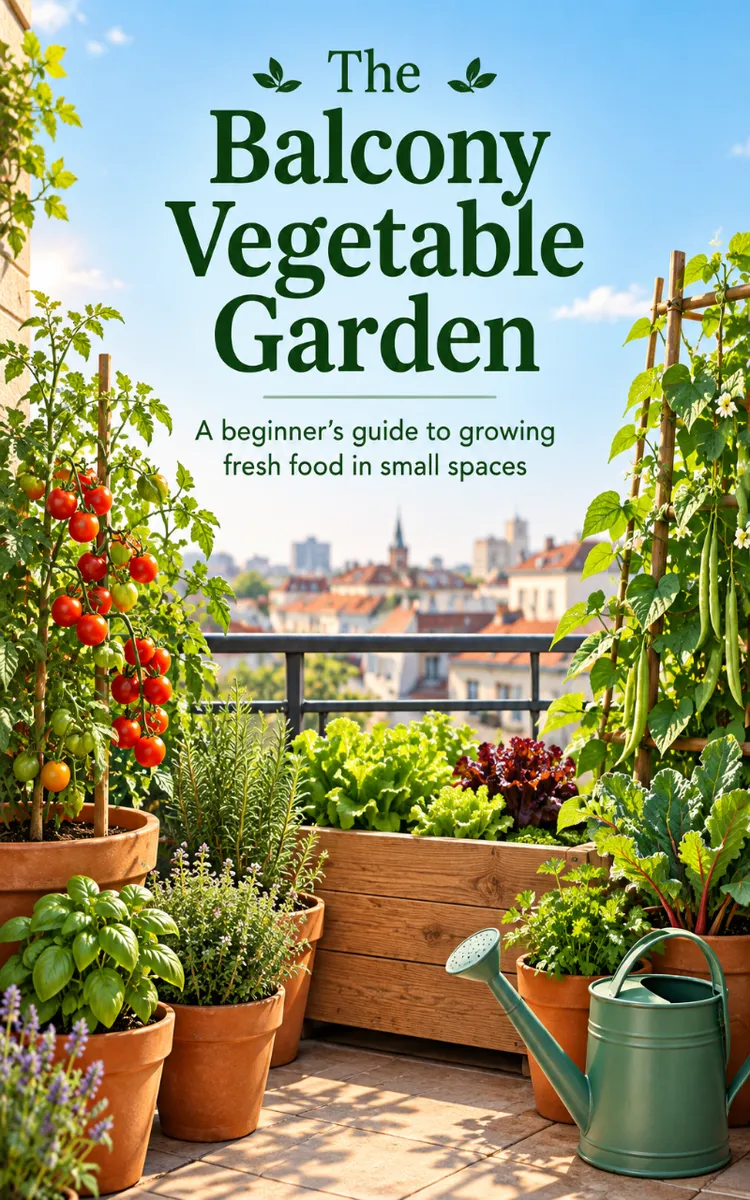
"The Balcony Vegetable Garden" is a how-to guide book by Sam May with 8 chapters and approximately 15,448 words. Month-by-month vegetable gardening for beginners with limited balcony space.
This book was created using Inkfluence AI, an AI-powered book generation platform that helps authors write, design, and publish complete books. It was made with the AI Ebook Generator.
Frequently Asked Questions
What is "The Balcony Vegetable Garden" about?
Month-by-month vegetable gardening for beginners with limited balcony space
How many chapters are in "The Balcony Vegetable Garden"?
The book contains 8 chapters and approximately 15,448 words. Topics covered include Assessing Your Balcony’s Growing Conditions, Choosing Containers and Potting Mix, Planning a Month-by-Month Planting Calendar, Starting Seeds and Planting Transplants, and more.
Who wrote "The Balcony Vegetable Garden"?
This book was written by Sam May and created using Inkfluence AI, an AI book generation platform that helps authors write, design, and publish books.
How can I create a similar how-to guide book?
You can create your own how-to guide book using Inkfluence AI. Describe your idea, choose your style, and the AI writes the full book for you. It's free to start.
Write your own how-to guide book with AI
Describe your idea and Inkfluence writes the whole thing. Free to start.
Start writingCreated with Inkfluence AI


