
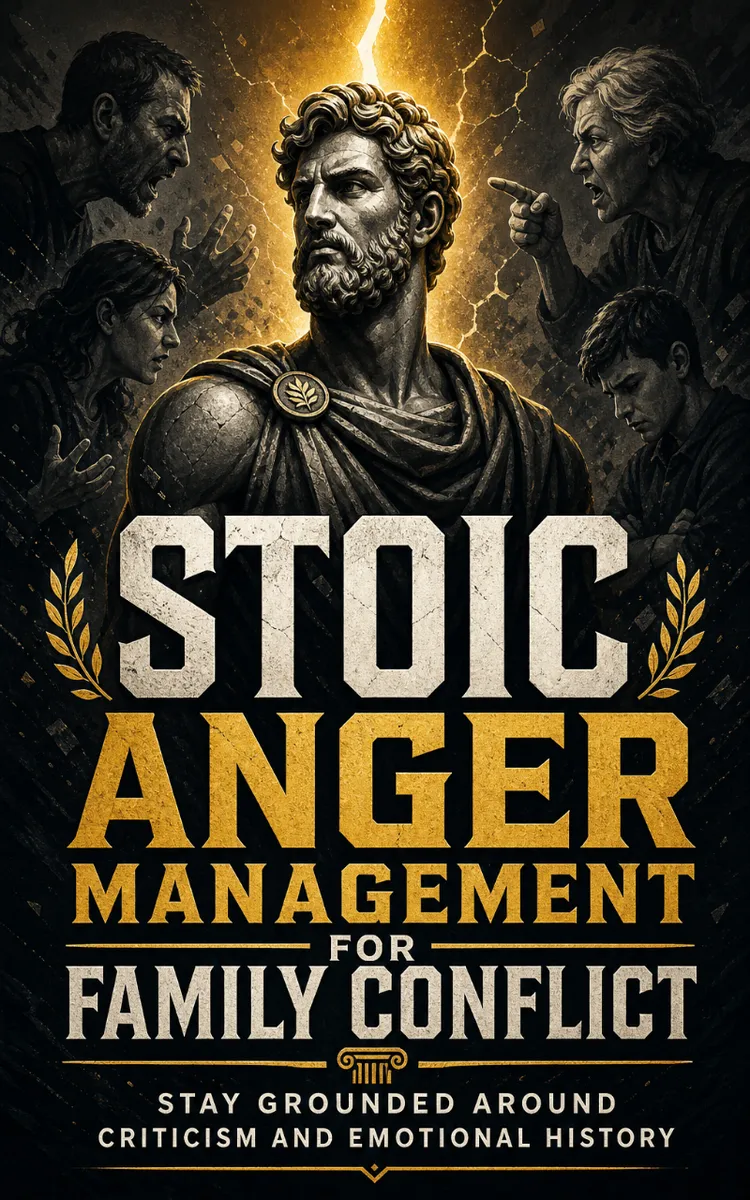
Stoic Anger Management For Family Conflict
Created with Inkfluence AI
Stoic-based anger management strategies for family conflict
Table of Contents
- 1. Understanding the Basics of Stoic Anger Management For Family Conflict
- 2. Essential Equipment and Setup for Stoic Anger Management For Family Conflict
- 3. Your First Steps with Stoic Anger Management For Family Conflict
- 4. Building Confidence with Stoic Anger Management For Family Conflict
- 5. Solving Everyday Stoic Anger Management For Family Conflict Problems
- 6. Taking Stoic Anger Management For Family Conflict to the Next Level
- 7. Fine-Tuning Your Stoic Anger Management For Family Conflict Approach
- 8. Making Stoic Anger Management For Family Conflict Part of Your Routine
- 9. Understanding the Basics of Stoic Anger Management For Family Conflict (Phase 2)
- 10. Essential Equipment and Setup for Stoic Anger Management For Family Conflict (Phase 2)
- 11. Your First Steps with Stoic Anger Management For Family Conflict (Phase 2)
- 12. Building Confidence with Stoic Anger Management For Family Conflict (Phase 2)
- 13. Solving Everyday Stoic Anger Management For Family Conflict Problems (Phase 2)
- 14. Taking Stoic Anger Management For Family Conflict to the Next Level (Phase 2)
- 15. Fine-Tuning Your Stoic Anger Management For Family Conflict Approach (Phase 2)
- 16. Making Stoic Anger Management For Family Conflict Part of Your Routine (Phase 2)
- 17. Understanding the Basics of Stoic Anger Management For Family Conflict (Phase 3)
- 18. Essential Equipment and Setup for Stoic Anger Management For Family Conflict (Phase 3)
- 19. Your First Steps with Stoic Anger Management For Family Conflict (Phase 3)
- 20. Building Confidence with Stoic Anger Management For Family Conflict (Phase 3)
Preview: Understanding the Basics of Stoic Anger Management For Family Conflict
A short excerpt from “Understanding the Basics of Stoic Anger Management For Family Conflict”. The full book contains 20 chapters and 32,755 words.
A slammed door and a sharp comment can feel like “proof” that you should fight back. But in family conflict, anger usually doesn’t fix what’s actually broken-it just changes the shape of the damage. Stoic anger management gives you a clear target: stop treating your emotions like an emergency alarm you must obey, and start treating them like a signal you can respond to on purpose.
This chapter builds the basics so you can handle criticism, expectations, and emotional history without spiraling. You’ll learn the Stoic foundation in plain steps, plus a repeatable way to reset mid-argument. After this, you’ll be able to (1) spot the exact moment anger takes over, (2) slow down your body and thoughts fast enough to choose words you can live with, and (3) set up a simple plan for the next conversation.
Why This Matters
Family conflict has a special kind of trigger: it hits your identity. When someone criticizes your choices, forgets your effort, or brings up old pain, you often hear a hidden message like “You don’t matter” or “You never change.” That message can flip anger on like a switch-fast, loud, and hard to turn off. The problem is that anger feels truthful in the moment. It convinces you that reacting right now is the only way to be safe or respected.
Stoic anger management solves a specific problem: it helps you separate what happened from what your mind adds to it. Two people can hear the same comment and take it differently. Stoicism trains you to respond to the real situation instead of the story your mind invents under stress. You won’t become emotionless. You will become steadier-so you can protect relationships without letting yourself get steamrolled.
After you understand the basics in this chapter, you’ll walk away with a simple model you can apply immediately. You’ll know what to do when you feel heat rise, what to say (and what to avoid saying) in the first minute, and how to check whether your response actually helped the situation.
Reflection prompt: Think about the last argument you had. What was the first sign-tight chest, fast replies, blaming thoughts, or a sudden urge to “win”? That first sign matters.
How It Works
Stoicism uses a practical idea: you can’t control everything that happens, but you can control your judgment about it. “Judgment” means the meaning you place on events-often instantly and automatically. When you change the judgment, you change the response. That’s the core mechanism behind Stoic anger management for family conflict.
Use this simple model called The Stoic Anger Loop: event → interpretation → impulse → action → outcome. In family arguments, the loop runs fast. Your goal is to slow it down just enough to choose action you can stand behind.
1. Name the event you actually experienced (not the story).
Example: “They criticized my tone” is an event. “They’re disrespecting me and always do this” is a story. Stoicism asks you to stick to the event first because it gives you something real to work with.
2. Check your interpretation: “What meaning am I adding?”
Ask yourself: “If I’m wrong about the meaning, what else could be true?” This step matters because anger often comes from your interpretation, not from the words alone.
3. Spot the impulse in your body and mind.
Anger shows up as urges: interrupt, raise your voice, scroll past the topic, threaten, or list every past mistake. Notice the impulse without obeying it. This step matters because impulses drive your first sentences-your first sentences set the tone for everything after.
4. Choose a Stoic response based on what you can control.
You can control your next action: your tone, your timing, your honesty, and your boundaries. You can’t control their mood or whether they decide to listen. Choose a response that protects those controllables.
Here’s a concrete example. Suppose your partner says, “You never help with the dishes.” The event is: they made a complaint about dishes. The interpretation might be: “They think I’m useless.” That interpretation creates an impulse: defend yourself fast or snap back with “You never appreciate me.” A Stoic response uses what you can control: you pause, speak calmly, and ask a clear question like, “Can we agree on a specific dish schedule for this week?” That response aims at the problem (dishes) instead of the threat (your worth).
A helpful tool for this chapter is a one-line reset you can memorize:
- Event. Interpretation. Impulse. Next action.
Use it like a mental checklist. When you can label those four parts, you stop guessing and you start steering.
Mini check-in: Ask yourself, “Am I reacting to their words, or to the meaning I attached to their words?” Your answer tells you where the loop speeds up.
Putting It Into Practice
Let’s walk through a realistic family scenario using only basic steps you can do in the moment....
About this book
"Stoic Anger Management For Family Conflict" is a how-to guide book by Socratic Mastery with 20 chapters and approximately 32,755 words. Stoic-based anger management strategies for family conflict.
This book was created using Inkfluence AI, an AI-powered book generation platform that helps authors write, design, and publish complete books. It was made with the AI Ebook Generator.
Frequently Asked Questions
What is "Stoic Anger Management For Family Conflict" about?
Stoic-based anger management strategies for family conflict
How many chapters are in "Stoic Anger Management For Family Conflict"?
The book contains 20 chapters and approximately 32,755 words. Topics covered include Understanding the Basics of Stoic Anger Management For Family Conflict, Essential Equipment and Setup for Stoic Anger Management For Family Conflict, Your First Steps with Stoic Anger Management For Family Conflict, Building Confidence with Stoic Anger Management For Family Conflict, and more.
Who wrote "Stoic Anger Management For Family Conflict"?
This book was written by Socratic Mastery and created using Inkfluence AI, an AI book generation platform that helps authors write, design, and publish books.
How can I create a similar how-to guide book?
You can create your own how-to guide book using Inkfluence AI. Describe your idea, choose your style, and the AI writes the full book for you. It's free to start.
Write your own how-to guide book with AI
Describe your idea and Inkfluence writes the whole thing. Free to start.
Start writingCreated with Inkfluence AI


