
The Real Cost of Writing a Novel with AI in 2026: BYOK Platforms vs All-Included Pricing
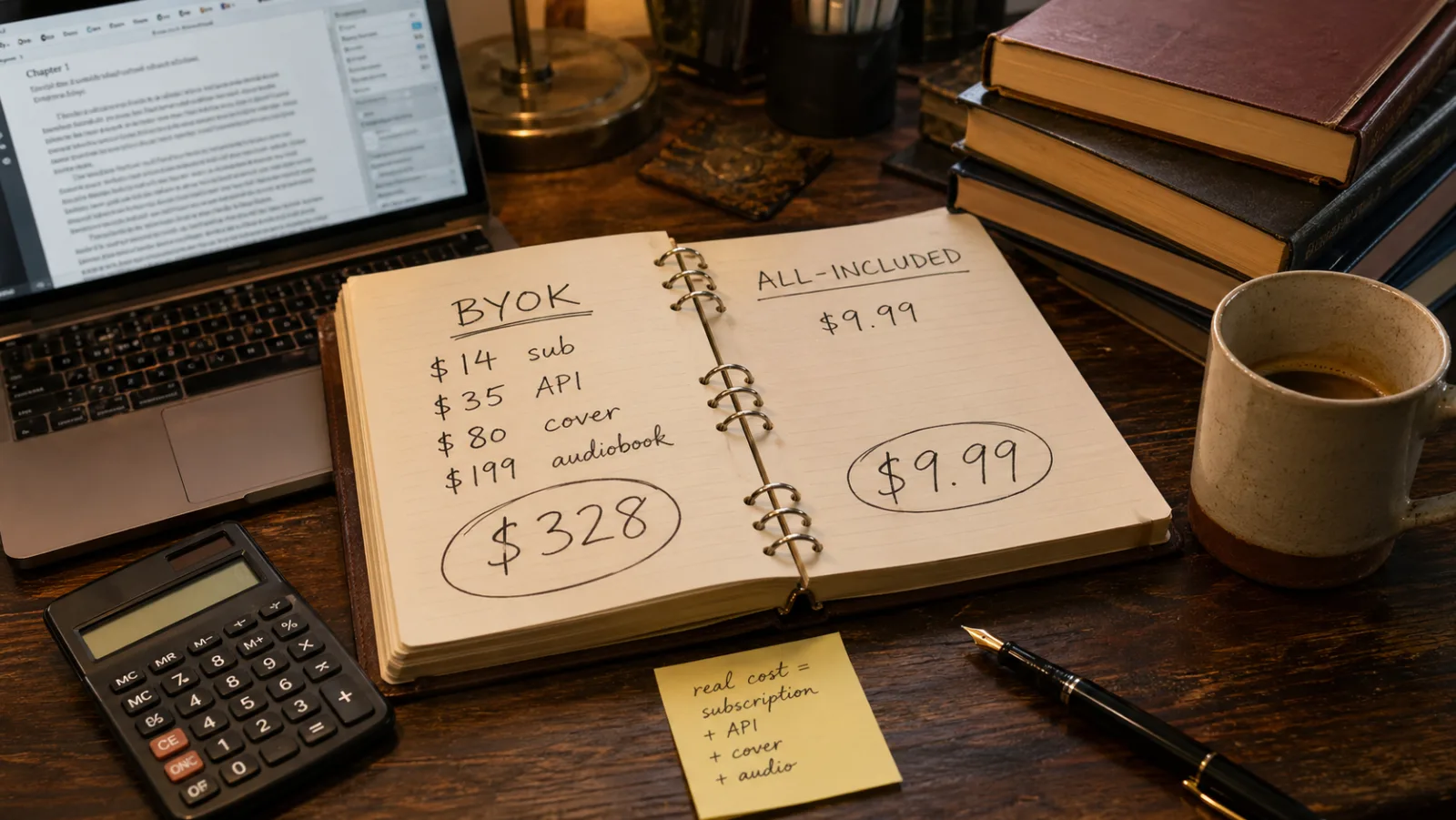
BYOK ("bring your own key") AI writing platforms advertise a $14/mo subscription, then quietly add $20-50/mo in API fees on top. We break down the actual all-in cost per novel and compare it to all-included pricing.
Quick Answer
A typical BYOK (bring-your-own-API-key) AI novel platform advertises a base subscription of $4 to $20/mo, but the realistic all-in cost to actually finish one 90,000-word novel runs $34 to $64/mo once you add the OpenAI or Anthropic API fees that the platform requires you to pay separately. All-included platforms like Inkfluence AI charge a single flat fee ($9.99/mo Creator, $19.99/mo Premium) that covers chapter generation, cover design, EPUB and PDF export, and ACX-spec audiobook narration with no separate API key, no token-counting, and no cost surprises. The TL;DR: BYOK looks cheaper on the home page; once you start drafting, all-included is roughly half the price for one novel and a third of the price for a writer publishing more than two books a year.
Why This Matters
The single biggest pricing trap in AI fiction tools right now is hidden API fees.
If you have spent any time on r/selfpublishing, r/PubTips, or the indie author corner of TikTok in 2026, you have seen the same thread surface roughly once a week: "I signed up for [BYOK platform], thought I was paying $14 a month, ended up burning $60 a month." The replies always include the same phrase: "you have to bring your own API key." That sentence carries an entire pricing model behind it.
This guide breaks down the actual cost of finishing one novel under both pricing models, in 2026 dollars, with the OpenAI and Anthropic API rates that are current at time of writing. The goal is not to argue that one model is better than the other in principle. It is to make sure that whichever model you pick, you picked it on purpose.
"BYOK" stands for "bring your own key." The platform charges you a subscription fee for the writing interface, the story bible, the chapter editor, the export tools. To actually generate text, you connect your own OpenAI or Anthropic API key and pay the model fees directly to OpenAI or Anthropic on top of the platform subscription.
It is a perfectly valid pricing model. Power users who already pay for a $200/mo enterprise OpenAI tier can spread that cost across all their tools. Heavy editors who only use AI for occasional scene drafts can keep their token bill low. The problem is not the model itself. The problem is that the marketing copy for most BYOK platforms in 2026 advertises the subscription number alone, and treats the API fees as a footnote. The buyer who has not spent six months in indie publishing forums does not realise the footnote is the bigger number.
What BYOK actually means in practice
The user flow on a BYOK platform looks like this:
- You pay the platform subscription. Common tiers in 2026 sit at $4/mo, $8/mo, $14/mo, and $20/mo, with the higher tiers unlocking features like longer story-bible memory, more concurrent projects, and audiobook export.
- You separately sign up for an OpenAI account, an Anthropic account, or both. You generate an API key and add a payment method to those accounts.
- You paste the API key into the platform's settings. From this point forward, every chapter generation, every regeneration, every "expand this scene" click sends your key to OpenAI or Anthropic and bills your card directly.
- At the end of the month you get two bills: the platform subscription, and a separate API bill from OpenAI or Anthropic.
The platform itself does not see, control, or cap your API spend. The token meter is not on the platform's home dashboard. You have to log into your OpenAI or Anthropic account to see how much you actually spent. Most users do not check until they get the credit card statement.
The API cost math: per chapter, per novel
Here is the arithmetic in current 2026 rates (April):
| Model | Input cost / 1M tokens | Output cost / 1M tokens | Cost to draft one 4,000-word chapter | Cost for a 30-chapter novel |
|---|---|---|---|---|
| GPT-5 (premium) | ~$2.50 | ~$10.00 | ~$0.18-0.30 | ~$5.40-9.00 |
| Claude Sonnet 4.5 / 4.6 | ~$3.00 | ~$15.00 | ~$0.25-0.40 | ~$7.50-12.00 |
| Claude Opus 4.7 (highest) | ~$15.00 | ~$75.00 | ~$1.30-2.20 | ~$39-66 |
| GPT-5 Mini | ~$0.30 | ~$2.40 | ~$0.04-0.08 | ~$1.20-2.40 |
Per-chapter cost assumes ~3,000 tokens of input context (story bible, prior chapter summary, previous chapter ending injected into every prompt) plus ~5,000 tokens of generated output for a 4,000-word chapter. Regenerations multiply the cost. Editing operations ("expand this scene", "rewrite this paragraph") add 10-30% on top of straight chapter drafts.
Two important wrinkles. First, those numbers assume one clean draft per chapter. In practice, novelists regenerate chapters two or three times to find the right tone, then run a half-dozen "expand" or "rewrite" passes per chapter during the polish phase. Realistic API spend per finished novel is two to three times the one-clean-draft baseline. Second, BYOK platforms typically default to whichever model the user picked, and most novelists pick the highest-quality model available because the difference between Opus 4.7 prose and GPT-5 Mini prose is genuinely visible on the page (we ran a head-to-head model test for novel writing with the actual scores). The "I will save money by using the cheap model" plan rarely survives the first time the cheap model produces a chapter the writer hates.
Realistic monthly API spend for a novelist actively drafting a book on a BYOK platform: $20 to $50/mo, with heavy regeneration users hitting $80-100/mo on the higher-quality models.
The regen tax: why your first estimate is wrong
Almost every BYOK cost calculation people post online assumes a clean drafting flow: one outline, one chapter, move on. The actual flow looks nothing like that. Real novelist workflows on AI tools include the following hidden cost amplifiers:
- Outline regenerations. Most authors regenerate the chapter outline three to five times before they like it. Each regeneration uses the full context of the story bible, premise, and prior outline attempts. At hard-SF or epic-fantasy bible sizes (3,000-4,000 words), this alone can run $1-3 per outline regeneration on the premium models.
- Chapter regenerations. Two to three regenerations per chapter is the norm, not the exception. The first generation establishes the structure; the second and third get the voice right. On a 30-chapter novel that means 60-90 chapter generations instead of 30, which roughly triples the chapter-level API spend.
- Expand-this-scene operations. Heavy edit workflows involve "expand this scene" or "rewrite this dialogue" calls that send a chapter slice plus the full context to the model. A typical novel pickups 30-60 of these operations during polish, each one priced like a partial chapter.
- Continuity regenerations. When a chapter contradicts the bible (a character's age changes, a magic rule slips), the fix is a regeneration with corrected context. Authors who run continuity sweeps mid-draft see another 10-20% in additional generation cost.
- Voice-tuning passes. Authors with a strong voice often regenerate chapter openings specifically until the prose sounds like them. Five to ten opening rewrites per chapter is common in literary fiction and romantasy.
The compound effect: a "$5 per chapter" estimate on a clean-draft basis becomes a "$15 per chapter" reality across the full drafting and polish workflow. The Reddit threads about runaway BYOK costs are almost always written by users who hit this wall in their second or third drafting month, not their first. Month one is the discovery phase where you find which prompts work; the API bill is moderate. Month two is the production phase where you iterate to find the voice; the bill triples. Month three is the polish phase; the bill peaks. Then you finish the book and start over for book two, where the cycle repeats.
An honest BYOK estimate for a 30-chapter novel including realistic regeneration: $50-150 in API fees over a 2-3 month drafting window on premium models, $20-40 on the cheaper models with quality compromises that most authors ultimately reject. All-included platforms collapse this entire cost variability into a single flat fee, which is the load the BYOK model leaves on the buyer.
Real-cost table: BYOK vs all-included for one novel
Here is the apples-to-apples comparison for finishing one 90,000-word novel that includes a designed cover, EPUB and PDF export, and an audiobook upload to ACX. Numbers in 2026 dollars, current at time of writing.
| Cost line | BYOK platform (typical) | All-included (Inkfluence Creator) |
|---|---|---|
| Platform subscription, one month | $14 | $9.99 |
| OpenAI / Anthropic API fees | $20-50 | $0 (included) |
| Cover designer subscription or one-off | $30-80 (Canva Pro / 99designs / one-off cover artist) | $0 (KDP-spec cover designer included) |
| Audiobook narration (ACX-spec) | $199+ (separate audiobook service per book) | $0 (AI narration + ACX export included) |
| EPUB conversion (Calibre or paid converter) | $0-30 (free with Calibre but adds a manual step) | $0 (one-click EPUB) |
| Realistic all-in cost, one novel | $263-373 | $9.99 |
The headline saving on the BYOK side ("only $14/mo!") is a third of the actual cost for the writer who wants a published, audiobook-ready novel at the end. The savings on the all-included side compound for any writer publishing more than one novel a year, because the cover designer, audiobook service, and EPUB converter are charged per project on the BYOK side and are flat-rate on the all-included side. For the wider publishing-cost picture (editing, ISBN, marketing) on top of the platform layer, see our 2026 cost-of-publishing breakdown.
Hidden costs people forget (cover, audiobook, conversion)
The API fee is the line item that gets the most Reddit attention, but the silent killers in BYOK pricing are the adjacent tools that are never bundled in. A finished novel needs:
A KDP-spec cover
Amazon's spec is 1600x2560 JPG. Most BYOK writing platforms do not include a cover tool, so writers add Canva Pro ($15/mo) or commission a designer ($80-300+ per book). Inkfluence's built-in cover designer outputs at KDP spec on every plan including free.
An EPUB file
KDP and most other distributors prefer EPUB over PDF. BYOK platforms typically export DOCX or HTML and ask the writer to convert with Calibre (free but a learning curve) or pay for a converter ($30 one-off). Inkfluence exports EPUB, PDF, and DOCX with one click.
An ACX-spec audiobook
Audible / ACX requires a very specific audio spec (44.1kHz / 192kbps CBR mono, RMS -18 to -23 dBFS, peak -3 dBFS, one MP3 per chapter). Hiring a narrator costs $100-400 per finished hour; AI narration services cost $20-50 per book. Inkfluence's audiobook studio is included on Creator and Premium with ACX-spec output baked in.
A book description / blurb
The book description is the second most important conversion surface after the cover. Most BYOK platforms do not have a description tool. Our free description generator produces five frameworks per click with no sign-up. Saves the $5-30 you would otherwise spend on a description-only AI tool.
Three real-world cost scenarios (NaNoWriMo, romantasy, hard SF)
Generic per-novel numbers obscure the way actual writers spend. Here are three concrete profiles based on workflows we see in our customer base.
Scenario 1: The NaNoWriMo author drafting a 50,000-word literary novel
Profile: writes once a year during November, targets the 50,000-word NaNoWriMo finish, rarely publishes immediately, often abandons the manuscript by January.
- BYOK platform path: $14 platform subscription for November, plus roughly $25 in API fees for an outline plus 15-20 chapter generations with two to three regenerations each. Cancels in December. Total: $39 for one half-finished manuscript. If the manuscript ever ships, add cover design ($30-150) and EPUB conversion ($0-30) and audiobook ($199+).
- All-included platform path: Free tier covers the first 5 chapters in early November. Upgrades to Creator at $9.99/mo to remove the chapter cap and unlock EPUB. Cancels in December. Total: $9.99. Cover, EPUB, and audiobook are included if the manuscript later ships.
The NaNoWriMo profile actually shows the BYOK pricing in its kindest light because the drafting window is short. Even here, all-included is roughly four times cheaper for the same output.
Scenario 2: The romantasy author on a quarterly release cycle
Profile: ships a 90,000 to 110,000-word romantasy novel every three months, year-round. Series-driven. Relies on Audible for a meaningful share of revenue. Uses cover templates rather than commissioning per book, but the templates still need updating per release.
- BYOK platform path: $14 platform x 12 months = $168/yr platform. API fees average $35/mo (including drafting heavy and editing months) = $420/yr. Cover-template updating: $80-150/yr (Canva Pro plus stock asset license). Audiobook: $200/book x 4 = $800/yr (using AI narration; live narration would 10x this). EPUB conversion: $0 with Calibre but ~10 hours of annual fiddling. Total: roughly $1,480/yr in tooling for four published novels, plus ~10 hours of conversion overhead.
- All-included platform path: Inkfluence Premium at $19.99/mo x 12 = $239.88/yr (or Creator $9.99 x 12 = $119.88/yr if four novels fits inside Creator's monthly chapter allowance, which it typically does for 90k-word books). Cover designer, EPUB export, and ACX-spec audiobook narration all included. Total: $120-240/yr in tooling for four published novels, no conversion overhead.
For the quarterly-release romantasy author, all-included is roughly six to twelve times cheaper, and the time savings on conversion and audiobook setup are themselves worth more than the price gap.
Scenario 3: The hard-SF author writing a four-book trilogy across three years
Profile: writes a 100,000 to 130,000-word hard-SF novel roughly every nine to twelve months. Bigger story bibles (4,000-6,000 words) due to physics, technology, and faction tracking. Hires professional cover artists per book. Sells primarily on KDP plus a smaller audiobook tail.
- BYOK platform path (heavy bible profile): $14 x 36 months = $504 platform across the trilogy. API fees significantly higher because every chapter prompt injects 5,000+ tokens of bible context: realistic average $50-70/mo across active drafting months, totalling $1,200-1,700 in API fees across the trilogy. Cover artists: $300 x 3 = $900. Audiobook: $200 x 3 = $600. Total: $3,200-3,700 for three published hard-SF novels.
- All-included platform path: Creator $9.99/mo for active drafting months only (typically 2-3 months per novel) x 9 months total = $89.91. Cover artists still hired separately (the all-included cover designer can serve, but hard-SF authors who want gallery-quality covers usually still commission): $300 x 3 = $900. Audiobook included. Total: roughly $990 for the same three novels.
The hard-SF trilogy is the scenario where BYOK is most expensive in absolute terms, because the per-chapter token spend is highest and there are more chapters per book. Even when a hard-SF author chooses to keep their separate cover artist (the optional add-on most likely to remain external), all-included is still 3-4x cheaper.
The economics for new writers
For a writer drafting their first or second novel, BYOK pricing is genuinely brutal. Here is the typical first-novel arc on a BYOK platform:
- Month 1: Subscribes to the platform, advertised at $14/mo. Generates an outline and a few chapters. Total spend: $14 platform + $5 API = $19. Feels great.
- Month 2: Drafts heavily. Regenerates chapters multiple times trying to find the voice. Total spend: $14 platform + $35 API = $49. Starts noticing the API bill.
- Month 3: Polish phase, "expand this scene" runs everywhere. Total spend: $14 platform + $42 API = $56. Posts on Reddit.
- Month 4: Finishes the novel. Now needs a cover (Canva Pro, $15/mo or one-off art at $150). Now needs an audiobook (separate service at $199+). Now needs EPUB conversion (Calibre learning curve). Total project cost so far: ~$400.
The same first-novel arc on an all-included platform looks like this:
- Month 1: Free tier covers the first 5 chapters. Total spend: $0.
- Month 2: Upgrades to Creator at $9.99/mo to remove the chapter cap and unlock EPUB export. Total spend: $9.99.
- Month 3: Polish phase uses the same plan. Cover designer is included. Total spend: $9.99.
- Month 4: Audiobook generated through the included AI narration with ACX-spec export. EPUB exported in one click. Total project cost: ~$30 across three or four months on Creator, then cancel between novels.
For new writers specifically, this gap matters because the first novel is also the one most likely to never finish. Spending $400 on a half-finished BYOK draft is a much heavier sunk cost than spending $30 on the same half-finished work on an all-included plan.
The economics for prolific writers (do BYOK costs ever pay off?)
Honest answer: rarely, but sometimes.
BYOK can be cheaper than all-included for a very specific writer profile: someone who already pays an enterprise OpenAI or Anthropic tier ($200+/mo) for unrelated work, who only uses the writing platform for occasional scene drafts rather than full chapter generation, and who already has a separate cover designer and audiobook workflow they like. For that writer, the marginal cost of "one more tool" using their existing API key is genuinely just the platform subscription.
For everyone else (the 95% case), all-included pricing works out cheaper because the cover designer, audiobook service, and EPUB conversion are bundled in once, not paid for per book. The break-even point is roughly:
- One novel a year: all-included is dramatically cheaper. ~$30-60 vs ~$400.
- Two to four novels a year: all-included is still cheaper, but the gap narrows once cover and audiobook costs are amortised over enough books. ~$120-240 a year vs ~$800-1600.
- Five-plus novels a year: the gap depends entirely on whether you write into a series with shared covers and an audiobook narrator on retainer. Heavy serialised romance or rapid-release romantasy authors can sometimes match all-included pricing on BYOK if they have already spent the upfront design cost on a series template.
The honest summary: if you publish less than five novels a year, all-included almost certainly wins. If you publish more, the BYOK math becomes worth running carefully against your specific cover and audiobook setup.
How all-included platforms keep flat-rate pricing sustainable
A reasonable question: if API fees are genuinely $20-50/mo per active drafting user, how does an all-included platform offer a $9.99 subscription that includes those generation costs without losing money? The answer is a combination of model routing, prompt engineering, batching, and the natural cost-curve of an active subscriber base.
- Model routing. All-included platforms route to whichever model produces the best quality-per-dollar at the current API rates, with the highest-tier models reserved for specific high-leverage operations (story-bible synthesis, voice-tuning passes). The exact model selection shifts as the frontier moves and is treated as an engineering implementation detail rather than a marketing line. BYOK users typically default to the most expensive model they have access to, because they have no incentive to optimise.
- Prompt engineering at scale. Writing a chapter takes roughly 5,000 output tokens. The platform engineers cap unnecessary expansion, prevent runaway loops, and trim context bloat that BYOK platforms pass through unchecked. Across thousands of chapter generations a month, this trimming saves real money.
- Caching and reuse. Story-bible context that does not change between chapter generations can be cached on the model side (Anthropic and OpenAI both support prompt caching at meaningful discounts). All-included platforms instrument this carefully; BYOK users almost never set it up correctly.
- Active-user economics. Most subscribers are not actively drafting every day. The novelist who pays $9.99 in March, drafts heavily, then cancels in April subsidises the platform's average margin even though her individual month was a slight loss. The active-user mix smooths out across thousands of subscribers.
- Bundle margins. Cover design, EPUB export, and audiobook narration are mostly fixed-cost software lines once the infrastructure exists. The marginal cost per audiobook minute is small at scale, cover renders are essentially free, EPUB conversion is free. Bundling these into the base subscription costs the platform almost nothing per user, while replacing $200-300 worth of separate tools for the user.
The honest answer is also that all-included platforms make less margin than software-only SaaS. The unit economics are leaner, the infrastructure cost per active user is real, and any platform that drops the API fee from headline pricing has to manage the model-routing and active-user mix carefully to stay profitable. Inkfluence specifically operates on these economics; we run profitable but the margin is dramatically tighter than a flat-rate template tool would be. That is the trade we make for the buyer experience of "no token meter, no API key, no hidden fees".
What happens when BYOK costs run away
Three specific failure modes are common on BYOK platforms in 2026, and they are worth knowing about before you commit:
- The forgotten regeneration loop. A user starts a chapter regeneration, walks away from the keyboard, comes back to find the platform has retried five times and burned $8 in API fees on a chapter the user never read. Most BYOK platforms do not cap retry behaviour because the user pays the API bill, not the platform.
- The model upgrade trap. A user starts on a cheaper model, notices the prose is mediocre, switches to the highest-tier model "just for the climactic chapters", forgets to switch back, then drafts the next twelve chapters at 5x the per-token rate. The next billing cycle arrives with a $200 API bill and no warning.
- The competing-tool regeneration overlap. A user runs the same chapter through their AI editor tool, then back through the AI writing platform, then back through the editor, in a polish loop that bills two separate API fees per pass. Cleaning up after a back-and-forth like this on a 30-chapter novel can cost more than the platform subscription itself.
None of these are catastrophic individually. Together they explain why the median Reddit post about BYOK platform costs reports a number 2-3x higher than the platform's home page implied. The all-included pricing model removes all three failure modes: regeneration loops cost the platform, not the user; model selection is handled by the platform; competing-tool overlap is bounded by the flat fee.
If you stay on a BYOK platform, the protective practices are: set hard monthly spend caps on your OpenAI and Anthropic dashboards (both support per-key spending limits), check the API dashboard at least weekly during active drafting months, never walk away from a regeneration in progress, and pin one model at a time rather than mixing tiers within a project.
How to pick the right pricing model for you
Three questions to ask before signing up for any AI novel-writing platform:
- "Is this an all-included subscription, or do I bring my own API key?" If the answer is BYOK, the advertised price is the floor, not the ceiling. Multiply by three to four for a realistic monthly figure.
- "What is bundled in for cover, EPUB, and audiobook?" If those are not bundled, add $30-100/mo to your projection (Canva Pro plus an audiobook service plus EPUB conversion if you want the audiobook to ship).
- "Can I cancel between books?" Most all-included plans (including ours) let you subscribe for one month per novel and cancel between projects. This is the cheapest pattern: pay $9.99 to draft, cancel, come back when the next book is ready. BYOK plans are usable in the same pattern, but you lose access to projects under the lower tiers and have to re-add the API key each time.
For most novelists in 2026, all-included pricing is simply the lower-stress option. You know the bill. You can budget. Cancel any time. Renew when the next book is ready.
If you want to put numbers on your specific situation, our ranked comparison of eight AI novel writers includes the real per-novel cost for each platform, including the API fees and the ancillary tools. Our best novel writing software 2026 listicle also runs the comparison head-to-head with the cost-per-finished-novel as the centrepiece table.
FAQ
What does BYOK mean in AI writing tools?
BYOK stands for "bring your own key." The platform charges a base subscription for the writing interface, story bible, and chapter editor, and you separately pay OpenAI or Anthropic for the actual model usage via your own API key. The platform does not see, cap, or include the API spend.
How much do API fees cost per novel in 2026?
A 30-chapter novel drafted on a premium model with realistic regeneration runs $20-50 in API fees during the active drafting month. On the most expensive models (e.g. Claude Opus 4.7), heavy regeneration can push the API bill to $80-100 in a single month.
Why do BYOK platforms not just include the API fees?
Two reasons. First, they avoid taking on the financial risk of a heavy regeneration user. Second, the marketing copy looks better when the headline price excludes the variable cost. Some BYOK platforms argue this gives users "control"; in practice most users would prefer a flat fee they can budget around.
Are all-included platforms using cheaper models behind the scenes?
All-included platforms typically route to whichever frontier model gives the best quality-per-token ratio at the time, with the highest-tier models reserved for high-leverage operations like story-bible synthesis and polish-step voice tuning. The exact selection is an implementation detail that shifts as the frontier moves; what the buyer sees is consistent prose quality at a flat fee, with no per-chapter token meter to babysit.
Can I cancel an all-included subscription between novels?
Yes. Most novelists subscribe for one month at $9.99, draft a full novel, export EPUB plus cover plus audiobook, then cancel. Come back when the next book is ready. The total per-novel cost on this pattern is the one month of the subscription. No annual lock-in.
What is the cheapest way to write and publish a full novel with AI in 2026?
For most novelists: free tier on an all-included platform for the first few chapters, upgrade to Creator ($9.99/mo) for the active drafting month, export EPUB and cover and audiobook through the included tools, cancel between books. Total per novel: under $30 in subscription fees, with no separate cover, audiobook, or conversion costs. See pricing and our ranked comparison for the full breakdown.
Are there hidden costs in all-included platforms?
The honest answer: any platform can introduce paid add-ons. Currently Inkfluence's all-included plans cover chapter generation, story bible, cover design, EPUB and PDF and DOCX export, ACX-spec audiobook narration, and import or remix tools with no per-action fees. Print-on-demand integrations (KDP Print, IngramSpark) charge their own per-book printing costs but those are not platform fees.
Should hard-SF or epic-fantasy authors prefer BYOK because of the longer chapters?
Counter-intuitively, no. Longer chapters and bigger story bibles mean larger context windows and more tokens per chapter, which makes API fees grow faster than subscription costs do. All-included pricing actually favours epic and hard-SF writers because their per-chapter API spend would be highest under BYOK. See our fantasy authors page and sci-fi authors page for genre-specific workflows.
What is the "regen tax"?
The cost amplifier that turns clean per-chapter API estimates into the realistic 2-3x bill writers actually pay. Real workflows include outline regenerations, two to three chapter regenerations each, expand-this-scene operations, continuity fixes, and voice-tuning passes. A "$5 per chapter" estimate becomes "$15 per chapter" in practice. All-included pricing collapses this variability into a flat fee so the buyer is not exposed to the iteration cost.
How do I cap BYOK costs if I want to stay on a BYOK platform?
Set a hard monthly spend cap on your OpenAI and Anthropic dashboards (both support per-key spending limits in their API settings). Check the API dashboard at least weekly during active drafting. Never walk away from a regeneration in progress. Pin one model per project rather than mixing tiers. These practices typically keep BYOK API spend in the $20-40/mo range rather than the $80-150/mo runaway range.
How do all-included platforms afford to include API costs?
Model routing (cheaper models for routine drafts, premium for high-leverage operations), prompt-engineering scale efficiencies (no runaway expansions, trimmed context), prompt caching, and the natural mix of active vs paused subscribers. Bundle margins on cover, EPUB, and audiobook are also generous because those are mostly fixed-cost software lines. Margins are tighter than software-only SaaS but the unit economics work, which is why this pricing model has grown in 2025-2026.
Bottom line
BYOK pricing is not a scam, but it is a pricing model that requires more vigilance from the buyer than the marketing copy suggests. If you are signing up for a platform whose home page advertises $4-20/mo, take a moment to find their pricing FAQ and search for the phrase "API key" or "OpenAI" or "Anthropic". If those phrases are present, multiply the headline subscription number by three to four for the realistic monthly cost, and add $30-100 for the cover and audiobook and conversion stack the platform does not include. Then compare against the all-included number. For most novelists publishing fewer than five books a year, the math will favour all-included. For everyone else, run it carefully on your specific workflow before committing.
API rates quoted are current at time of writing (April 2026) per OpenAI and Anthropic public pricing pages. Cover, audiobook, and conversion costs reflect average market rates for indie authors. Per-novel costs assume a 90,000-word novel drafted with realistic regeneration patterns and a finished published-format output (EPUB, KDP cover, ACX audiobook).

Founder, Inkfluence AI
Sam is the founder of Inkfluence AI. He built the platform to make book creation accessible to everyone - from first-time authors to seasoned publishers.
Helpful links
Ready to Create Your Own Ebook?
Start writing with AI-powered tools, professional templates, and multi-format export.
Get Started FreeRelated Articles
 AI Writing
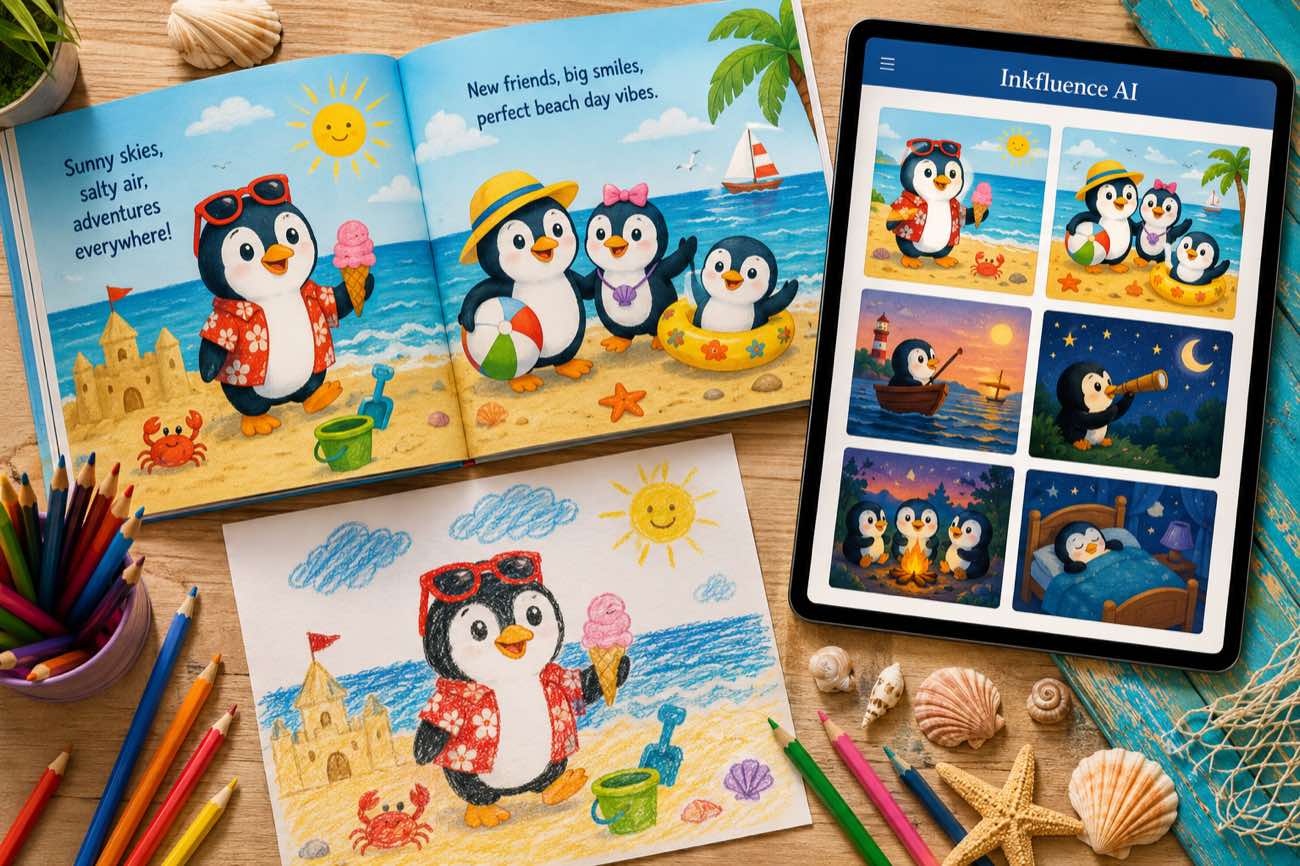
 How to Make a Children's Picture Book with AI: Idea to Printed Book in a Day
The complete 2026 workflow for making a fully illustrated children's picture book with AI: age-band word counts, page planning, consistent characters, cover design, and publishing it on Amazon KDP with the right disclosure.
 AI Writing
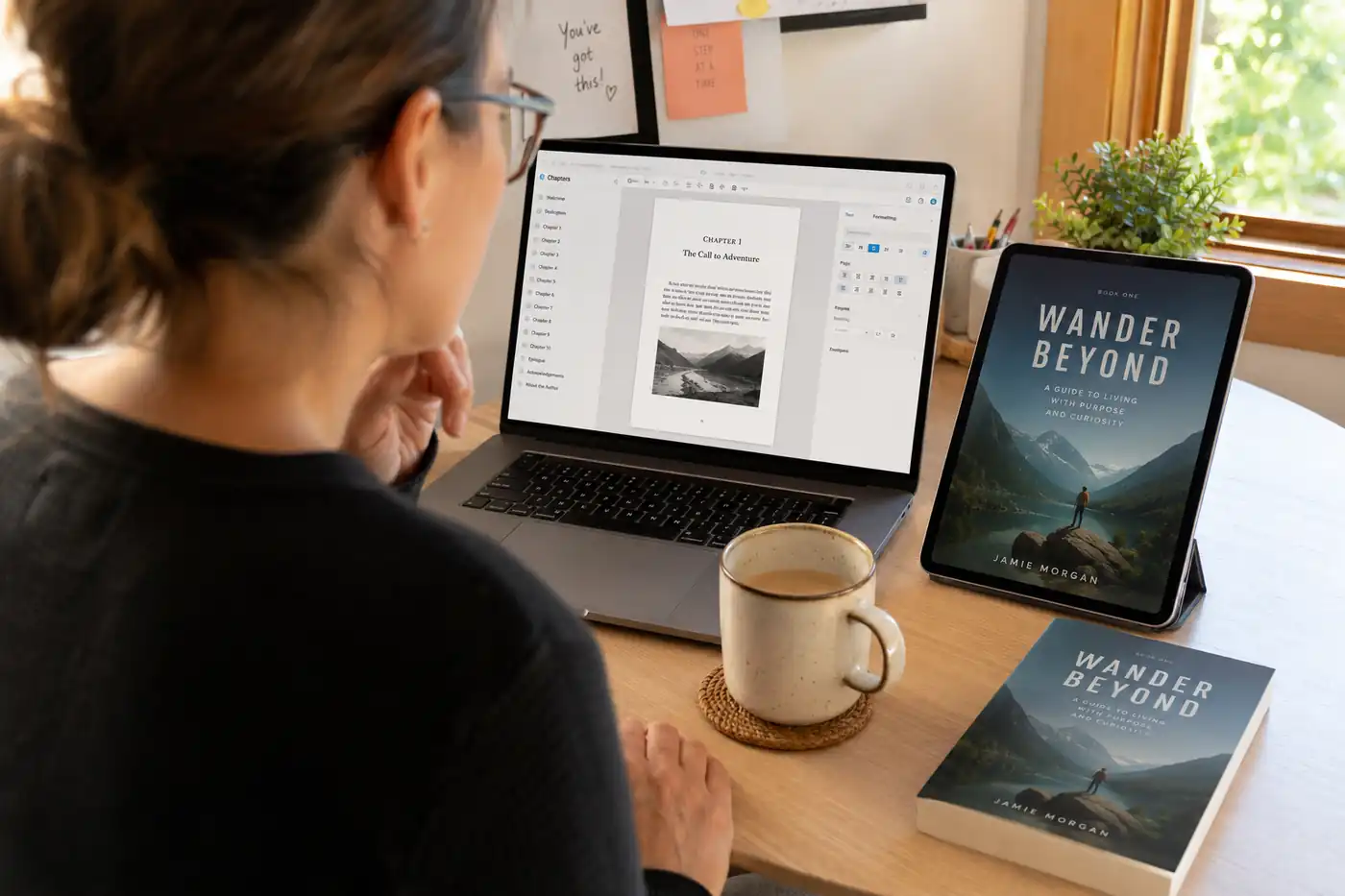
 The 9 Best Ebook Creators in 2026: AI, Formatting, and Design Tools Compared
Not every "ebook creator" does the same job. We compare the 9 best tools of 2026 across three categories: AI generators that write the book, formatting tools that typeset it, and design tools that make it beautiful, with verified pricing for each.
 AI Writing
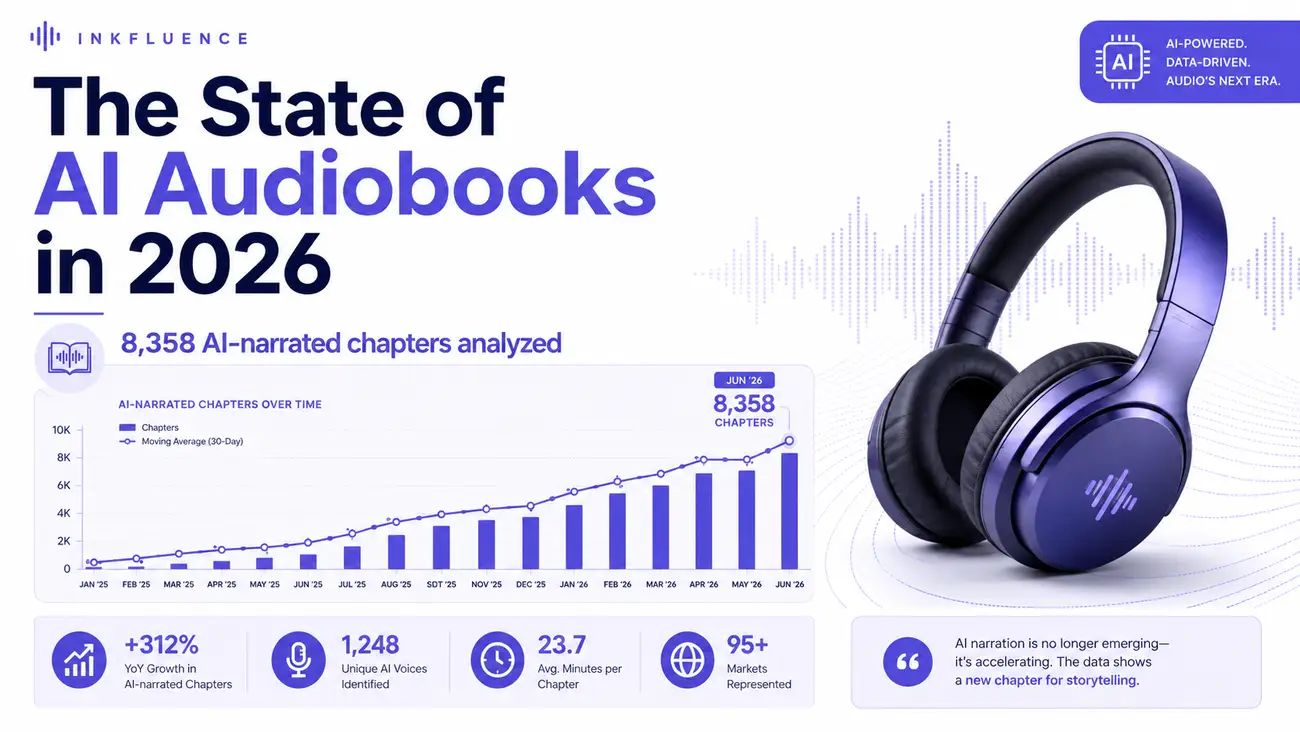
 The State of AI Audiobooks in 2026: What 8,358 AI-Narrated Chapters Reveal
We looked at 8,358 chapters our users narrated into audiobooks with AI. Monthly narration grew from a handful of chapters in late 2025 to nearly 3,000 a month by mid-2026, 99% of jobs finished cleanly, and listeners consistently pick natural, conversational voices over dramatic ones. Here is the first-party data and what it means for authors.
Get ebook tips in your inbox
Join creators getting weekly strategies for writing, marketing, and selling ebooks.