
Read the first chapter
The whole of chapter one, free. About 13 min. Turn the pages with the arrows, your keyboard, or a swipe.
Chapter 1
Entering the Tattoo Profession
Why Responsibility Comes Before Technique
A new artist can buy a machine, watch a few lining videos, and begin taking clients within a weekend. The machine may run, the ink may enter the skin, and the result may even look acceptable at first. None of that proves the artist can protect a client, judge safe limits, manage complications, or accept responsibility for permanent work. The first professional skill is knowing when you are not ready to work on human skin.
Tattooing breaks the skin and places pigment into living tissue. That creates duties that reach beyond drawing ability. You must protect clients from preventable exposure, explain risks honestly, respect consent, work within local rules, and refuse requests that you cannot perform safely. You also need a realistic path from beginner practice to supervised client work. A tattoo shop is not simply a place to rent a chair; it is a controlled learning environment where experienced artists can correct decisions before those decisions harm someone.
The Grounded Entry Map gives you a practical way to judge your next move. It connects four questions: What can I safely do now? What must I learn under supervision? What does the client understand and agree to? What evidence shows that I am ready for more responsibility? By the end of this section, you should be able to compare career paths, prepare for an apprenticeship, set ethical boundaries, and build a written readiness record instead of relying on confidence alone.
The Grounded Entry Map
The Grounded Entry Map has four parts. Each part keeps ambition tied to evidence. You can use it before buying equipment, before applying to a shop, and before accepting any paid appointment.
1. Permission: Identify the legal and workplace requirements that control where and how you may tattoo. Rules vary by country, state, province, and city. Contact the local health department or licensing office and ask about practitioner permits, shop registration, bloodborne pathogen training, inspection requirements, age limits, and record keeping. Save the answers in a folder. Guessing can lead to illegal work or a preventable health violation.
2. Preparation: Build the skills and habits that support safe work before you touch human skin. This includes drawing, design placement, machine handling, cartridge selection, skin stretching, cleaning procedures, and waste disposal. Preparation does not mean collecting every machine or ink color. It means practicing a small set of controlled tasks and recording what you learned.
3. Supervision: Place your development under an experienced artist who can watch your process in person. A proper apprenticeship includes observation, cleaning duties, equipment setup, technical demonstrations, design reviews, and gradual responsibility. Supervision matters because many dangerous errors look normal on video. An experienced artist can notice a contaminated bottle cap, a poor hand position, excessive pressure, or an unsafe client setup before the mistake becomes an injury.
4. Proof: Keep evidence that supports each new responsibility. Your proof may include a drawing portfolio, completed training certificates, cleaning checklists, mentor sign-offs, healed-work photographs, and notes about corrections. A portfolio should show consistency, not only one impressive design. Healed photographs matter because fresh tattoos can hide problems such as uneven saturation, excessive trauma, or poor line retention.
Ask yourself: if a mentor asked you to explain why you chose a particular needle grouping, how you controlled contamination, and when you would stop a procedure, could you answer clearly? If not, you have found a learning task, not a reason to start charging clients.
A supervised apprenticeship usually begins with responsibilities that appear basic but carry professional meaning. You may clean work surfaces, prepare disposable barriers, check expiry dates, organize cartridges, observe consultations, and learn how the shop separates clean supplies from used equipment. These tasks teach you the workflow that protects every tattoo. A shop that refuses to explain safety practices or asks you to tattoo clients immediately does not provide the supervision you need.
Career paths differ, but each path has trade-offs:
| Path | What it can provide | Main risk | Sensible first question | |---|---|---|---| | Formal shop apprenticeship | Direct correction, shop workflow, gradual client exposure | Poor-quality or unpaid arrangements | Who supervises me, and what skills must I demonstrate before tattooing? | | School or structured training program | Scheduled lessons and basic theory | Limited experience with real shop pressure | Does the program include supervised skin work and local compliance guidance? | | Private mentorship | Focused attention from one artist | Narrow teaching or unclear expectations | What will we practice, document, and review each week? | | Independent home practice | Flexible drawing and machine practice | Unsafe setup and no immediate correction | Am I practicing only on approved materials until a qualified mentor clears me? | | Shop employment after training | Real client workflow and professional standards | Pressure to work beyond your skill level | Who has final approval for my appointments and designs? |
An apprenticeship should have clear boundaries. Before you begin, discuss schedule, duties, training content, payment, supplies, confidentiality, and the conditions for leaving. Put the agreement in writing. A professional mentor should explain what they expect from you and what access they will provide. You should never pay large sums for vague promises such as “exposure” or “guaranteed clients.” You should also avoid mentors who demand unpaid labor indefinitely while offering no instruction, feedback, or path toward supervised work.
Ethical boundaries begin during the consultation, not when the machine starts. Confirm the client’s legal age under local rules, verify identity when required, obtain informed consent, and explain the design, location, approximate time, expected discomfort, healing process, and possible risks. Informed consent means the client understands what will happen and chooses freely. A signature alone does not replace a clear conversation.
You must also protect the client’s right to change their mind. If a client appears intoxicated, heavily pressured, unable to understand the discussion, or uncertain about the design, stop the appointment. Do not tattoo a person who cannot provide clear consent. Do not let a friend, partner, parent, or shop manager pressure someone into proceeding. A tattoo remains on the client’s body, so the client - not the person paying, accompanying, or supervising them - must make the decision.
Some requests require refusal or referral. These include work over unexplained rashes, open wounds, active infection, severe irritation, or suspicious lesions. You should not diagnose skin conditions. Explain that the area needs assessment by a qualified medical professional and offer to reschedule after the client receives appropriate advice. You should also refuse designs that contain hateful threats or target protected groups. Artistic freedom does not remove your responsibility for the harm a tattoo may communicate.
Your boundaries must include your own skill level. If you have practiced smooth black-and-gray gradients but have not learned color packing under supervision, do not accept a large, saturated color piece because the client offers extra money. If you can produce clean work on practice material but have not handled real skin, do not treat a friend as a test surface. The client should never become the place where you discover whether your setup works.
A useful readiness record can include the following:
• A drawing portfolio with dated designs in several sizes. - A written explanation of your cleaning and barrier workflow. - Local permit and training requirements. - Mentor feedback and sign-offs. - Photographs of healed work reviewed by a qualified artist. - A list of procedures you may perform and procedures you must refer. - A consultation form that records consent, placement, design approval, and aftercare instructions. - A written emergency and incident plan supplied by the shop.
The goal is not to delay your career without purpose. The goal is to match responsibility to demonstrated ability. A beginner may be ready to prepare a station, observe a consultation, or practice on synthetic skin. The same beginner may not be ready to choose a voltage for a client’s skin, manage a difficult placement, or respond to a needlestick injury. Clear limits make progress measurable.
Applying the Map Before the First Client
Consider a realistic entry situation: you have practiced drawing for six months, completed an introductory bloodborne pathogen course, and bought a rotary machine with disposable cartridges. You can produce steady lines on synthetic skin, but you have never tattooed human skin. A local studio offers an apprenticeship. The owner asks you to begin next Monday and says you can tattoo a small design on a friend after three days of cleaning.
Use the Grounded Entry Map in numbered steps:
1. Verify the shop before accepting. Ask to see the current shop permit, inspection information, and written safety procedures where local law allows. Ask who will supervise you during every client procedure. Expected outcome: you know whether the workplace operates legally and whether a real mentor will be present.
2. Request the training plan. Ask what you will learn during the first four weeks. A reasonable plan may include station setup, hand hygiene, glove changes, surface barriers, waste handling, cartridge disposal, consultation observation, and synthetic-skin practice. Expected outcome: you can identify instruction instead of accepting a vague promise of “learning as you go.”
3. Set a no-human-skin condition. Explain that you will not tattoo a client or friend until the supervising artist observes your complete setup, reviews your work, confirms your legal status, and gives clear approval. Expected outcome: the shop understands that your first priority is controlled learning.
4. Build a weekly record. For each training day, write the task, the correction, and the standard you must meet next time. For example: “Monday - set up barriers; mentor corrected the placement of the power supply cover because the cable crossed the clean field. Tuesday - repeat setup with cable outside the protected area.” Expected outcome: repeated errors become visible and measurable.
5. Review your design skills. Prepare three small designs: a simple black line design, a black-and-gray design with clear value changes, and a limited-color design. Keep each design at least 50 millimeters wide so the details remain workable for a beginner. Expected outcome: the mentor can judge your drawing decisions, not just your ability to copy a reference.
6. Observe a full consultation. Watch the mentor discuss placement, size, skin condition, medical concerns, aftercare, and the client’s final approval. Write down the questions asked without recording private information. Expected outcome: you learn that professional work begins before the machine touches skin.
7. Practice the decision to stop. During synthetic-skin sessions, set a rule that you stop when your hand position changes, your line becomes inconsistent, your cartridge behaves unexpectedly, or your mentor identifies a contamination risk. Expected outcome: stopping becomes a normal safety action rather than an embarrassing failure.
8. Receive clearance in stages. After your mentor approves your setup and synthetic-skin control, begin with a small, simple design on suitable skin under direct supervision, if local rules permit. The mentor should remain close enough to intervene, not work in another room. Expected outcome: your first client procedure stays limited, observable, and appropriate to your skill.
9. Document the result after healing. Follow the shop’s follow-up process and photograph the healed tattoo with the client’s permission. Ask the mentor to review line consistency, saturation, trauma, and placement. Expected outcome: you learn from the healed result instead of judging success only from the fresh tattoo.
10. Decide the next limit. If the healed work shows uneven lines or weak saturation, repeat the same class of task rather than moving to larger or more complex work. If the result meets the mentor’s standard, add only one new challenge at a time, such as a slightly larger design or a controlled gray wash. Expected outcome: each advancement has a reason and a visible standard.
The expected result after the first month is not a full appointment book. It is a documented routine, a mentor who can describe your strengths and weaknesses, and a clear list of procedures you still cannot perform independently. That result protects clients and helps you improve faster than rushing into work that requires correction after the fact.
Use this quick checklist before accepting any client appointment:
• Confirm that the shop and your work status meet local requirements. - Identify the qualified person supervising the procedure. - Match the design, size, placement, and technique to your demonstrated ability. - Complete a consultation and obtain clear informed consent. - Refuse work on damaged or questionable skin until the client receives proper medical advice. - Confirm that the client remains sober, willing, and able to understand the procedure. - Prepare the station according to the shop’s written hygiene procedure. - Use only supplies and procedures approved by the supervising artist. - Stop when contamination, unsafe skin response, equipment failure, or loss of control occurs. - Record feedback and review healed results before expanding your services.
A practical test can reveal whether you understand your role. Ask yourself: if the client develops a concern tomorrow, can I explain what I used, what aftercare I gave, who supervised me, and what action the shop expects next? If you cannot answer, improve the record-keeping and supervision before taking another appointment.
Common Boundary Failures and Their Fixes
Treating equipment ownership as professional readiness
Buying a rotary machine, power supply, cartridges, and ink creates access to tools, not competence. A machine can run at a stable setting while you still use too much pressure, stretch the skin poorly, or work beyond a safe limit. The problem becomes worse when a beginner practices on friends because the machine feels familiar.
Do this: Use equipment for supervised learning and practice on approved synthetic materials until a qualified mentor evaluates your control. Keep a record of the machine, cartridge type, hand speed, and mentor feedback.
Not this: Accept a paid tattoo because you own professional-looking equipment or because a friend says your practice lines look clean.
The fix involves matching each tool to a demonstrated task. You may be ready to practice basic line control without being ready to perform a large outline, pack color, or work near a sensitive placement. Readiness belongs to the whole procedure, not the machine alone.
Accepting pressure as consent
A client may arrive with a partner who chooses the design, pushes for a larger size, or says the client will regret backing out. Another client may be nervous but continue because they already paid a deposit. Pressure can make a person say yes without making a free, informed choice.
Do this: Speak directly with the client, review the design and placement, allow time for questions, and confirm that they can stop before and during the procedure. Follow the shop’s deposit and cancellation policy without using the deposit to pressure the client.
Not this: Say, “You already paid, so we should continue,” or let another person answer every question for the client.
The fix may mean rescheduling or refunding money according to the shop policy. Losing one appointment costs less than creating a permanent mark on someone who did not freely choose it. Clear consent also protects you from disputes about design changes, placement, or size.
Working outside your ability or refusing necessary referral
Beginners often accept difficult work because they fear losing the client. A request may involve a large cover-up, scar tissue, highly detailed realism, sensitive placement, or skin that looks inflamed. These cases require judgment that develops through supervised experience. Continuing without that judgment can cause poor healing, excessive trauma, or a result the client cannot reasonably correct.
Do this: Explain the limit plainly, show the client examples of work you can perform, and refer the case to an artist with suitable experience. If the skin appears unhealthy, advise the client to seek medical assessment before any tattooing.
Not this: Promise that a difficult case will be “fine,” hide uncertainty, or use the client’s skin to test a technique you have not learned.
The fix is a referral system. Keep a short list of artists whose styles and experience fit common requests. A referral does not end your professional development; it shows that you understand the difference between learning under supervision and experimenting on a client.
A final boundary concerns the mentor relationship. A mentor may correct you sharply when a safety step fails, but correction should remain specific and connected to the work. Threats, humiliation, unsafe instructions, discrimination, and demands for secret cash work do not create a professional learning environment. If a shop asks you to hide an injury, reuse disposable supplies, tattoo without required supervision, or ignore local rules, step away and seek advice from the relevant licensing or health authority.
Professional tattooing begins when you accept that every decision has a person attached to it. The Grounded Entry Map keeps that fact visible: verify permission, prepare deliberately, work under supervision, and advance only when your proof supports the next responsibility. Your drawing style and technical skills will develop over time, but the habit of protecting clients must begin before your first line on skin.
End of chapter one. 19 more chapters and about 67,039 words in the full book.
Swipe or use the arrows to turn the page
What's inside: 20 chapters
- 1. Entering the Tattoo Profession
- 2. Building Drawing Fundamentals
- 3. Designing for Skin and Scale
- 4. Choosing a Tattoo Apprenticeship
- 5. Understanding Tattoo Machines
- 6. Selecting Machines and Power Supplies
- 7. Needles, Cartridges, and Configurations
- 8. Setting Up a Hygienic Workstation
- 9. Preventing Cross-Contamination
- 10. Sterilization and Sharps Disposal
- 11. Assessing Skin and Client Readiness
- 12. Stencil Placement and Transfer
- 13. Machine Setup and Voltage Control
- 14. Practicing Lines and Line Weight
- 15. Shading with Smooth Gradients
- 16. Packing Solid Black and Color
- 17. Choosing and Handling Tattoo Inks
- 18. Managing Pain, Healing, and Aftercare
- 19. Troubleshooting Common Tattoo Problems
- 20. Building a Professional Tattoo Practice
About this book
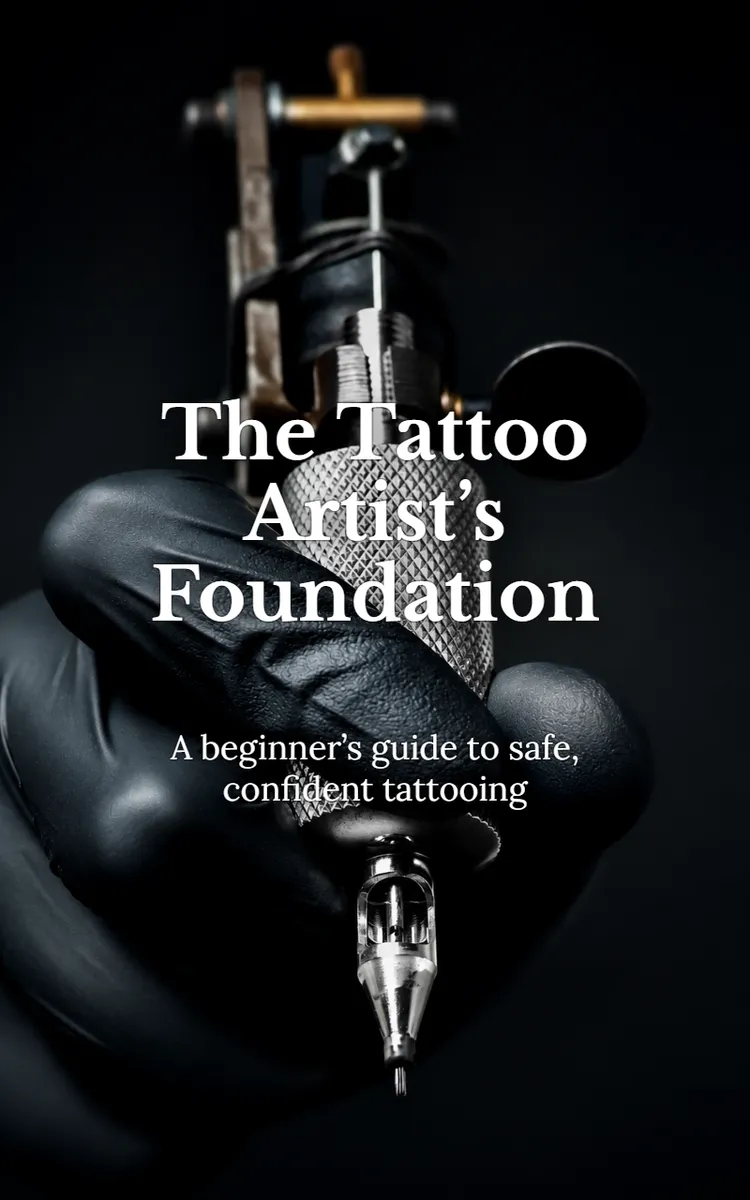
"The Tattoo Artist’s Foundation" is a how-to guide book by christian sammut with 20 chapters and approximately 67,039 words. Tattoo machine fundamentals, hygiene, techniques, equipment, and professional practice.
This book was created using Inkfluence AI, an AI-powered book generation platform that helps authors write, design, and publish complete books. It was made with the AI Ebook Generator.
Frequently Asked Questions
What is "The Tattoo Artist’s Foundation" about?
Tattoo machine fundamentals, hygiene, techniques, equipment, and professional practice
How many chapters are in "The Tattoo Artist’s Foundation"?
The book contains 20 chapters and approximately 67,039 words. Topics covered include Entering the Tattoo Profession, Building Drawing Fundamentals, Designing for Skin and Scale, Choosing a Tattoo Apprenticeship, and more.
Who wrote "The Tattoo Artist’s Foundation"?
This book was written by christian sammut and created using Inkfluence AI, an AI book generation platform that helps authors write, design, and publish books.
How can I create a similar how-to guide book?
You can create your own how-to guide book using Inkfluence AI. Describe your idea, choose your style, and the AI writes the full book for you. It's free to start.
Write your own how-to guide book with AI
Describe your idea and Inkfluence writes the whole thing. Free to start.
Start writingCreated with Inkfluence AI


