

Read the first chapter
The whole of chapter one, free. About 6 min. Turn the pages with the arrows, your keyboard, or a swipe.
Chapter 1
Day 1: A Fresh Start-Safety, Prayer, and the First Assessment
Scripture Focus
Psalm 46:1
> God is our refuge and strength, > an ever-present help in trouble.
Before a counseling plan is formed, the counseling room must become a place where a wounded person can experience safety, choice, and God’s steady presence.
A client may arrive carrying fear that is not visible: a racing heart, guarded answers, difficulty sitting near a doorway, or uncertainty about whether speaking will make life more dangerous. The first pastoral task is not to gather every detail of the trauma. It is to establish enough safety for the person to remain present and to choose what happens next. Psalm 46 does not deny trouble. It names God as refuge within it. A trauma-informed practice reflects that refuge through careful actions, clear boundaries, and patient attention.
Safety begins before the first question. The counselor should prepare a private, accessible room; explain who can enter; keep exits visible; and reduce unnecessary noise and interruptions. If counseling occurs online, confirm that the client has a private location and a reliable way to reconnect if the call drops. These details may seem ordinary, but trauma often makes ordinary uncertainty feel threatening. A clear setting communicates, “You don’t have to manage surprises here.”
Immediate safety also requires a brief assessment of urgent danger. Ask directly and calmly about current abuse, threats, suicidal thoughts, self-harm, harm toward others, severe intoxication, and medical emergencies. Direct questions do not create these risks. They help bring hidden risks into the light so that appropriate care can begin. If danger is present, follow local law, church policy, and professional requirements. Contact emergency services or a qualified crisis provider when needed. Pastoral care is not a substitute for emergency medical or psychiatric care, and referring someone is not a failure of faith. It is an act of responsible love.
Consent should be specific, ongoing, and easy to withdraw. Explain what pastoral counseling includes, what it does not include, and how prayer or Scripture may be offered. Ask, “Would it be all right if I prayed with you?” Do not assume that a Christian client wants prayer at every meeting, or that a particular passage will feel comforting in the moment. A person may love the Bible and still need silence, grounding, or medical attention before discussing Scripture. A trauma-informed faith practice offers spiritual care without using spiritual pressure.
Confidentiality must be explained in plain language. Tell the client that their information is kept private, while also naming the limits required by law or safety policy. These limits commonly include serious and immediate danger, suspected abuse or neglect of a child or vulnerable adult, and legal demands for records. Requirements differ by location, so seminary students should consult a supervisor, attorney, licensing board, or denominational policy before opening a practice. Never promise absolute secrecy when you cannot provide it.
A useful opening may sound like this: “What you share is private within the limits I’ll explain. If I become concerned that you or someone else faces immediate danger, I may need to involve additional help. I’ll tell you what I’m doing whenever safety allows. You can pause, decline a question, or ask why I’m asking it.” This brief statement gives the client information and restores a measure of control.
The first assessment should be focused rather than invasive. Begin with the present: “What brought you today?” Then ask what the client needs in the next hour, whether they are safe returning home, and what support is available. Observe functioning without turning observation into a diagnosis. Note orientation, speech, mood, concentration, physical distress, and signs of dissociation. Ask about sleep, substance use, medications, medical concerns, and current treatment. Trauma symptoms can overlap with depression, anxiety, grief, psychosis, neurological conditions, and medication effects. A pastoral counselor should not diagnose beyond training or scope.
Document facts, not labels. Write, “Client reports sleeping three hours nightly and having nightmares four nights this week,” rather than, “Client is unstable.” Record the client’s words when risk is discussed. Note your assessment, the safety plan, referrals, consent, and follow-up date. Good records protect the client and help the counselor provide consistent care.
Scripture also gives us a model for presence. When Job suffered, his friends initially sat with him in silence (Job 2:13). Their later speeches became harmful when they assumed they understood the cause of his pain. The lesson is practical: presence comes before explanation. The counselor’s first victory may be modest - a client leaves knowing the room was predictable, the boundaries were honest, and no one forced disclosure. That is not a small beginning. It is the groundwork for trustworthy care.
Practice for Today
1. Complete a safety-and-boundaries review. Before receiving a client, inspect the counseling space and write down the steps you will take if an urgent concern appears. Include the local emergency number, a crisis resource, a medical referral, your supervisor’s contact information, and your procedure for documenting risk. Check that the room has a visible exit, reasonable privacy, and a way to summon help. For online sessions, add a plan for confirming the client’s location and reconnecting after a dropped call.
Prepare a two-minute informed-consent explanation. It should cover privacy, its limits, record keeping, fees or scheduling if applicable, the voluntary nature of counseling, and the role of prayer and Scripture. Read it aloud once. Revise any sentence that sounds vague. “I’ll keep this private unless safety or law requires action” is clearer than “Everything we say stays between us.”
2. Practice the first assessment without rushing into the story. Use the following order in a role-play with a supervisor or trusted colleague:
1. Ask what brought the person today and what would make the meeting useful. 2. Ask about immediate safety: “Are you in danger right now?” “Have you had thoughts of harming yourself or someone else?” 3. Ask about basic stability: sleep, food, medications, substance use, medical needs, and a safe place to go afterward. 4. Ask what support is available and what the client wants you to know before continuing. 5. Offer one next step, such as grounding, a medical referral, a safety plan, or a follow-up appointment.
Keep the first meeting paced. A client does not need to recount every event to receive wise care. If distress rises sharply, pause and use a grounding practice: invite the client to place both feet on the floor, name five things they see, notice the support of the chair, and take a slow breath without forcing deep breathing. Ask permission before offering physical proximity, touch, or any exercise.
3. Journal with honest self-examination. Set a timer for fifteen minutes and respond to these questions: “Which part of safety and confidentiality do I find easiest to explain? Which part do I tend to avoid?” Then write a sample response to a client who says, “If I tell you everything, will you call the police?” Keep your answer truthful, calm, and limited to the actual legal and policy requirements in your setting. End by writing one sentence of prayerful commitment, such as, “Lord, help me protect dignity while responding wisely to danger.”
As you prepare, remember that prayerful counseling is not prayer used to bypass assessment. Prayer steadies the counselor so that assessment can be careful. It also reminds us that the client is not a problem to solve, but a person bearing God’s image. Ask the Lord for humility before you ask for insight. Ask for courage to make a referral when your competence or setting is not enough. Ask for patience when progress is measured by a client’s ability to remain safe for one more day.
The opening of a practice is therefore both spiritual and practical. A Bible on the table cannot create safety by itself. Safety is communicated through consent, predictable procedures, accurate information, respectful language, and competent action. When these are joined with prayer, Scripture becomes part of a trustworthy ministry rather than a tool of pressure. The counselor offers refuge in a limited human way while pointing beyond the room to the God who remains present in trouble.
Closing Prayer
Lord Jesus, make me attentive before I become instructive. Give me wisdom to recognize danger, humility to respect consent, and courage to explain confidentiality honestly. Help me create a counseling space where people are treated with dignity and never pushed beyond what they can bear. Guide my questions, my records, my referrals, and my prayers. Be a refuge for the person before me, and teach me to serve with skill, truth, and compassion. Amen.
End of chapter one. 6 more chapters in the full book.
Swipe or use the arrows to turn the page

Spirit-Led Whole-Person Renewal

ChurchBased Christian Biblical Counseling Ministry

Anxiety And Panic Counseling Desk Reference
What's inside: 7 chapters
- 1. Day 1: A Fresh Start-Safety, Prayer, and the First Assessment
- 2. Days 8-14: Deepening Trust-Assessment, Hope, and Christian Meaning-Making
- 3. Days 15-21: Stabilization and Surrender-Breathing, Grounding, and Prayerful Regulation
- 4. Days 22-28: Processing with Wisdom-Trauma Narratives, Cognitive Repair, and Biblical Truth
- 5. Days 29-35: Hope, Prayer, and Community-Liturgy of Healing and Support Systems
- 6. Days 36-42: Relapse Prevention and Ethical Care-Boundaries, Monitoring, and Referral
- 7. Days 43-49: Commissioning and Ongoing Formation-Sustaining Ministry and Deepening Trust in God
About this book
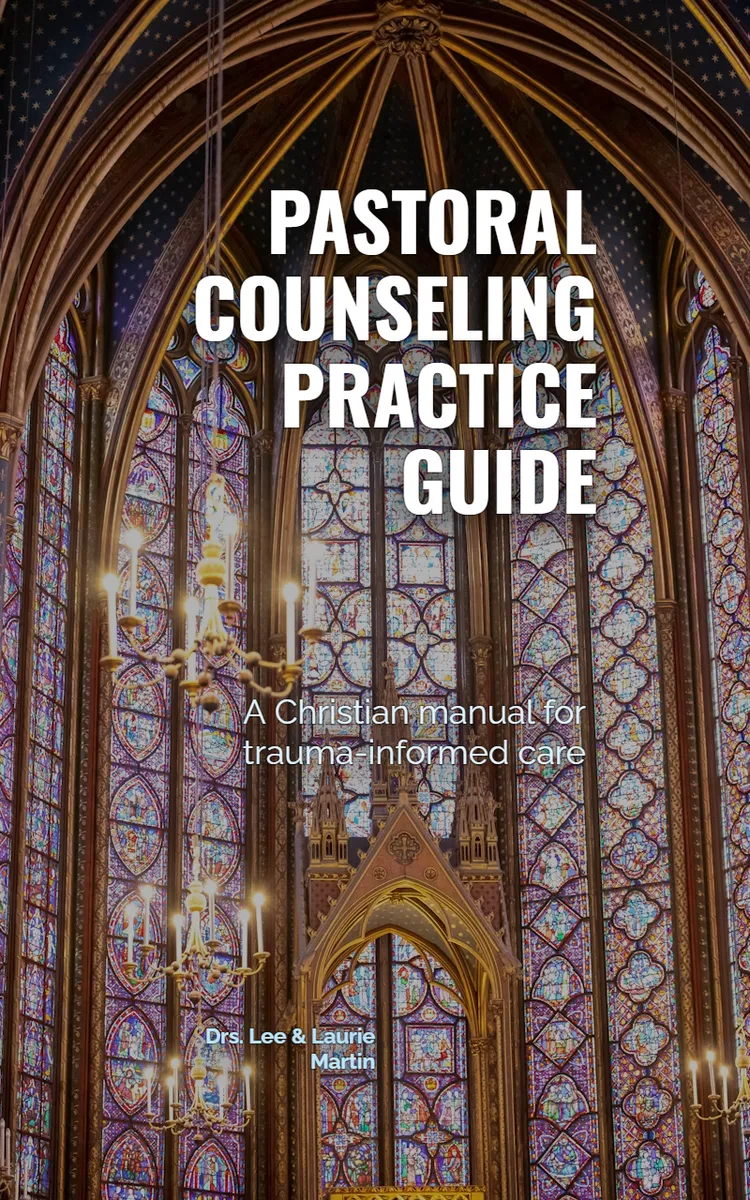
"Pastoral Counseling Practice Guide" is a religious devotional book by Drs. Lee & Laurie Martin with 7 chapters and approximately 7,756 words. Christian pastoral counseling manual for trauma and PTSD.
This book was created using Inkfluence AI, an AI-powered book generation platform that helps authors write, design, and publish complete books.
Frequently Asked Questions
What is "Pastoral Counseling Practice Guide" about?
Christian pastoral counseling manual for trauma and PTSD
How many chapters are in "Pastoral Counseling Practice Guide"?
The book contains 7 chapters and approximately 7,756 words. Topics covered include Day 1: A Fresh Start-Safety, Prayer, and the First Assessment, Days 8-14: Deepening Trust-Assessment, Hope, and Christian Meaning-Making, Days 15-21: Stabilization and Surrender-Breathing, Grounding, and Prayerful Regulation, Days 22-28: Processing with Wisdom-Trauma Narratives, Cognitive Repair, and Biblical Truth, and more.
Who wrote "Pastoral Counseling Practice Guide"?
This book was written by Drs. Lee & Laurie Martin and created using Inkfluence AI, an AI book generation platform that helps authors write, design, and publish books.
Write your own religious devotional book with AI
Describe your idea and Inkfluence writes the whole thing. Free to start.
Start writingCreated with Inkfluence AI


