

Read the first chapter
The whole of chapter one, free. About 4 min. Turn the pages with the arrows, your keyboard, or a swipe.
Chapter 1
How Synthetic Fibers Contact Skin
When Synthetic Fibers Contact Skin
• Clear principle Petroleum-derived textiles, polyester, nylon, acrylic, rayon blends containing petroleum-based finishes, are plastics chosen for cost and performance, not human health. Worn against skin, they create repeat, prolonged contact with industrial chemicals: dyes, resin finishes, flame retardants, plasticizers, antimicrobials, and manufacturing residues. Remove them from daily wear whenever possible.
• How exposure happens Contact pathways are straightforward and avoidable:
• Direct transfer: solvents and finish chemicals migrate from fabric surfaces to skin by touch and pressure.
• Off-gassing and vapor contact: volatile additives evaporate and can be inhaled or deposited on nearby skin.
• Sweat-mediated mobilization: heat and perspiration increase chemical release and enhance skin absorption.
• Abrasion and shedding: microfibers carrying additives abrade the skin or are inhaled and later deposit on skin.
• Contact at seams and trims: elastic waistbands, printed areas, adhesives, and metal components concentrate exposures at narrow skin sites.
• Why this matters clinically Repeated contact with these materials contributes to:
• Dermal inflammation: irritant and allergic contact dermatitis from finishes, dyes, or elastic components.
• Increased chemical load: dermal uptake adds to systemic exposure, particularly relevant for persistent or bioactive additives.
• Heightened vulnerability: infants, pregnant and nursing people, those with eczema or open skin, and people with metabolic or immune vulnerabilities have less margin for added chemical burden.
• Immediate household actions Do not delay. Replace synthetics with cotton, linen, or other verified natural fibers in the zones that touch skin most: underwear, sleepwear, base layers, baby clothing, and items worn for long periods.
• Inventory now: pull out worn clothing and separate items that contain polyester, nylon, acrylic, spandex, or ambiguous “synthetic” blends. Check labels; when labels are missing, treat the garment as suspect.
• Isolate suspect items: bag synthetics in sealed containers to prevent cross-contamination with natural fibers until you decide and act.
• Protect high-contact zones first: prioritize underwear, bras, socks, pajamas, and baby garments for replacement with cotton or linen.
• Safe short-term handling and laundering When handling or washing synthetics before disposal or repurposing, reduce transfer to your remaining clothing and home environment:
• Wash separately: launder synthetic items alone, using cool water and a fragrance-free detergent, to limit chemical transfer.
• Avoid drying on shared lines: tumble-dry or dry in a separate space to prevent airborne deposition onto other garments.
• Contain lint and fibers: clean machine filters and dryer traps after each load; dispose of lint in sealed waste.
• Minimize agitation: aggressive washing releases more microfibers and chemicals, use gentle cycles.
• Do not use solvents or home stripping methods to “remove” finishes, these can increase exposure and damage skin on contact.
• Disposal and reuse options Do not donate worn synthetics for household use; they will continue to expose others.
• Recycling paths: seek municipal or textile-recycling programs that accept polyester/nylon for industrial recycling, confirm accepted items first.
• Industrial repurpose: consider textile recycling firms that convert fibers into insulation or stuffing, bag and label items as synthetic.
• If no recycling available: securely bag and discard to prevent shedding during handling; avoid leaving piles of synthetics in living spaces.
• Do not incinerate at home: burning plastics releases toxic gases.
• Immediate substitutions to buy now Replace high-contact garments with:
• Undergarments and sleepwear: 100% cotton or 100% linen, preferring undyed or low-chemical processing.
• Socks and bras: cotton blends where the majority fiber is natural; avoid elastic-lined waistbands that remain synthetic in contact zones.
• Activewear alternative: for exercise choose certified natural-fiber performance fabrics or lightweight cotton blends with minimal finishes; minimize duration if synthetic use is unavoidable temporarily.
• Special populations: must-avoid groups For these people, elimination is mandatory:
• Pregnant and nursing people: avoid all routine skin contact with synthetics to reduce cumulative chemical burden to parent and child.
• Infants and young children: use only natural fibers, no synthetics for clothing, bedding, or sleep surfaces.
• Chronic skin disease: those with eczema or rosacea should transition immediately and avoid any further direct contact with petroleum-based textiles.
• Document, preserve, and seek clinical testing, do not self-challenge If you suspect a garment caused a reaction, document it and stop using the item:
• Record facts: date first worn, symptom onset, location, photos, fiber label, brand, and any relevant product contacts.
• Preserve evidence: keep the garment sealed and bring it to clinical appointments.
• No reintroduction: do not retest garments on yourself. Controlled diagnostic testing, such as patch testing, belongs to clinicians. Self-provocation risks worsening and chronic sensitization.
• Clinician note for referrals Bring the preserved garment, photos, and a concise exposure log to a dermatologist or occupational medicine specialist. Ask for:
• Patch testing for standard allergens and, if indicated, textile-related series.
• Exposure assessment and advice on whether documented chemicals require further systemic evaluation.
• Resources for safe disposal and documentation if workplace exposures are suspected.
• Policy and sourcing brief Prioritize suppliers who disclose full fiber content and avoid items labeled with vague terms such as “performance blend” without details. Seek certifications that emphasize low-chemical processing and transparency. Local, small-scale weavers and certified natural-fiber manufacturers are preferable.
• Bottom line Synthetics are plastics, not textiles for health. Eliminate routine skin contact with petroleum-derived fabrics. Do not reintroduce or test at home. Replace, contain, and dispose safely. Preserve evidence and consult clinicians for diagnosis and further testing.
• Next chapter The following chapter will provide step-by-step laundering protocols, a checklist for an immediate home wardrobe conversion, and a supplier list for verified natural-fiber replacements.
End of chapter one. 7 more chapters in the full book.
Swipe or use the arrows to turn the page


What's inside: 8 chapters
- 1. How Synthetic Fibers Contact Skin
- 2. Additives, Finishes, and Migration Risks
- 3. Allergic Contact Dermatitis Triggers
- 4. Eczema Flare Management With Fabric Choices
- 5. Heat, Sweat, and Odor-Related Exposure
- 6. Hormone Disruption and Endocrine Concerns
- 7. Sleep Recovery With Low-Contact Clothing
- 8. Wardrobe Audits and Evidence-Based Swaps
About this book
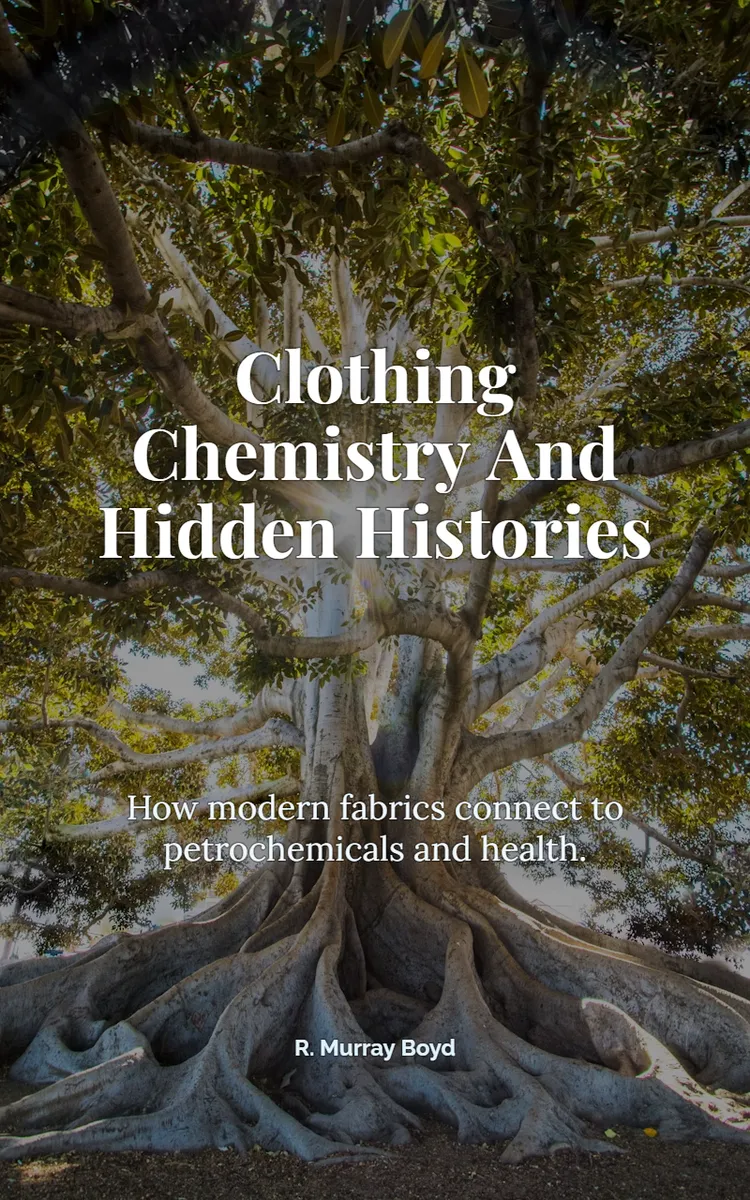
"Clothing Chemistry And Hidden Histories" is a health & wellness book by R. Murray Boyd with 8 chapters and approximately 13,851 words. Health and environmental impacts of synthetic clothing materials.
This book was created using Inkfluence AI, an AI-powered book generation platform that helps authors write, design, and publish complete books. It was made with the AI Health Book Generator.
Frequently Asked Questions
What is "Clothing Chemistry And Hidden Histories" about?
Health and environmental impacts of synthetic clothing materials
How many chapters are in "Clothing Chemistry And Hidden Histories"?
The book contains 8 chapters and approximately 13,851 words. Topics covered include How Synthetic Fibers Contact Skin, Additives, Finishes, and Migration Risks, Allergic Contact Dermatitis Triggers, Eczema Flare Management With Fabric Choices, and more.
Who wrote "Clothing Chemistry And Hidden Histories"?
This book was written by R. Murray Boyd and created using Inkfluence AI, an AI book generation platform that helps authors write, design, and publish books.
How can I create a similar health & wellness book?
You can create your own health & wellness book using Inkfluence AI. Describe your idea, choose your style, and the AI writes the full book for you. It's free to start.
Write your own health & wellness book with AI
Describe your idea and Inkfluence writes the whole thing. Free to start.
Start writingCreated with Inkfluence AI


