
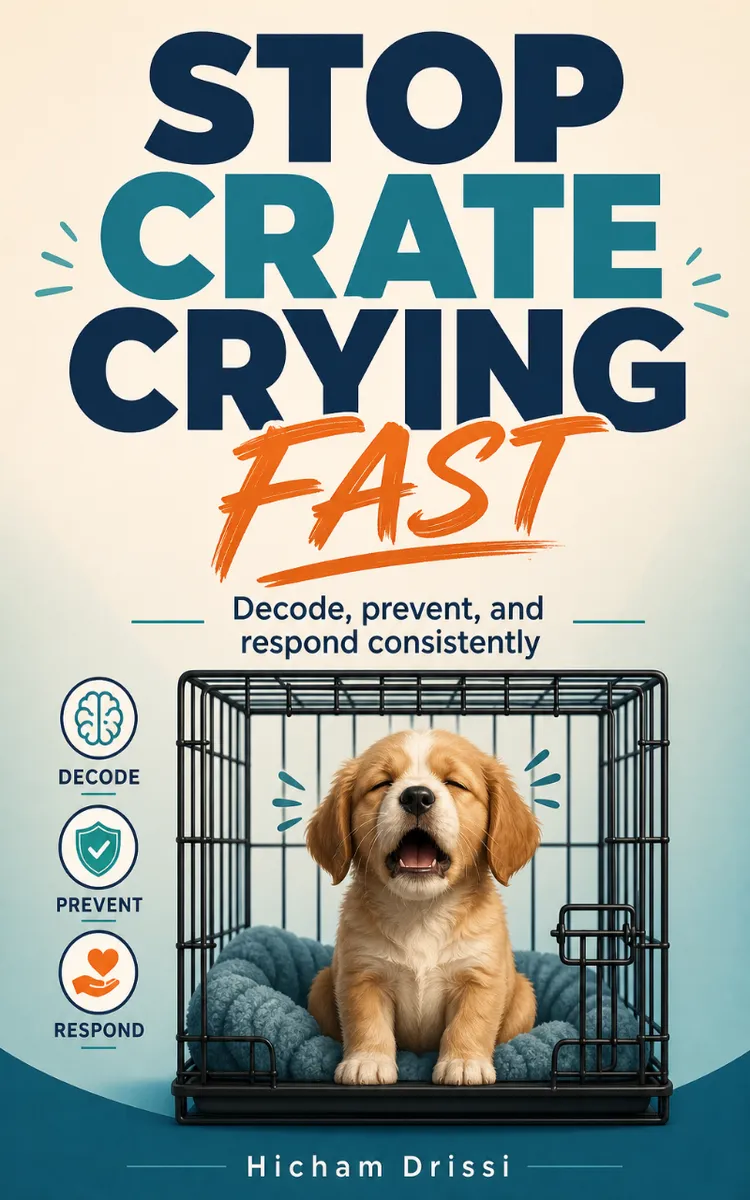
A practical checklist-driven guide to stop puppy crate crying by quickly decoding potty vs fear and building a calmer night routine.
Table of Contents
- 1. Two-Track Cry Decoder Checklist
- 2. Night-Settle Ladder Wind-Down Plan
- 3. Crate Setup Blueprint: Comfort First
- 4. 3 AM Reset Protocol Checklist
- 5. Gradual Quiet Windows Day Plan
Preview: Two-Track Cry Decoder Checklist
A short excerpt from “Two-Track Cry Decoder Checklist”. The full book contains 5 chapters and 8,036 words.
What This Helps You Do
Is that cry a full bladder - or a frightened puppy asking not to be alone? The Two-Track Cry Decoder helps you sort each crate cry into potty or anxiety using timing, body signs, and what happens after you help.
Use it during night cries, early-morning whining, or any sudden change in crate noise. You’ll make one calm response instead of guessing, bargaining, or turning a quick potty break into a midnight party.
Before You Start
Set up the few things that make the decoder easier to use:
- Keep a small notebook or phone note beside the crate.
- Record bedtime, last water, last potty, and each wake-up time.
- Place a leash and shoes where you can grab them quietly.
- Keep the potty route clear and safely lit.
- Choose one short potty phrase, such as “Go potty.”
- Decide where the puppy will return after the break.
- Keep crate lights low or off during night checks.
- Remove exciting toys during the overnight test.
- Note whether the puppy peed, pooped, or did neither.
- Plan one calm response before the next cry starts.
The timing note matters because a cry five minutes after bedtime tells you something different from a cry after four quiet hours. You don’t need a perfect record. A few clear details are enough to spot a pattern.
Use the same route and the same quiet routine when possible. Consistency makes the “after you help” result easier to read. If every response changes, the result gets muddy fast.
Checklist Items
Read the Timing
Start with the clock, not the volume. A loud cry isn’t automatically a potty cry, and a soft whine isn’t automatically anxiety.
☐ Check how long the puppy stayed quiet first.
☐ Note the time since the last potty break.
☐ Compare the cry with the puppy’s usual schedule.
☐ Mark cries that happen soon after crate entry.
☐ Mark cries that happen after several quiet hours.
☐ Watch for a repeat wake-up at the same time.
A cry that begins soon after crating may point toward fear, stress, or loneliness. A cry after a longer sleep stretch may point toward a full bladder or the need to poop. Treat timing as a clue, not a verdict.
For example, crying three minutes after the crate door closes often deserves a closer look at anxiety signs. Crying after a long, quiet stretch deserves a closer look at potty timing. The clock narrows the choices; it doesn’t make the final call.
Check Body Signs
Next, look at the puppy’s body. Keep your movements quiet so your check doesn’t add more excitement.
☐ Watch for pacing, circling, or repeated position changes.
☐ Look for sniffing that seems focused and urgent.
☐ Check for scratching, pawing, or frantic crate movement.
☐ Notice whether the puppy settles between cries.
☐ Look for a tense body or rapid restless movement.
☐ Notice whether the puppy seems alert to every sound.
☐ Check for signs of searching for a potty spot.
Potty clues often include focused sniffing, circling, or restless movement that seems directed toward getting out. Anxiety clues can include a tense body, frantic movement, repeated scratching, or an inability to settle.
Don’t expect one body sign to solve the mystery. Puppies can be restless for both reasons. Pair the body check with timing, then use the response test to confirm your best guess.
Sort the Cry Into Two Tracks
Use the two tracks to keep your decision simple:
- Potty track: A full bladder or a need to poop.
- Anxiety track: Fear, stress, or loneliness.
☐ Label the first likely track: potty or anxiety.
☐ Choose potty when timing and body signs point outside.
☐ Choose anxiety when distress starts soon after crating.
☐ Avoid switching tracks because the crying gets louder.
☐ Keep the first response calm and deliberately boring.
The label is only a working decision. You’re not diagnosing the puppy, and you’re not promising the first guess is right. You’re choosing the most likely track so you can test it without creating extra noise.
When the puppy cries after a long sleep and sniffs urgently, start with the potty track. When the puppy cries almost immediately, stays tense, and can’t settle, start with the anxiety track. The next step tells you whether that choice fits.
Use the Confirmation Question
The key question is direct: If I fix the potty need right now, does the crying end?
☐ Take the puppy out when potty signs are strong.
☐ Keep the route quiet, brief, and predictable.
☐ Give the puppy a chance to pee or poop.
☐ Return to the crate immediately after the break.
☐ Check whether the crying stops after returning.
☐ Record “ended,” “continued,” or “unclear.”
If the puppy pees or poops and then settles, the potty track gains support. If the puppy does nothing outside and resumes crying in the crate, anxiety becomes more likely.
The result matters more than your first impression. A puppy may sound desperate but settle quickly after a short potty break....
About this book
"Stop Crate Crying Fast" is a checklist pack book by Anonymous with 5 chapters and approximately 8,036 words. A practical checklist-driven guide to stop puppy crate crying by quickly decoding potty vs fear and building a calmer night routine..
This book was created using Inkfluence AI, an AI-powered book generation platform that helps authors write, design, and publish complete books.
Frequently Asked Questions
What is "Stop Crate Crying Fast" about?
A practical checklist-driven guide to stop puppy crate crying by quickly decoding potty vs fear and building a calmer night routine.
How many chapters are in "Stop Crate Crying Fast"?
The book contains 5 chapters and approximately 8,036 words. Topics covered include Two-Track Cry Decoder Checklist, Night-Settle Ladder Wind-Down Plan, Crate Setup Blueprint: Comfort First, 3 AM Reset Protocol Checklist, and more.
Who wrote "Stop Crate Crying Fast"?
This book was written by Anonymous and created using Inkfluence AI, an AI book generation platform that helps authors write, design, and publish books.
Write your own checklist pack book with AI
Describe your idea and Inkfluence writes the whole thing. Free to start.
Start writingCreated with Inkfluence AI


