

Read the first chapter
The whole of chapter one, free. About 5 min. Turn the pages with the arrows, your keyboard, or a swipe.
Chapter 1
Day 1: A Fresh Start-Spiritual Assessment and Hope
Scripture Focus
Psalm 139:23-24 (ESV)
> Search me, O God, and know my heart! > Try me and know my thoughts! > And see if there be any grievous way in me, > and lead me in the way everlasting!
Spiritual healing begins with honest attention before God, not with a rushed diagnosis or a polished religious answer.
A counseling relationship needs a trustworthy starting point. Psalm 139 gives us one: God already knows the whole person, yet He invites us to participate in truthful self-examination. That invitation shapes both sides of this journey. The counselor learns to listen carefully, assess wisely, and remain dependent on God. The client learns to name pain, notice patterns, and receive care without hiding behind shame.
This prayer also gives us a healthy boundary. Spiritual assessment isn’t an inspection designed to expose someone. It’s a prayerful search for what needs care. A counselor may ask about fear, guilt, spiritual dryness, doubt, conflict, sleep, grief, habits, relationships, and physical health. These questions aren’t evidence that a person has failed. They help distinguish what is happening so that care can be wise and specific.
Reflection
A fresh start in Christian counseling doesn’t mean pretending the past didn’t happen. It means bringing the past, present, and deepest concerns into the light of God’s truth. Spiritual healing is the work of God’s grace restoring a person’s relationship with Him, with others, with self, and with the responsibilities of daily life. It includes repentance where sin is present, comfort where suffering is present, renewed understanding where false teaching has shaped belief, and patient support where emotional or bodily weakness is involved.
That definition matters because spiritual suffering can look different from one person to another. A client may say, “I don’t feel close to God,” while the deeper issue is unresolved grief, chronic exhaustion, or fear that makes prayer feel unsafe. Another may carry genuine guilt from disobedience and need confession and changed behavior, not merely reassurance. Someone else may have absorbed teaching that portrays God as harsh and impossible to please. The symptom may be the same - avoidance of prayer - but the cause and treatment may differ. Good spiritual care seeks the right understanding before offering the right response.
This manual and devotional are designed as one integrated journey. The counselor can use the Scripture, questions, and practices as part of a structured care process. The client can use the same material between sessions to observe patterns and respond to God. The two paths should support each other without becoming identical. A client’s personal reflection is valuable, but it doesn’t replace careful assessment. A counselor’s skill is important, but it doesn’t replace the client’s daily participation or the Holy Spirit’s work.
A Christian psychology framework holds spiritual and emotional realities together without confusing them. Scripture guides the meaning of healing, while sound counseling practice helps us recognize thoughts, emotions, behaviors, relationships, and bodily factors. Prayer belongs in the process, but prayer should never be used to avoid appropriate medical care, safety planning, or referral. Confession belongs in the process, but we must not label every symptom as hidden sin. Compassion belongs in the process, but compassion doesn’t remove the need for truthful change.
For that reason, the first assessment should be both broad and personal. Ask what brings the person now. Ask when the struggle began and what makes it better or worse. Ask about faith practices, church experience, beliefs about God, current relationships, losses, habits, and physical changes. Listen for words such as “unclean,” “abandoned,” “numb,” “trapped,” or “unworthy.” These words often reveal how suffering has been interpreted. Then gently ask, “What do you believe this struggle says about you or about God?” That question can uncover a painful belief that needs patient examination.
The first takeaway is simple: healing begins when suffering is named in God’s presence and understood with care. We don’t have to force a conclusion on the first day. We can begin with truth, humility, and hope. God’s searching is not careless exposure. It is the attention of a faithful Shepherd who leads us toward life.
Practice for Today
1. Complete a three-part spiritual assessment. Set aside fifteen minutes and write brief answers under these headings: “What I’m experiencing,” “What I think may be causing it,” and “What I need from God and wise support.” Be specific. Instead of writing “I’m struggling spiritually,” write, “I avoid prayer because I expect God to be disappointed with me,” or, “I feel numb after six months of grief.” If you’re a counselor, use these headings as an opening assessment tool, then explore each statement with gentle follow-up questions.
2. Separate symptoms from conclusions. Choose one current struggle and make two columns in your journal. In the first, record observable symptoms: difficulty praying, repeated worry, anger during conversations, isolation, loss of sleep, or inability to receive encouragement. In the second, record the interpretation you’ve attached to those symptoms: “God has left me,” “I’m beyond help,” or “I must be hiding sin.” Pray over both columns. Ask God to show you what is fact, what is interpretation, and what needs further discernment. Don’t rush to solve the question today. Honest uncertainty is safer than a false answer.
3. Pray the assessment prayer slowly for five minutes. Begin with Psalm 139:23-24. Sit quietly for one minute, then ask, “Lord, what are You bringing to my attention?” Write down what comes to mind without arguing with it or condemning yourself. Test each impression against Scripture, wise counsel, and the fruit it produces. If the reflection points to possible trauma, severe depression, self-harm, abuse, substance misuse, or another serious concern, share it with a qualified counselor, pastor, or medical professional. Spiritual healing welcomes appropriate help; it doesn’t require carrying dangerous burdens alone.
If you’re working with a counselor, bring your written responses to the next conversation. If you’re using this material on your own, consider inviting a mature Christian who listens well - not someone who gives quick explanations - to pray with you. The goal isn’t to create a perfect spiritual report. The goal is to begin a truthful record of where you are and where God may be leading you.
As you practice, notice the difference between conviction and condemnation. Conviction is specific and draws us toward repentance, repair, and grace. Condemnation is vague, crushing, and isolating. A careful counselor helps the client tell the difference, while also taking real sin seriously. A fresh start doesn’t erase responsibility. It places responsibility inside the mercy of Christ, where change can actually grow.
Closing Prayer
Lord Jesus, search me with mercy and truth. Help me name my suffering without hiding and examine my beliefs without fear. Give counselors wisdom to listen before they explain, and give clients courage to receive honest care. Show me what needs repentance, what needs comfort, and what needs further help. Lead me one faithful step at a time into healing, truth, and deeper trust in You. Amen.
End of chapter one. 6 more chapters in the full book.
Swipe or use the arrows to turn the page

Spirit-Led Whole-Person Renewal

ChurchBased Christian Biblical Counseling Ministry

Anxiety And Panic Counseling Desk Reference
What's inside: 7 chapters
- 1. Day 1: A Fresh Start-Spiritual Assessment and Hope
- 2. Days 6-10: Seeing the Symptoms-Spiritual, Emotional, and Relational Signals
- 3. Days 11-15: Root Causes-Sin, Disobedience, Lies, and Emotional Wounds
- 4. Days 16-20: Healing Pathways-Prayer, Surrender, and Renewed Thinking
- 5. Days 21-24: Truth in Community-Correcting Wrong Teaching and Relational Repair
- 6. Days 25-27: Hope Under Pressure-Coping, Resilience, and Ongoing Care
- 7. Day 28-30: Freedom and Commission-Living as a Healed Believer
About this book
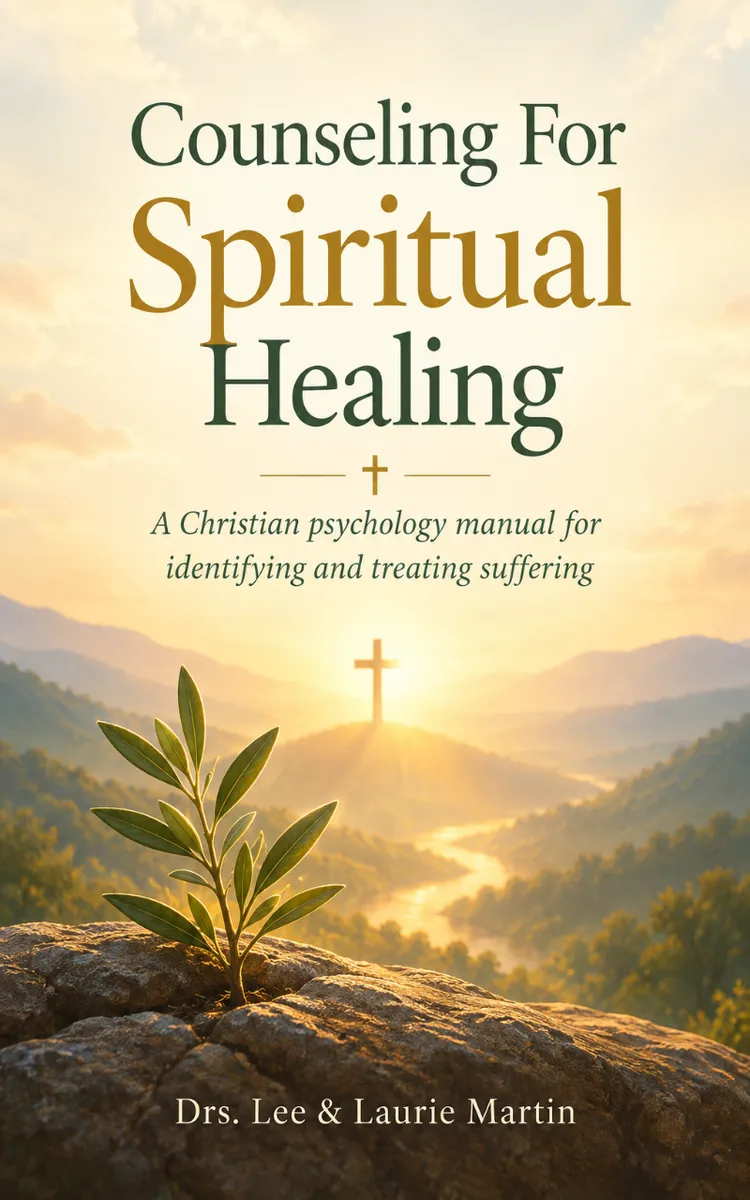
"Counseling For Spiritual Healing" is a religious devotional book by Drs. Lee & Laurie Martin with 7 chapters and approximately 7,880 words. Christian counseling manual for spiritual and emotional problems.
This book was created using Inkfluence AI, an AI-powered book generation platform that helps authors write, design, and publish complete books.
Frequently Asked Questions
What is "Counseling For Spiritual Healing" about?
Christian counseling manual for spiritual and emotional problems
How many chapters are in "Counseling For Spiritual Healing"?
The book contains 7 chapters and approximately 7,880 words. Topics covered include Day 1: A Fresh Start-Spiritual Assessment and Hope, Days 6-10: Seeing the Symptoms-Spiritual, Emotional, and Relational Signals, Days 11-15: Root Causes-Sin, Disobedience, Lies, and Emotional Wounds, Days 16-20: Healing Pathways-Prayer, Surrender, and Renewed Thinking, and more.
Who wrote "Counseling For Spiritual Healing"?
This book was written by Drs. Lee & Laurie Martin and created using Inkfluence AI, an AI book generation platform that helps authors write, design, and publish books.
Write your own religious devotional book with AI
Describe your idea and Inkfluence writes the whole thing. Free to start.
Start writingCreated with Inkfluence AI


