
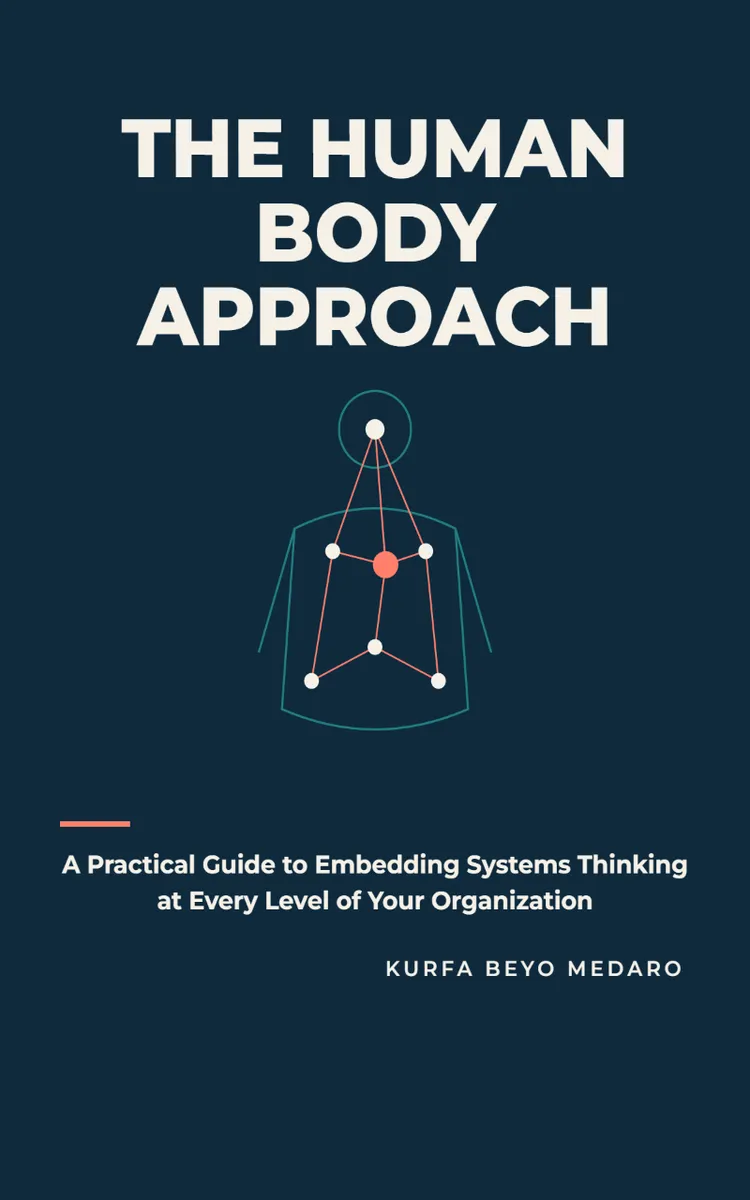
Read the first chapter
The whole of chapter one, free. About 11 min. Turn the pages with the arrows, your keyboard, or a swipe.
Chapter 1
Why Organizations Must Think Like Living Systems
1.1 Overview of Systems Thinking in Organizations
1.1.1 The Growing Complexity of Modern Organizations
Every generation of leaders inherits an organization more complicated than the one before it. Today's enterprises operate across time zones, regulatory regimes, supply chains, and digital platforms that did not exist a decade ago. A decision made in one department — a pricing change, a staffing cut, a new software rollout — no longer stays contained within that department. It ripples outward, touching customer experience, employee morale, compliance exposure, and financial performance, often in ways no single manager anticipated. This is the defining condition of modern organizational life: complexity has outpaced our traditional tools for managing it.
The data bears this out. McKinsey's global State of Organizations research has found that roughly two-thirds of surveyed business leaders view their own organizations as overly complex and inefficient, with close to 40 percent pointing specifically to complex organizational structure as a driver of that inefficiency.¹ A separate McKinsey analysis estimates that knowledge workers now lose close to a third of their workweek to administrative and coordination overhead generated by this complexity — time that produces no direct value but is nonetheless consumed by the friction of navigating an increasingly tangled system.² This is not a marginal inefficiency; it is a structural drag on organizational performance that grows, largely unnoticed, with every additional layer of process, tool, and approval step an organization adds.
Much of the management thinking still taught in business schools and practiced in boardrooms was designed for a simpler world — one where cause and effect were close together in time and space, where problems could be broken into parts, solved independently, and reassembled. That world is largely gone. What has replaced it is a web of interdependent systems: technological, human, financial, and cultural, all interacting simultaneously. Leaders who continue to manage this complexity with linear, department-by-department thinking find themselves perpetually surprised by outcomes they did not intend and could not predict.
The Systems Thinker community of practice has long argued that this growing complexity is not a temporary phase to be endured until things settle down. It is the new baseline. Organizations that thrive in this environment are not the ones that eliminate complexity — that is impossible — but the ones that build the internal capacity to sense it, understand it, and respond to it intelligently. That capacity is systems thinking, and building it deliberately, at every level of an organization, is the central purpose of this book.
1.1.2 Why Traditional Linear Thinking Fails
Linear thinking assumes that effects follow causes in a straight, traceable line: if sales are down, find the sales problem; if morale is low, find the morale problem. This mode of thinking served industrial-era organizations reasonably well because their processes were, in fact, relatively linear — an assembly line moved in one direction, and a defect could usually be traced back to a single station.
Modern organizations rarely work this way. A drop in sales might originate in a hiring decision made two years earlier, a policy change in a completely unrelated department, or a shift in how information flows between frontline staff and leadership. Linear thinking, applied to a non-linear problem, produces a predictable pattern of failure: leaders treat symptoms instead of root causes, fixes in one area create new problems in another, and the same crises recur every few years under different names because the underlying structure that produces them was never addressed.
Systems thinking offers a different starting assumption: that behavior over time is produced by the structure of relationships within a system, not by the isolated actions of individuals or departments. This reframing does not make problems easier to solve, but it makes them possible to solve correctly — by addressing the structures that generate them rather than chasing their symptoms indefinitely.
1.1.3 Systems Thinking as a Competitive Advantage
In markets where products, prices, and technologies can be copied within months, an organization's ability to think clearly about its own complexity becomes one of the few advantages that cannot be easily replicated. Competitors can match a feature or undercut a price; they cannot as easily match an organization's capacity to anticipate second-order consequences, coordinate across silos under pressure, or learn faster from its own mistakes.
Organizations with mature systems thinking capability tend to make fewer catastrophic decisions, not because their leaders are smarter, but because their decision-making processes surface interdependencies earlier. A systems-literate finance team asks how a cost-cutting measure will affect frontline morale before it is implemented, not after turnover spikes. A systems-literate operations team anticipates how a new supplier will interact with existing logistics before a shortage occurs. This anticipatory capacity compounds over time into a durable strategic advantage.
1.1.4 Systems Thinking as a Leadership Competency
For much of the twentieth century, effective leadership was described primarily in terms of decisiveness, authority, and command of detail. These traits still matter, but they are no longer sufficient. Leaders today are increasingly evaluated — by boards, by employees, by the markets they operate in — on their ability to see and manage whole systems rather than isolated functions.
This book treats systems thinking not as an abstract academic discipline reserved for strategists and analysts, but as a practical leadership competency that can and must be developed at every level of an organization, from the executive suite to the frontline. Later chapters will describe in detail what this competency looks like in practice for executives, managers, and employees alike.
1.2 Why the Human Body Analogy is an Effective Teaching Tool
1.2.1 Learning Through Familiar Biological Systems
Systems thinking has a well-documented adoption problem: the concepts are powerful, but the vocabulary — feedback loops, stocks and flows, leverage points, emergent behavior — can feel abstract and inaccessible to people without a background in systems science. Training programs built entirely on this vocabulary often produce nodding comprehension in the room and little behavioral change afterward.
The human body offers a shortcut past this problem. Every person in an organization, regardless of role, education, or background, already has direct, lived experience of a complex, interdependent, self-regulating system: their own body. They understand — intuitively, if not technically — that a lack of sleep affects mood, that stress affects digestion, that an injury to one limb changes how the rest of the body compensates. This shared, embodied knowledge becomes the entry point for teaching systems concepts that would otherwise require lengthy academic explanation.
1.2.2 Lessons from Nature's Most Effective System
The human body is, by any reasonable measure, one of the most sophisticated systems in existence. It coordinates trillions of cells, dozens of organs, and multiple regulatory systems to maintain equilibrium — homeostasis — in the face of constant internal and external disruption. It does this largely without centralized micromanagement: no single organ dictates the actions of every cell, yet the whole functions with remarkable coherence.
This is precisely the organizational capability most leaders say they want and struggle to build: coordinated action without constant top-down control. Studying how the body achieves this — through distributed sensing, rapid feedback, and adaptive response — gives organizational leaders a working model, not just a metaphor, for what healthy coordination actually looks like.
1.2.3 Interdependence and Balance in the Human Body
No organ in the human body operates in isolation, and none can be optimized in isolation without cost to the whole. A heart that pumps too aggressively strains the vascular system; a liver overwhelmed by toxins affects energy, cognition, and mood throughout the body. This principle — that local optimization without regard to system-wide balance eventually produces system-wide harm — has a direct organizational parallel. A sales department optimized purely for volume, without regard for what operations or customer service can sustainably deliver, produces exactly the kind of system-wide strain the body teaches us to recognize and avoid.
1.2.4 Translating Biological Principles into Organizational Practices
The value of the Human Body Approach is not in the metaphor alone but in its translation into concrete organizational practice. Throughout this book, each biological system introduced — the brain, the nervous system, the circulatory system, the immune system, and others — will be mapped explicitly to an organizational function, with practical guidance on how to strengthen that function using the same principles that keep its biological counterpart healthy. The goal is not poetic comparison; it is a usable diagnostic and design framework that leaders can apply directly to their own organizations.
1.3 How This Book Helps Organizations Move Systems Thinking from Theory to Culture
1.3.1 Moving from Theory to Habit
Most organizations that attempt to introduce systems thinking do so through a single training event: a workshop, a keynote, perhaps a book club. These interventions can generate genuine enthusiasm in the room, but enthusiasm fades within weeks once people return to the pressures of daily work. Concepts that are never practiced are rarely retained. This book is structured to move beyond one-time exposure toward the repeated, structured practice that turns a concept into a habit — the same way physical training turns knowledge of an exercise into muscle memory.
1.3.2 Moving from Training to Practice
Later chapters provide concrete mechanisms — cross-functional teams, feedback loops, lessons-learned sessions, communities of practice — through which systems thinking is exercised in the normal course of work rather than confined to a classroom. The distinction matters: training builds awareness, but only practice, repeated in real working conditions, builds capability.
1.3.3 Moving from Individual Understanding to Organizational Culture
An organization is not systems-literate simply because a handful of its leaders understand feedback loops. Culture change requires that systems thinking become embedded in the structures that shape everyday behavior: policies, job descriptions, performance management criteria, and the informal norms that govern how people actually treat one another under pressure. Chapters Three, Four, and Five of this book address this embedding process directly, moving from individual competency to institutional practice.
1.3.4 Creating Sustainable Organizational Excellence
The ultimate ambition of this book is not to make systems thinking a temporary initiative with a start and end date, but to make it a durable organizational trait — one that outlasts any single leader, survives reorganizations, and continues to shape decisions long after the initial rollout is complete. Sustainable excellence, in this sense, is less a destination than a continuously reinforced way of operating, and the final chapters of this book are devoted to the mechanisms that sustain it over time.
1.4 Diagnosing Organizational Health
1.4.1 Symptoms of Organizational Dysfunction
Before an organization can begin the work of embedding systems thinking, its leaders need an honest diagnosis of its current condition. Just as a physician looks past a patient's presenting complaint to identify underlying causes, organizational leaders must learn to recognize dysfunction not merely in isolated incidents but in recurring patterns: repeated missed deadlines across unrelated projects, chronic miscommunication between specific departments, high turnover concentrated in particular teams, or decisions that are made and then quietly reversed within months. These patterns are the organizational equivalent of symptoms — signals of an underlying systemic issue rather than problems to be solved individually.
1.4.2 Identifying Systemic Root Causes
Symptom-level fixes — replacing a manager, adding a new approval step, launching another communication initiative — often provide short-term relief while leaving the underlying structure untouched, which is why the same problems tend to resurface under a different name. Identifying root causes requires looking at the relationships and incentives that produce the symptom: Are two departments rewarded for outcomes that conflict with one another? Does information flow one direction but not the other? Is there a feedback loop that punishes the behavior leadership claims to want? This book will introduce specific diagnostic tools, including the Organizational Health Diagnostic Assessment in Appendix B, to help leaders move systematically from symptom to structure.
1.4.3 Assessing Readiness for Transformation
Not every organization is equally ready to undertake this work. Readiness depends on factors such as leadership commitment, the organization's recent history with change initiatives, the level of trust between employees and management, and whether there is sufficient organizational slack — time, attention, and resources — to invest in new ways of working. An honest readiness assessment early in the process prevents leaders from launching an ambitious transformation the organization is not yet equipped to sustain, and helps identify what groundwork must be laid first.
1.4.4 Beginning the Systems Thinking Journey
The chapters that follow are sequenced deliberately. Chapter One builds a shared vocabulary and conceptual foundation in systems thinking. Chapter Two introduces the Human Body Framework in full, mapping organizational functions to biological systems. Chapter Three addresses how systems thinking is applied differently — and consistently — at the executive, managerial, and employee levels. Chapter Four provides the practical mechanisms for embedding these practices into policy, training, and performance management. Chapter Five addresses the resistance every transformation effort encounters and how to build lasting buy-in. Chapter Six grounds the framework in real organizational examples, both successes and failures. The Conclusion draws these threads together into a sustained call to action. Readers are encouraged to treat this sequence as a journey rather than a reference to be consulted out of order — each chapter builds the conceptual and practical groundwork the next one depends on.
Introduction Features
Story: Why Good Organizations Fail
Consider an organization with talented people, a sound strategy, and adequate resources — one that nonetheless finds itself missing targets, losing key staff, and repeating the same crises year after year. Investigation typically reveals not a single point of failure but a web of small misalignments: a performance system that rewards individual output over collaboration, a communication structure where bad news is filtered out before it reaches leadership, a culture where raising a concern is quietly discouraged. No single decision caused the decline; the organization's own structure produced it, one reinforcing loop at a time. This is the pattern systems thinking is designed to interrupt.
Organizational Health Reflection Exercise
Before continuing to Chapter One, leaders and teams are encouraged to reflect individually and then discuss as a group: What problems does our organization seem to solve repeatedly without them staying solved? Where do well-intentioned decisions in one department consistently create difficulty in another? What would change if we treated these as signals of structure rather than isolated incidents?
Diagnostic Checklist
• Recurring problems that resist permanent resolution despite repeated intervention
• Persistent friction or miscommunication between specific departments or roles
• Decisions frequently reversed or quietly abandoned within months of adoption
• Elevated turnover concentrated in particular teams rather than distributed evenly
• A gap between stated organizational values and observed everyday behavior
• Information that flows readily downward but struggles to flow upward
Key Takeaways
• Organizational complexity has outpaced traditional linear management tools, making systems thinking a practical necessity rather than an academic preference.
• The human body provides an intuitive, universally understood model for teaching systems concepts that resist abstract explanation.
• Lasting change requires moving systems thinking from individual awareness into embedded organizational habit and culture.
• Effective transformation begins with an honest diagnosis of organizational health, distinguishing surface symptoms from systemic root causes.
End of chapter one. 10 more chapters and about 16,565 words in the full book.
Swipe or use the arrows to turn the page
What's inside: 11 chapters
- 1. Why Organizations Must Think Like Living Systems
- 2. Understanding Systems Thinking
- 3. The Human Body Approach: Organizations as Living Systems
- 4. Embedding Systems Thinking at Every Level of the Organization
- 5. Practical Strategies for Embedding Systems Thinking
- 6. Overcoming Resistance and Building a Systems Thinking Culture
- 7. Case Studies and Real-World Applications
- 8. Conclusion: Building a Systems Thinking Mindset into Organizational Culture
- 9. Appendices
- 10. Notes and Sources
- 11. About the Author
About this book
"THE HUMAN BODY APPROACH" is a business book by Anonymous with 11 chapters and approximately 16,565 words. It covers key insights and practical takeaways on the topic.
This book was created using Inkfluence AI, an AI-powered book generation platform that helps authors write, design, and publish complete books. It was made with the AI Business Book Writer.
Frequently Asked Questions
What is "THE HUMAN BODY APPROACH" about?
"THE HUMAN BODY APPROACH" is a business book by Anonymous covering key insights and practical takeaways on the topic.
How many chapters are in "THE HUMAN BODY APPROACH"?
The book contains 11 chapters and approximately 16,565 words. Topics covered include Why Organizations Must Think Like Living Systems, Understanding Systems Thinking, The Human Body Approach: Organizations as Living Systems, Embedding Systems Thinking at Every Level of the Organization, and more.
Who wrote "THE HUMAN BODY APPROACH"?
This book was written by Anonymous and created using Inkfluence AI, an AI book generation platform that helps authors write, design, and publish books.
How can I create a similar business book?
You can create your own business book using Inkfluence AI. Describe your idea, choose your style, and the AI writes the full book for you. It's free to start.
Write your own business book with AI
Describe your idea and Inkfluence writes the whole thing. Free to start.
Start writingCreated with Inkfluence AI


