

Read the first chapter
The whole of chapter one, free. About 6 min. Turn the pages with the arrows, your keyboard, or a swipe.
Chapter 1
Day 1: Enter the Covenant-Name the Conflict and Seek God’s Presence
Scripture Focus
Malachi 2:14 > “The LORD was witness between you and the wife of your youth, to whom you have been faithless, though she is your companion and your wife by covenant.”
A covenant marriage is lived before God’s presence, so the first counseling step is not assigning blame but naming the conflict honestly before the Witness who sees both the wound and the responsibility.
A slammed door, a cold silence at breakfast, or the same argument returning after years can make marriage feel like a private contract that has failed. Scripture gives us a deeper frame. Marriage is a covenant witnessed by God. That doesn’t mean every painful marriage problem is solved by trying harder, and it never means a spouse must remain in danger. It does mean that marital conflict has spiritual weight. Our words, loyalties, secrets, fears, and patterns are brought into the presence of God.
For the counselor, this changes the first session. We aren’t simply collecting complaints or deciding who is right. We’re listening for the presenting symptoms, the relational pattern beneath them, and the spiritual problems that may be shaping the suffering. For the spouse reading alone, the same frame matters. You can begin by asking, “What is happening between us, and what is happening in me before God?” Those are different questions, and both deserve care.
A contract is usually organized around performance: “If you do your part, I’ll do mine.” A covenant calls for faithful presence, truth, repentance, protection, and love. Yet covenant language must never be used to excuse abuse, coercion, adultery, or ongoing danger. God’s covenant character is holy and protective. A counselor should screen for physical violence, threats, sexual coercion, stalking, financial control, substance misuse, and fear before recommending joint conversations. If safety is uncertain, safety planning and appropriate professional or legal support come first.
The first task is to name the conflict without reducing a person to the conflict. “We fight about money” may be accurate, but it may also conceal fear, secrecy, unequal responsibility, or a long history of feeling dismissed. “We have no intimacy” may involve grief, betrayal, medical concerns, resentment, or emotional disconnection. “My spouse is the problem” may express real harm, but it can also prevent honest examination of one’s own reactions. The goal is truthful description in God’s presence, not a polished case against the other person.
A useful first-session map has three layers. First, identify symptoms: anxiety, anger, withdrawal, insomnia, hopelessness, panic, sexual pain, or constant tension. Second, identify the conflict cycle: what usually starts the interaction, how each spouse responds, and how the exchange ends. Third, explore spiritual concerns: unforgiveness, deception, self-protection, contempt, misplaced dependence, neglected prayer, hardened judgment, or confusion about grace and responsibility.
Consider a common cycle. One spouse asks for an account of spending. The other hears accusation and becomes defensive. The first spouse presses harder because the answer feels evasive. The second withdraws, which confirms the first spouse’s fear. Soon the argument is called “a money problem,” but the deeper pattern includes fear, pursuit, withdrawal, and broken trust. Spiritual care does not erase the financial facts. It helps both people see how the cycle is affecting their hearts and choices before God.
For counselors, begin with a calm assessment rather than a spiritual lecture. Ask each spouse to describe one recent conflict in observable terms. What was said? What happened next? What did each person feel, believe, and do? Then ask, “Where did you sense God’s presence, absence, or correction in that moment?” This question should not be used to corner someone. It opens a careful conversation about conscience, hope, responsibility, and the ways pain can distort a person’s view of God.
For individual readers, write the conflict in one sentence without labels. “We disagree about money” is more useful than “My spouse is selfish.” Then add the emotional impact: “When this happens, I feel afraid and become controlling,” or, “I feel criticized and disappear into silence.” This isn’t false equivalence. It’s a way to separate what your spouse has done from how you respond. Both can be examined honestly.
Covenant also gives us a reason for hope, but biblical hope is not denial. Hope doesn’t require pretending that trust has already been restored. It allows you to take the next faithful step: tell the truth, seek protection, confess your part, request help, set a wise boundary, or listen without preparing a counterattack. Restoration may involve reconciliation, but reconciliation requires repentance, safety, and changed patterns. Forgiveness is not the same as immediate access or the removal of consequences.
A first read of the marriage, then, should include both spiritual and clinical attention. Look at the covenant reality, the symptoms, the cycle, the history, and the present safety. Prayer belongs in that process, but prayer should support honest assessment rather than replace it. God’s presence is not a reason to rush past pain. It is the reason we can face pain truthfully.
Practice for Today
1. Create a one-page Covenant Conflict Map. Divide the page into four short sections: “What happened,” “What I felt,” “What I did next,” and “What I believe God is asking of me.” Use one specific conflict from the last seven days. Keep to observable details. Instead of writing, “My spouse always humiliates me,” write, “During dinner on Tuesday, my spouse criticized my spending in front of the children.” Then record your response without defending or condemning yourself.
If you’re a counselor, use this map in the first session. Give each spouse five quiet minutes to complete it separately. Compare the accounts with care. Differences in perception are clinically important, but they aren’t automatically proof that one person is lying. Listen for fear, confusion, exaggeration, minimization, and the need for safety.
2. Spend ten minutes in a presence-and-truth prayer. Set a timer for two minutes of silence. Sit with both feet on the floor and breathe slowly. Then speak to God in three direct sentences: “Lord, this is what is happening.” “This is what I feel and fear.” “Show me my responsibility and protect me from false guilt.” Leave the final two minutes quiet. Notice what surfaces without treating every thought as God’s voice. Write down one clear conviction and one needed question.
If the marriage includes intimidation or danger, make the needed question practical: “Who can help me make a safe plan?” Do not use private prayer as a substitute for contacting trusted support, emergency services, a domestic-violence advocate, or a qualified counselor when risk is present.
3. Name the covenant value being injured and the next faithful action. Choose one value - truth, safety, fidelity, tenderness, responsibility, or faithful presence. Complete this sentence: “The conflict is injuring ______, and my next faithful action is ______.” A spouse may write, “The conflict is injuring truth, and my next action is to disclose the debt I’ve hidden.” Another may write, “The conflict is injuring safety, and my next action is to speak with an advocate before attempting a joint conversation.”
Keep the action small enough to complete within twenty-four hours. A covenant is not repaired by impressive promises made during emotional moments. It is strengthened through truthful, observable steps repeated over time.
Closing Prayer
Lord, You are present in this marriage and in the pain surrounding it. Help me name the conflict truthfully without hiding my own responsibility or carrying blame that is not mine. Give me wisdom to recognize symptoms, understand the pattern, and choose the next faithful step. Protect what is vulnerable, confront what is false, and lead us toward repentance, safety, and healing. Amen.
End of chapter one. 6 more chapters in the full book.
Swipe or use the arrows to turn the page

Spirit-Led Whole-Person Renewal

ChurchBased Christian Biblical Counseling Ministry

Anxiety And Panic Counseling Desk Reference
What's inside: 7 chapters
- 1. Day 1: Enter the Covenant-Name the Conflict and Seek God’s Presence
- 2. Days 6-9: Identify the Spiritual Root-Unbelief, Idolatry, and the War of the Heart
- 3. Days 10-14: Learn Covenant Communication-Safety, Boundaries, and Repair
- 4. Days 15-20: Grief, Forgiveness, and the Work of Healing-From Pain to Peace
- 5. Days 21-24: Prayerful Surrender-Rebuild Trust Through God’s Faithfulness
- 6. Days 25-27: Intimacy Restored-Love, Desire, and the Safety to Be Known
- 7. Days 28-30: Sustain the Covenant-Hopeful Growth, Ongoing Care, and Next Steps
About this book
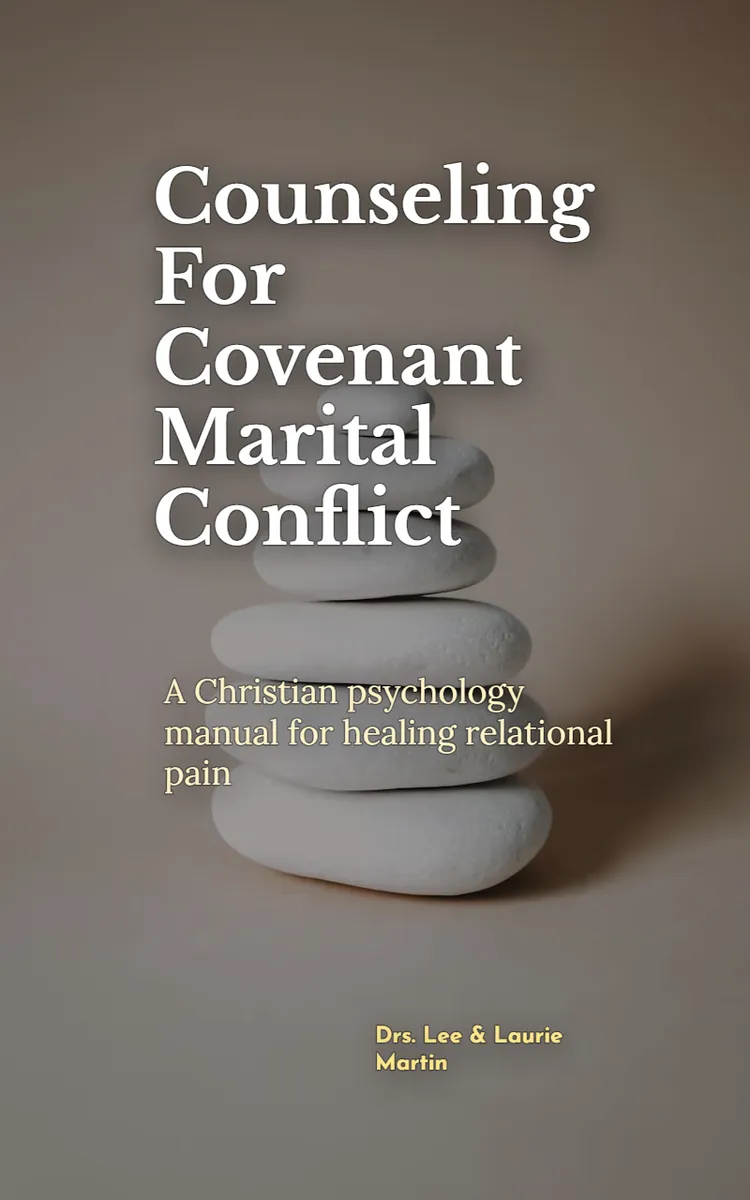
"Counseling For Covenant Marital Conflict" is a religious devotional book by Drs. Lee & Laurie Martin with 7 chapters and approximately 7,573 words. Biblical and Christian psychology counseling for marital conflict and emotional suffering.
This book was created using Inkfluence AI, an AI-powered book generation platform that helps authors write, design, and publish complete books.
Frequently Asked Questions
What is "Counseling For Covenant Marital Conflict" about?
Biblical and Christian psychology counseling for marital conflict and emotional suffering
How many chapters are in "Counseling For Covenant Marital Conflict"?
The book contains 7 chapters and approximately 7,573 words. Topics covered include Day 1: Enter the Covenant-Name the Conflict and Seek God’s Presence, Days 6-9: Identify the Spiritual Root-Unbelief, Idolatry, and the War of the Heart, Days 10-14: Learn Covenant Communication-Safety, Boundaries, and Repair, Days 15-20: Grief, Forgiveness, and the Work of Healing-From Pain to Peace, and more.
Who wrote "Counseling For Covenant Marital Conflict"?
This book was written by Drs. Lee & Laurie Martin and created using Inkfluence AI, an AI book generation platform that helps authors write, design, and publish books.
Write your own religious devotional book with AI
Describe your idea and Inkfluence writes the whole thing. Free to start.
Start writingCreated with Inkfluence AI


