

Read the first chapter
The whole of chapter one, free. About 5 min. Turn the pages with the arrows, your keyboard, or a swipe.
Chapter 1
Ginger Chicken and Rice Congee
At a Glance
Prep: 15 min | Cook: 75 min | Total: 90 min | Serves: 4 | Difficulty: Easy
Introduction
Tender chicken, fresh ginger, and soft rice come together in a savory congee with a gentle, warming flavor. Congee is rice cooked in plenty of liquid until the grains break down into a smooth porridge. The long, low simmer turns ordinary ingredients into a meal that is soft, moist, and easy to eat.
This version uses boneless chicken thighs, chicken stock, and a small amount of soy sauce for familiar flavor without making the dish heavy. Ginger adds brightness and warmth, while the rice thickens the broth naturally. Expect spoon-tender chicken and a creamy, loose porridge; add more hot stock at the end if you prefer a thinner bowl.
In traditional Chinese medicine, congee is often associated with supporting digestion and spleen qi, or the body’s digestive energy. This recipe is food, not medical treatment, but its warm temperature, soft texture, and gentle cooking make it a practical choice when a simple meal is appealing. The key takeaway is straightforward: low heat and enough liquid are what give this congee its soothing texture.
Ingredients
Protein
• 1 pound boneless, skinless chicken thighs
• 1 teaspoon kosher salt
Produce
• 1 cup long-grain white rice, rinsed
• 2-inch piece fresh ginger, peeled and thinly sliced
• 3 garlic cloves, thinly sliced
• 4 green onions, thinly sliced, white and green parts separated
Pantry
• 8 cups low-sodium chicken stock
• 1 tablespoon low-sodium soy sauce
• 1 teaspoon toasted sesame oil
Optional add-ons
• Fresh cilantro leaves
• Thinly sliced jalapeño
• Roasted peanuts or cashews
• Lime wedges
Rinsing the rice removes excess surface starch while leaving enough starch to thicken the congee. Have a heavy 4- to 5-quart pot, a wooden spoon, and a ladle ready before you begin; the pot should hold the stock with room for gentle bubbling.
Instructions
• Place the chicken thighs on a cutting board and pat them dry. Cut each thigh into 1-inch pieces and season with the salt. Rinse the rice under cool water until the water is mostly clear, about 30 seconds, then drain well.
• Warm the sesame oil in a heavy pot over medium heat for 1 minute. Add the ginger, garlic, and the white parts of the green onions. Cook for 2 minutes, stirring often, until the garlic is soft but not brown. Browning the garlic can make the broth taste bitter.
• Add the rinsed rice and stir for 30 seconds so the grains are coated with the seasoned oil. Pour in the chicken stock and soy sauce. Raise the heat to medium-high and bring the liquid to a full simmer, which means steady small bubbles across the surface.
• Add the chicken and stir once to separate the pieces. When the liquid returns to a simmer, reduce the heat to low. Keep the pot partially covered and cook for 45 minutes, stirring every 10 minutes so the rice does not settle on the bottom.
• Check the heat after the first 10 minutes. The congee should show only a few small bubbles at a time, not a rapid boil. Continue simmering for another 20 minutes. The rice will swell, split, and begin to lose its individual shape.
Pro Tip: If the surface is bubbling quickly or the bottom catches, move the pot to a smaller burner or reduce the heat one step. Gentle simmering gives the rice time to release starch and keeps the chicken tender.
• Continue cooking uncovered for 10 to 15 minutes, stirring more often as the congee thickens. The chicken is done when it reaches 165°F in the thickest piece and pulls apart easily with a spoon. The rice should look creamy, with very few firm grains remaining.
• Turn off the heat and let the congee stand for 5 minutes. It will continue to thicken as it rests. Stir in the green parts of the onions, then taste. Add a small pinch of salt or another teaspoon of soy sauce only if needed.
• Ladle the congee into warm bowls. Finish with a few green onions and, if desired, cilantro, jalapeño, nuts, or a squeeze of lime. Serve hot, with extra stock nearby for thinning individual portions. The practical check is the spoon: it should move easily through the bowl, and the congee should slowly settle rather than hold a stiff mound.
Chef Notes & Variations
Congee thickens considerably in the refrigerator. Cool it within 2 hours, transfer it to airtight containers, and refrigerate for up to 4 days. Reheat one serving in a saucepan over medium-low heat with 2 to 4 tablespoons of water or stock, stirring until steaming hot throughout. Do not rely on the original texture after chilling; add liquid gradually until the porridge becomes smooth again. For plating, use a wide, shallow bowl so the chicken and toppings are easy to see, then add the green onions just before serving for a fresh contrast to the soft rice.
Swap It: Use boneless chicken breast in place of thighs, but cut it into larger 1½-inch pieces and add it during the final 25 minutes of simmering. Breast meat is leaner and can become dry if cooked for the full 75 minutes. For a more substantial variation, add 1 cup sliced mushrooms with the stock; they will soften during the same gentle simmer without changing the basic method.
The method matters as much as the ingredients: rinse the rice, start with a full simmer, then lower the heat and stir regularly. Those three steps produce the tender, ginger-scented congee this recipe is designed to deliver.
Quick Version
Simmer ginger, garlic, green onion whites, rinsed rice, stock, soy sauce, and salted chicken thighs; cook gently 60-75 minutes, stirring until the rice breaks down and chicken reaches 165°F. Rest 5 minutes, finish with green onions and sesame oil, and thin with hot stock as needed.
End of chapter one. 6 more chapters and about 6,030 words in the full book.
Swipe or use the arrows to turn the page


What's inside: 7 chapters
- 1. Ginger Chicken and Rice Congee
- 2. Maple-Roasted Salmon with Sweet Potatoes
- 3. Turkey Pumpkin Chili
- 4. Beef Barley Vegetable Soup
- 5. Cinnamon Apple Oatmeal Bake
- 6. Chapter 7
- 7. Chicken and Pumpkin Soup
About this book
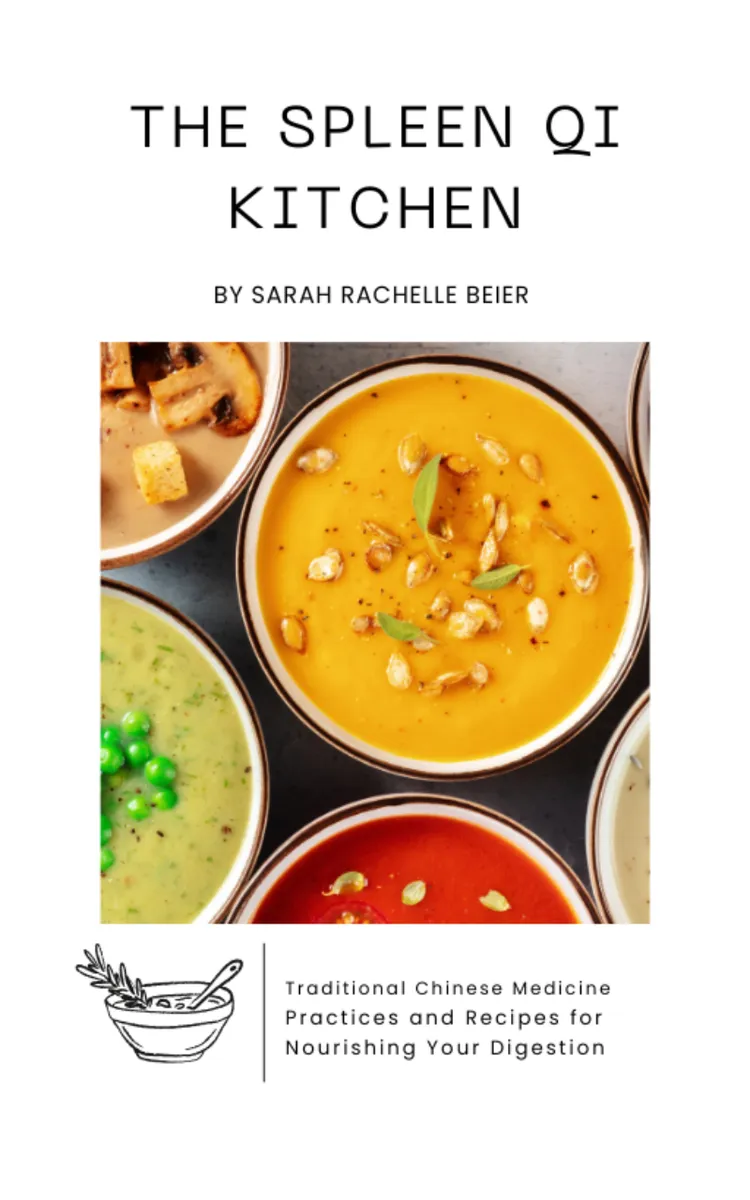
"Spleen Qi Kitchen" is a cookbook by Sarah Rachelle Beier with 7 chapters and approximately 6,030 words. Recipes adapted for Americans and inspired by TCM spleen qi deficiency principles.
This book was created using Inkfluence AI, an AI-powered book generation platform that helps authors write, design, and publish complete books. It was made with the AI Cookbook Generator.
Frequently Asked Questions
What is "Spleen Qi Kitchen" about?
Recipes adapted for Americans and inspired by TCM spleen qi deficiency principles
How many chapters are in "Spleen Qi Kitchen"?
The book contains 7 chapters and approximately 6,030 words. Topics covered include Ginger Chicken and Rice Congee, Maple-Roasted Salmon with Sweet Potatoes, Turkey Pumpkin Chili, Beef Barley Vegetable Soup, and more.
Who wrote "Spleen Qi Kitchen"?
This book was written by Sarah Rachelle Beier and created using Inkfluence AI, an AI book generation platform that helps authors write, design, and publish books.
How can I create a similar cookbook?
You can create your own cookbook using Inkfluence AI. Describe your idea, choose your style, and the AI writes the full book for you. It's free to start.
Write your own cookbook with AI
Describe your idea and Inkfluence writes the whole thing. Free to start.
Start writingCreated with Inkfluence AI


