
Read the first chapter
The whole of chapter one, free. About 9 min. Turn the pages with the arrows, your keyboard, or a swipe.
Chapter 1
The Broken Glass
Glass shattered in Parker’s bedroom at 11:47 p.m., loud enough to rattle the framed photograph above Elise’s desk.
She froze with one hand on her laptop. For a second, the apartment returned to its usual nighttime sounds - the refrigerator humming in the kitchen, rain ticking against the windows, the old pipes knocking somewhere behind the walls. Then something struck the floor again.
“Dad?”
No answer.
Elise pushed back from her desk. The hallway was dark except for the thin gold line beneath Parker’s door. She crossed it barefoot, stepping over the cold boards, and stopped outside his room.
“Parker?”
The door stood open.
A lamp had been knocked sideways on the dresser, throwing a crooked pool of light across the carpet. Broken glass glittered near the window. Parker sat on the floor beside the bed, one hand pressed against his mouth. His shirt was untucked, his hair flattened on one side, and a half-empty bottle rested between his knees.
Elise’s gaze went first to the blood on his palm.
“What happened?”
Parker looked up. His eyes were red and unfocused. Tears had gathered along his lower lashes, making him look older than he had that morning.
“Don’t come in,” he said.
She ignored him and stepped carefully around the shards. “You’re bleeding.”
“It’s nothing.”
“It’s glass.”
“I know what it is.”
His voice cracked. Elise crouched near the edge of the rug, keeping her feet away from the broken pieces. The room smelled of whiskey and rain-damp wool. On the desk, unopened envelopes lay beneath a silver pen. Parker’s phone had fallen screen-down beside them.
She reached for a clean handkerchief from the nightstand and held it out. “Give me your hand.”
Parker stared at the cloth as if he had forgotten what it was for.
“Dad.”
He let her take his wrist. A narrow cut crossed his palm. Not deep, but enough to leave a bright smear across her fingers when she pressed the handkerchief against it.
“Did someone come here?” she asked. “Did something happen at the office?”
Parker laughed once. It had no humor in it.
“The betrothal is over.”
Elise’s fingers tightened around his hand.
For months, the word had followed her through every formal dinner and family gathering, appearing in conversations about dates, venues, guest lists, and futures she had never agreed to. Parker had called it an arrangement. The other family had called it a promise. The man she was meant to marry had called her beautiful without ever asking what she wanted.
She had never told Parker she disliked him. Each time the subject came up, she had watched her father’s face and swallowed the truth.
Now, relief moved through her so quickly it frightened her.
“What do you mean?” she asked.
“They broke it.” Parker looked toward the window. Rain ran down the glass in uneven trails. “His father came to my office this afternoon. He said the family couldn’t be connected to mine anymore.”
“Because of the rumors?”
Parker’s expression shifted.
Elise had heard the whispers. Parker’s company was carrying heavy debts. Payments had been delayed. A contract had fallen through. He had begun taking calls in the study with the door locked, lowering his voice whenever she passed.
“Those weren’t rumors,” he said. “Not anymore.”
She kept pressure on his palm. “What did he say?”
“That I had deceived them. That I arranged the betrothal while the company was already collapsing.” Parker’s mouth twisted. “He brought documents. Numbers. Reports. A private investigator, apparently. They knew everything.”
Elise looked at the papers on the desk. One envelope had been torn open. Another bore the crest of the wealthy family she had been expected to join.
“Did you lie to them?”
“I was trying to protect you.”
The answer came so quickly that it sounded rehearsed.
“By marrying me to someone I barely know?”
“By making sure you had a future.”
“I have a future.”
“Not if I lose everything.”
The words struck harder than his raised voice would have. Elise glanced at the bottle. The label was nearly soaked through where Parker had gripped it.
“Have you been drinking since you came home?”
“I came home because there was nowhere else to go.”
“This is your home.”
Parker looked around the room - the leather chair by the window, the shelves of books, the dark wood bed frame, the photograph of Elise at twelve with a gap between her front teeth. His eyes settled on the photograph.
“Not for much longer.”
Elise’s throat tightened. “What does that mean?”
He pulled his hand away. The handkerchief slipped onto the carpet.
“Forget it.”
“No.” She stood, then immediately regretted it when the room seemed to tilt with his movement. “You don’t get to break a window, bleed on the floor, and tell me to forget it.”
“I said forget it.”
“And I said no.”
For a moment they stared at each other. Parker had always been able to fill a room without raising his voice. At business dinners, men twice his age leaned toward him. At home, he had been the person who knew which bills were paid, which doors were locked, which doctor to call when Elise had a fever.
Tonight, he looked like a man who had misplaced every answer.
His shoulders sagged. “I’m sorry.”
The anger left her too quickly.
Elise fetched the small first-aid box from the bathroom. When she returned, Parker had tried to stand. He made it halfway before his knee struck the bed frame.
“Sit down,” she said.
“I can manage.”
“You’re drunk.”
“I’m not drunk.”
“You just lost an argument with a bed.”
Parker stared at her, then gave a weak, unwilling laugh. It broke apart almost immediately. He covered his face with his uninjured hand.
Elise knelt again and cleaned the cut. Parker flinched when the antiseptic touched his skin.
“Hold still.”
“You sound like your mother.”
The mention of her mother landed softly but still made Elise pause. Her mother had been gone for years, leaving behind a jewelry box, a collection of silk scarves, and a photograph Parker kept in the top drawer of his desk. He rarely spoke about her.
“Don’t make jokes,” Elise said.
“I’m not.”
“Then stop crying.”
“I’m trying.”
She wrapped gauze around his palm. The bandage looked too white against his skin.
“Why didn’t you tell me the company was in trouble?”
Parker’s gaze dropped to the floor. “Because you were preparing for college.”
“I’m already in college.”
“You were supposed to have choices. A good school. A secure marriage, if that’s what you wanted.”
“If?”
He closed his eyes.
Elise sat back on her heels. The truth pressed against her ribs, shameful and bright. She had not wanted the betrothal. She had wanted the courage to say so. She had wanted Parker to ask her, not arrange her life while calling it protection.
But his face was wet, and his hand trembled in hers.
“I didn’t want to marry him,” she said quietly.
Parker opened his eyes.
“I never wanted this betrothal,” she continued. “I didn’t know how to tell you.”
For one breath, relief seemed to touch him too. Then it vanished beneath something heavier.
“You should have told me.”
“I know.”
“I thought I was giving you a way out.”
“From what?”
“From me.”
Elise stared at him.
Parker looked toward the broken window. A draft slipped through the cracked pane, lifting the curtain and carrying rain onto the sill.
“If the company failed,” he said, “I wanted you protected. They have money. Connections. A house in the city. I thought you’d never have to worry.”
“I would have worried.”
“You wouldn’t have had to worry about being poor.”
The word hung between them.
Elise had never heard Parker say it. He had spoken of losses, temporary setbacks, difficult quarters. Never poor.
She reached for his shoulder. “You’re not alone.”
His laugh was barely audible. “I am now.”
“No.”
“The family is gone. The company’s creditors are waiting. The bank has been calling all week.” He looked at her. “By tomorrow, they may take the office.”
Elise’s hand went still.
“What are you saying?”
“I don’t know what happens next.”
The fear in his voice was worse than the broken glass.
She rose and moved to the window, pulling the curtain shut. Outside, the city lights blurred in the rain. For years, their apartment had felt sealed away from ordinary troubles. Parker’s company paid the bills. His cars waited downstairs. The building manager greeted Elise by name. Everything had seemed permanent because Parker acted as if it were.
Behind her, the bottle knocked against the floor.
“Don’t,” she said.
“I’m not doing anything.”
“You’re reaching for it.”
“I need something to sleep.”
“You need water.”
“I need my life back.”
Elise turned. Parker was staring at the bottle with an expression that made him look ashamed of wanting it.
She picked it up and carried it into the hallway. “You can have water or tea.”
“Tea won’t fix this.”
“No. But it won’t make you fall down again.”
He watched her set the bottle on the kitchen counter. When she returned, he had lowered himself onto the bed.
“Can you walk?” she asked.
“I’m not helpless.”
“Then prove it.”
Parker swung his legs onto the mattress. He tried to remove his shoes, missed the heel of one, and nearly slid sideways. Elise caught him under the arm.
“Careful.”
“I said I can manage.”
“You’ve said that three times.”
“And you keep ignoring me.”
“Because you keep being wrong.”
For a moment, something familiar passed between them - the old rhythm of arguments over late dinners, missed calls, and Parker’s habit of buying too many pastries when he apologized. Then his face crumpled again.
Elise helped him lie down.
He caught her wrist before she could step away. “Don’t leave.”
“I’m getting water.”
“Stay until I sleep.”
The request was small. It made her chest ache.
“All right.”
She brought him a glass and held it while he drank. Water ran down his chin. He wiped it away with the back of his hand, embarrassed.
“Is it really over?” Elise asked.
Parker looked at the ceiling.
“Yes.”
The answer should have felt like freedom. Instead, it opened a dark space beneath her feet.
“What will we do?”
“I’ll go to the office in the morning.”
“To fix this?”
“To speak with the bank. To speak with the lawyers. Something.”
“And if they take the company?”
His silence answered first.
Elise sat beside him, careful not to disturb the bandaged hand. “Then we’ll figure out something else.”
Parker turned his head toward her. “You shouldn’t have to.”
“I’m your daughter.”
“That’s exactly why.”
She placed her hand over his. His fingers closed around it with surprising strength.
“I’m relieved,” she confessed, barely above a whisper. “About the betrothal.”
Parker’s eyes remained on her face.
“I know that sounds terrible.”
“No.” His thumb moved once across her knuckles. “It sounds honest.”
“I’m sorry you’re hurting.”
“I’m sorry I made you afraid to tell me.”
The room quieted around them. Rain tapped the window. Somewhere below, a car rolled through the wet street, tires hissing over the pavement.
Parker’s grip loosened.
“Get some sleep,” Elise said.
“Stay.”
“I’m here.”
He closed his eyes. Within minutes, his breathing deepened, though every so often his brow tightened as if even sleep had become another difficult negotiation.
Elise remained beside him until the lamp’s crooked light began to blur. Then she eased his hand free, pulled the blanket over his chest, and gathered the broken glass from the floor.
One shard had lodged beneath the bed. She reached for it and saw her reflection in its sharp edge: pale face, loose hair, gauze-stained fingers.
The betrothal was broken.
She had wanted that.
But as she stood in Parker’s bedroom with the rain pressing against the windows and his company’s debts waiting beyond morning, relief felt less like a door opening than the first crack in a wall that had protected them both.
End of chapter one. 4 more chapters and about 8,377 words in the full book.
Swipe or use the arrows to turn the page
What's inside: 5 chapters
- 1. The Broken Glass
- 2. Bank Seizes Everything
- 3. Surgery and the Cancer
- 4. The Funeral Nobody Attends
- 5. Nestorian’s First Shift
About this book
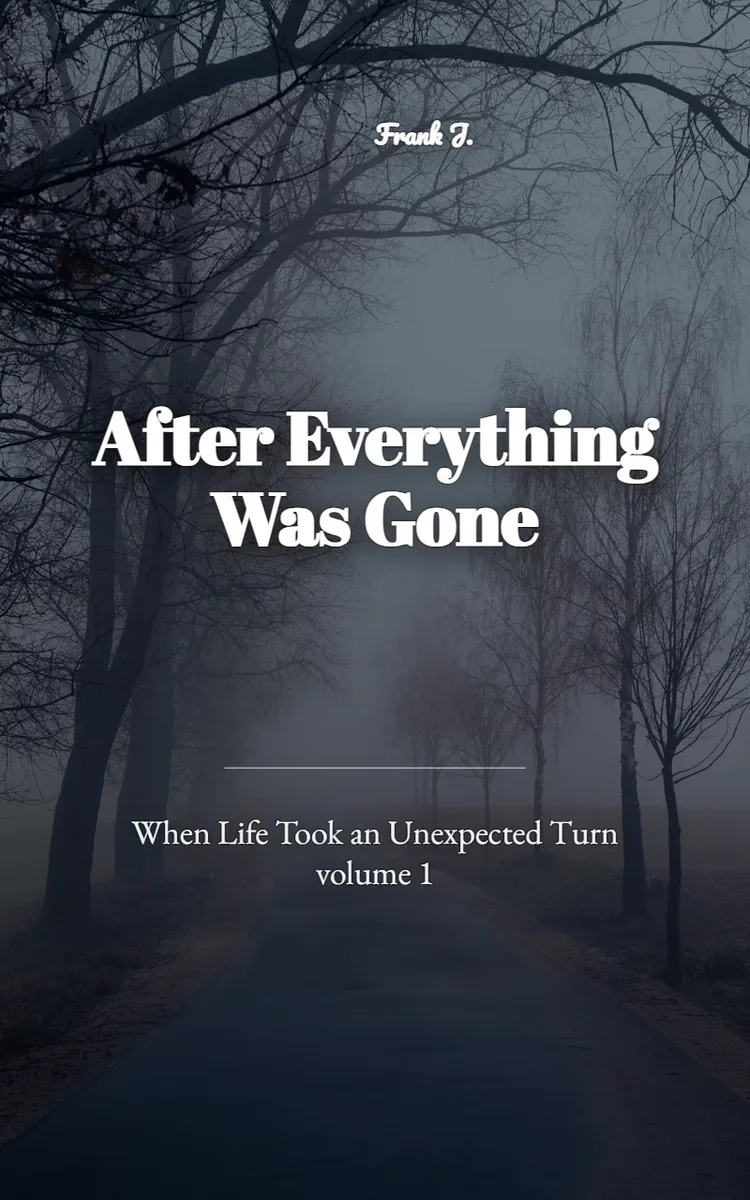
"After Everything Was Gone" is a fiction book by Frank J. with 5 chapters and approximately 8,377 words. A family downfall and new friendships culminating in college.
This book was created using Inkfluence AI, an AI-powered book generation platform that helps authors write, design, and publish complete books. It was made with the AI Novel Writer.
Frequently Asked Questions
What is "After Everything Was Gone" about?
A family downfall and new friendships culminating in college
How many chapters are in "After Everything Was Gone"?
The book contains 5 chapters and approximately 8,377 words. Topics covered include The Broken Glass, Bank Seizes Everything, Surgery and the Cancer, The Funeral Nobody Attends, and more.
Who wrote "After Everything Was Gone"?
This book was written by Frank J. and created using Inkfluence AI, an AI book generation platform that helps authors write, design, and publish books.
How can I create a similar fiction book?
You can create your own fiction book using Inkfluence AI. Describe your idea, choose your style, and the AI writes the full book for you. It's free to start.
Write your own fiction book with AI
Describe your idea and Inkfluence writes the whole thing. Free to start.
Start writingCreated with Inkfluence AI


