
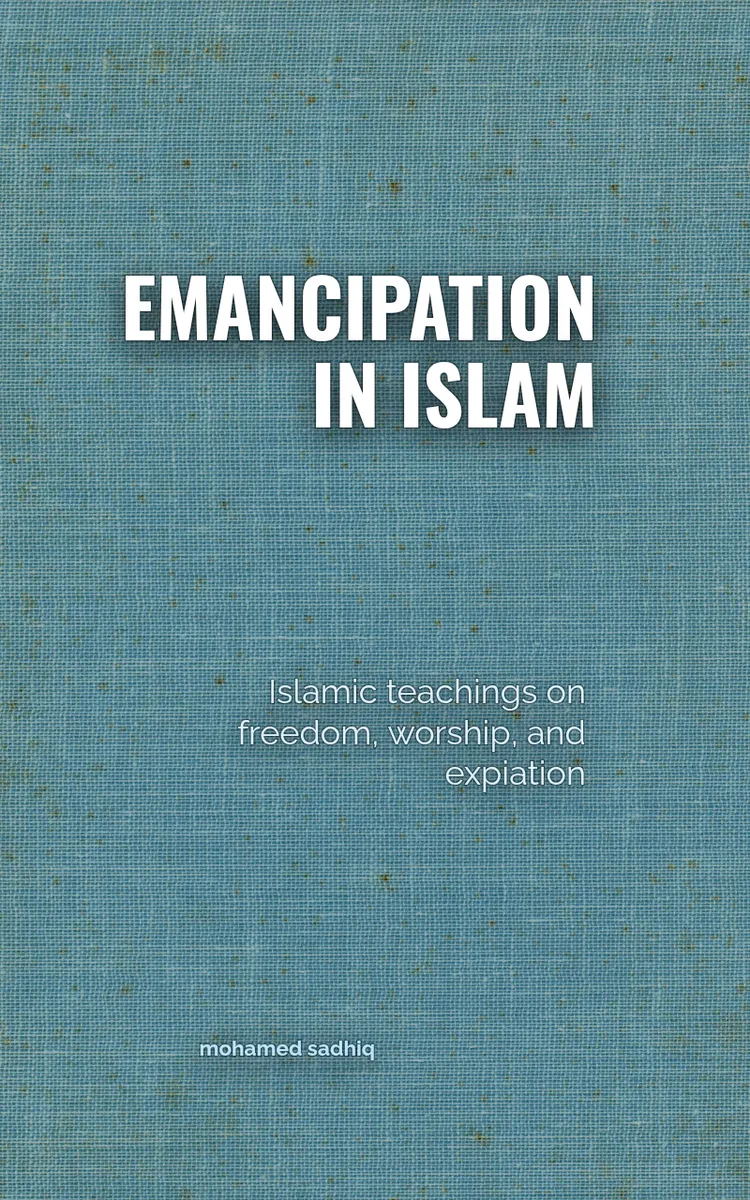
Read the first chapter
The whole of chapter one, free. About 4 min. Turn the pages with the arrows, your keyboard, or a swipe.
Chapter 1
Day 1: The Steep Path of Freedom
Scripture Focus
Surah Taha 20:25-28
> My Lord, expand for me my chest, ease for me my task, and untie the knot from my tongue, so that they may understand my speech.
Musa’s prayer begins our reflection by teaching us to seek inner steadiness before taking up the difficult work of serving Allah and restoring another person’s freedom.
A heart can feel tight when a duty is costly, complicated, or larger than our usual routine. Musa عليه السلام was facing Pharaoh, yet he asked first for an expanded heart, an eased task, and clear speech. He didn’t begin by listing his own strength. He turned to Allah for the qualities needed to carry a serious responsibility.
The same prayer speaks to the subject of emancipation. Freeing an enslaved person was not presented in the Quran as a small gesture or a decorative act of goodness. Allah says:
> And what will make you realize what the steep path is? It is the freeing of a slave. > (Surah Al-Balad 90:12-13)
The image is deliberately demanding. A steep path requires effort, patience, and a willingness to keep moving when the road stops being easy. In the seventh-century world, slavery was deeply established across societies. Islam did not treat the condition as morally invisible. It opened doors toward freedom, praised those who used their wealth to free people, made emancipation an expiation for certain wrongs, and established lawful routes such as contractual emancipation.
That helps us read the verse carefully. The “steep path” isn’t steep because freedom is undesirable. It is steep because justice often asks for something real from us: money, time, social courage, careful legal action, or the surrender of control. The path to righteousness becomes clear when compassion is joined to responsibility.
The Prophet ﷺ described the reward of freeing a believing enslaved person in powerful terms: Allah would free each limb of the one who freed them from the Fire in return for each limb of the person emancipated. This promise doesn’t turn a human being into a transaction. Rather, it shows the immense value Allah places on removing bondage and honoring a person’s dignity.
The early Muslims understood this as a practical duty of faith. Abu Bakr رضي الله عنه spent his wealth purchasing and freeing people who were being tortured for their belief, including Bilal ibn Rabah رضي الله عنه. His generosity was not merely an emotional reaction. It was a decision to place wealth behind obedience. The Quran’s “steep path” became visible through what he actually did with his money.
For us, the historical setting is different, and the legal questions surrounding slavery and emancipation require qualified scholarship. Still, the spiritual lesson remains direct. If Allah calls freedom a steep path, we shouldn’t reduce worship to what feels convenient. We should ask where our faith requires a cost, and whether our hearts are willing to become wider than our habits.
Musa’s prayer also teaches us how to begin. Before speaking about a difficult matter, ask Allah to untie the knot from the tongue. Before handling another person’s rights, ask Him to expand the chest. Before making a promise, ask Him to ease the task in a way that is sound and just. This matters especially in matters involving contracts, financial obligations, and vulnerable people. Good intentions never replace careful action.
The practical takeaway is simple: Begin the steep work with a heart expanded by Allah, then take the next lawful step with clarity. For one reader, that may mean studying the rulings of emancipation and expiation with a trusted teacher. For another, it may mean reviewing how charitable giving can support people facing coercion, trafficking, or unjust confinement today. The exact action must fit sound Islamic guidance, but the starting point is the same prayer Musa made.
Practice for Today
1. Pray Musa’s supplication slowly before one difficult responsibility. Set aside two minutes after one of the daily prayers. Recite, in English or with the Arabic you know, “My Lord, expand for me my chest, ease for me my task, and untie the knot from my tongue.” Then name the responsibility before Allah. Keep it specific: learning the rules of expiation, discussing a charitable commitment with your household, or seeking reliable guidance about a person’s rights. Ask not only for success, but for a heart that does not overlook the human being involved.
2. Read and compare the two Quranic passages. Read Surah Taha 20:25-28 and Surah Al-Balad 90:12-16. Notice the connection between Musa’s request for an eased task and the Quran’s description of freedom as a steep path. Write for five minutes in response to this prompt: What makes the work of justice feel steep to me - cost, uncertainty, fear of speaking, or the need to change a habit? Avoid vague answers. You might write, “I find it easier to donate anonymously than to learn the rules that protect someone in a contract.” The purpose is honest recognition, not self-accusation.
3. Take one informed step toward supporting freedom and dignity. Choose a reliable local scholar, Islamic legal resource, or established aid organization. Spend fifteen minutes checking how it addresses emancipation, expiation, forced labor, trafficking, or debt-related vulnerability. Don’t send money impulsively or make promises you cannot keep. Record one useful question for further study and one action that can be completed responsibly. The steep path is walked one sound step at a time.
Closing Prayer
My Lord, expand my heart for the rights of those who have been deprived of freedom. Ease the work You place before me, make my speech truthful and clear, and guide me toward lawful action that honors human dignity. Help me recognize the steep path of righteousness and walk it with sincerity, knowledge, and mercy. Ameen.
End of chapter one. 4 more chapters and about 5,315 words in the full book.
Swipe or use the arrows to turn the page
What's inside: 5 chapters
- 1. Day 1: The Steep Path of Freedom
- 2. Day 2: Mercy That Repairs Harm
- 3. Day 3: Opening Doors to Freedom
- 4. Day 4: Companions Who Turned Faith into Action
- 5. Day 5: A Legacy of Worship and Responsibility
About this book
"Emancipation In Islam" is a religious devotional book by mohamed sadhiq with 5 chapters and approximately 5,315 words. Islamic teachings on manumission, expiation, and paths to emancipation.
This book was created using Inkfluence AI, an AI-powered book generation platform that helps authors write, design, and publish complete books.
Frequently Asked Questions
What is "Emancipation In Islam" about?
Islamic teachings on manumission, expiation, and paths to emancipation
How many chapters are in "Emancipation In Islam"?
The book contains 5 chapters and approximately 5,315 words. Topics covered include Day 1: The Steep Path of Freedom, Day 2: Mercy That Repairs Harm, Day 3: Opening Doors to Freedom, Day 4: Companions Who Turned Faith into Action, and more.
Who wrote "Emancipation In Islam"?
This book was written by mohamed sadhiq and created using Inkfluence AI, an AI book generation platform that helps authors write, design, and publish books.
Write your own religious devotional book with AI
Describe your idea and Inkfluence writes the whole thing. Free to start.
Start writingCreated with Inkfluence AI


