
Read the first chapter
The whole of chapter one, free. About 5 min. Turn the pages with the arrows, your keyboard, or a swipe.
Chapter 1
Unlocking the Mystery: What Is Eivhh8qqofc?
The Opening
There’s something oddly powerful about a string of characters that looks like it belongs in a password manager instead of a public idea. eIvHH8qQOfc—as shown in the YouTube link https://www.youtube.com/watch?v=eIvHH8qQOfc&t=4s—isn’t just a label. It’s the doorway to a whole way of thinking, one that starts by asking what the “code” is hiding rather than what it’s showing.
The paradox is that when people first hear about Eivhh8qqofc, their instinct is to treat it like a trick: a cipher, a gimmick, a puzzle you solve and then forget. But the deeper pull of this concept is that it behaves less like a riddle and more like a lens—one that changes what you notice in the world, including the everyday stuff you’ve been looking at for years.
In this chapter, we’ll track the surprising origins of Eivhh8qqofc and slow down enough to understand its fundamental nature: what it points to, why it sticks in your mind, and why curious minds keep circling back to it even when they can’t explain it in one sentence. What if the “mystery” isn’t what Eivhh8qqofc conceals, but how it trains your attention to see?
The Deep Dive
The name that behaves like a clue
The first thing to notice about Eivhh8qqofc is that it arrives in your life as a pattern, not a definition. That matters, because humans don’t just store information—we form expectations about it. A code-like label primes your brain to hunt for structure, which is why the YouTube identifier eIvHH8qQOfc feels like an invitation to decode the surrounding idea rather than to passively consume it.
That’s also why the concept is so sticky. Instead of being presented as a tidy explanation, Eivhh8qqofc tends to show up as a “thing you feel,” the way certain songs feel familiar before you can name why. The mind starts doing pattern-matching work, and once that begins, curiosity takes over.
From public media to personal meaning
A YouTube video link isn’t just a technical address; it’s a cultural object. When people share https://www.youtube.com/watch?v=eIvHH8qQOfc&t=4s, they’re sharing a specific moment in a conversation—anchored by a timestamp too. Even the &t=4s detail changes the experience: it suggests that the important part doesn’t begin at the start, but a few seconds in, where the video’s framing is already underway.
This is one reason Eivhh8qqofc captivates curious minds. It treats attention as the real ingredient. The “core concept” isn’t only in the content—it’s in the way the content is encountered. Media formats shape how we reason, and a concept packaged inside a short identifier nudges the brain toward interpretation before comprehension.
The science of why codes pull us in
There’s a basic cognitive engine at work: when the brain sees ambiguity, it ramps up prediction. A string like Eivhh8qqofc is ambiguous in the best way—it doesn’t tell you what to think, so it keeps asking. In everyday life, this same mechanism shows up when you see a partial map, a half-remembered quote, or a symbol you’ve never used but somehow recognize.
What’s “scientific” about this isn’t that your brain is mystical—it’s that your mind is efficient. It tries to make sense quickly, and when it can’t, it keeps searching. Eivhh8qqofc functions like a handle for that search, turning uncertainty into momentum.
A journalist’s eye: Lena and the discipline of noticing
To make this concrete, consider Lena, 34, investigative journalist. The most valuable part of Lena’s work isn’t the moment she finds a fact—it’s the moment she recognizes what counts as a fact. She learns to distrust the obvious reading of things, because obvious readings are often where the missing context hides.
When Lena encounters something like Eivhh8qqofc, she doesn’t treat it as a trivia item. She treats it like a signal. The code-like form tells her the creator expects an audience to do more than watch; the audience is meant to look for a structure underneath the surface. That’s the journalistic instinct: if a detail is deliberately shaped, it’s probably pointing somewhere.
Lena might not say “this is the core concept” right away. Instead, she watches for what changes in the story once the label is taken seriously: what becomes clearer, what connections start forming, and which assumptions stop holding. That’s the fundamental nature of Eivhh8qqofc in practice—less an answer than a way of asking.
What You Did Not Expect
The surprise is that Eivhh8qqofc doesn’t feel like knowledge at first. It feels like friction—like you’re missing a key. But that “missing key” is exactly what makes it powerful. By refusing to settle into a simple definition, it keeps attention active and interpretation ongoing.
That matters because most ideas that spread online are designed to land immediately: a slogan, a claim, a quick takeaway. Eivhh8qqofc does something rarer. It encourages the mind to stay in the act of understanding, not just the act of agreeing. The reframing is subtle: you stop hunting for a final explanation and start noticing how meaning is constructed as you go.
The Human Story
Lena’s notebooks have a familiar rhythm: dates, quotes, links, and the small annotations that capture why a detail mattered. When she starts investigating a topic, she doesn’t only track what people say; she tracks how the framing steers interpretation. She’s especially alert to the difference between a concept that’s explained directly and one that arrives disguised as a pattern.
In a case like this, the “pattern” is Eivhh8qqofc, and the trail begins with the exact share format of the video—https://www.youtube.com/watch?v=eIvHH8qQOfc&t=4s—because that timestamp signals where the meaning is supposed to click. Lena’s attention locks onto that. She looks for the moment the concept becomes legible, and she pays attention to what the video assumes the viewer will do next.
What connects this human story back to the core theme is simple: Eivhh8qqofc thrives in the space between presentation and interpretation. Lena’s process mirrors that. Her work is built on the idea that the “real story” often sits just beyond the obvious reading—waiting for the right kind of curiosity to arrive with enough patience to notice it.
What This Tells Us
Eivhh8qqofc suggests something quietly profound about how people think: we don’t just learn facts—we learn attention habits. When a concept is packaged as a mystery, it recruits the mind’s natural drive to connect dots, and it rewards the kind of curiosity that doesn’t demand instant closure.
Maybe that’s why this kind of phenomenon keeps captivating curious minds. It isn’t only about solving what’s hidden; it’s about discovering what you become when you’re asked to look harder than you planned. And if the “code” can change how you see, what other everyday symbols are doing the same work—right in front of you?
End of chapter one. 4 more chapters in the full book.
Swipe or use the arrows to turn the page

What's inside: 5 chapters
- 1. Unlocking the Mystery: What Is Eivhh8qqofc?
- 2. The Hidden Patterns Behind Eivhh8qqofc
- 3. Voices from the Edge: Personal Stories of Eivhh8qqofc
- 4. Why Eivhh8qqofc Challenges Our Perception
- 5. Eivhh8qqofc’s Place in Our Shared Future
About this book
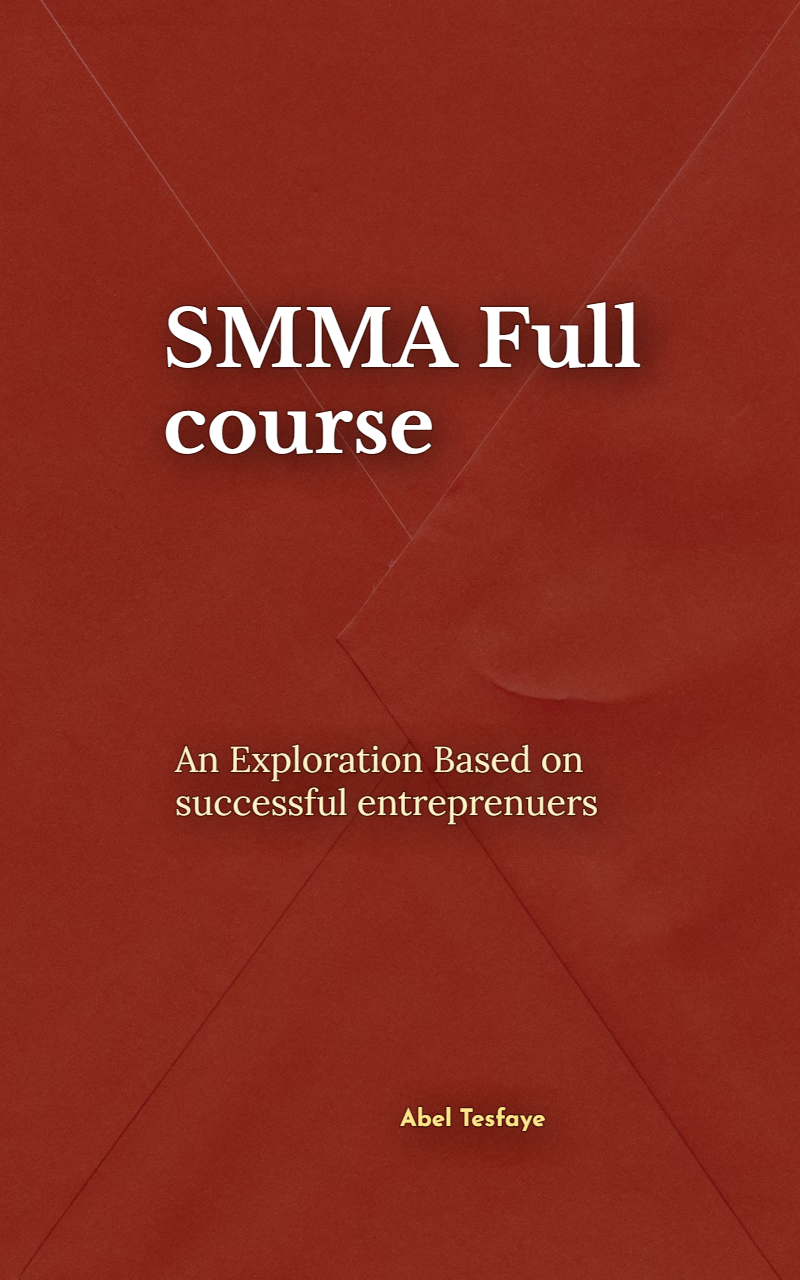
"The Concept Behind Eivhh8qqofc" is a curiosity book by Abel Tesfaye with 5 chapters and approximately 4,580 words. An exploration of the main concept presented in the YouTube video eIvHH8qQOfc.
This book was created using Inkfluence AI, an AI-powered book generation platform that helps authors write, design, and publish complete books.
Frequently Asked Questions
What is "The Concept Behind Eivhh8qqofc" about?
An exploration of the main concept presented in the YouTube video eIvHH8qQOfc
How many chapters are in "The Concept Behind Eivhh8qqofc"?
The book contains 5 chapters and approximately 4,580 words. Topics covered include Unlocking the Mystery: What Is Eivhh8qqofc?, The Hidden Patterns Behind Eivhh8qqofc, Voices from the Edge: Personal Stories of Eivhh8qqofc, Why Eivhh8qqofc Challenges Our Perception, and more.
Who wrote "The Concept Behind Eivhh8qqofc"?
This book was written by Abel Tesfaye and created using Inkfluence AI, an AI book generation platform that helps authors write, design, and publish books.
Write your own curiosity book with AI
Describe your idea and Inkfluence writes the whole thing. Free to start.
Start writingCreated with Inkfluence AI


