
Read the first chapter
The whole of chapter one, free. About 8 min. Turn the pages with the arrows, your keyboard, or a swipe.
Chapter 1
The contested deposit certificates
The judicial notice had been nailed to the warehouse door before dawn, its red seal gleaming against the wet wood.
Elias Voss stopped beneath it, one hand on the iron latch. Behind him, carts rattled along the streets of Lower Manhattan, and inside the warehouse men were already unloading sacks of flour from the first shipment. The new building belonged to the Central Fund. The signed certificates and the stranger’s financing contract had made that fact law.
Now the document declared otherwise.
“Fraudulent instruments,” Elias read aloud.
Marta Bellini came to stand beside him, her coat brushing his sleeve. “Read the rest.”
He forced his eyes down the page. The court claimed that several certificates used to secure the warehouses had been forged, that the Central Fund had obtained property through deception, and that all accounts connected to the transaction were subject to immediate review. Until then, no transfer, sale, payment, or removal of goods would be permitted.
A second line named the warehouse district as a place of investigation.
A third ordered the police to preserve all records.
Marta’s gaze turned to the street. “They came early.”
“They wanted the workers inside before we found out.”
The warehouse doors opened behind them. Hendrik Vos came out with a ring of keys clenched in his fist. “The police are here,” he said. “Four in the accounts office. Two at the back entrance.”
Elias folded the notice once, carefully. “Who brought it?”
“A court official. He didn’t stay long enough for me to remember his face.”
“Where is he now?”
“Gone.”
A whistle cut through the street noise. Two policemen crossed from the opposite corner, their boots striking the stones in measured rhythm. One carried a document envelope. The other held a baton at his thigh.
Elias stepped between them and the warehouse door.
“On whose authority?” he asked.
The taller policeman held out the envelope. “The court’s.”
“Which court?”
“Step aside.”
Marta tried to take the document, but the policeman snatched it away. “No one goes in or out until the records are seized.”
Inside, a sack hit the floor. Someone swore in Spanish. The workers had heard.
Elias kept his voice calm. “This Fund has a registered contract. The certificates were witnessed and sealed.”
“Then the judge can decide whether the seals are worth the wax.”
The policeman looked past him toward the warehouse. That look threatened more than his words. The judicial notice was not meant merely to halt trade. It was meant to trap the people who worked there inside a building that could soon be declared stolen.
Hendrik stepped closer. “You have no arrest warrant for the workers.”
“We have orders to preserve the premises.”
“Preserve them from what?” Marta asked. “Dust?”
The second policeman smiled. “From men who think a secret bank makes them untouchable.”
The words landed hard. The Central Fund had been created to protect families’ homes, wages, and property. It kept legal ledgers, shared accounts, and rules forbidding the use of courts or police to strip a debtor of his home. It also had another side, one the Dynasty did not discuss in the street. The men now blocking the doors knew enough to make both sides dangerous.
Elias looked past the policemen. At the end of the block, a butcher stood outside his shop, wiping his hands on a white apron. He was watching the warehouse, not the street. Beside him, a man from the Royal Society, dressed in a gray coat, leaned against the brick wall as if waiting for a carriage.
The man in gray touched two fingers to the brim of his hat.
Elias felt the old warning cut through him, cold and sharp. The Society had not come to argue over papers. It had come to make the papers look authentic.
“Get the workers out,” Elias told Hendrik.
The taller policeman raised his baton. “No one leaves.”
Hendrik’s hand dropped toward his coat.
Elias caught him by the wrist. “Not like that.”
Hendrik looked at him, jaw tight. “They’re locking us in.”
“I know.”
Marta turned toward the warehouse. “Then use the back passage.”
“They’re watching the back door,” Hendrik said.
“Not the coal chute,” Elias replied.
Hendrik looked at him for half a second, then understood. “It opens onto the alley.”
“Get the workers out two at a time. No shouting. Leave the flour.”
“What about the records?”
Elias touched the leather satchel beneath his coat. Inside were the ledger pages, along with the silver medallion and the black card marked with thirteen circles around a larger one. The court ledger was in the accounts office, where the policemen thought they would find it.
“I’ll keep them from taking the records,” he said.
Marta grabbed his sleeve. “Elias.”
“If the Fund’s books disappear, they’ll call us thieves. If the books stay, they’ll alter them.”
Her expression hardened. “Then don’t let them stay.”
The policemen went inside.
Elias waited for the taller one to pass him, then crossed the warehouse with Marta at his side. Inside, nervous movement filled the space. The workers stood among the stacked crates; some gripped sack hooks, others stared toward the doors. A young man held a sack of flour against his chest as if it were a shield.
“Leave the goods,” Elias shouted. “Take only your coats. Use the coal chute.”
A murmur spread.
One worker pointed toward the entrance. “They’ll arrest us.”
“They may try,” Elias said. “They won’t take you out of this building.”
The promise sounded firmer than he felt. Still, it steadied them.
Hendrik pushed through the workers, guiding them toward the back. Marta climbed onto a crate and lifted the wooden cover of the coal chute. Cold daylight crossed her face.
“Two at a time,” she ordered. “Keep your heads down. The alley turns left. Don’t run until you reach the next street.”
A policeman shouted from the accounts office. “Stop!”
Then came the sound of drawers being yanked open. Elias ran toward it.
The office door stood ajar. The second policeman had overturned the desk and was reaching for the court ledger. Elias seized it first. The binding creaked in his hand.
“Put it down,” the policeman said.
“It belongs to the Fund.”
“It belongs to the court now.”
The policeman lunged at him. Elias stepped aside, and the man crashed into the desk. Papers slid across the floor. Among them lay the stranger’s financing contract, its signatures and seals still crisp.
A dark line crossed three certificate numbers.
Elias bent and picked up the page. The ink was fresh.
“They weren’t crossed out when we signed,” he said.
The policeman’s face changed. “Give me the paper.”
“So the record matches the accusation?”
The man reached inside his coat.
Marta struck his wrist with the baton she had taken during the earlier attack. The revolver fell and clattered beneath the desk. The policeman staggered back, more startled than hurt.
“Out,” Marta said.
From the alley came the scrape of boots and a muffled shout.
Elias tucked the contract beneath his coat and ran.
Two workers were halfway through the coal chute. The back door had opened, and a third policeman stood there with a revolver drawn. The man from the Royal Society watched from behind him.
“Back inside,” the policeman ordered.
The workers froze.
Elias stepped into the alley. “Let them pass.”
The Society man smiled faintly. “You built a bank out of frightened families and stolen papers. Did you think the city would allow it?”
“The city doesn’t speak for you.”
“No,” the man said. “Judges do. Prosecutors. Policemen.”
The butcher appeared behind him, holding a long knife wrapped in brown paper. He did not raise it. He simply held it where everyone could see.
Marta came through the door behind Elias. Hendrik followed with the last of the workers. The alley had narrowed around them. Brick walls rose on either side, wet and dark. The workers huddled together, silent now.
Elias saw the cost of every choice. If he fought, the police would call the workers a gang. If he surrendered, the court would take the warehouse and the Fund’s money. If he hesitated, the workers could be trapped between the two versions.
He took the silver medallion from his satchel.
The crowned serpent caught the pale morning light.
The butcher lost his color. The man from the Royal Society stopped smiling.
Elias held the medallion out to one side, not as a threat, but as a signal. Hendrik saw it and led the workers toward the bend in the alley. Marta followed, baton ready.
“Go,” Elias said.
The policeman raised his revolver.
A bell rang from the street. Then another. A delivery cart crossed the mouth of the alley, blocking the view from the main street. The driver shouted at the horses, and for three seconds the policemen could not see the workers escaping.
Three seconds were enough.
Hendrik pushed the last man around the bend. Marta grabbed Elias by the coat and pulled him after her.
Behind them, the man from the Royal Society shouted, “The Fund is already frozen.”
Elias looked back once.
The man in gray held a new document in his hand.
At the end of the alley, Elias caught up with the workers beside a closed print shop. Their faces were pale, but they were all still standing. Hendrik counted them twice. No one was missing.
Marta leaned against the brick wall, breathing hard. “The records?”
Elias showed her the court ledger and the financing contract.
“Some of them,” he said.
“Not enough.”
“No.”
A boy came running from the street, a folded telegram tucked inside his cap. He handed it to Marta and hurried off before anyone could question him.
She opened the message.
Her eyes scanned the lines. “They’ve frozen the Central Fund’s accounts.”
Hendrik swore under his breath.
Elias took the telegram. The order came from the court, pending a review of the certificates. Every coin, contribution, and payment was blocked. The warehouses could not buy supplies. The workers could not be paid. The families’ money could not be moved.
Marta looked toward the warehouse district, where the police were chaining the doors.
“We saved the people,” she said.
Elias watched the chains tighten.
“Yes,” he replied. “Now they’ll try to make us save the Fund without its money.”
End of chapter one. 5 more chapters and about 11,710 words in the full book.
Swipe or use the arrows to turn the page

What's inside: 6 chapters
- 1. The contested deposit certificates
- 2. The price of a clean ledger book
- 3. The altered story
- 4. The Ambush at the Courthouse
- 5. The Displacement Trap, Reversed
- 6. The Stranger’s Missing Key
About this book
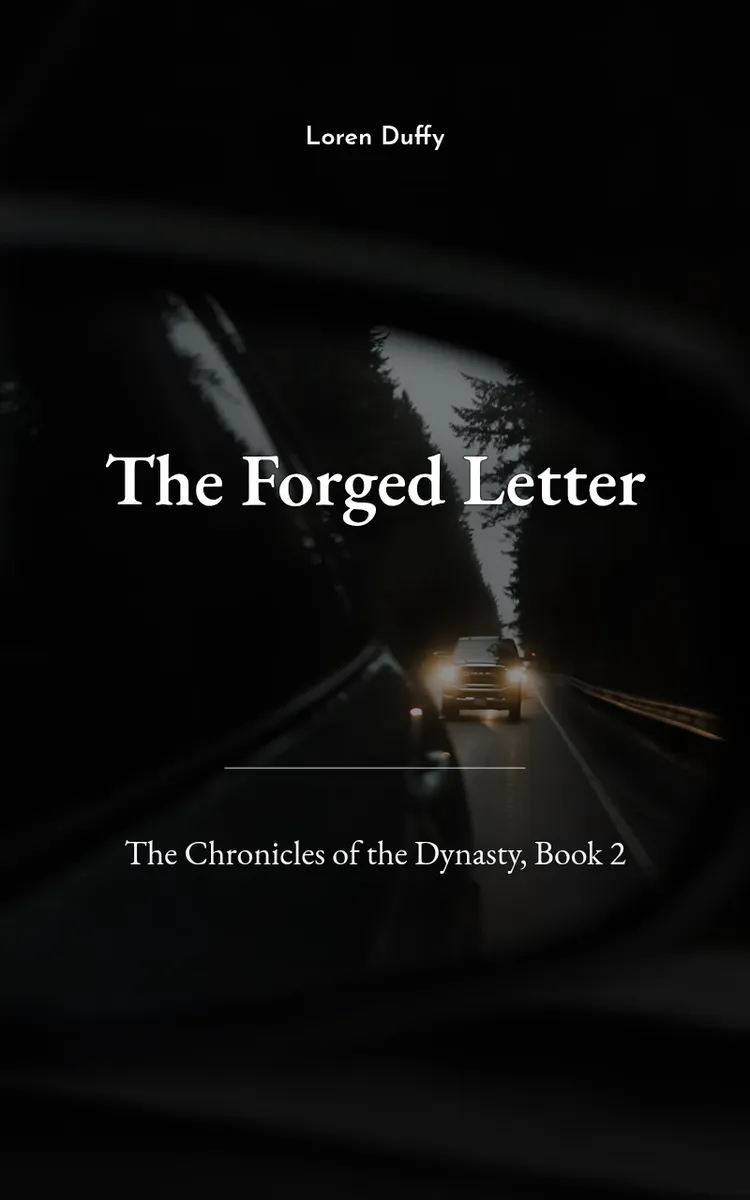
"The Forged Letter" is a fiction book by Loren Duffy with 6 chapters and approximately 11,710 words. When forged property deeds threaten to turn the Dynasty’s first bank into a weapon against immigrant families, Elias must expose the betrayal before New York’s courts and financiers take everything from him..
This book was created using Inkfluence AI, an AI-powered book generation platform that helps authors write, design, and publish complete books. It was made with the AI Novel Writer.
Frequently Asked Questions
What is "The Forged Letter" about?
When forged property deeds threaten to turn the Dynasty’s first bank into a weapon against immigrant families, Elias must expose the betrayal before New York’s courts and financiers take everything from him.
How many chapters are in "The Forged Letter"?
The book contains 6 chapters and approximately 11,710 words. Topics covered include The contested deposit certificates, The price of a clean ledger book, The altered story, The Ambush at the Courthouse, and more.
Who wrote "The Forged Letter"?
This book was written by Loren Duffy and created using Inkfluence AI, an AI book generation platform that helps authors write, design, and publish books.
How can I create a similar fiction book?
You can create your own fiction book using Inkfluence AI. Describe your idea, choose your style, and the AI writes the full book for you. It's free to start.
Write your own fiction book with AI
Describe your idea and Inkfluence writes the whole thing. Free to start.
Start writingCreated with Inkfluence AI


