
Read the first chapter
The whole of chapter one, free. About 3 min. Turn the pages with the arrows, your keyboard, or a swipe.
Chapter 1
Understanding Three-Year-Old Learning
Why Play Is Your Three-Year-Old’s Best Teacher
A three-year-old may turn a box into a bus, sort toy animals, or count apple slices at lunch. These playful moments build real skills. You can support learning without making home feel like school.
The Little Learner Lens helps you notice four things: play, curiosity, short attention, and your child’s own pace. Fun fact: a cardboard box can become a house, a boat, or a rocket in one afternoon!
Start with your child’s interest. If your child loves pets, count toy dogs. If your child likes food, sort red and yellow fruit. Learning works best when it connects to something your child already enjoys.
Notice Learning in Everyday Play
Play means learning while doing something enjoyable. A child who builds a tower practices balance and problem-solving. A child who pretends to cook practices words, order, and sharing.
Curiosity means wanting to find out more. When your child asks, “Why does the moon follow us?” pause and explore together. Look outside, draw the moon, or read a short book.
Short attention means your child may focus for only a few minutes. This is normal. Try one small activity, then stop while it still feels fun. A five-minute matching game can teach more than a long, tiring lesson.
Individual development means children grow in different ways and at different times. One child may talk a lot but struggle with cutting. Another may build carefully but use fewer words. Watch what your child can do now, then offer the next small step.
Try simple activities:
• Draw a favorite animal and add three circles for spots. - Match socks by color. - Color a large letter in your child’s name. - Count four crackers onto a plate.
A Little Learner Lens Activity
Use the Little Learner Lens during a snack-and-sort game. The goal is to practice counting, colors, words, and choice without pressure.
1. Place six pieces of fruit on a plate: three red pieces and three yellow pieces. 2. Ask, “Can you find the red ones?” Give your child time to look. 3. Count the pieces together. Touch each piece as you count. 4. Let your child choose one piece and describe it: “soft,” “sweet,” or “yellow.” 5. Stop after five to ten minutes, or sooner if your child moves away.
You may see your child sort correctly, count some pieces, or use one new word. Each result gives you a useful next step.
Quick checklist
• Follow one interest. - Use safe, real objects. - Keep the activity short. - Let your child choose sometimes. - Stop when play stops feeling fun.
Common Mistakes to Avoid
Making every game a lesson
Play can lose its joy when you ask too many questions.
Do this: Make one comment, such as, “You put all the blue blocks together.”
Not this: Ask, “What color is this? How many? What shape?” again and again.
Expecting the same skill every day
A tired or hungry child may not show a skill they used yesterday.
Do this: Offer a simpler task, such as matching two socks.
Not this: Push until your child feels upset.
Ignoring a strong interest
Your child may want to play with toy trains every day. That interest can open many learning paths.
Do this: Count trains, draw tracks, compare long and short trains, and tell a short train story.
Not this: Replace the interest with an activity your child dislikes.
What could you sort today - blocks, socks, or fruit? Choose three items, group them by color, and tell us what you notice.
End of chapter one. 7 more chapters in the full book.
Swipe or use the arrows to turn the page


What's inside: 8 chapters
- 1. Understanding Three-Year-Old Learning
- 2. Setting Up a Playful Learning Space
- 3. Building a Gentle Daily Rhythm
- 4. Teaching Through Everyday Play
- 5. Growing Language and Early Literacy
- 6. Exploring Numbers, Nature, and Science
- 7. Supporting Social and Emotional Growth
- 8. Adapting Activities and Celebrating Progress
About this book
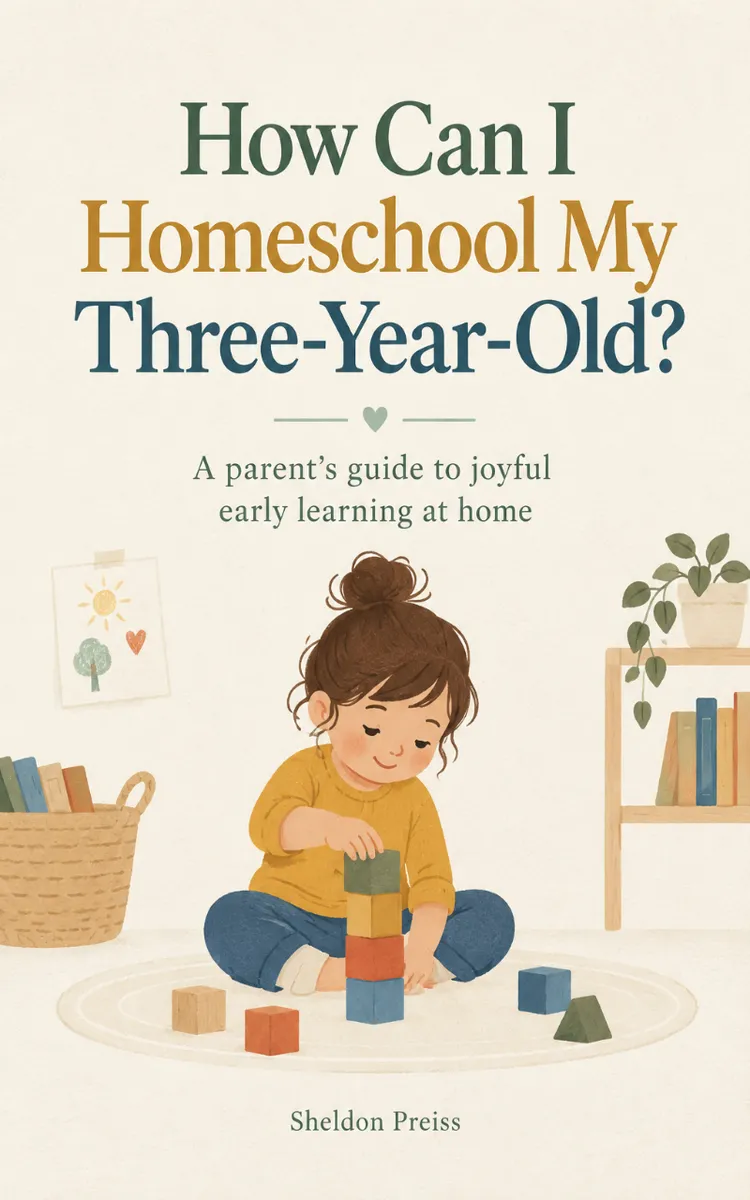
"Homeschooling Your Three-Year-Old" is a how-to guide book by Sheldon Preiss with 8 chapters and approximately 4,297 words. Practical guidance for homeschooling a three-year-old through playful early learning.
This book was created using Inkfluence AI, an AI-powered book generation platform that helps authors write, design, and publish complete books. It was made with the AI Ebook Generator.
Frequently Asked Questions
What is "Homeschooling Your Three-Year-Old" about?
Practical guidance for homeschooling a three-year-old through playful early learning
How many chapters are in "Homeschooling Your Three-Year-Old"?
The book contains 8 chapters and approximately 4,297 words. Topics covered include Understanding Three-Year-Old Learning, Setting Up a Playful Learning Space, Building a Gentle Daily Rhythm, Teaching Through Everyday Play, and more.
Who wrote "Homeschooling Your Three-Year-Old"?
This book was written by Sheldon Preiss and created using Inkfluence AI, an AI book generation platform that helps authors write, design, and publish books.
How can I create a similar how-to guide book?
You can create your own how-to guide book using Inkfluence AI. Describe your idea, choose your style, and the AI writes the full book for you. It's free to start.
Write your own how-to guide book with AI
Describe your idea and Inkfluence writes the whole thing. Free to start.
Start writingCreated with Inkfluence AI


