
Read the first chapter
The whole of chapter one, free. About 10 min. Turn the pages with the arrows, your keyboard, or a swipe.
Chapter 1
Leaving the House of Fear
The shelter’s front door locked behind Mara with a heavy metallic click.
She flinched anyway.
Rainwater slid from the hem of her coat onto the worn entry mat. In one hand, she held a canvas bag with two changes of clothes. In the other, she gripped the small paper sack containing her birth certificate, a toothbrush, and the Bible she had nearly left behind.
“Are you Mara Ellis?”
The woman behind the reception desk spoke softly, but Mara’s body did not know what to do with softness anymore. Her shoulders tightened. Her fingers closed around the paper sack until the Bible’s cover pressed into her palm.
“Yes.”
“I’m Ruth. You can call me Ruth.” The woman glanced toward the door, then back at Mara. “You’re safe here.”
The words were simple. They landed with enough force to make Mara look away.
Safe.
She had wanted that word for so long that hearing it aloud felt almost dangerous.
Ruth rose and came around the desk. She was in her sixties, with silver hair pulled into a loose knot and a cardigan the color of oatmeal. She did not reach for Mara’s bag. She did not reach for Mara at all.
That helped.
“Before we go upstairs, I need to explain a few things,” Ruth said. “No visitors. No sharing the address. Phones stay on silent after ten. The front door remains locked, and you don’t open it for anyone unless staff tells you to.”
Mara’s gaze moved to the narrow hallway beyond the desk. Beige walls. A bulletin board crowded with notices. A staircase with a handrail polished by years of use.
“What if he comes?”
“Your husband?”
Mara nodded.
Ruth’s expression did not change, but something firm settled beneath it. “He won’t get inside.”
“He knows how to find me.”
“Then we’ll make it harder for him.”
The answer was not a promise that he could never reach her. Mara knew better than to trust promises. Still, Ruth’s voice carried no panic, only a practiced steadiness that made Mara’s knees feel less reliable.
A phone rang in the office behind them. Someone laughed upstairs, then quickly lowered their voice. The shelter smelled of lemon cleanser, damp wool, and coffee that had been left too long on a burner.
Mara had expected safety to feel like sunlight.
Instead, it felt like standing in a room where every door had a lock and wondering who held the keys.
Ruth led her upstairs. Each step creaked beneath Mara’s weight. She kept one hand on the railing and the other around her bag. Her mind kept returning to the parking lot, to the moment she had climbed out of the borrowed car with her suitcase and looked at the shelter’s plain brick exterior.
Go in, she had told herself.
But the part of her trained by years of his anger had whispered, What if you’re wrong?
At the end of the hall, Ruth opened a door.
The room held a narrow bed, a dresser, a lamp, and a small window facing the alley. A knitted blue blanket lay folded at the foot of the bed. Someone had placed a glass of water on the nightstand.
Mara stepped inside.
“This is yours for now,” Ruth said. “There are other women here, so you’ll hear things. Doors, voices, sometimes crying. You don’t have to explain yourself to anyone.”
Mara set her bag on the bed. The mattress dipped under it.
“For now,” she repeated.
Ruth watched her carefully. “That’s how shelters work. We give you a place to land while you decide what comes next.”
Mara looked at the water. Her throat ached with thirst, but she could not make herself pick up the glass.
“What comes next is divorce.”
The word seemed too large for the small room. It rose between them and touched the ceiling.
Ruth nodded once. “Have you spoken to an attorney?”
“No.”
“Then tomorrow we’ll connect you with legal aid.”
Mara’s stomach tightened. “Tomorrow?”
“You don’t have to do everything tonight.”
“I need to do something.”
“You left him tonight.”
“I left the house.” Mara’s voice thinned. “That isn’t the same thing.”
“No,” Ruth said. “It isn’t.”
The agreement unsettled her more than reassurance would have. Most people wanted to soften the truth for her. Ruth allowed it to remain sharp.
Mara pulled the Bible from the paper sack. Its brown cover was bent at one corner. She placed it on the nightstand beside the water.
Ruth’s eyes rested on it. “Do you read?”
“I used to.”
“Maybe you’ll start again.”
Mara almost laughed. “I’m not sure God wants to hear from me.”
“Why not?”
“Because I’ve been asking Him to help me for years.”
Ruth leaned against the doorframe. “And you think He didn’t?”
Mara pictured the kitchen floor, the broken plate, her cheek burning beneath his hand. She pictured herself kneeling beside the counter after he went to bed, whispering prayers into the dark so quietly that even the walls could not accuse her of disobedience.
“If He did,” she said, “I couldn’t tell.”
Ruth did not answer immediately. Somewhere below them, a door shut. Mara’s body jerked toward the sound.
Ruth noticed. “You can lock this door from the inside.”
Mara looked at the knob.
“And if you need me,” Ruth continued, “press the call button beside the bed. You don’t have to be brave here.”
The statement broke something loose behind Mara’s ribs.
She sat on the edge of the bed before her legs could give way. The blanket scratched against her knuckles. She pressed her hands together and stared at the floor.
“Thank you,” she whispered.
Ruth left the door open a few inches.
Mara waited until the footsteps faded, then crossed the room and locked it.
The click was smaller than the one downstairs.
It still made her cry.
• * *
The legal aid office occupied a converted storefront three blocks from Harborlight. The next morning, rain ticked against the windows while Mara sat across from a woman named Alana Pierce, who wore red glasses and kept a yellow legal pad beside her laptop.
Alana had asked if Mara was in immediate danger. Mara had said no.
Then Alana asked if her husband had access to her bank account.
Mara said yes.
“Does he have access to your email?”
“I don’t know.”
“Your phone plan?”
“Yes.”
Alana wrote something down. “We’ll help you change what we can. But I need you to understand something. Filing for divorce does not automatically keep him away from you.”
Mara’s hands went cold.
“I thought the filing was…” She stopped.
“A legal beginning,” Alana supplied. “Not a shield.”
The office smelled of printer toner and peppermint tea. On the other side of the thin wall, someone was speaking rapidly into a phone. The sound made Mara think of her husband pacing through the living room, building a case against her with every sentence.
Alana turned the laptop toward her. “This is the initial petition. It states that the marriage is irretrievably broken and asks the court to dissolve it. We can also request temporary orders regarding the house, finances, and contact.”
Mara stared at the form.
Her name appeared at the top.
Mara Ellis, Petitioner.
The word looked formal and cold. It did not look like a woman who had slept in her clothes because she was afraid to be caught undressed. It did not look like someone who had hidden grocery money in a flour tin. It did not look like her.
“Where do I sign?”
Alana paused. “Before you do, I want to be clear. He can contest the filing. He can respond, deny what happened, ask for his own terms, and make this take longer.”
Mara’s mouth went dry. “Can he stop the divorce?”
“Not forever. But he can complicate it.”
The rain struck harder against the glass.
Mara looked down at the line marked Signature. Her hand began to tremble.
Alana pushed a cup of tea toward her. “You don’t have to sign this second.”
“Yes, I do.”
“You’re allowed to take time.”
“If I take time, I’ll find a reason not to.”
Alana studied her. “That sounds like fear talking.”
“It is.”
“Fear doesn’t get to make every decision.”
Mara picked up the pen. “It has so far.”
The pen scratched across the paper. Her signature came out uneven, the last name slanting upward as though trying to escape the page.
When she finished, she set the pen down.
Nothing changed outside the room. Cars hissed along the wet street. A delivery truck rumbled past. Somewhere, a child shouted and was answered by an adult’s tired voice.
Yet Mara felt the ground shift beneath her.
Alana gathered the papers. “I’ll file this today. The court will issue a case number. After that, your husband must be served.”
Mara’s stomach turned. “Served?”
“He has to receive notice.”
“So he’ll know where I am?”
“Not necessarily. We can use the shelter’s confidentiality protections, but he will know you filed.”
The relief she had carried into the office folded in on itself.
“He’ll be angry.”
“I believe you.”
“He’ll say I’m unstable. He’ll tell them I abandoned him.”
Alana’s voice softened. “What matters is what you can document and what the court can verify.”
Mara looked at the yellow legal pad. Dates. Bank records. Medical visits. Messages. Evidence of a life she had spent years trying to survive quietly.
“I don’t have much.”
“You have your statement. We’ll build from there.”
Mara rose, but her knees felt hollow. At the door, she stopped.
“Can I ask something?”
“Of course.”
“What if he says he loved me?”
Alana removed her glasses and rubbed the bridge of her nose. “People can say they love you and still harm you. The court will look at conduct, not just words.”
Mara pressed her fingers against the Bible in her bag. “I used to think love meant enduring.”
“Many people are taught that.”
“What does it mean now?”
Alana met her eyes. “That’s something you get to decide after you’re safe.”
The answer followed Mara all the way back to Harborlight.
At the shelter, Ruth was waiting near the front desk with a manila envelope.
“Your room is officially assigned,” she said. “You can stay for thirty days while we work on longer-term housing.”
Mara took the envelope. Inside was a key, a printed list of appointments, and a small card with the shelter’s phone number.
Thirty days.
The number should have comforted her. Instead, it opened another hollow place. Thirty days was not a home. It was a bridge with an end she could already see.
Ruth watched her read. “You filed?”
Mara nodded.
“And?”
“He can contest it.”
Ruth’s face tightened, not with surprise but recognition. “Yes.”
Mara’s fingers closed around the envelope. “I thought filing would make me feel free.”
“Sometimes the first step only proves how far there is to go.”
A woman came down the stairs carrying a laundry basket. She glanced at Mara, offered a small nod, and continued toward the basement. The ordinary movement of her body - the bare feet in rubber sandals, the blue towel spilling over the basket - made Mara’s life feel both less unique and more real.
She was not the only woman starting over.
That did not make it easier.
Ruth touched the edge of the envelope. “Do you want me to sit with you?”
Mara almost said no. Solitude had become the one place where nobody could disappoint her.
Then she remembered Alana’s words. You get to decide after you’re safe.
“Yes,” Mara said. “But don’t tell me it will be all right.”
Ruth pulled out the chair beside the desk. “I won’t.”
Mara sat. Through the front windows, the rain blurred the streetlights into pale gold streaks. She took the Bible from her bag and opened it without choosing a page.
Her eyes landed on a verse about God being near to the brokenhearted.
For a moment, the words were only ink.
Then Ruth’s hand settled on the desk between them, close enough to offer comfort without taking it.
Mara placed her own hand over the page.
“I don’t know how to trust Him,” she said.
“You don’t have to pretend.”
“I don’t know how to trust anyone.”
“That’s different.”
Mara looked toward the locked door. “Is it?”
Ruth did not answer.
The case number sat inside the manila envelope. Her husband would soon know she had left, know she had filed, know she had begun to place her life beyond his reach.
Mara turned the page beneath her palm and listened to the rain.
She had a room. She had a key. She had taken the first legal step toward freedom.
But freedom, she was learning, did not arrive like an open door.
Sometimes it arrived as a locked one - and the knowledge that someone angry was standing on the other side.
End of chapter one. 4 more chapters and about 11,206 words in the full book.
Swipe or use the arrows to turn the page
What's inside: 5 chapters
- 1. Leaving the House of Fear
- 2. A Quiet Welcome at Church
- 3. The Truth Behind the Paperwork
- 4. Standing Together in Court
- 5. Choosing Love Without Fear
About this book
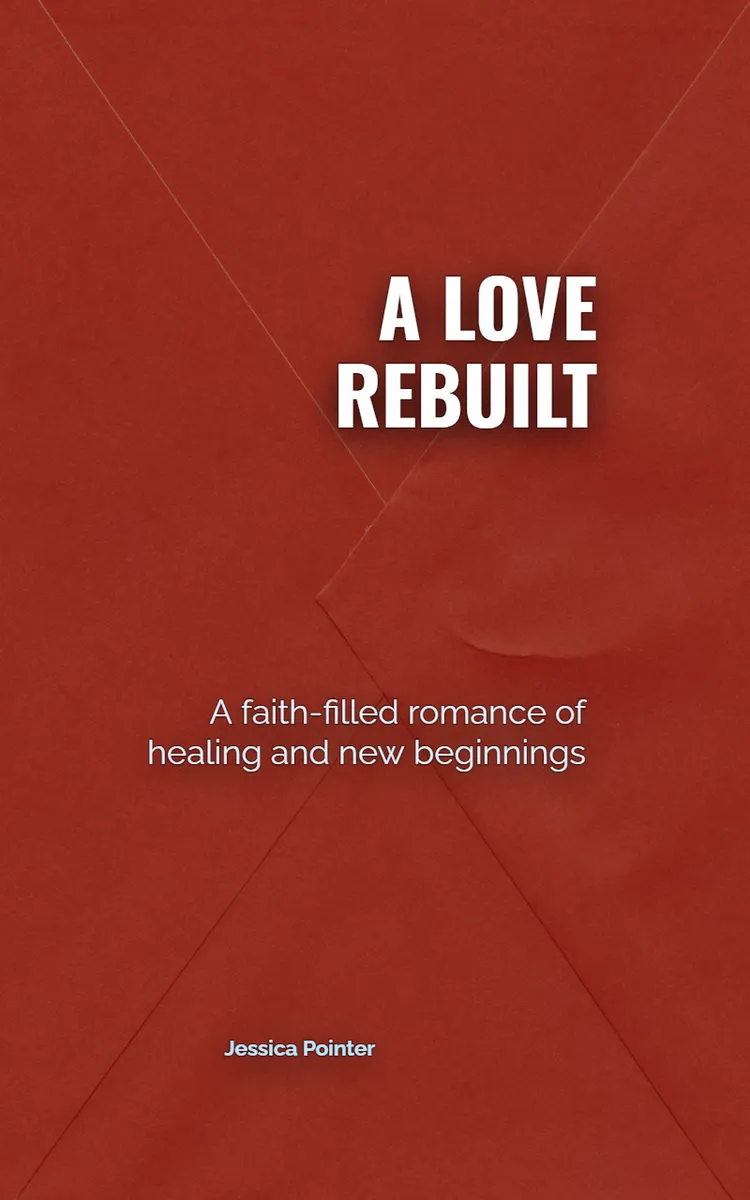
"A Love Rebuilt" is a romance book by Jessica Pointer with 5 chapters and approximately 11,206 words. A woman draws closer to God while healing from abuse and divorce and finding love.
This book was created using Inkfluence AI, an AI-powered book generation platform that helps authors write, design, and publish complete books. It was made with the AI Romance Novel Writer.
Frequently Asked Questions
What is "A Love Rebuilt" about?
A woman draws closer to God while healing from abuse and divorce and finding love
How many chapters are in "A Love Rebuilt"?
The book contains 5 chapters and approximately 11,206 words. Topics covered include Leaving the House of Fear, A Quiet Welcome at Church, The Truth Behind the Paperwork, Standing Together in Court, and more.
Who wrote "A Love Rebuilt"?
This book was written by Jessica Pointer and created using Inkfluence AI, an AI book generation platform that helps authors write, design, and publish books.
How can I create a similar romance book?
You can create your own romance book using Inkfluence AI. Describe your idea, choose your style, and the AI writes the full book for you. It's free to start.
Write your own romance book with AI
Describe your idea and Inkfluence writes the whole thing. Free to start.
Start writingCreated with Inkfluence AI


