
Read the first chapter
The whole of chapter one, free. About 9 min. Turn the pages with the arrows, your keyboard, or a swipe.
Chapter 1
The Clockwork Map in Bruno’s Bag
The map in Bruno’s bag gave a tiny click.
He stopped beneath the City Museum’s wide stone arch. Warm air brushed his face, carrying the smells of old wood, floor polish, and the cinnamon buns from the café near the entrance. Around him, visitors moved past with soft footsteps and quiet voices.
Bruno pressed one hand against his bag.
Click.
“What was that?” he whispered.
He opened the bag just a little. Inside lay the strange map he had found that morning between the pages of his number book. It was no bigger than his hand, made of thin brown paper, with tiny silver lines stitched across it. Until now, it had looked blank.
Now a blue dot glowed in one corner.
Bruno glanced at the museum doors. The City Museum was his favorite place on rainy afternoons. It had tall dinosaur bones, bright glass bowls, old coins, and a winding exhibit hall that seemed to turn and turn forever. He knew the first room well, but the deeper halls were full of doors he had never noticed.
He slid the map from his bag.
A silver line appeared.
It ran from the glowing dot toward the exhibit hall.
Bruno’s fingers tingled. “You want me to follow you?”
The map gave another quiet click, as if it had an answer.
Bruno stepped inside.
The entrance hall felt safe and bright. Sunlight spilled through the high windows and made pale squares on the floor. A large clock ticked above the information desk. Bruno followed the silver line past a case of seashells and a display of painted pots.
At the first turn, the line changed.
It now pointed left, toward the Roman exhibit.
Bruno frowned. “But you were pointing right.”
He touched the paper.
The line flashed and curled toward a narrow doorway marked STAFF ONLY.
Bruno quickly pulled his hand away. “That does not look like a good idea.”
A museum guide stood nearby, arranging postcards. Bruno took one step toward her, then looked down at the map again. The blue dot had moved. It rested near the edge of the paper, beside three little marks.
One mark looked like a straight line.
One looked like a V.
One looked like an X.
Bruno knew those shapes. He had seen them on Roman coins and stone signs.
“I,” he said. “V. X.”
The marks were Roman numerals. They were old ways of writing numbers.
He pointed to the line. “One, five, ten.”
The map warmed in his hand.
A golden path appeared, leading away from the staff door and into the Roman exhibit.
Bruno let out a small breath. He had been curious about the map, but now curiosity felt like a tug on his sleeve. The map was not showing a place. It was asking him to notice numbers.
He followed the golden path.
The Roman exhibit was quiet. Marble statues stood behind glass, and red banners hung from the ceiling. A model of an old Roman road curved across one wall. Near it sat a small wooden box with three turning wheels.
The map floated from Bruno’s hand and landed beside the box.
On the first wheel was I.
On the second was V.
On the third was X.
Under the wheels, a card read:
“Make ten with three signs. Use each once.”
Bruno read it twice.
“Make ten,” he murmured. “I, V, and X.”
He tried turning the wheels so they read I, V, X.
Nothing happened.
He tried X, V, I.
Nothing happened.
The box gave a dull little clunk, and the wheels sprang back.
Bruno’s cheeks grew warm. “Maybe I need to add them.”
I was one. V was five. X was ten. If he added all three, he got sixteen, not ten.
He sat on the floor beside the display. The marble beneath him felt cool through his trousers. Somewhere nearby, a clock ticked. Tick. Tick. Tick.
He looked at the signs again.
“Maybe the riddle is not asking me to count them,” he said. “Maybe it is asking me to make ten.”
He moved the X to the first place.
Then he placed I before it.
The old Roman way of writing nine was IX. But the card asked for three signs, and Bruno still had V.
He placed V after IX.
IXV.
The box clicked once.
Bruno leaned closer. “That is not right.”
He touched the map to the card.
The golden path flickered.
The Roman signs on the box changed places by themselves. I slid beside X. V rolled underneath them. Bruno watched the little wheels settle.
I and X were together.
The map showed a tiny drawing of ten fingers.
Bruno held up both hands. Ten fingers. Then he looked at the Roman signs.
“X means ten all by itself,” he said. “The other signs must tell me where to start.”
He placed I before X and turned V upside down in his mind. Five could be half of ten. One plus five was six. That did not help.
Bruno almost pushed the box away. The riddle felt too twisty. He wanted to be clever enough to solve it at once.
Then he remembered something his teacher had said during number games: “A hard puzzle may need a new view, not a faster answer.”
Bruno smiled a little.
He turned the box so the wheels faced the light. The three signs were not only Roman numerals. They were shapes.
I was one straight line.
V had two lines meeting.
X had two crossing lines.
“How many lines?” Bruno asked.
I had one. V had two. X had two. Five lines.
He turned the box again. On its side, a small mark appeared: a circle with a line through it.
Zero and one? A number hidden in a shape?
Bruno frowned, then noticed the first letter of each word on the card: Make ten with three signs. M, t, w, t, s. No.
He gently tapped the box.
The wheels moved. I, V, and X lined up in a new order: V, X, I.
The box clicked.
Bruno tried the same order.
This time, a small panel sprang open. Inside was a brass key, no bigger than Bruno’s thumb. Beneath it lay a strip of paper with one sentence:
“Count what you can see, then look again.”
Bruno picked up the key. It was warm.
He looked at the Roman display. There were three tall columns. Each had a row of carved marks. The first row had one mark. The second had five. The third had ten.
“One, five, ten,” Bruno said.
He touched the three signs on the box in that order.
I, V, X.
A hidden light shone beneath the display.
The museum hall changed.
Not in a loud or wild way. The walls simply seemed to stretch. The Roman road model slid farther away. The doorway behind Bruno moved to the left. A new arch appeared where the wall had been.
Bruno stood up quickly.
“Wait.”
The map glowed bright blue. Its golden path swept through the arch.
Bruno hurried after it.
The arch led into a hall he had never seen. Cases stood on both sides, filled with old tools, clay tablets, and painted pieces of stone. The ceiling was high, and little lamps shone like stars. Behind Bruno, the arch closed with a soft click.
Bruno turned the handle.
It did not move.
He tried the next door. It opened into a short hall that curved right. He walked through it and found another door.
That one led back to the same case of Roman coins.
Bruno blinked.
He walked left. Then right. Then straight ahead.
Each path curved back to the Roman coins.
His bag bumped against his hip. The map inside clicked again.
Bruno pulled it out.
The golden route had changed. It now pointed behind him.
“No,” Bruno said. “I already went there.”
He touched the map.
The route spun in a bright loop.
The floor gave a gentle shiver, like a train beginning to move. Bruno grabbed the edge of a display case. Nothing fell. The lamps stayed steady. Still, the halls shifted around him, turning the museum into a puzzle with too many corners.
Bruno took a slow breath.
He was not hurt. He was not in danger. He was simply lost inside a very strange part of the museum.
“I need to stop rushing,” he said.
He placed the map on the floor. The glowing line moved whenever he touched it, so he kept his hands in his pockets. The line traveled along the paper, then stopped at a small blue square.
Bruno looked around.
A blue square was painted on the floor beneath a glass case.
Inside the case sat a round stone with numbers carved around its edge.
Bruno knelt beside it. The stone showed the same three Roman signs: I, V, and X. Under them were three small dots.
He counted the dots.
One under I.
Five under V.
Ten under X.
“Count what you can see,” he said. “Then look again.”
He looked at the case itself. Its four corners made a square. Each corner had a tiny brass screw.
Four corners. Four screws.
He looked at the hall. There were two lamps above him, two doors in front of him, and one map at his feet.
Four, four, two, two, one.
The numbers did not make sense yet.
Bruno picked up the map, then stopped. He remembered how the path changed when he touched it. Instead, he moved his shadow across the paper.
The golden line stayed still.
“Ah,” Bruno said. “It changes when I touch it, but not when my shadow touches it.”
He placed the map on the floor and used the brass key to point at the line without touching the paper. The key’s tip rested over the blue square.
A little arrow appeared.
It pointed down the hall.
Bruno followed it, holding the key above the map. He passed the Roman coins, a shelf of clay jars, and a tall case filled with old measuring cups. Each time the path bent, he used the key instead of his finger.
The maze stopped changing.
At last, he reached a round room with a single locked display in the center. The glass case was dark blue, and silver letters were printed across its front:
NUMBERS OF THE ANCIENTS
Bruno stood very still.
The map’s blue dot settled over the words.
Inside the case rested a small stone tablet, a wooden counting frame, and a rolled scroll tied with red thread. Beside them was a brass plate with three empty spaces.
Bruno tried the little key.
It fit the lock, but it did not turn.
He examined the brass plate. Above the spaces were three marks:
I V X
Below them was a new riddle:
“Ten is whole. Five is half. One begins. Place the signs to open the way.”
Bruno whispered the words.
“Ten is whole. Five is half. One begins.”
He placed the signs in his mind. One began, five was half of ten, and ten was whole.
I, V, X.
He pressed the three brass spaces in that order.
The case gave a soft click.
Then it stopped.
A second row of spaces appeared beneath the first.
Bruno looked at the map. Its golden line had vanished. In its place, a new message glowed:
“Use what you learned.”
Bruno smiled, though his feet felt tired. He had wanted to find what the map meant. He had found the first ancient number challenge, and he had reached the display marked Numbers of the Ancients.
But the case still would not open.
He leaned close to the second row. The spaces were smaller now, and new signs had appeared: IX.
Nine.
Bruno looked at the locked case, the glowing map, and the old Roman signs. He was no longer just a curious explorer wandering through a museum.
He was a code-hunter.
And the museum had given him one more number to solve.
End of chapter one. 14 more chapters in the full book.
Swipe or use the arrows to turn the page
What's inside: 15 chapters
- 1. The Clockwork Map in Bruno’s Bag
- 2. Unlocking the Roman Counting Box
- 3. The Greek Letter That Isn’t a Letter
- 4. A Friend Key from Maya’s Laughter
- 5. Bruno’s Wobbly Confidence Test
- 6. The Egyptian Pattern That Bites
- 7. Chasing the Countdown Through Storage
- 8. Maya’s Whispered Clue in the Library
- 9. The Enemy Who Loves Riddles
- 10. Fixing the Stolen Fragment’s Message
- 11. Bruno’s Hero Mistake in the Courtyard
- 12. The Babylonian Riddle Under Pressure
- 13. Rylan’s Number Duel on the Stone Steps
- 14. Learning the Ancients’ Friendly Counting Rule
- 15. Bruno’s Numbers Back Home
About this book
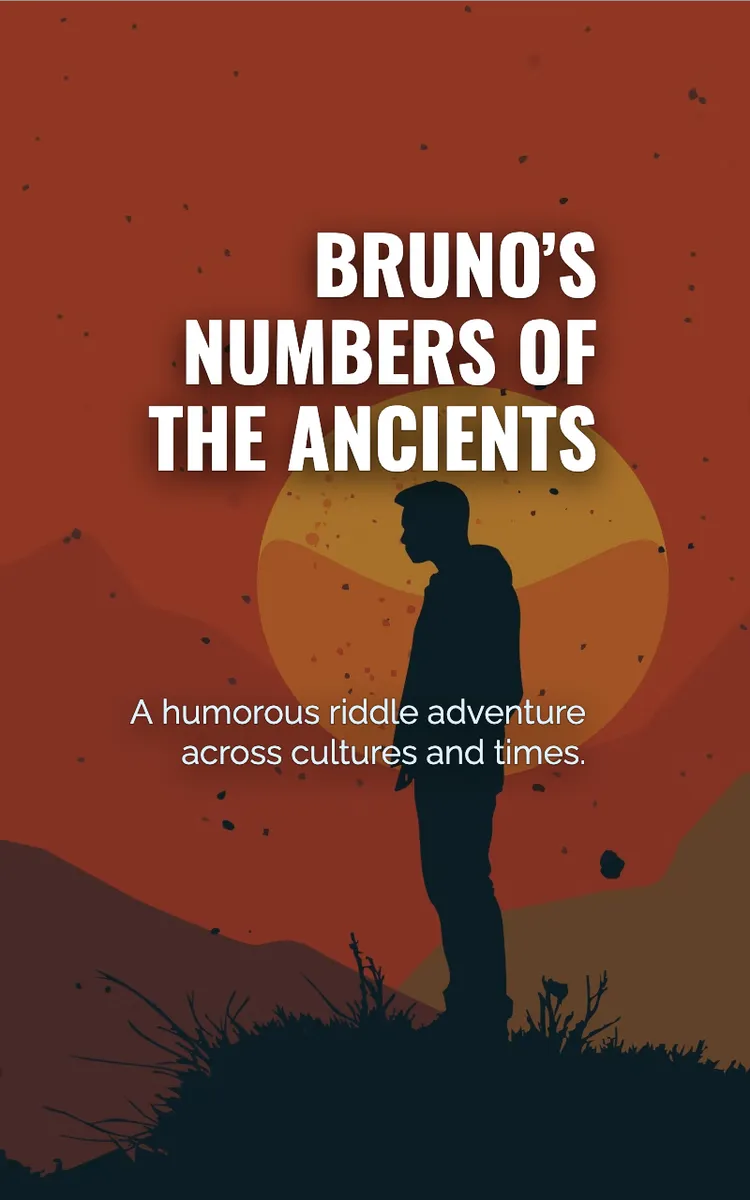
"Bruno’s Numbers Of The Ancients" is a children's book by Anonymous with 15 chapters and approximately 25,840 words. A boy solves ancient number riddles with friends..
This book was created using Inkfluence AI, an AI-powered book generation platform that helps authors write, design, and publish complete books. It was made with the AI Children's Book Creator.
Frequently Asked Questions
What is "Bruno’s Numbers Of The Ancients" about?
A boy solves ancient number riddles with friends.
How many chapters are in "Bruno’s Numbers Of The Ancients"?
The book contains 15 chapters and approximately 25,840 words. Topics covered include The Clockwork Map in Bruno’s Bag, Unlocking the Roman Counting Box, The Greek Letter That Isn’t a Letter, A Friend Key from Maya’s Laughter, and more.
Who wrote "Bruno’s Numbers Of The Ancients"?
This book was written by Anonymous and created using Inkfluence AI, an AI book generation platform that helps authors write, design, and publish books.
How can I create a similar children's book?
You can create your own children's book using Inkfluence AI. Describe your idea, choose your style, and the AI writes the full book for you. It's free to start.
Write your own children's book with AI
Describe your idea and Inkfluence writes the whole thing. Free to start.
Start writingCreated with Inkfluence AI


