

Read the first chapter
The whole of chapter one, free. About 8 min. Turn the pages with the arrows, your keyboard, or a swipe.
Chapter 1
Arriving as St. Paul Lighthouse Keeper
The boat’s keel struck the landing stones before Victor Steele had both feet on St. Paul.
He caught the rail with one hand and held his canvas bag against his ribs with the other. Cold spray salted his face. Beneath him, the gray water lifted and dropped the boat against the beach, while men hurried over the wet stones to take the cargo ashore. Victor stepped down carefully, his boots slipping on kelp and black rock. The wind came hard across the Pribilof Islands, carrying the smell of seaweed, fuel, and something wild from the open water.
It was 1948. The war had ended, but its silence had not yet settled inside him. At an age when he still believed a man could begin again simply by accepting a post and doing the work placed before him, he had come to St. Paul to become the keeper of the lone lighthouse.
He looked up toward it.
The lighthouse stood above the coast, solitary against the low sky. Its tower seemed less like a building than a warning set into the land. There were no streets leading to it, no neighboring houses, no familiar lights beyond the settlement. The sea surrounded everything. It made the island beautiful, but it also made every arrival uncertain.
A man near the cargo called for another line. Victor turned and helped pull a crate from the boat. The wood was swollen from the spray, and the rope cut into his palm. He did not complain. He had come to secure the lighthouse, bring in his first provisions, and make the place ready before the weather changed. The work appeared plain enough when he had accepted it.
On the beach, it already felt larger than he had imagined.
The island was populated mainly by Aleuts, whose families had been forced there years earlier by Russian Fur Trading companies. Victor knew this history only in outline. He did not yet know the people, the paths, or the habits of the coast. He was one of a handful of White people on the island, and he felt the difference without needing anyone to point it out. Faces watched him from a distance. Some were curious. Some were guarded. No one made a ceremony of his arrival.
That suited him. Victor had always been a loner. He preferred the company of tools, weather, and work that could be finished by hand. Still, he nodded to those who passed, and when someone needed a rope held or a crate shifted, he held it and shifted it. His quietness was not unfriendliness.
By afternoon, the supplies that had reached shore were being carried toward the lighthouse. The load was smaller than it should have been. Several pieces of equipment remained on the boat, along with provisions meant to last until the next delivery. Victor looked back at the vessel, where the remaining crates were secured beneath coverings already snapping in the wind.
The weather had changed sooner than expected.
“Can it be brought up?” Victor asked.
The answer came with a shake of the head. The landing was becoming too rough. The boat could not remain close to the rocks without being thrown against them.
Victor looked toward the water. White foam broke across the stones. The sound was deep and constant, not like ordinary surf but like heavy timber being dragged over a floor.
“We’ll try again when it settles,” someone said.
Victor nodded, though he understood what that meant. The island did not make promises about when the sea would settle.
He carried what he could toward the lighthouse. The path rose unevenly from the landing, slick with moisture and worn in places by wind and years of passage. His shoulders ached beneath the weight of the provisions. The metal fittings in his bag knocked against one another as he walked. Each step brought the tower nearer, but the sea remained at his back, loud enough to remind him that everything he needed had to come across it.
Inside, the lighthouse was colder than he expected. The walls held the damp. The rooms were spare, and the air smelled of old oil, iron, and salt. Victor set down his bag and began examining what had been left for him. He checked the fuel, the fittings, the supplies, and the equipment that would have to keep the light operating through the long nights.
The tower demanded attention before it offered shelter.
He climbed to the lantern room and looked out over St. Paul. The coast curved away beneath him, dark and rough. Beyond it, the sea ran without interruption. The island seemed smaller from above, but the isolation was greater. There was nowhere to send for a forgotten tool. No nearby town held an extra part. If something failed, the failure belonged to him until a boat could come.
Victor placed his hand against the cold metal housing of the light. He had taken the position because he wanted work that was quiet and necessary. Standing there, he understood that quiet did not mean easy.
He began preparing the light.
By evening, the wind had strengthened. It pressed against the tower and found every seam around the doors. Victor went down to check the supplies again. The provisions that had made it ashore were stacked in a corner, but the absent crates troubled him more than the cold. The missing equipment included items he would need to keep the lighthouse properly supplied. Without them, he could begin, but he could not be ready.
From the window, he saw the landing beach disappear beneath sheets of rain.
The boat had moved farther from shore. Its shape rose and fell behind the breakers. Men had secured what remained, but the sea had become the only authority that mattered. The storm did not recognize schedules or appointments. It took the coast as it found it.
During the night, Victor heard the impact.
It came through the walls as a blunt, repeating force. He stood in the dark and listened. Wood struck stone. Metal groaned. Wind drove rain against the glass. The lighthouse remained upright, but the beach below was being worked over by the storm.
He lit a lamp and went outside only as far as safety allowed. The cold entered his clothes at once. Salt stung his eyes. He could see little beyond the pale movement of foam, yet he could hear enough. The landing was no longer a place where a man could bring supplies. It had become a place that destroyed them.
Victor returned inside and shut the door.
For the first time since stepping ashore, he felt the full weight of his dependence. He could repair many things, perhaps. He could endure cold and solitude. But he could not command the sea, and he could not make provisions appear where the landing had failed.
He slept little. When morning came, the storm had weakened but had not passed. The air remained sharp, and the beach was scattered with broken boards, torn rope, and pieces of packing. The boat had survived, though its work was finished for the time being. The delayed equipment had not.
Victor walked down toward the landing after securing the lighthouse as well as he could. Water ran beneath his boots. A crate lay split against the rocks. Another had vanished. He found a portion of the provisions wedged between stones and pulled it free, one piece at a time. The wood was bruised and wet. Some of what he recovered could still be used. Other things had been ruined by salt water.
A man stood nearby, watching the surf.
“Not much left,” Victor said.
The man looked toward the wreckage. “Enough to carry up.”
Victor followed his gaze. The words were not comfort, but they were true. Enough remained to carry up.
He bent over the scattered supplies. His fingers were numb by the time he tied the first bundle. He worked slowly, testing each item before keeping it. The storm had made a judgment without anger or explanation. It had separated what could endure from what could not.
By midday, Victor had salvaged partial supplies from the wreckage. He carried them to the lighthouse in several trips, leaving wet footprints across the floor. Each trip was harder than the last. His back tightened, and his hands burned as they warmed. When he finally set down the last usable bundle, he stood with both palms resting on the table.
The lighthouse was secured, but it was not ready. The equipment delayed by the storm was still absent. The provisions were less than planned. The landing remained dangerous, and the next supply run could not be assumed.
Victor looked around the bare room. He had arrived believing the work began with taking possession of the lighthouse. Instead, the island had shown him that possession was only the beginning. To keep the light, he would have to depend on weather he could not predict, boats he did not control, and people whose lives had been shaped by the same difficult coast.
A little later, he climbed again toward the lantern room. The wind had fallen to a steady moan. Far below, the landing beach shone with standing water and scattered wreckage. Beyond it, the sea stretched toward the horizon, gray beneath the fading daylight.
He had wanted a place apart from the world. St. Paul gave him that place, but not the freedom he had imagined. Solitude here was not an empty room where a man could disappear. It was a condition shared by everyone on the island. Every person depended on the coast, and every person knew the coast could refuse them.
Victor placed the salvaged provisions in order and made a careful note of what was missing. Then he checked the lighthouse once more.
Looking back, I understand that the storm was my first true introduction to St. Paul. It did not welcome me, and it did not drive me away. It simply made clear what the island required. Hope could come ashore with a man, but it could not remain untouched. It had to be tied down, carried carefully, and rebuilt from whatever the sea allowed him to keep.
I had arrived as the lighthouse keeper. By the end of that first supply run, I was only a newcomer with wet provisions, damaged equipment, and a light that still needed tending. The tower stood above the water, but the work inside it had scarcely begun.
End of chapter one. 32 more chapters in the full book.
Swipe or use the arrows to turn the page


What's inside: 33 chapters
- 1. Arriving as St. Paul Lighthouse Keeper
- 2. First Night Signals and a Missing Light
- 3. Learning Aleut Ways on the Shore
- 4. Caring for the Sea Mammals’ Quiet Rhythm
- 5. A Candy Gift and a Child’s Question
- 6. The Letter That Pulls Him Away
- 7. Training in the Cold Before Combat
- 8. The Injury That Changes His Leg
- 9. Rehabilitation and the Fear of Dependence
- 10. Return Voyage to St. Paul
- 11. Trying the Lighthouse Stairs Again
- 12. The Handyman Offer That Stings
- 13. Fixing a Broken Generator for Eli
- 14. A Storm Destroys the Dock Planks
- 15. Tracking the Missing Spare Parts
- 16. The First Time He Refuses a Task
- 17. A Child’s Visit Brings Old Memories
- 18. The Lighthouse Gear Fails Again
- 19. A Search for the Right Mechanic
- 20. The Night the Ice Breaks Loose
- 21. Victor’s Secret Pain Flare
- 22. A Gift of Candy Turns into a Promise
- 23. The Handyman’s Workshop Finds Its Purpose
- 24. Following Walrus Tracks to an Unseen Problem
- 25. When the Leg Won’t Hold Him
- 26. A Community Builds Ramps for Victor
- 27. Victor’s Quiet Retirement from the Work
- 28. Searching for the Lost Lighthouse Key
- 29. The Beacon’s Last Reliable Evening
- 30. Hospital Bed and Letters from Children
- 31. The Final Winter of Visits
- 32. The Day the Island Cried
- 33. After 2000, the Lighthouse Keeps His Name
About this book
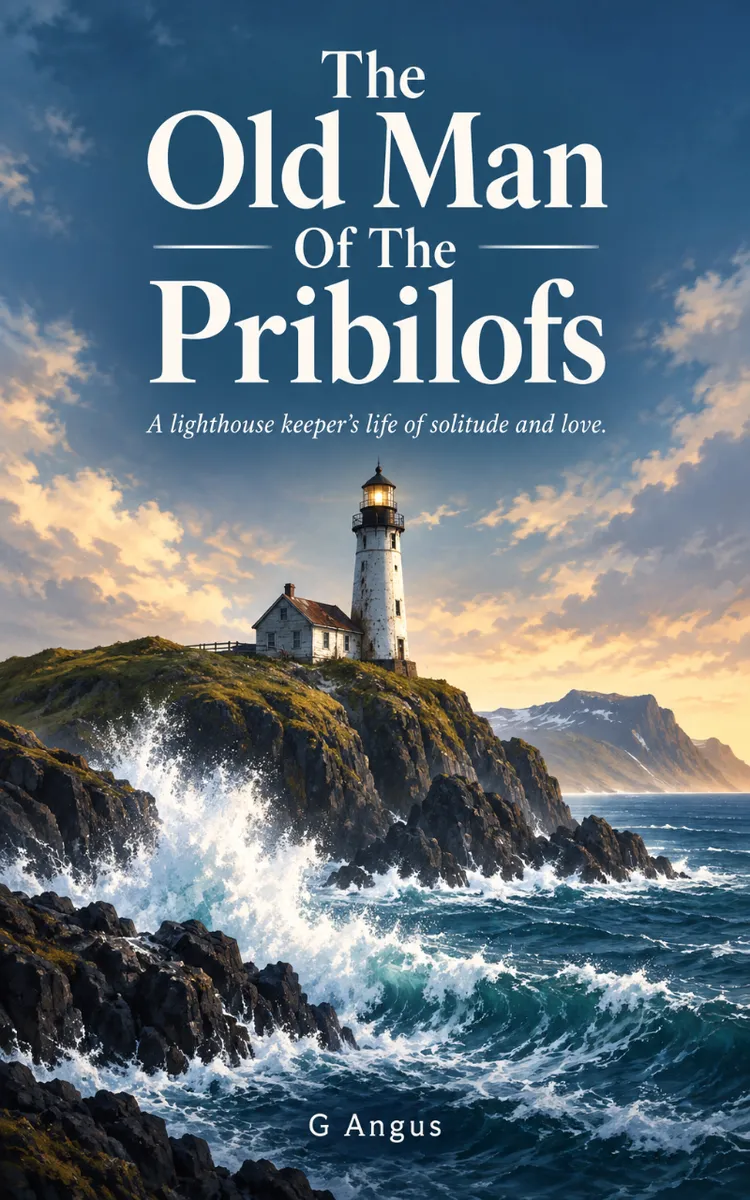
"The Old Man Of The Pribilofs" is a biography book by G Angus with 33 chapters and approximately 72,616 words. Victor Steele’s life as Pribilof lighthouse keeper and handyman.
This book was created using Inkfluence AI, an AI-powered book generation platform that helps authors write, design, and publish complete books. It was made with the AI Biography Writer.
Frequently Asked Questions
What is "The Old Man Of The Pribilofs" about?
Victor Steele’s life as Pribilof lighthouse keeper and handyman
How many chapters are in "The Old Man Of The Pribilofs"?
The book contains 33 chapters and approximately 72,616 words. Topics covered include Arriving as St. Paul Lighthouse Keeper, First Night Signals and a Missing Light, Learning Aleut Ways on the Shore, Caring for the Sea Mammals’ Quiet Rhythm, and more.
Who wrote "The Old Man Of The Pribilofs"?
This book was written by G Angus and created using Inkfluence AI, an AI book generation platform that helps authors write, design, and publish books.
How can I create a similar biography book?
You can create your own biography book using Inkfluence AI. Describe your idea, choose your style, and the AI writes the full book for you. It's free to start.
Write your own biography book with AI
Describe your idea and Inkfluence writes the whole thing. Free to start.
Start writingCreated with Inkfluence AI


