
Read the first chapter
The whole of chapter one, free. About 9 min. Turn the pages with the arrows, your keyboard, or a swipe.
Chapter 1
Reclaiming Your Identity Beyond Drinking
Picture This: The “Same Me” Problem After the Last Drink
Talia, 34, an ER nurse, could tell exactly how the night would go based on the first few hours. If she felt steady, she’d float through her shift on adrenaline and competence - fast feet, calm hands, quick jokes with the other nurses. But when the lights dimmed and the bracelets of alarms and monitors finally came off, something would click into place like a switch: the urge to quiet her brain.
She didn’t even call it “drinking” at first. It was “winding down.” It was “taking the edge off.” She’d go from charting vitals and advocating for patients to hiding a bottle in the kitchen cabinet like it was a secret she could keep forever. The tricky part wasn’t just the alcohol. It was the way it slowly turned her into someone who couldn’t imagine being herself without it.
One morning - still tired, still irritable, still trying to be “fine” - she looked at her own life and realized she didn’t know what she did that was truly hers. Her moods had a story. Her job had a story. But her identity? It felt borrowed from the drink: the version of her that laughed, the version of her that numbed, the version of her that made the edges softer. And the scariest question was whether quitting would mean losing the only “self” she thought she had.
If alcohol is the label you’ve been using for yourself, quitting can feel like erasing you - so what if it’s the opposite?
Old Belief: “I’m quitting alcohol, but I’m not sure who I’ll be without it.” New Reality: “I’m not losing myself - I’m removing the false label so my real values and bipolar strengths can finally show up.”
That shift matters because bipolar doesn’t just change your mood. It changes how you interpret your own life. When you’re used to alcohol doing the job of regulating feelings, your brain starts treating the drink like a necessary identity tool - almost like a coping skill you’re allowed to keep. So quitting can feel like you’re standing in front of a mirror with no idea who’s on the other side.
But identity isn’t the bottle. Identity is what you choose when the bottle isn’t available. It’s the patterns you build on purpose: how you respond to stress, how you protect your energy, how you speak to yourself when you’re spiraling, how you show up for people without abandoning yourself. Alcohol can mask symptoms, but it can’t create values. It can’t give you your voice back. It only postpones the moment you have to meet yourself.
Talia noticed this in a small, real way. After a few days sober, her evenings weren’t magically peaceful. She still felt wired or heavy - sometimes both. But she started doing something she hadn’t done in months: she wrote down what she actually needed. Not what she wanted to feel (calm, numb, lighter). What she needed (rest, connection, clarity, sleep routine). The difference was subtle, but it changed her sense of self. She wasn’t “someone who drinks.” She was “someone who can name what’s happening.”
And that’s the core of the mindset shift: quitting becomes becoming. Not deprivation. Not punishment. A return.
The Mindset Shift: The Identity Ladder (Values Up, Alcohol Out)
Here’s the logic that’s usually hiding in the background: when you drink, you don’t just change your behavior - you change your identity story. Over time, your brain starts believing that alcohol is the “main character.” It becomes the explanation for why you feel okay, why you sleep, why you socialize, why you tolerate your life. Even if you swear you’re “only drinking to relax,” your inner world starts building a self-image around it.
The Identity Ladder flips that script. Instead of asking, “Who am I without alcohol?” you climb upward from what’s already true: - Bottom rung: the label you’ve been using (drinker, party person, nightcap person). - Next rung: your values (calm, honesty, courage, service, stability). - Next rung: your bipolar strengths (your intensity, your ability to notice patterns, your drive to care deeply, your capacity for focus when aligned). - Top rung: your chosen identity (the kind of person you become when you protect those values - even when your mood is loud).
For bipolar, this matters even more because your emotions aren’t background noise. They’re signals. When alcohol is in the picture, you often silence the signal instead of learning its language. Quitting doesn’t just remove a substance; it removes the shortcut your brain used to avoid the hard work of interpretation.
So instead of treating sobriety like “don’t do this,” you treat it like “build that.” Build your identity with intention.
Signs this pattern is running your life 1. You say things like, “I can’t relax without it,” even though you’ve never tried relaxing with a plan that fits your real mood. 2. When you imagine quitting, your mind goes straight to loss - less fun, less comfort, less you - before it ever goes to values. 3. You use alcohol to manage transitions (end of shift, weekend start, stress after conflict) because it’s easier than naming the need. 4. You feel proud of your willpower in the moment, but you don’t feel like a different person afterward - because the identity layer never changed.
Identity isn’t what you drink. It’s what you protect - especially when your feelings get intense.
Going Deeper: Values and Bipolar Strengths That Don’t Need a Bottle
Let’s get specific, because “find your values” can sound nice and vague until you actually try it on a hard day. For Talia, her ER shifts weren’t just a job. They were evidence of her strengths: she can stay present under pressure, she can read what’s happening in a room, and she can care for people without falling apart every time something goes wrong.
Those strengths didn’t vanish when alcohol entered her life. They changed shape. Alcohol started acting like a steering wheel when she felt overwhelmed - except it wasn’t steering her toward anything. It was smoothing the road by turning off the engine.
So the deeper move is this: you stop treating bipolar strengths like something you “have” only during good weeks. You start treating them like skills you can use while building sobriety. That doesn’t mean you pretend every day is easy. It means you stop believing your strengths are only allowed when you’re in the mood that matches your old coping style.
Try this concrete example: after a rough shift, Talia used to think, “I deserve a drink.” That phrase is doing identity work. It tells her her worth is conditional on relief. When she switched to the Identity Ladder, she practiced a different question: “What value is this moment asking for?” Often, it wasn’t pleasure. It was recovery. It was respect for her nervous system. It was the kind of calm that comes from routine, not blackout.
Then she matched her bipolar strength to the value. Her intensity - her ability to feel things deeply - could become something useful. Instead of using that intensity to chase a numbing effect, she used it to go all-in on a recovery ritual that actually helped: a hot shower, a simple meal, and a written “shift debrief” with three lines. What happened? What did I handle? What do I need tomorrow?
That’s not generic self-care. That’s identity-building. It says: “I can handle my inner weather without surrendering my choices.”
Reflection prompts that cut through the fog 1. When you think about your drinking, what value were you trying to protect - comfort, connection, control, rest, courage? If you’re honest, you might notice it wasn’t “fun” you were chasing as much as relief from feeling too much. One honest answer might be: “I wanted rest, but I didn’t know how to ask for it.”
2. What are 2-3 bipolar strengths you’ve used in your life even when drinking wasn’t part of the plan? Think beyond productivity. Maybe you’re good at noticing patterns, advocating, creating order, or staying loyal under pressure. Write them like proof, not compliments.
3. What label do you cling to when you’re stressed - “I’m the kind of person who needs a drink,” “I’m not calm without it,” “I unwind that way”? Naming the label makes it visible. Then you can challenge it. A real example might sound like: “I’m telling myself alcohol is my only off-switch.”
4. If your identity had to be built from your values, what would your evenings look like on a normal night - not a perfect night? Keep it real. Maybe it’s the same bedtime every night, a specific comfort routine, or texting one safe person. The “normal” version is what matters.
5. When you feel a craving, what do you actually fear will happen if you don’t drink? Cravings often carry a hidden story: “I’ll feel stuck,” “I’ll be too much,” “I’ll spiral,” “I’ll be alone with my thoughts.” The fear isn’t your enemy - it’s information.
Growth Challenge: Climb One Rung Today (7 Days of Identity Proof)
You don’t need a whole new life overnight. You need evidence - small, repeatable proof that your identity can exist without alcohol. This challenge uses the Identity Ladder in a way that’s doable even when you’re tired, shaky, or not feeling “motivated.”
Challenge Title: The Identity Ladder - Values Proof in 7 Days
• Day 1: Write down your current alcohol label in one sentence. Example: “I unwind with alcohol after my shift.” Then write the value you were trying to protect underneath it. Example: “I was trying to protect rest.” - Days 2-6: Each evening, do a 3-minute “Rung Check” before any decision. Ask: - What value do I need right now? - What bipolar strength can help me meet it? - What’s one action I can take tonight that matches that? Keep the action small enough that you can do it even on a bad mood day. - Day 7: Review your 7 actions and pick one sentence you want your identity to be built on. Example: “I’m someone who chooses recovery rituals that respect my nervous system.”
Expected difficulty rating: Medium (because it asks for honesty, not just behavior change)
You’ll know it’s working when... - You catch yourself saying “alcohol is my off-switch” and you can replace it with a value-based sentence. - Your evenings start to feel like yours again, even if your mood isn’t perfect. - You can point to at least 5 nights where you did something that matched your values instead of just “staying sober.”
Key Takeaway: Quitting Is Not Deprivation - It’s Identity Returning
When you define yourself by the bottle, every craving feels like a threat to who you are. But when you define yourself by values and bipolar strengths, cravings become something else entirely: a signal that your nervous system is asking for support. Not permission to disappear. Not proof you’re doomed. Just a moment you can respond to with intention.
Talia’s biggest shift wasn’t that the urge vanished. It was that she stopped treating the urge like the boss of her identity. She started climbing the ladder - one rung at a time - until “drink” didn’t automatically translate into “me.” And once that translation broke, quitting stopped feeling like erasing and started feeling like returning.
Your sobriety becomes real when your identity stops depending on alcohol and starts depending on your values.
• You can reframe quitting as becoming, not deprivation, by replacing your alcohol label with values. - Bipolar strengths aren’t something you lose - they’re tools you learn to use in recovery. - The Identity Ladder turns vague self-work into nightly proof you can actually do. - When cravings hit, you can ask what value you’re protecting instead of what you’re “missing.”
Next, we’ll take the same identity mindset and map it onto the moments that usually blow sobriety off course - so you don’t just quit once. You learn how to stay you.
End of chapter one. 24 more chapters in the full book.
Swipe or use the arrows to turn the page


What's inside: 25 chapters
- 1. Reclaiming Your Identity Beyond Drinking
- 2. Spotting Bipolar Triggers Before Urges
- 3. Building a Safety Plan for High-Risk Days
- 4. Choosing Sobriety Goals That Fit Bipolar
- 5. Replacing Alcohol Coping With Regulation Skills
- 6. Understanding Urge Surfing Without Romanticizing It
- 7. Breaking the All-or-Nothing Relapse Story
- 8. Creating a Daily Structure That Stabilizes Mood
- 9. Protecting Sleep Like It’s Medication
- 10. Managing Social Pressure Without Losing Connection
- 11. Setting Boundaries With Family and Friends
- 12. Handling “Just One Drink” Negotiations
- 13. Rebuilding Confidence Through Micro-Wins
- 14. Using Medication Support to Reduce Relapse Risk
- 15. Creating an Alcohol-Free Environment That Works
- 16. Replacing Rituals With Meaningful Alternatives
- 17. Coping With Mixed States Without Self-Destruction
- 18. Preventing Mania Escalation Triggers
- 19. Staying Grounded During Depression Lows
- 20. Building a Support Team You Can Actually Use
- 21. Rewriting Shame Into Responsibility
- 22. Designing Your Relapse-Response Playbook
- 23. Practicing Radical Honesty With Yourself
- 24. Turning Sobriety Into Purposeful Growth
- 25. Sustaining Confidence for the Long Haul
About this book
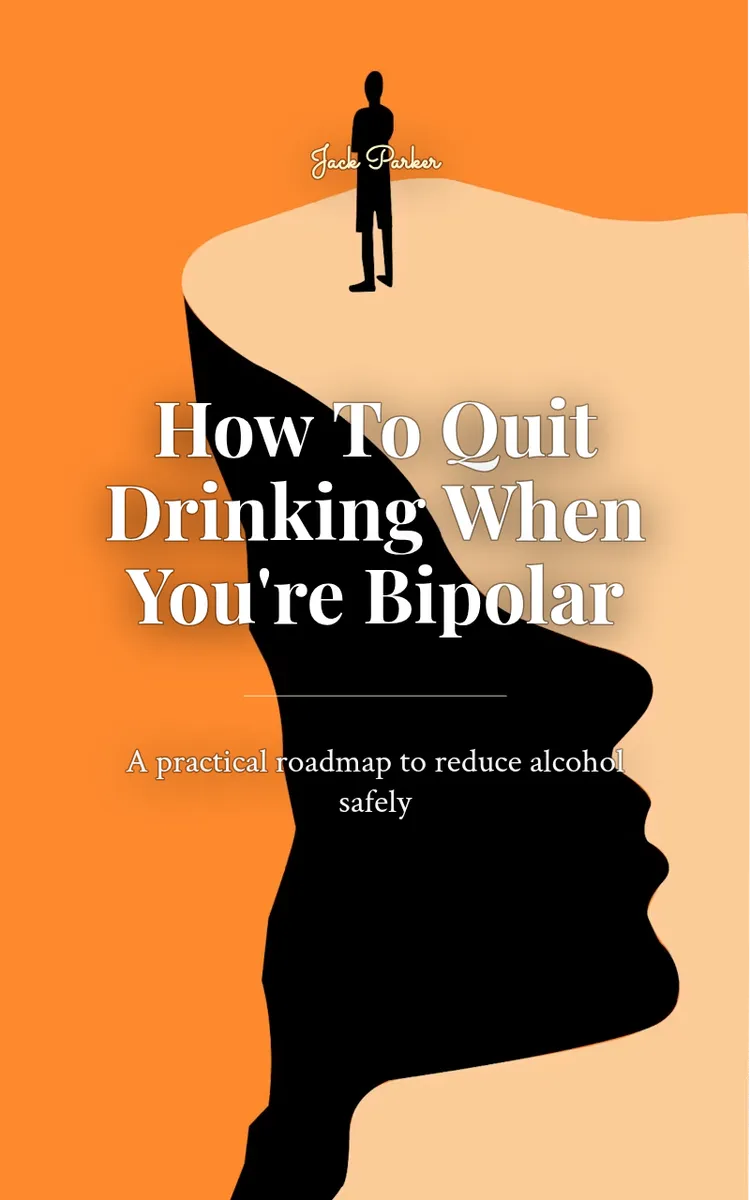
"Quit Drinking With Bipolar Care" is a self-help book by Jack Parker with 25 chapters and approximately 44,531 words. Quitting drinking for people with bipolar disorder.
This book was created using Inkfluence AI, an AI-powered book generation platform that helps authors write, design, and publish complete books. It was made with the AI Self-Help Book Writer.
Frequently Asked Questions
What is "Quit Drinking With Bipolar Care" about?
Quitting drinking for people with bipolar disorder
How many chapters are in "Quit Drinking With Bipolar Care"?
The book contains 25 chapters and approximately 44,531 words. Topics covered include Reclaiming Your Identity Beyond Drinking, Spotting Bipolar Triggers Before Urges, Building a Safety Plan for High-Risk Days, Choosing Sobriety Goals That Fit Bipolar, and more.
Who wrote "Quit Drinking With Bipolar Care"?
This book was written by Jack Parker and created using Inkfluence AI, an AI book generation platform that helps authors write, design, and publish books.
How can I create a similar self-help book?
You can create your own self-help book using Inkfluence AI. Describe your idea, choose your style, and the AI writes the full book for you. It's free to start.
Write your own self-help book with AI
Describe your idea and Inkfluence writes the whole thing. Free to start.
Start writingCreated with Inkfluence AI


