
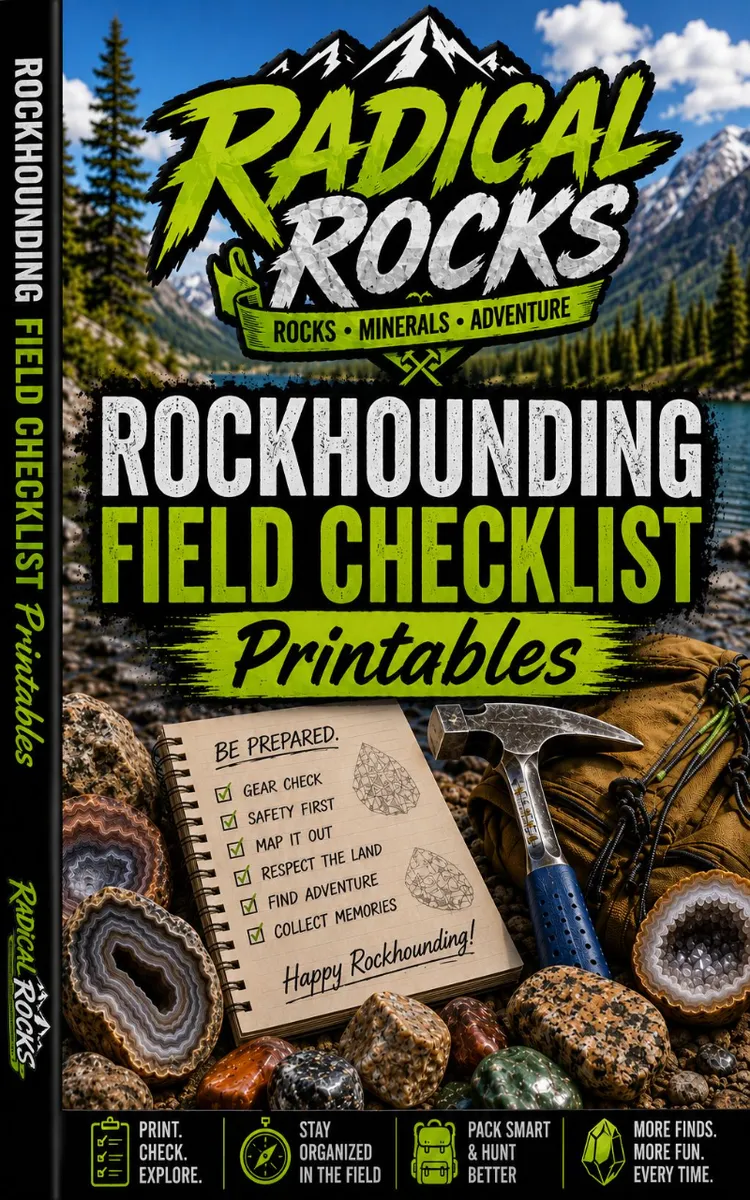
Rockhounding Field Checklist Printables
Created with Inkfluence AI
Printable rockhounding field checklist for collecting rocks and minerals
Table of Contents
- 1. Safety and PPE Checklist for Fieldwork
- 2. Pre-Trip Gear Checklist by Location
- 3. Prospecting Strategy Checklist for Finding Gems
- 4. Sifting, Sorting, and Labeling Checklist
- 5. Home Cleanup and Testing Checklist for Beginners
Preview: Safety and PPE Checklist for Fieldwork
A short excerpt from “Safety and PPE Checklist for Fieldwork”. The full book contains 5 chapters and 10,101 words.
What This Covers
Could one sharp edge, a cloud of dust, or a loose slope turn a short collecting stop into an emergency? This checklist helps you spot those risks before breaking rock, then match your personal protective equipment (PPE) to the site.
Use it at road cuts, dry washes, quarries, and open ground. After completing it, you should have the right protection on your body, a clear response plan, and fewer avoidable cuts, eye injuries, and dust exposures.
What You Need
Gather these items before leaving, then keep them together in one marked safety bag:
- Safety glasses with side shields
- Work gloves with a snug fit
- Sturdy boots with slip-resistant soles
- Long pants and a long-sleeved shirt
- Hard hat for overhead or falling-rock hazards
- N95 respirator for dusty work
- Hearing protection for powered tools
- High-visibility vest near traffic
- First-aid kit with wound dressings
- Hand sanitizer and clean water
- Brush for removing loose dust
- Small flashlight or headlamp
- Phone with a charged battery
- Emergency contact information
- Site rules, map, and access permission
- Weather forecast and heat warning
- Plenty of drinking water
Choose glasses that seal reasonably well around your eyes without blocking your view. Regular sunglasses do not replace safety glasses because they leave side gaps and may not stop flying chips.
Use gloves that protect your hands but still let you grip a rock securely. Loose gloves can catch on tools. Thin cut-resistant work gloves are useful for handling sharp shale, broken crystal points, and freshly split rock.
Wear boots that cover your ankles and have firm soles. Open shoes expose your feet to sharp fragments, unstable ground, and biting insects. Check the soles before each trip; worn tread increases slipping risk on wet stone.
Pack an N95 respirator when collecting may disturb dry soil, clay, or rock dust. It must fit closely over your nose and mouth. Facial hair along the sealing edge can prevent a proper fit. Do not treat a dust mask or bandana as equal protection.
Before entering private land, an active mine, or a managed collecting area, confirm permission and safety rules. Some sites prohibit hammering, require a helmet, or close during blasting. A phone signal is not guaranteed, so save the address, access road, and emergency contact before driving out.
Action Items
The STOP-Scan-Protect Loop keeps the safety check short enough to repeat whenever the site changes. STOP before unloading. Scan the ground, walls, weather, and nearby activity. Protect yourself with the correct PPE and distance. Repeat the loop after moving to a new exposure, starting a new tool, or noticing changing weather.
STOP Before Collecting
☐ Stop at the entrance and pause before unloading equipment.
☐ Confirm permission, site rules, and restricted areas.
☐ Save the site address and emergency contact offline.
☐ Tell someone your location and expected return time.
☐ Check weather, heat, wind, and storm warnings.
☐ Identify the nearest safe vehicle route.
☐ Keep your phone charged and accessible.
☐ Leave unstable slopes and closed workings alone.
A short pause prevents rushed decisions. Ramon, 41, a warehouse safety trainer, uses the same habit at every collecting stop: he stands still, checks the whole site, and only then opens his tool bag. That pause helps him notice hazards hidden by the excitement of finding exposed material.
Scan the Ground and Surroundings
☐ Look for loose rock above and below your position.
☐ Check footing before stepping onto sloped or broken ground.
☐ Avoid undercut banks, overhangs, and fresh cracks.
☐ Test no ledge with your hands or body weight.
☐ Watch for holes, brush, loose gravel, and hidden wire.
☐ Identify traffic, machinery, blasting, and other collectors.
☐ Check water depth before crossing a wash or stream.
☐ Keep away from cliff edges and drop-offs.
☐ Mark a safe standing area before breaking rock.
Treat every slope as changeable. Rain, freeze-thaw damage, and vibration can loosen material that looked solid from a distance. Stand to the side of a crack or seam rather than directly below it. Never work beneath another person.
Scan for biological hazards as well. Look beneath gloves and inside boots after breaks if the site has snakes, scorpions, ticks, or biting insects. Do not place hands into dark holes, rock piles, or brush where you cannot see.
Near roads or active work areas, wear a high-visibility vest and stay outside marked boundaries. Make eye contact with equipment operators only when it is safe, and never assume they can see you.
Protect Eyes, Hands, Feet, and Skin
☐ Put on safety glasses before handling a hammer.
☐ Wear gloves before lifting sharp or freshly broken rock.
☐ Lace boots tightly and check their tread.
☐ Cover legs and arms against cuts and sun.
☐ Add a hard hat beneath overhead rock hazards.
☐ Wear high-visibility clothing near vehicles.
...
About this book
"Rockhounding Field Checklist Printables" is a checklist pack book by Radical Rocks with 5 chapters and approximately 10,101 words. Printable rockhounding field checklist for collecting rocks and minerals.
This book was created using Inkfluence AI, an AI-powered book generation platform that helps authors write, design, and publish complete books.
Frequently Asked Questions
What is "Rockhounding Field Checklist Printables" about?
Printable rockhounding field checklist for collecting rocks and minerals
How many chapters are in "Rockhounding Field Checklist Printables"?
The book contains 5 chapters and approximately 10,101 words. Topics covered include Safety and PPE Checklist for Fieldwork, Pre-Trip Gear Checklist by Location, Prospecting Strategy Checklist for Finding Gems, Sifting, Sorting, and Labeling Checklist, and more.
Who wrote "Rockhounding Field Checklist Printables"?
This book was written by Radical Rocks and created using Inkfluence AI, an AI book generation platform that helps authors write, design, and publish books.
Write your own checklist pack book with AI
Describe your idea and Inkfluence writes the whole thing. Free to start.
Start writingCreated with Inkfluence AI


