

Read the first chapter
The whole of chapter one, free. About 8 min. Turn the pages with the arrows, your keyboard, or a swipe.
Chapter 1
Behavioral Addiction Clinical Intake Map
The Four-Lens Intake Map: Purpose and Expected Outcome
What would you miss if a client described hours of online gambling, compulsive sexual behavior, gaming, shopping, or scrolling only as a “bad habit”? A structured intake helps you hear the pattern beneath the report: what happens, what maintains it, what danger is present, what the behavior promises, and how the client understands change before God and within ordinary life.
The Four-Lens Intake Map organizes the first assessment into four connected lenses: Pattern, Risk, Meaning, and Readiness. It is not a substitute for a licensed diagnostic evaluation, medical care, psychiatric assessment, or emergency response. It is a counselor-friendly map for gathering enough reliable information to form a responsible working formulation, identify immediate safeguards, and choose the next clinical and pastoral steps.
Who this is for: Christian counselors, pastors with appropriate training and referral relationships, clinicians serving clients who want faith-integrated care, and clients who need a clear way to describe their own struggle. Used well, the map helps you:
• distinguish occasional use from a persistent loss-of-control pattern; - identify financial, relational, occupational, legal, medical, and safety concerns; - explore shame, worship, escape, identity, suffering, and spiritual practices without reducing the problem to a spiritual slogan; - measure readiness without pressuring a client into premature promises; - document a concrete plan for the next seven days.
The expected health outcome is not a guaranteed cure. It is a safer and more accurate starting point: fewer unidentified risks, clearer boundaries around the behavior, better coordination with licensed care when needed, and a treatment plan that addresses both behavior and the person’s relationship with God, self, others, and daily responsibilities.
What the Four Lenses Reveal
Behavioral addictions are reinforced by learning. A behavior produces a rapid change in attention, mood, arousal, relief, connection, or hope. Repetition strengthens the association between a cue and the behavior. A notification, payday, loneliness, conflict, fatigue, sexual image, game loss, or open browser may become a trigger. The behavior then offers a short-term reward, while consequences often arrive later. This gap makes honest self-assessment difficult.
The first lens, Pattern, asks what can be observed. Record the behavior, setting, duration, frequency, money or time involved, failed attempts to reduce it, and the consequences that follow. “I use it too much” is not enough. “I gamble online four nights each week, usually from 10:30 p.m. until 1:00 a.m., after conflict with my spouse, and I hide the bank notifications” gives the counselor a workable pattern.
The second lens, Risk, asks what requires immediate protection or referral. Risk may involve debt, theft, coercion, exploitation, sleep loss, unsafe driving, neglect of children, exposure to illegal material, domestic conflict, self-harm thoughts, intoxication, or severe mood change. Screen directly and calmly. Ask, “Have you had thoughts of harming yourself or someone else?” “Are you currently safe?” “Has anyone been threatened, coerced, or exposed to danger because of this behavior?” A positive answer requires a safety response appropriate to the situation and local law, not a promise to discuss it at the next session.
The third lens, Meaning, explores what the behavior does for the client and what the client believes about it. Behavioral addiction often involves avoidance - an attempt to escape grief, anxiety, anger, shame, boredom, loneliness, or perceived failure. It may also involve distorted hope: the belief that one more purchase, wager, sexual encounter, level, or hour online will finally settle an inner problem. Faith questions belong here, but they must be handled with care. Ask how the behavior affects prayer, worship, honesty, relationships, stewardship, and love of neighbor. Do not assume that every struggle reflects weak faith, demonic activity, or a lack of repentance. Scripture calls counselors to truth, confession, wisdom, self-control, and compassionate care; it does not authorize us to bypass assessment.
The fourth lens, Readiness, measures the client’s willingness and capacity to take a next step. Readiness is not the same as agreement with the counselor. A client may want change but lack sleep, money, support, or confidence. Another may be highly motivated after a crisis but unable to sustain a plan. Use a 0-to-10 scale: “How important is change this week?” and “How confident are you that you can take one specific step?” Ask why the number is not lower. The answer often reveals strengths, values, and practical barriers.
Several factors commonly intensify the pattern:
1. Access and privacy: A phone, credit line, private room, or unrestricted internet connection can make the behavior available within seconds. 2. Emotional vulnerability: Depression, anxiety, trauma symptoms, grief, loneliness, anger, or shame may increase reliance on rapid relief. 3. Sleep and routine disruption: Late-night use weakens judgment and removes ordinary accountability. 4. Relational and financial strain: Secrecy, debt, conflict, and isolation can create the very distress that triggers further use. 5. Co-occurring conditions or substances: Attention problems, mood symptoms, substance use, or medication changes may require evaluation by a qualified professional.
The intake should therefore hold two truths together: the client is morally responsible for choices, and the client may also need skilled clinical care for conditions that affect impulse control, mood, sleep, or judgment. Christian counseling is strongest when it refuses both condemnation without help and compassion without truth.
Conducting the Intake and Building the First Plan
Begin with a private setting, informed consent, confidentiality limits, and a clear explanation of your role. State that you will ask about behavior, safety, spiritual life, and practical consequences. Tell the client that direct questions are intended to protect them, not to shame them. When possible, complete the first intake in 60 to 90 minutes. If the client is distressed, intoxicated, severely sleep-deprived, or unsafe, shorten the interview and address safety before completing the map.
Move through the lenses in order, but return to earlier answers when new information appears.
1. Map the Pattern. Ask for the most recent episode, then the most severe episode. Record date, start time, end time, trigger, behavior, amount of money or content involved, concealment, and immediate result. Review the previous 14 days rather than relying only on general impressions. Ask the client to bring bank statements, screen-time reports, app histories, or calendar records when doing so is safe and lawful.
2. Screen Risk. Identify immediate danger first. If there is current suicidal intent, a plan, access to lethal means, violence, abuse, exploitation, or inability to maintain basic safety, follow emergency procedures and involve appropriate crisis, medical, safeguarding, or law-enforcement resources. Do not leave the person alone while waiting for emergency help when local protocol identifies that as necessary. If risk is not immediate but remains significant, document the concern, consult a supervisor or licensed provider, and create a written safety plan before ending the session.
3. Clarify Meaning. Ask, “What does the behavior give you for the next ten minutes?” and “What does it cost you by the next morning?” Explore the client’s understanding of sin, suffering, responsibility, forgiveness, temptation, and hope. Ask which Christian practices are currently supportive and which have become sources of avoidance or shame. A client who says, “I pray for forgiveness and then return to the same behavior without changing access or routine,” is identifying a need for repentance expressed through concrete action, not merely stronger emotion.
4. Rate Readiness and choose one step. Have the client rate importance and confidence from 0 to 10. Select a step that raises safety and lowers access without demanding a lifetime promise. Examples include removing saved payment methods today, placing financial accounts under temporary joint review, installing an agreed accountability tool, ending private device use after a set time, or scheduling a licensed mental-health evaluation within seven days.
For the first week, use a brief daily log completed once each evening. Record trigger, urge intensity from 0 to 10, action taken, duration, consequence, and one truthful prayer or Scripture reflection. Review the log at the next session, not as a scorecard for perfection but as data for refinement. If the client has a lapse, document what preceded it and what protection failed. A lapse calls for rapid review and renewed safeguards; it does not justify concealment or hopelessness.
Progression should be observable. By the end of week one, the client should have a completed risk plan and at least one access barrier. By week two, review seven consecutive days of logs and identify the two most reliable triggers. By weeks three and four, evaluate whether the plan reduces frequency, duration, financial exposure, secrecy, or harm. Continue or modify the plan based on evidence. Seek professional help promptly when there are suicidal thoughts, threats, abuse, severe depression, mania-like symptoms, psychosis, dangerous sleep deprivation, escalating debt, illegal behavior, withdrawal from essential responsibilities, or repeated inability to maintain agreed safety boundaries. Coordinate with licensed clinicians rather than presenting spiritual counseling as a replacement for their care.
Common Intake Errors That Distort the Map
Mistake: Treating the client’s first label as the whole assessment
Why it happens: Clients often arrive saying, “I am addicted,” “I have no self-control,” or “I just need accountability.” The counselor may accept the label because it sounds clear and urgent.
What to do instead: Ask for the most recent episode and reconstruct it minute by minute. A client who reports “all-night gaming” may reveal that the central risk is sleep deprivation and job impairment. A client who says “shopping addiction” may reveal hidden debt, coercive control, or a mood episode requiring licensed evaluation. Use observable details before drawing conclusions.
Mistake: Moving to spiritual correction before screening safety
Why it happens: Christian counselors rightly care about repentance, truth, and obedience. Under pressure, however, a familiar spiritual response can come before questions about self-harm, violence, exploitation, or financial danger.
What to do instead: Complete the Risk lens early. Ask direct questions, document answers, and follow emergency and safeguarding procedures when indicated. Then connect safety actions to Christian stewardship, honesty, protection of vulnerable people, and wise dependence on the body of Christ.
Mistake: Confusing motivation with readiness
Why it happens: A client may speak passionately after discovery by a spouse, loss of money, or a frightening consequence. Strong emotion can sound like a stable commitment.
What to do instead: Separate importance from confidence. Ask for a 0-to-10 rating, identify why confidence is not higher, and choose one action that can be completed within 24 hours. Review it after seven days. Readiness becomes clearer through repeated behavior, not promises made in a crisis.
The Four-Lens Intake Map keeps the counselor attentive to the whole person without losing the facts. Pattern gives the work precision, Risk gives it protection, Meaning gives it depth, and Readiness gives it a starting point. Together they create a disciplined path toward truthful assessment, wise referral, and faithful change.
End of chapter one. 7 more chapters in the full book.
Swipe or use the arrows to turn the page

Spirit-Led Whole-Person Renewal

ChurchBased Christian Biblical Counseling Ministry

Anxiety And Panic Counseling Desk Reference
What's inside: 8 chapters
- 1. Behavioral Addiction Clinical Intake Map
- 2. Differential Diagnosis for Behavioral Addictions
- 3. Functional Analysis of Triggers and Cycles
- 4. Craving Surfing With Scripture-Based Reappraisal
- 5. Relapse Prevention With Implementation Intentions
- 6. Trauma-Informed Care for Behavioral Addictions
- 7. Accountability Structures and Church-Based Support
- 8. Measuring Progress and Preventing Treatment Drift
About this book
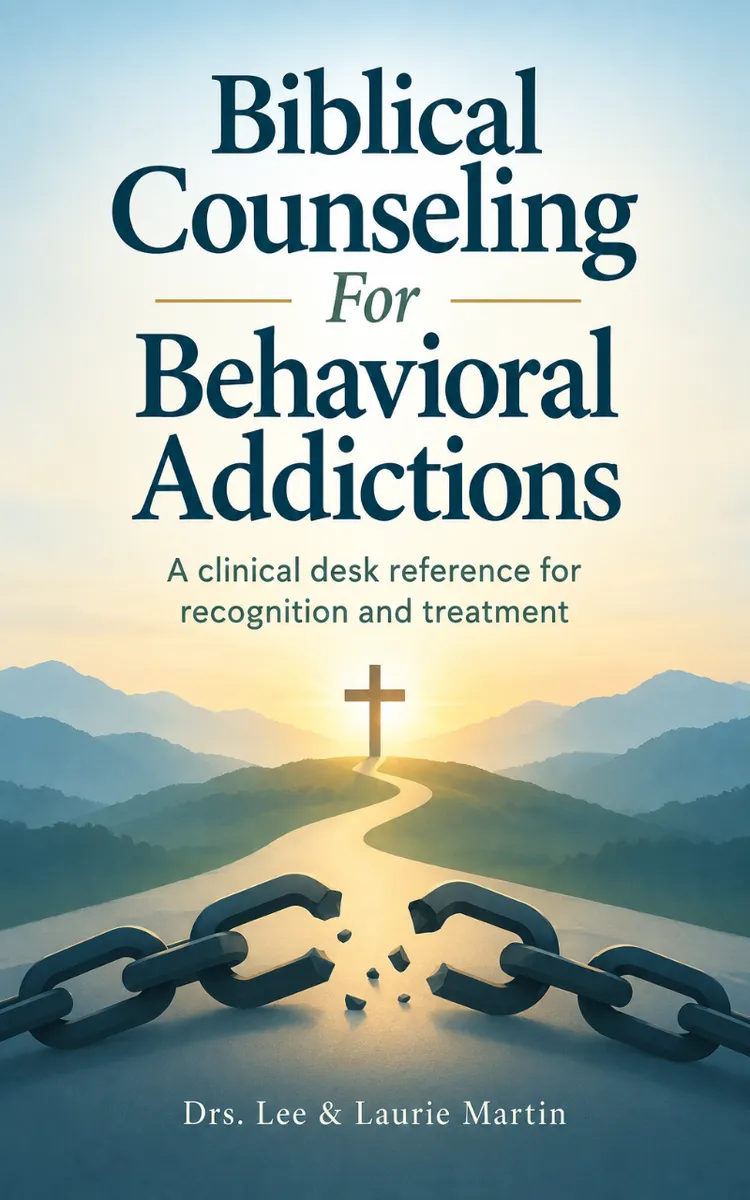
"Biblical Counseling For Behavioral Addictions" is a clinical guide book by Drs. Lee & Laurie Martin with 8 chapters and approximately 14,569 words. Counseling manual for behavioral addictions using Biblical counseling and Christian psychology.
This book was created using Inkfluence AI, an AI-powered book generation platform that helps authors write, design, and publish complete books. It was made with the AI Health Book Generator.
Frequently Asked Questions
What is "Biblical Counseling For Behavioral Addictions" about?
Counseling manual for behavioral addictions using Biblical counseling and Christian psychology
How many chapters are in "Biblical Counseling For Behavioral Addictions"?
The book contains 8 chapters and approximately 14,569 words. Topics covered include Behavioral Addiction Clinical Intake Map, Differential Diagnosis for Behavioral Addictions, Functional Analysis of Triggers and Cycles, Craving Surfing With Scripture-Based Reappraisal, and more.
Who wrote "Biblical Counseling For Behavioral Addictions"?
This book was written by Drs. Lee & Laurie Martin and created using Inkfluence AI, an AI book generation platform that helps authors write, design, and publish books.
How can I create a similar clinical guide book?
You can create your own clinical guide book using Inkfluence AI. Describe your idea, choose your style, and the AI writes the full book for you. It's free to start.
Write your own clinical guide book with AI
Describe your idea and Inkfluence writes the whole thing. Free to start.
Start writingCreated with Inkfluence AI


