
Read the first chapter
The whole of chapter one, free. About 11 min. Turn the pages with the arrows, your keyboard, or a swipe.
Chapter 1
The Flooded Conservatory
Rain struck the conservatory roof hard enough to sound like thrown gravel.
Mara Voss stood at the warped iron door with one hand on the latch and watched brown water curl over the tiled threshold. Beyond it, the flooded glasshouse glimmered beneath a bruised afternoon sky. Ferns bowed under the weight of rainwater. Vines dragged across the paths like ropes. Somewhere inside, glass cracked with a sharp, delicate report.
She had come to assess the damage before the storm worsened. She had told herself that was all.
Then she saw the white orchid collection sinking beneath the rising water, and the lie became impossible to maintain.
“Open the door,” a man called from behind her. “Unless you plan to save them from the outside.”
Mara turned.
Elias Rook stood in the rain without an umbrella, his dark coat plastered to his shoulders. Water ran from his hair to the hard line of his jaw. He carried a coil of rope in one hand and a heavy pry bar in the other, as if the conservatory had personally offended him.
“You’re late,” he said.
“I arrived when the road became passable.”
“You arrived when the water reached the second step.”
“Then you’re welcome.”
His mouth tightened. Not quite a smile. Elias seemed to regard smiles as concessions that could be exploited.
Mara faced the door again. “How long has the pump been out?”
“Twenty minutes.”
“And you waited for me?”
“I waited for someone who knew which plants could be moved and which would die if disturbed.”
The answer caught at her, though his tone made it sound like an accusation. She pushed the door inward. Cold water rushed around her boots, carrying leaves, broken twigs, and the sweet, rotten smell of drowned soil.
Elias caught her elbow as the current shoved her sideways.
His hand was warm through her sleeve. His grip steadied her for one breath too long.
“Careful,” he said.
“I was.”
“You were falling.”
“I was adjusting.”
“You can call it whatever you like.”
He released her. The absence of his hand seemed to leave a mark.
Inside, the conservatory had become a shallow, moving lake. Water covered the mosaic floor to Mara’s ankles and climbed steadily toward her calves. Rain poured through three shattered panes overhead, silvering the air. The glass walls trembled whenever thunder rolled across the hills.
Mara moved toward the eastern beds, lifting her skirts above the water. “The orchids first. They’re mounted on cork, so they can survive flooding for a few hours, but not if the roots stay submerged.”
“I’ll take the benches.”
“No. The benches are bolted down.”
“Then I’ll unbolt them.”
“With what?”
Elias lifted the pry bar.
Mara looked at him. “That will damage the frames.”
“The frames are already under water.”
“The orchids are attached to the frames.”
“Then tell me what to break.”
His bluntness scraped against her nerves, but there was no time to argue for the pleasure of it. She waded to the nearest bed and reached beneath a curtain of dripping leaves. The water was icy. Something smooth brushed her wrist.
She jerked back.
“Snake?” Elias asked.
“Root.”
“Good. I dislike surprises.”
“You seem to create them.”
He glanced over his shoulder. “You’re talking too much.”
“And you’re listening too little.”
For a moment, the storm filled the space between them. Then Elias set down the pry bar and stepped into the bed beside her.
“Tell me.”
The words were quiet. Not an apology. Something more useful.
Mara pointed. “Those three trays. Lift from underneath. Not the stems. The roots are shallow, and the leaves bruise.”
He crouched, water darkening his trousers. His hands slid beneath the trays exactly where she indicated. Large hands, scarred across the knuckles, careful despite their strength.
“Now?”
“On three. One, two - ”
He lifted on two.
The tray tilted. Water spilled across Mara’s boots, and she caught the far edge before the orchids toppled.
“Did you misunderstand the numbers?” she snapped.
“I decided the third one was unnecessary.”
“You don’t get to improvise with living things.”
“Neither do you, apparently.”
His eyes met hers over the trembling tray. Rainwater clung to his lashes. The closeness was absurdly intimate, their shoulders almost touching, their breath mingling in the damp air.
Mara looked away first.
Together they carried the orchids toward the raised stone platform near the west wall. Elias moved backward through the water, watching her rather than his footing.
“Behind you,” she warned.
“I know.”
“You’re about to hit the fountain.”
“I know that too.”
“You could have said.”
“I assumed you enjoyed being right.”
The fountain struck his calf. He stumbled. The tray lurched. Mara reached for it, but Elias caught her around the waist with his free arm and pulled her against him.
The orchids remained upright.
For one suspended second, Mara was pressed to the solid heat of his chest. His breath touched her temple. Beneath his coat, his heart beat hard and fast - not from fear, she thought, but from the effort of holding both her and the tray steady.
“Put me down,” she whispered.
“You’re standing.”
“Then let go.”
His arm tightened before he obeyed.
The loss of contact made her colder than the water.
They set the orchids on the platform. One white blossom had broken from its stem. Mara lifted it from the water and laid it beside the tray.
Elias watched her. “Can it be saved?”
“The plant can.”
“That wasn’t what I asked.”
“No.”
He nodded once, accepting the answer. “Next.”
The flood rose another inch.
They worked through the conservatory in a rhythm neither of them acknowledged. Mara named what needed moving. Elias found a way to move it. He carried the heavy citrus pots while she wrapped the delicate roots in damp cloth. He climbed a ladder to retrieve seed boxes from the upper shelves, and she held the ladder steady while wind pressed against the glass.
At the northern wall, a gust burst through a broken pane. The ladder bucked.
“Mara.”
She saw him lose his footing.
The ladder struck the tiles. Elias dropped hard, one hand catching the shelf, the other scraping over a jagged edge of glass. A thin line of red appeared across his palm.
Mara waded toward him. “Are you hurt?”
“Nothing worth mentioning.”
“Show me.”
He pulled his hand away. “We have better things to do.”
She seized his wrist. “You’re bleeding into the water.”
His gaze dropped to her fingers around him. “You always take charge when frightened?”
“I’m not frightened.”
“You’re shaking.”
“The water is cold.”
“Of course.”
She tore a strip from the lining of her sleeve and wrapped his palm. He let her, though his attention remained fixed on her face.
“You should have called for help,” she said.
“There isn’t anyone else.”
“That isn’t an answer.”
“It’s the only one I have.”
She tightened the knot. He flinched.
“Good,” she murmured. “Now you’ll remember you’re not indestructible.”
“I never claimed to be.”
“No. You simply behave as if everyone else is disposable.”
Something changed in his expression. The hard surface cracked - not dramatically, but enough for her to glimpse the exhaustion underneath.
“You think I don’t know what this place means?” he asked.
Mara released his hand. “I think you know what it costs.”
His eyes moved over the flooded paths, the broken panes, the plants he had tried to protect with sandbags and failing pumps. “My father built it. He spent thirty years keeping the collection alive. When he died, the trustees gave me six months to make it profitable or sell the property.”
Mara stared at him.
“The conservatory is already under review,” he continued. “If the damage is bad enough, they’ll call demolition practical.”
The word landed more heavily than the thunder.
“You knew this could happen.”
“I knew they were waiting for an excuse.”
“And you still brought me here?”
“I brought you because you’re the only person in the county who can tell me what survives.”
His voice had lost its edge. That made the confession worse.
Mara looked at the bandage around his hand. She had expected arrogance, perhaps grief disguised as control. She had not expected the naked shape of his fear: not losing a building, but failing the person who had left it to him.
“You should have told me,” she said.
“You would have come?”
“No.”
“That’s why.”
The honesty struck deeper than any apology.
A violent crack split the air overhead. One of the great roof panels fractured from corner to corner.
Elias grabbed Mara and pulled her beneath the stone archway as the glass collapsed. Shards shattered across the floor and vanished into the water. A wave surged through the conservatory, knocking pots from their stands.
Mara clung to his coat. He had one arm around her shoulders, his body angled between her and the falling glass.
When the noise stopped, she realized her cheek was against his throat.
“Are you cut?” he asked.
“No.”
“Look at me.”
She lifted her head. His face was inches from hers. Rain and sweat gleamed on his skin. His hand remained at the back of her neck, fingers spread, not forcing her closer, simply making sure she was there.
“I’m fine,” she said.
“I need to know.”
“You know.”
His thumb moved once against her nape. The gesture was so gentle it frightened her more than the storm.
Mara stepped away. “The seed vault.”
“What about it?”
“It’s in the lower room.”
“That room is already flooded.”
“Then we move faster.”
They crossed the conservatory through waist-deep water. The current pulled at Mara’s legs, and more than once Elias caught her hand. Each time, he released her as soon as she found her balance. The restraint felt deliberate. It made her want to close the distance herself.
The lower room door had swollen shut. Elias drove his shoulder into it once, twice. On the third attempt, the lock gave.
Water poured through the opening.
Inside, the shelves leaned under the weight of damp boxes. Mara plunged forward, searching for the metal case that held the oldest seeds. Elias followed, bracing himself against the doorframe.
“There,” she said.
The case was wedged beneath a fallen cabinet.
Elias crouched and gripped the cabinet. “Take it when I lift.”
“You’ll tear your hand open.”
“Then take it quickly.”
He heaved. The cabinet rose an inch. Mara reached beneath it and dragged out the case. A current struck her knees, and she nearly lost her footing.
Elias caught her by the waist.
“Got you,” he said.
The words were low against her ear.
For a moment she could not move. His wet shirt pressed against her back. His injured hand rested at her ribs, careful even now. She felt the effort in him, the tremor in his arm, the way he was holding himself still so she could choose what happened next.
Mara turned within his grasp.
His eyes searched hers. “Tell me to let go.”
She should have.
Instead, she touched the cut at his palm through the makeshift bandage. “You’re impossible.”
“I’ve been called worse.”
“I believe that.”
His mouth curved faintly. The sight undid something in her.
She kissed him.
It was not gentle at first. It was cold water, broken glass, fear, and the terrible relief of finding another body still standing. Elias froze for half a heartbeat, then his good hand came to her face. He kissed her back with a care that made the urgency sharper, his thumb brushing her cheek as if asking permission again.
Mara answered by pulling him closer.
He broke the kiss before she could forget the rising water. Their foreheads touched.
“We have to go,” he whispered.
“I know.”
Neither moved.
Then the ceiling groaned.
Elias lifted the seed case and pushed her toward the door. They fought their way upstairs, carrying the last of the collection to the stone platform while the storm tore open the roof. By the time the pump restarted, the conservatory looked less like a garden than the remains of a shipwreck.
But the orchids were above the water. The seed case was dry. The rare citrus trees stood secured against the western wall.
Mara sat on the platform, soaked to the skin, watching Elias knot a rope around the largest pot. His bandage had turned pink.
“You need stitches,” she said.
“You need sleep.”
“I’m not the one bleeding.”
“You’re not the one who kissed me in a flooded basement.”
Heat rose beneath the cold on her face. “You kissed me back.”
“I did.”
The simple admission carried more weight than flirtation.
Beyond them, rain hammered the ruined roof. The conservatory had survived, but barely. Water streamed through the broken panes, and the western wall had begun to bow.
Elias looked at the damage, then at her. “I can’t repair this alone.”
Mara knew what he was asking before he said it.
“I’m not staying because you need a gardener.”
“I need your knowledge.”
“You need someone to make the place worth saving.”
“Yes.”
“And if I agree, I become part of the review. Part of the risk.”
His jaw tightened. “You’d be working for me.”
“That’s the cost.”
“No,” he said. “The cost is that if we fail, you lose your time, your reputation, and the chance to walk away clean.”
Mara looked at the orchids, their white flowers trembling in the wind.
She had arrived as an outsider, prepared to measure damage and leave him to the consequences. Now his hand was bleeding because he had followed her instructions, his conservatory was breaking around them, and the choice before her felt less like employment than a door she had already stepped through.
“How long?” she asked.
“Until the trustees decide.”
“And if they decide to sell?”
“Then we fight them.”
“You make that sound simple.”
“It won’t be.”
At last, something like trust passed between them - not whole, not safe, but real enough to hold.
Mara rose, water dripping from her sleeves. “I’ll stay until the collection is secure.”
Elias’s expression tightened with relief before he could hide it.
“Not for you,” she said.
“I know.”
“And you will listen when I tell you what the plants need.”
“I’ll try.”
“You’ll do more than try.”
His gaze dropped to her mouth. “Yes, Mara.”
The use of her name made the ruined place feel suddenly smaller.
Outside, the storm moved east, leaving the conservatory exposed to the darkening sky. Inside, among the rescued plants and shattered glass, Mara understood that saving the collection had not ended the crisis.
It had tied her to Elias Rook - and to the impossible work of rebuilding everything they had nearly lost.
End of chapter one. 4 more chapters and about 12,371 words in the full book.
Swipe or use the arrows to turn the page
What's inside: 5 chapters
- 1. The Flooded Conservatory
- 2. A Waltz Beneath the Rafters
- 3. The Letter in the Seed Chest
- 4. The Night the Glass Shattered
- 5. A Home Among the Orchids
About this book
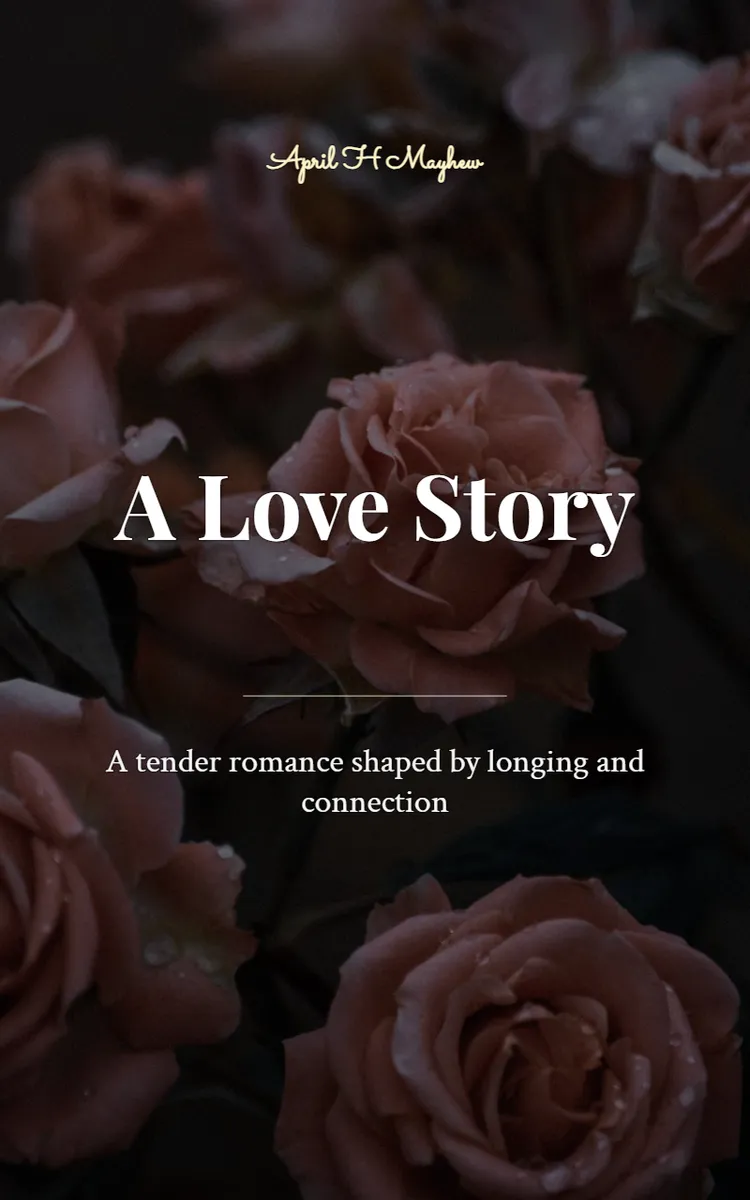
"A Love Story" is a romance book by April H Mayhew with 5 chapters and approximately 12,371 words. A romantic story centered on love and emotional connection.
This book was created using Inkfluence AI, an AI-powered book generation platform that helps authors write, design, and publish complete books. It was made with the AI Romance Novel Writer.
Frequently Asked Questions
What is "A Love Story" about?
A romantic story centered on love and emotional connection
How many chapters are in "A Love Story"?
The book contains 5 chapters and approximately 12,371 words. Topics covered include The Flooded Conservatory, A Waltz Beneath the Rafters, The Letter in the Seed Chest, The Night the Glass Shattered, and more.
Who wrote "A Love Story"?
This book was written by April H Mayhew and created using Inkfluence AI, an AI book generation platform that helps authors write, design, and publish books.
How can I create a similar romance book?
You can create your own romance book using Inkfluence AI. Describe your idea, choose your style, and the AI writes the full book for you. It's free to start.
Write your own romance book with AI
Describe your idea and Inkfluence writes the whole thing. Free to start.
Start writingCreated with Inkfluence AI


