
Read the first chapter
The whole of chapter one, free. About 7 min. Turn the pages with the arrows, your keyboard, or a swipe.
Chapter 1
Replacing Fear With Identity Safety
When Love Sounds Like Management
Your child says, “I’m gay,” and for a moment, the room seems to shrink.
You may hug them. You may say you love them. You may even mean it with every part of you. Then the questions arrive: “Are you sure?” “How do you know?” “Who else knows?” “What will school be like?” “Should we tell the family?” Your mind races toward protection, planning, and prevention. Your child watches your face, listening for what your words haven’t said yet.
This is where good intentions can accidentally feel like pressure. A child who has finally shared something deeply personal may start wondering whether their identity is now a family problem to solve.
Your child doesn’t need you to manage their identity; they need to feel safe being known by you.
The Shift From Managing to Respecting
Old Belief: If I ask enough questions and plan carefully enough, I can protect my child from every painful experience connected to being gay.
New Reality: Emotional safety begins when my child can share their identity without having to defend it, explain it, or calm me down.
Protection matters. Of course it does. You may need to address bullying, privacy, family reactions, or unsafe situations. But there’s a difference between responding to a real risk and treating your child’s identity as a crisis before anything has happened.
When a parent immediately asks for certainty, the child may hear doubt. When a parent jumps to disclosure plans, the child may hear loss of control. When a parent becomes intensely emotional, the child may end up comforting the parent instead of receiving support.
Consider a child who says, “I think I’m gay.” A managing response might be, “Have you dated anyone? Are you completely sure? Don’t tell Grandma yet. We need to figure out what this means.” A safety-building response might be, “Thank you for telling me. You don’t have to have every answer today. I love you, and I’ll follow your lead about who knows.”
The second response doesn’t ignore practical concerns. It puts the child’s dignity first. It gives them room to understand themselves without feeling placed under investigation.
The Identity Safety Ladder helps you notice what your child may need next. The first rung is calm acceptance: your face, voice, and words communicate that their truth hasn’t made them less lovable. The second is respectful curiosity: you ask what support looks like instead of demanding an explanation. The third is shared control: you include your child in decisions about privacy, conversations, and next steps. The fourth is steady action: you address harm while making sure your child remains a person, not a project.
Notice When Fear Takes the Wheel
Fear often disguises itself as responsibility. You tell yourself you’re “just asking questions,” but your child experiences an interrogation. You say you’re “just being realistic,” but they hear a prediction that their life will be difficult. You say you’re “just trying to help,” while quietly taking over decisions that belong to them.
The goal isn’t to become perfectly calm. That’s not realistic. The goal is to recognize when your fear is leading the conversation, then return to your child’s emotional safety.
Signs this pattern is running your life:
1. You keep asking for certainty after your child has already answered. “Are you sure?” may feel like a reasonable question once. Repeatedly asking can sound like, “I’m waiting for you to change your mind.”
2. You plan disclosure before asking what your child wants. Telling relatives, teachers, or friends may seem helpful, but sharing someone else’s identity without permission can make home feel less safe.
3. You focus on future pain before offering present acceptance. Bullying and rejection are serious concerns. Still, your child first needs to know they’re not facing those possibilities alone.
4. You make your reaction the center of the conversation. Tears, panic, anger, or long explanations about your hopes can leave your child managing your emotions instead of being supported.
Identity safety grows when your child can be honest without becoming responsible for your fear.
A useful pause is to ask yourself, “Am I responding to something my child needs right now, or am I trying to quiet my own discomfort?” That question doesn’t shame you. It gives you a way back to the relationship.
You can also use a simple three-second reset before responding: soften your shoulders, take one slow breath, and look at your child rather than at the problem your mind is building. That tiny pause can change the entire tone of the moment.
Questions That Bring You Back to Your Child
1. What did my child actually say, and what story did I add to it? If your child said, “I’m gay,” the facts may end there. The story might be, “They’ll be rejected,” or “I’ve failed as a parent.” Separating the statement from the fear helps you respond to the child in front of you.
2. What would my child need to hear from me in the next sixty seconds? A grounded answer might be, “I love you. Thank you for trusting me. You don’t have to explain everything right now.” Simple words can create more safety than a long speech.
3. Have I asked permission before sharing this information with anyone else? Your child may want support but still want privacy. Try asking, “Who knows, and who are you comfortable telling?” Their answer may change over time, so treat privacy as an ongoing conversation.
4. Am I asking this question for my child’s benefit or to reduce my anxiety? “How can I support you?” usually opens a door. “When did this start?” may be useful later, but in the first moment it can sound like you’re searching for a cause.
5. Where can I practice being steady, even if I’m still learning? You don’t need flawless language. You need consistency. If you say something clumsy, repair it directly: “That came out wrong. I’m learning, and I want you to feel respected with me.”
These questions are not a test you pass once. They’re a way to keep returning to the same priority: your child should not have to shrink, perform certainty, or manage your emotions to remain close to you.
The Seven-Day Identity Safety Ladder Challenge
For the next 7 days, practice one rung of the Identity Safety Ladder each day.
• Day 1 - Calm acceptance: Say one clear sentence without adding a question: “I love you exactly as you are.” - Day 2 - Respectful curiosity: Ask, “What would feel supportive from me right now?” Then listen without correcting or filling the silence. - Day 3 - Shared control: Before discussing your child with anyone, ask permission. If they aren’t ready, respect the answer. - Day 4 - Fear pause: When you feel urgency, take one breath and name the fear privately: “I’m worried about rejection.” Don’t hand that fear to your child as a prediction. - Day 5 - Repair: Think of one moment when you sounded doubtful, rushed, or overly intense. Say, “I’ve been thinking about that conversation. I’m sorry I made you feel questioned.” - Day 6 - Steady support: Do one ordinary, affirming thing together. Watch a show, make dinner, or take a walk without turning it into an identity discussion. - Day 7 - Ask and listen: Ask, “What helps you feel safe talking with me?” Write down the answer and use their words going forward.
Expected difficulty: Medium
You’ll know it’s working when:
• You pause before reacting to fear. - Your child doesn’t have to reassure you. - You ask before sharing their identity. - Your conversations include ordinary life, not only serious discussions. - You can say, “I don’t know yet, but I’m here with you.”
The challenge may feel awkward at first. That’s normal. Emotional safety is built through repeated experiences, not one perfect conversation. Your child learns, over time, whether your acceptance remains steady when the topic is uncomfortable.
Safety Is Something Your Child Feels
Your child’s identity becomes safer when your acceptance is felt in your reactions, your boundaries, and your willingness to let them lead their own story.
You’ve learned that:
• Managing your child’s identity can create pressure, even when your intention is protection. - The Identity Safety Ladder moves from calm acceptance to respectful curiosity, shared control, and steady action. - Your child shouldn’t have to prove their identity or comfort you about it. - Small, repeated moments of respect build more trust than one dramatic promise.
You don’t have to know every answer today. You do need to make home a place where your child can tell the truth without bracing for disappointment. That kind of safety gives you both room to keep growing - together, honestly, and at a pace your child can trust.
End of chapter one. 4 more chapters in the full book.
Swipe or use the arrows to turn the page
What's inside: 5 chapters
- 1. Replacing Fear With Identity Safety
- 2. Unlearning Conditional Love Beliefs
- 3. Practicing Affirming Communication Scripts
- 4. Building Boundaries Without Guilt
- 5. Strengthening Resilience and Purpose Together
About this book
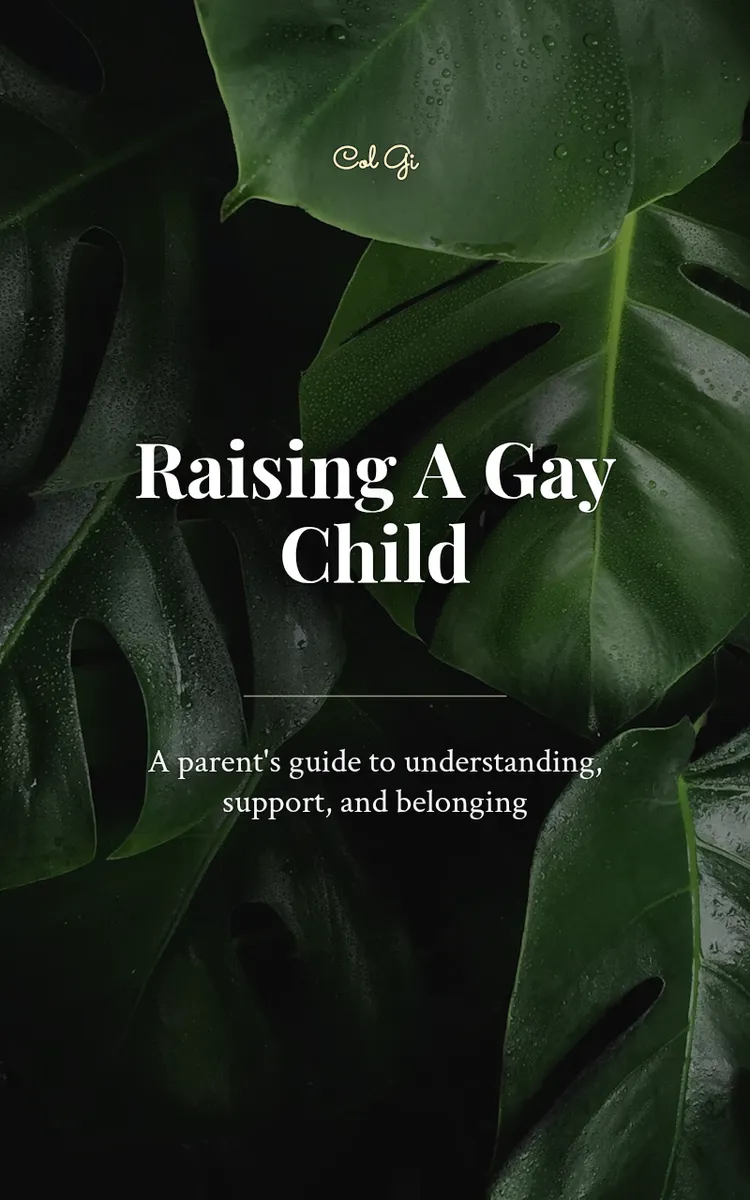
"Raising A Gay Child" is a self-help book by Col Gi with 5 chapters and approximately 7,606 words. Parent guidance for supporting a gay child.
This book was created using Inkfluence AI, an AI-powered book generation platform that helps authors write, design, and publish complete books. It was made with the AI Self-Help Book Writer.
Frequently Asked Questions
What is "Raising A Gay Child" about?
Parent guidance for supporting a gay child
How many chapters are in "Raising A Gay Child"?
The book contains 5 chapters and approximately 7,606 words. Topics covered include Replacing Fear With Identity Safety, Unlearning Conditional Love Beliefs, Practicing Affirming Communication Scripts, Building Boundaries Without Guilt, and more.
Who wrote "Raising A Gay Child"?
This book was written by Col Gi and created using Inkfluence AI, an AI book generation platform that helps authors write, design, and publish books.
How can I create a similar self-help book?
You can create your own self-help book using Inkfluence AI. Describe your idea, choose your style, and the AI writes the full book for you. It's free to start.
Write your own self-help book with AI
Describe your idea and Inkfluence writes the whole thing. Free to start.
Start writingCreated with Inkfluence AI


